

 Laily UPN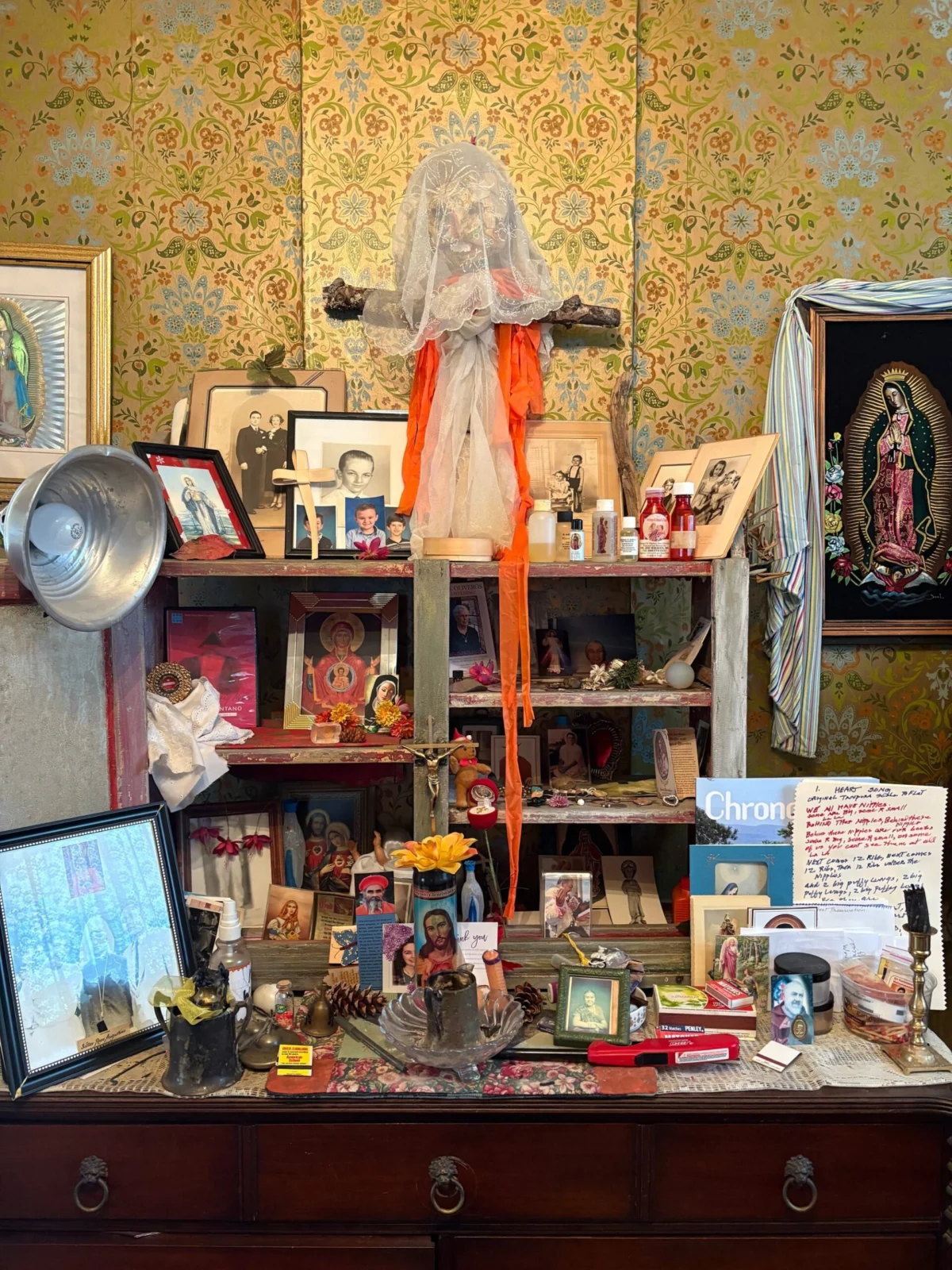
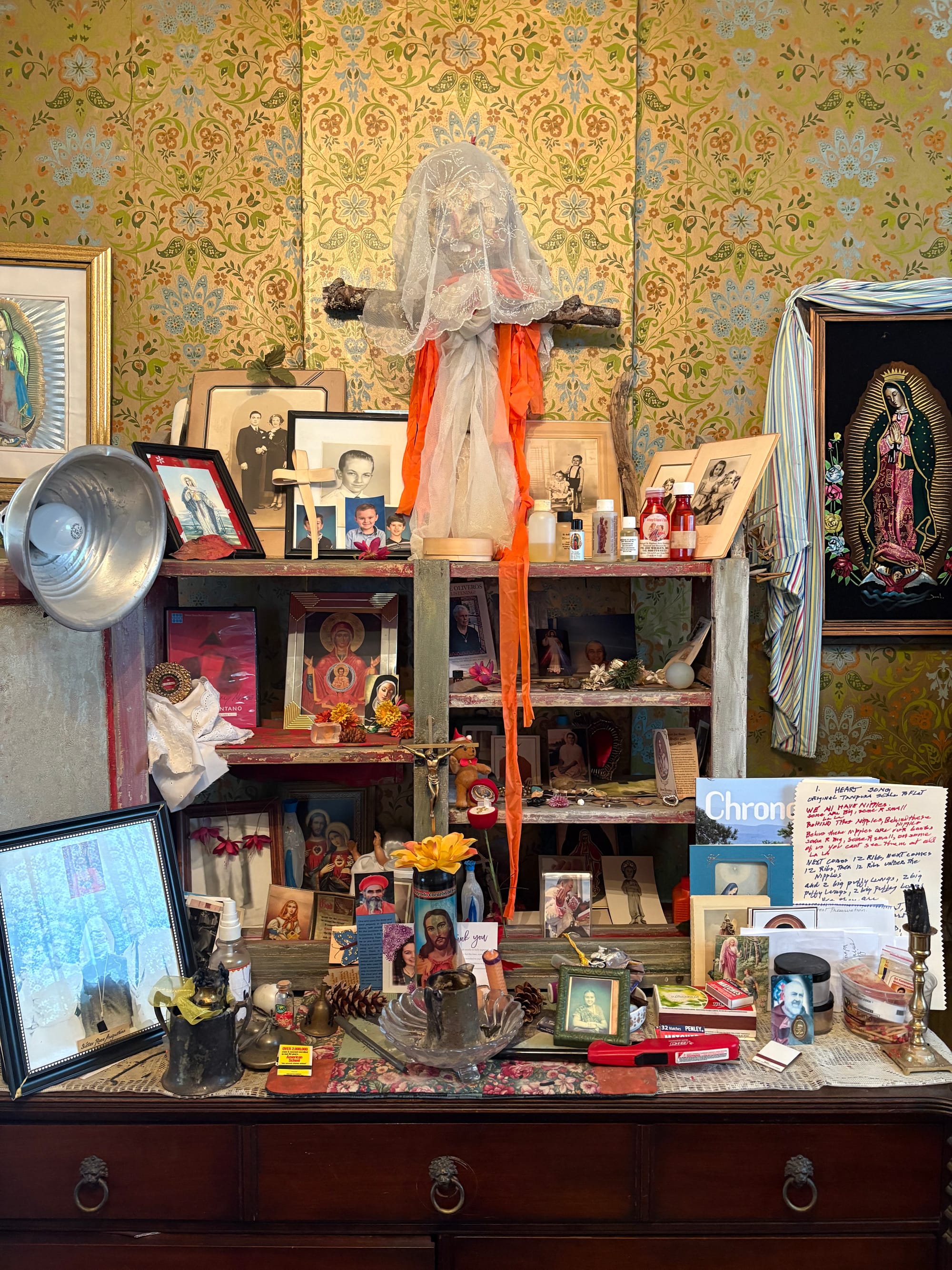
On a crisp, snow-dusted morning in late January, the residence of Linda Mary Montano in Saugerties, New York, feels less like a private home and more like a liminal space—a threshold between the mundane and the metaphysical. Stepping inside, one is immediately enveloped by a living shrine. Every corner is crowded with sacred altars, avant-garde sculptures, and layers of religious iconography that speak to a six-decade-long career spent blurring the razor-thin line between artistic practice and daily existence.
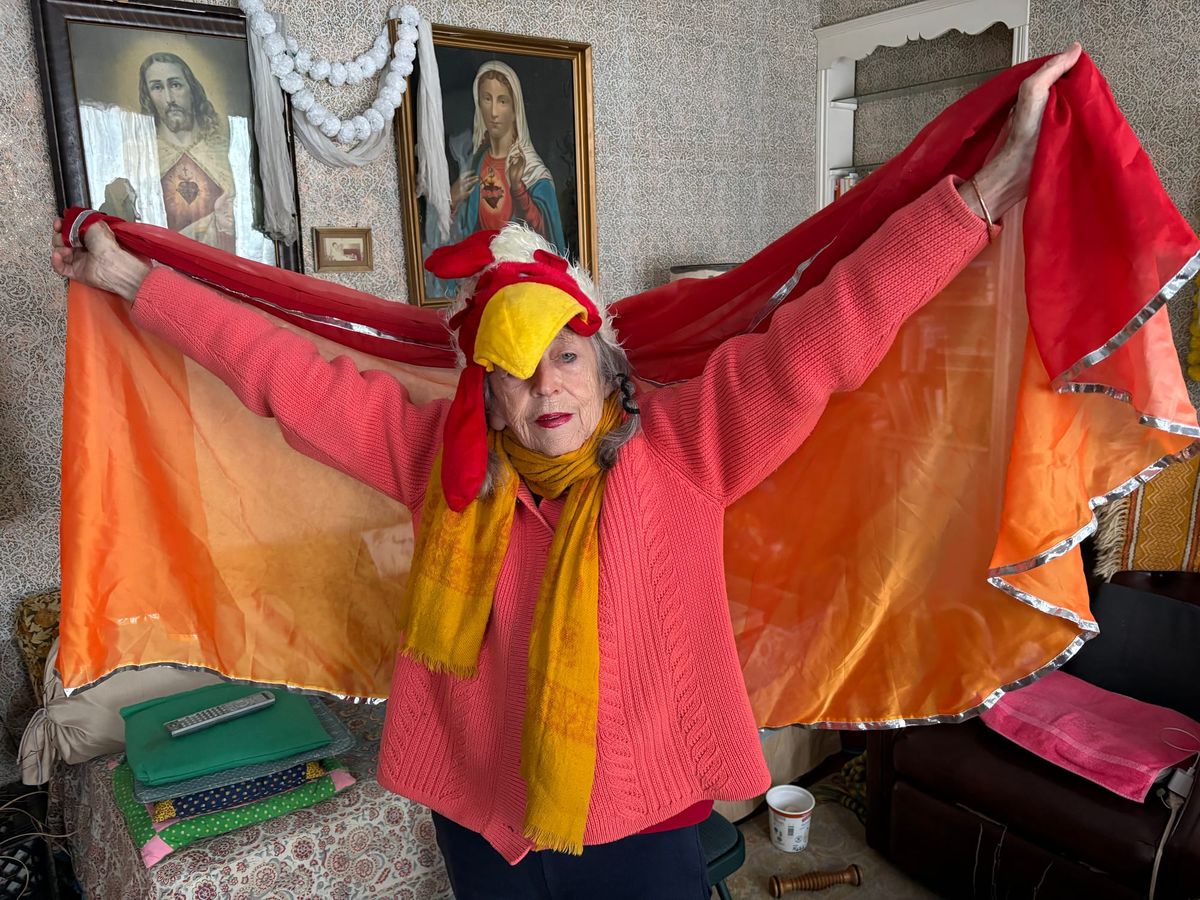
The octogenarian artist moves through her space with a lightness that suggests she is not merely inhabiting the house, but curating a permanent, evolving performance. As I settled into the quiet intensity of her home, Montano ascended the stairs to don her "Chicken Linda" costume. To Montano, chickens are not merely livestock; they are divine entities in disguise. By embodying this persona, she taps into a deep, primal connection with the Holy Spirit, transforming her own identity into a vessel for spiritual inquiry.
The Architecture of a Life: A Chronology of Artistic Endurance
Born in 1942, Linda Mary Montano’s journey is one of relentless exploration. Her formal training began with a master’s degree in Catholic sculpture in Italy, followed by an MFA in sculpture at the University of Wisconsin-Madison (1967–69). During those formative years, she was one of only two women in a department dominated by large-scale, masculine industrial forms.
"Sculpture was extremely large, unwieldy, and masculine during my time there," she recalls. This friction pushed her toward the radical, leading her to integrate live chickens into her sculptural work—a choice that presaged her lifelong obsession with the intersection of the animate and the aesthetic.
The San Francisco Shift and the Birth of "Art/Life"
In the early 1970s, the center of gravity for experimental art shifted to San Francisco. Amidst the burgeoning First Wave feminist art movement, Montano found her true north. Influenced by Allan Kaprow’s "Happenings" and the collaborative spirit of the Woman’s Building in Los Angeles, Montano coined the term "art/life." This philosophy posits that the artist’s existence is the primary medium.
She was deeply influenced by the conceptual luminaries of the era, including Tom Marioni, Howard Fried, and Paul Kos. It was a period of "improvisational freak-out," she notes, where the female voice was finally finding the room to roar. During this time, she met her guru, Shri Bhramananda Saraswati, who provided her with the spiritual grounding to treat her artistic practice as a form of sacred service. "He gave me the mic, he gave me the stage," she says, reflecting on the permission he granted her to explore the edges of human consciousness.
Grief and the Language of Art
Perhaps the most visceral moment in Montano’s career occurred in 1977, following the murder of her former husband, Mitchell Payne. In the wake of profound trauma, she turned to the only language she possessed: art. Her 22-minute video piece, Mitchell’s Death, remains a seminal work in the history of feminist performance.
"I didn’t have verbal language, because I did not have emotional language," she admits. "I didn’t have an ability to even tell anyone he died… or to lay in anyone’s arms, so I laid in the arms of art." This work, now housed in the collections of the Museum of Modern Art and the Museum of Conceptual Art, transformed her private mourning into a public, cathartic ritual.

Supporting Data: The Mechanics of Endurance
Montano’s practice is defined by "endurance performance"—a category of art that requires the artist to subject their body and mind to extreme conditions for the sake of creative, often spiritual, catharsis.
Bound to the Other
In 1983, Montano collaborated with Tehching Hsieh on a year-long performance in which the two artists were bound together by an eight-foot rope. They were never to touch or separate for 365 days. Reflecting on the piece, Montano identifies it as "free rage therapy" and an exercise in Jungian shadow work. It was, she insists, a total permission to feel, a descent into the "hell realms" of interpersonal friction that ultimately paved the way for profound gratitude.
The Color of Time: Fourteen Years of Living Art
From 1984 to 1998, Montano embarked on her most ambitious endurance project: Fourteen Years of Living Art. During this period, she lived by the constraints of the Hindu chakra system. She wore only single-colored clothing and resided in a storefront space at the New Museum, where she offered tarot readings and palmistry.
Curator Marcia Tucker provided the structure for this experiment, allowing Montano to repaint her space annually to match the colors of the chakras—red, orange, green, yellow, blue, purple, and white. "What a gift," Montano reflects. "To have that vision, to have that space—it was an invitation to inhabit the soul’s spectrum."
Official Perspectives: The Philosophy of the "Ego-Buster"
When asked about the necessity of such extreme, long-term actions, Montano frames her work as an "ego-buster." Her approach is inherently anti-capitalist and anti-individualistic in the traditional sense. By repeating a specific action for years, the artist forces the ego to surrender.
"If you stay long enough with a chosen action… what it does is kill the ego, invites the ego to go on vacation," she explains. "It allows you to meld, to mold, to incorporate this tiny little garbage can of ego into the larger framework."
This perspective is bolstered by her eclectic theological background. Having spent two years as a Maryknoll Sister and three years at the Zen Mountain Monastery, her work serves as a synthesis of Zen discipline, Hindu philosophy, and a re-imagined Catholicism. She describes her current relationship with her faith as a move away from "punishment, sin, and guilt" toward a practice centered on "healing, cleansing, and connecting."
The Implications of a Life-as-Work
The implications of Montano’s six-decade career are vast for the contemporary art world. She challenges the notion that art must be a static object purchased, sold, and displayed. Instead, she argues for art as a continuous, lived-in experience—a "safe haven" where one can practice being human.
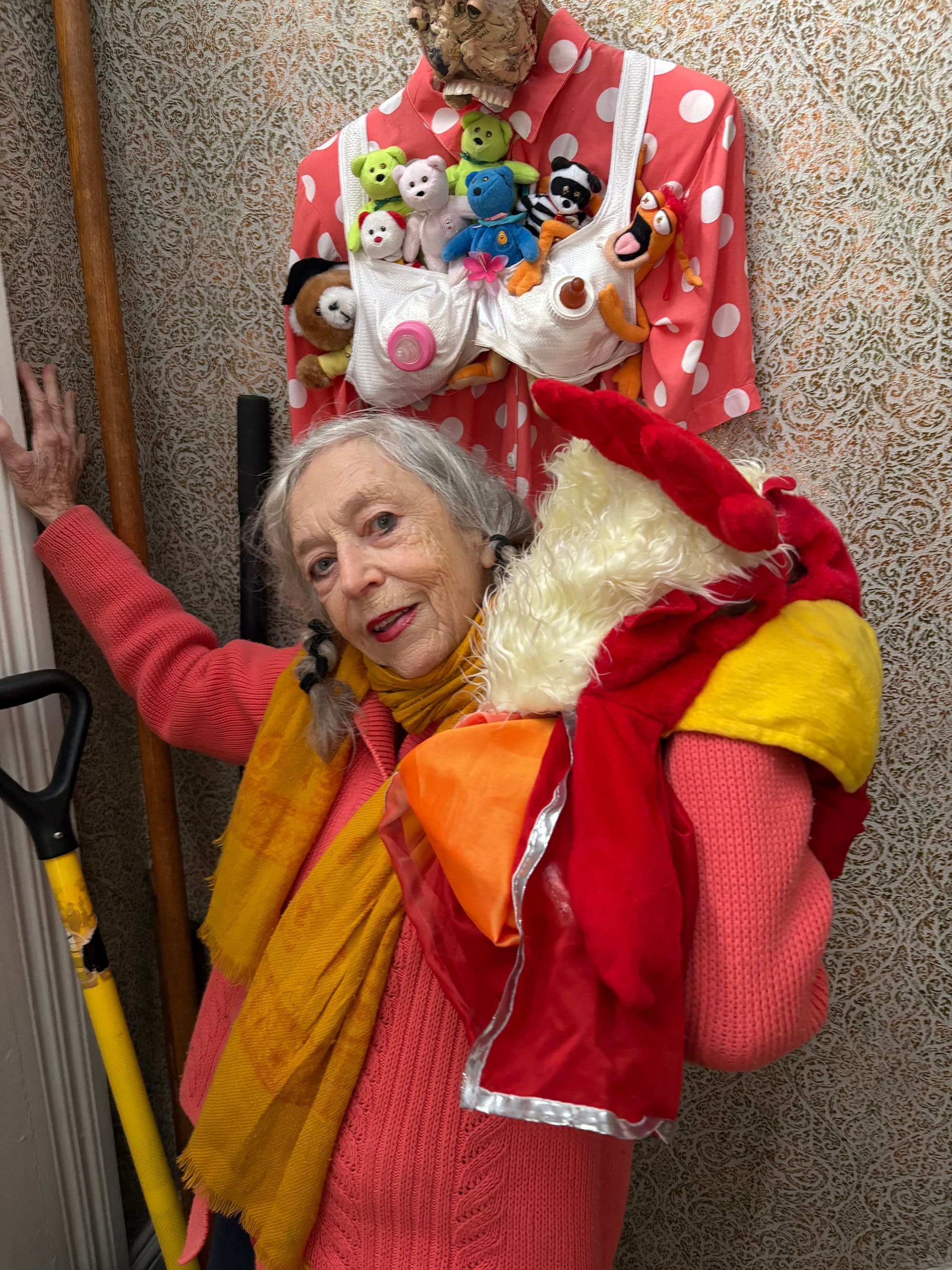
Her home in Saugerties serves as the final, enduring altar to this philosophy. Whether it is a sculpture of a Kali figure adorned with toy bears or a "Jesus Comes Off the Cross with a Heart" installation, the objects are not merely decorative. They are the artifacts of a life that has prioritized the internal landscape over external acclaim.
As my visit drew to a close, Montano pulled a small ceramic chicken from a shelf and placed it in my hand. It was a gesture of connection, a final act of performance before she retreated into the sacred silence of her home. In an art world that often prioritizes the spectacle of the "new," Linda Mary Montano stands as a testament to the power of the "persistent." She reminds us that the most radical thing an artist can do is not to make a masterpiece, but to make a life that is, in itself, a work of art.
Her practice invites us all to consider our own daily actions: What would happen if we treated our own lives with the same level of devotion, endurance, and radical honesty? In the shadow of her home-shrine, the answer seems to be that we might finally, as Montano suggests, let the ego go on vacation and discover what remains when the boundaries between art and life dissolve entirely.

 Evan Lee Salim
 Lina Hope