
 Jia Lissa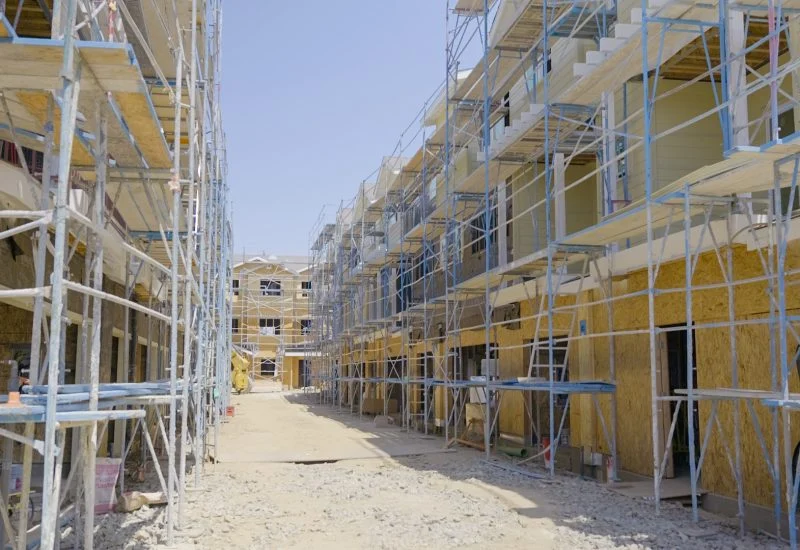
For decades, the narrative surrounding the housing crisis in California—and across the United States—has been defined by a familiar set of culprits: neighborhood opposition, stringent environmental regulations, and the "NIMBY" (Not In My Backyard) phenomenon. However, a groundbreaking shift in Los Angeles suggests that the true bottleneck is far more mechanical and, perhaps, more solvable: the way we fund the construction of homes.
In a move that could provide a blueprint for municipalities nationwide, the LA County Affordable Housing Solutions Agency (LACAHSA) has launched a novel financing mechanism that treats affordable housing not as a charitable endeavor, but as critical civic infrastructure—akin to the construction of roads, bridges, and public schools. By bypassing the traditional, bureaucratic hurdles of federal tax credit programs, Los Angeles is poised to accelerate the development of thousands of units, potentially changing the economics of the entire sector.
The Main Facts: A $204 Million Pivot
On a pivotal Wednesday, the board of LACAHSA—a regional authority established just three years ago—approved the issuance of a $204 million social bond. This capital is earmarked to back 20 distinct housing projects across the county, expected to deliver more than 1,500 new units of housing.
At the heart of this strategy is the shift away from the federal Low-Income Housing Tax Credit (LIHTC) program. While LIHTC has been the backbone of affordable housing for 40 years, it has become increasingly cumbersome. The new LA model leverages the massive $4 trillion municipal bond market to provide low-cost capital directly to nonprofit developers. The "secret sauce" is a layer of catalytic capital—provided by a county-wide sales tax—which mitigates the risk of losses for institutional investors, making these bonds an attractive, low-risk investment.
Chronology of a Financial Evolution
The path to this moment began in 2022, when California state legislation authorized the creation of regional housing agencies in the San Francisco Bay Area, San Diego, and Los Angeles. While these bodies were designed to streamline regional planning, they were initially hampered by the same funding limitations that plague the rest of the state.
Los Angeles, however, possessed a unique advantage: a voter-approved, half-cent countywide sales tax. This tax generates approximately $385 million annually for the agency. While much of this revenue is dedicated to immediate services for the unhoused, LACAHSA leadership saw an opportunity to use a portion of these funds as "first-loss" or "junior" capital.
The timeline of the program’s success unfolded rapidly:
- 2022: State legislation empowers LACAHSA to act as a regional housing engine.
- Early 2024: LACAHSA opens a call for project applications. The response is overwhelming: 127 applications requesting $1.5 billion in funding for over 11,600 units.
- Spring 2024: The board approves an initial $100 million for 10 non-LIHTC projects, serving as a pilot for the new financial model.
- Summer 2024: The board approves a second, larger tranche of $204 million, including a mix of LIHTC-backed and non-LIHTC projects, setting the stage for a comparative study of efficiency.
The Problem with the Status Quo: Why LIHTC is Faltering
To understand why the LACAHSA model is revolutionary, one must understand the "capital stack" of traditional affordable housing. For forty years, LIHTC has been the primary vehicle for developers. While it successfully brought institutional capital into the market, it has become a victim of its own success.
The Terner Center for Housing Innovation at UC Berkeley has conducted extensive research on the costs of complexity. Because LIHTC is so difficult to secure, developers often have to "layer" five or more sources of financing to make a project pencil out. According to the Center, each additional layer of financing adds roughly 3% to the project’s total cost.
The delays are equally damaging. Research indicates that each additional public funding source adds an average of four months to the pre-construction timeline. For a 100-unit project, these delays and the associated administrative costs add more than $2 million to the bottom line.
"Each layer of financing… that’s a lot of extra cost to carry and complication and time," says Carol Galante of the Terner Center. In Los Angeles, the reality has been even more dire: roughly 75% of proposed affordable housing projects fail to secure the competitive tax credit equity, leaving them stranded despite having the necessary permits and site control.
Supporting Data: The Efficiency Gap
The LACAHSA model is effectively running a "natural experiment" that could settle a long-standing debate in urban planning. By funding both projects that use tax credits and projects that rely solely on the new bond mechanism, the agency is gathering data on cost-efficiency.
Early analysis by Ryan Johnson, the interim director of LACAHSA, suggests that projects built without the reliance on LIHTC can be completed for at least 12% less than their tax-credit-dependent counterparts. The financial math is clear:
- Interest Rate Reduction: By providing a 25-year, below-market rate loan that accounts for 20% of the capital stack, LACAHSA reduces the developer’s overall cost of capital.
- Risk Mitigation: By using sales tax revenue to cover the "junior" risk layer, the agency attracts private investors who can purchase the "senior" bond layer at significantly lower interest rates.
- Basis Points: This structure can lower the effective cost of capital from 7%—the current market rate for many developers—to under 4%. For many projects, that 300-400 basis point spread is the difference between a project that is built and one that remains a blueprint.
Official Responses and Strategic Implications
The implications of this move are being felt far beyond Los Angeles. Mayor Rex Richardson of Long Beach, who serves as the chair of the LACAHSA board, has been vocal about the paradigm shift. "The challenge isn’t a lack of sites, developers, or community will," Richardson stated. "The challenge is financing and operational support."
Ryan Johnson echoes this sentiment, framing the agency as a new, more efficient partner for developers. "It’s cheaper than LIHTC and it’s less complex," Johnson told ImpactAlpha. He describes the agency’s role as a "one-stop shop" that provides not only construction loans but also rental subsidies and long-term operating support.
Global Comparisons
The LACAHSA model is not entirely unprecedented, though it is rare in the U.S. context. Major global cities like Paris, Vienna, and Singapore have long treated social housing as a core state responsibility, using public financing or publicly managed private savings to ensure housing for the majority of their populations. By shifting toward this "social housing" model, Los Angeles is effectively moving away from the American preference for developer-led, subsidy-heavy construction toward a more stable, state-backed infrastructure model.
Future Outlook: A Model for the State
The overwhelming demand from developers—127 applications seeking $1.5 billion—proves that there is no lack of appetite for housing; there is only a lack of efficient capital.
As LACAHSA continues to deploy its bond-backed funds, the success or failure of these 20 projects will likely determine whether the California state legislature pushes to replicate this model in other regions. If LACAHSA can indeed deliver units 12% cheaper and significantly faster than the traditional model, the "financing-first" approach may become the new standard for housing policy across the country.
Ultimately, the Los Angeles experiment proves that affordable housing is not a mystery of zoning or social engineering, but a logistical challenge of capital markets. By de-risking the investment for the private sector and simplifying the capital stack, the agency is doing what was previously thought impossible: building the foundations of a new, faster, and more affordable way to house the nation.


 Pevita Pearce