


 Lina Hope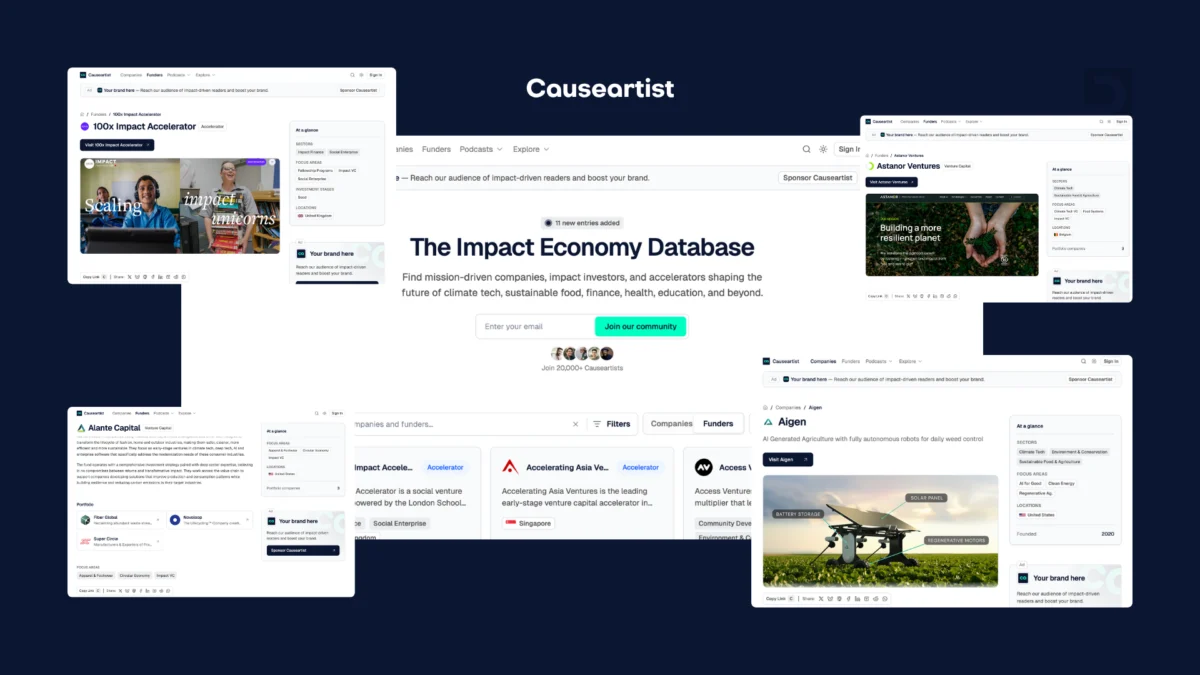
In an industry often characterized by fragmentation and short-term trends, Causeartist—the long-standing platform dedicated to the impact economy—is undergoing a seismic structural shift. After a period of relative quiet on the content front, founder Grant Trahant has announced "Causeartist 3.0," a strategic pivot that aims to bridge the long-standing gap between journalistic storytelling and the technical infrastructure required to scale social enterprise.
The most significant change accompanying this launch is the transition of the organization into a nonprofit entity, the Causeartist Foundation. This move signals a departure from the traditional media business model, prioritizing long-term mission stability over the volatile demands of ad-supported growth and algorithmic dependencies.
The Genesis of a New Vision: Why Causeartist 3.0?
For over a decade, Causeartist has operated as a leading voice in the social entrepreneurship space, profiling hundreds of founders, investors, and change-makers across 130 countries. However, according to Trahant, a recurring pattern emerged during these hundreds of hours of interviews: the "impact economy" remains severely disconnected.
While the stories of impact are being told, and the capital exists to fund them, there is no cohesive "operating system" for the industry. Information remains siloed across various platforms, disparate databases, and social media feeds. Causeartist 3.0 is designed to be that bridge.
Bridging Storytelling and Infrastructure
The new vision for Causeartist is built on a dual-pillar architecture:
- Narrative Journalism: Continuing the platform’s legacy of high-quality interviews and storytelling that highlights the human element behind companies that solve global challenges.
- The Impact Database: A comprehensive, living digital archive that maps the landscape of startups, venture funds, philanthropic organizations, and regional ecosystems.
By integrating these two, the platform aims to stop the "scattered" nature of impact information. Instead of a user having to scour the internet to find a relevant investor or a specific social enterprise, the platform intends to host that data in a centralized, accessible, and structured environment.
A Chronology of the Shift
To understand the weight of this transition, one must look at the trajectory of the platform over the last ten years.
- 2014–2018 (The Growth Phase): Causeartist establishes itself as a digital media outlet, focusing on the "do-good" business model. The site gains traction by spotlighting brands that utilize the "buy-one-give-one" or ethical supply chain models.
- 2019–2023 (The Global Expansion): The platform expands its scope, interviewing founders across 130+ nations. It becomes a hub for networking, connecting investors with impact-driven startups.
- 2024–2025 (The Quiet Period): The team goes "heads down." Public content production slows significantly, leading to speculation from long-time readers. Behind the scenes, the team pivots from a content-first model to an infrastructure-building phase.
- May 2026 (The Launch): The official announcement of Causeartist 3.0 and the establishment of the Causeartist Foundation. The transition from a for-profit media entity to a non-profit foundation is finalized, marking a move toward long-term sustainability.
The Strategic Pivot: Why Become a Nonprofit?
The decision to transition into a nonprofit is not merely a legal or tax designation; it is a tactical choice to insulate the organization from the pressures of modern digital media.
Independence from Algorithmic Pressure
Modern media platforms are often forced to cater to the shifting whims of social media algorithms. This "click-driven" culture often forces publishers to prioritize sensationalism over substance. By adopting a nonprofit structure, the Causeartist Foundation removes the requirement to chase short-term, ad-driven revenue. This allows the team to prioritize high-quality, long-form research and data accuracy—qualities that are often undervalued in the attention economy.
Longevity and Stability
"Media platforms come and go," says Trahant. "But the need for consistent, high-quality storytelling and access to information in the impact economy isn’t going anywhere."
By moving to a nonprofit model, the foundation gains the ability to accept grants, build endowments, and engage in long-term partnerships that would be impossible for a traditional media company. This stability is crucial for the development of a "living database," which requires constant maintenance and vetting—a costly endeavor that rarely pays for itself through banner ads.
Supporting Data: The Need for an Impact Operating System
The impact economy has seen massive growth in the last decade, with ESG (Environmental, Social, and Governance) investing and impact-driven venture capital reaching record highs. However, the data infrastructure has failed to keep pace.
According to industry reports, nearly 60% of social entrepreneurs struggle to identify suitable investors, and 45% of impact investors report that the primary barrier to capital deployment is "the lack of standardized, high-quality deal flow data."
Causeartist 3.0 addresses this by creating a centralized directory. By mapping ecosystems—from early-stage social impact startups in emerging markets to established philanthropic leaders—the platform aims to reduce the "friction of connection." In theory, this leads to higher capital efficiency, where funds move faster to the people who need them most because the due diligence process is streamlined by better data.
Official Stance and Future Roadmap
The organization has been transparent about its upcoming roadmap. While the immediate focus is on launching the core database, the team is also looking toward community-led verification of the data, ensuring that the information remains accurate and relevant.
Implications for the Sector
The transition of Causeartist is likely to be viewed as a litmus test for the future of mission-driven media. If a platform can successfully merge the editorial prestige of a media outlet with the utility of a technical database, it could set a new industry standard.
For founders and investors, this could mean a significant reduction in time spent on discovery. For the broader impact community, it represents a move toward professionalism and maturity.
A Call to Action for the Community
As Causeartist enters its 3.0 chapter, the leadership has made it clear that they are seeking collaboration. The foundation is looking for partners who are interested in:
- Data Integration: Organizations willing to share, clean, and verify impact data to keep the database accurate.
- Strategic Partnerships: Foundations and funds that wish to support the infrastructure that makes impact investing more accessible.
- Editorial Contributions: Subject matter experts who can provide deep-dive insights into specific sectors of the impact economy.
"We’re just getting started again," Trahant noted in his announcement. For the audience that has followed the brand for years, the shift represents not an end, but an evolution—a transformation from a mirror reflecting the impact movement into a floor upon which the movement can build.
Conclusion
The evolution of Causeartist from a blog to a global storytelling hub, and now to a nonprofit infrastructure foundation, reflects the broader maturation of the social enterprise sector itself. The era of simply "talking about" impact is ending; the era of "scaling and mapping" impact has arrived. By prioritizing infrastructure over engagement and longevity over growth, the Causeartist Foundation is positioning itself as an essential utility for the next generation of global problem solvers.
For those looking to engage, the door is open. The foundation’s pivot suggests that the future of impact will not be defined by the loudest voice, but by the most connected one. As the platform prepares to launch its comprehensive database, the community waits with anticipation to see if this new model can truly create the cohesive ecosystem the impact world has been missing.


 Pevita Pearce
 Jia Lissa