


 Sagoh
Sagoh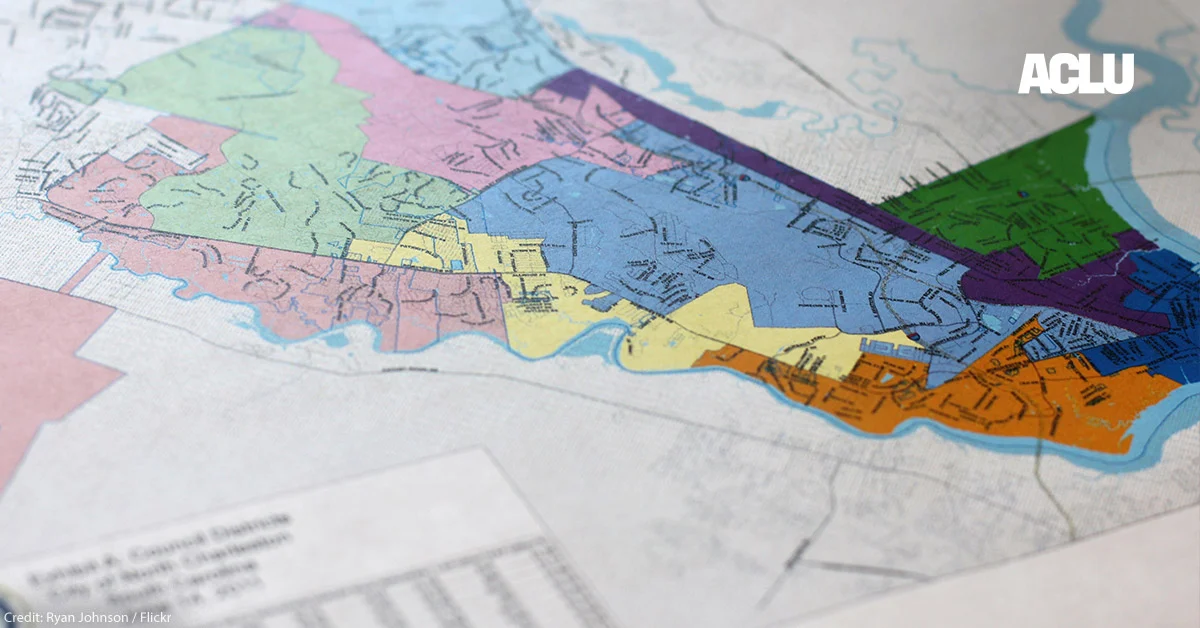
The fundamental promise of American democracy—that voters should choose their representatives, rather than representatives choosing their voters—is facing its most significant challenge in decades. Following the Supreme Court’s landmark April 2026 ruling in Louisiana v. Callais, the mechanisms designed to ensure fair, equitable, and representative legislative districts have been profoundly weakened.
As the legal landscape shifts, understanding the mechanics of redistricting and the implications of the Callais decision is no longer just a task for political scientists; it is a civic necessity for every voter concerned about the integrity of their representation.
Understanding the Basics: Redistricting vs. Gerrymandering
At its core, redistricting is a routine, constitutionally mandated process. Every ten years, following the decennial census, states are required to redraw the boundaries of legislative districts to account for population shifts. When conducted with integrity, this process ensures that each district contains a roughly equal number of residents, upholding the principle of "one person, one vote." It allows for communities to be represented according to their current demographic realities, ensuring that as a state grows and changes, its government remains reflective of those it serves.
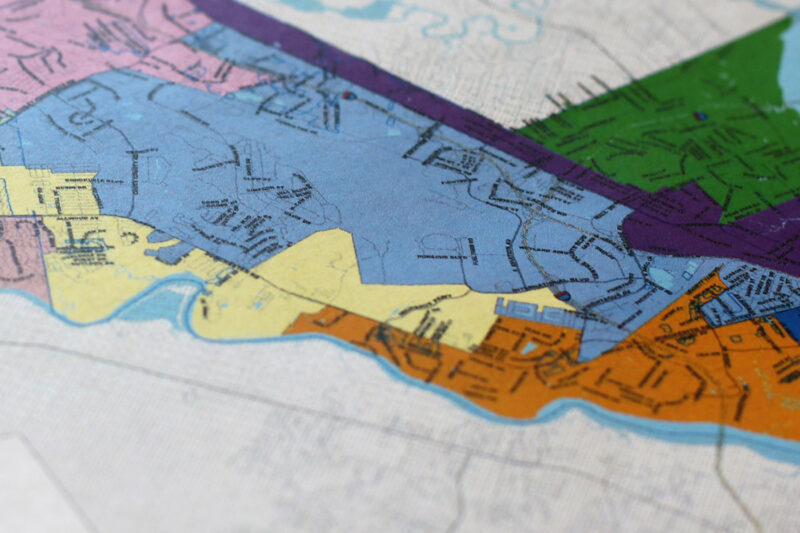
However, when this administrative necessity is weaponized, it becomes "gerrymandering." Gerrymandering occurs when those in power manipulate district lines to maximize their political advantage, often by packing opposing voters into a single district or cracking them across multiple districts to dilute their influence. While redistricting is a tool for equality, gerrymandering is a tool for entrenchment.

Reapportionment: The Starting Gun
It is essential to distinguish between redistricting and reapportionment. Reapportionment is the process by which the 435 seats in the U.S. House of Representatives are distributed among the 50 states based on population changes. For example, the 2020 Census revealed significant migration patterns, leading to states like Texas gaining seats while others, such as New York, saw a decline. Once these seats are allocated, states then engage in redistricting—the granular work of drawing the actual geographic lines that define who votes for whom.
A Chronology of the Shift: From the Voting Rights Act to Callais
For decades, the Voting Rights Act (VRA) of 1965 served as the primary bulwark against discriminatory map-drawing. Specifically, Section 2 of the VRA prohibited any voting practice or procedure that resulted in the denial or abridgment of the right to vote on account of race or color.
- 1960s: The Supreme Court establishes the "one person, one vote" doctrine, cementing the requirement that districts be balanced by population.
- 1965–2020: Section 2 of the VRA becomes the gold standard for challenging discriminatory maps. Courts focused on whether a map resulted in the dilution of minority voting power, regardless of whether explicit discriminatory intent could be proven.
- April 2026: In Louisiana v. Callais, the Supreme Court strikes down a Louisiana congressional map that included two districts specifically designed to empower Black voters.
- The Aftermath: The Court’s ruling effectively gutted the "results" test of the VRA. By elevating the burden of proof, the Court has made it nearly impossible for plaintiffs to challenge maps unless they can provide smoking-gun evidence of intentional racial discrimination—a standard that is notoriously difficult to satisfy in the opaque, data-driven world of modern legislative map-making.
Supporting Data: Demographic Shifts and Political Reality
The tension surrounding redistricting is amplified by the changing face of America. According to 2020 Census data, almost all of the nation’s population growth over the previous decade was driven by communities of color.
In a fair system, this demographic shift would naturally lead to an increase in the number of districts where voters of color have a meaningful opportunity to elect candidates of their choice. Instead, the Callais decision creates a scenario where these growing populations can be "cracked" or "packed" with legal impunity. By fracturing these communities, legislatures can effectively negate the political impact of their growth, ensuring that political power does not keep pace with demographic reality.
The Implications of Callais for American Democracy
The Callais ruling has profound implications for every level of government, from local school boards and city councils to the halls of Congress.
1. The Death of the "Results" Test
Before Callais, challengers only needed to show that a map caused a discriminatory outcome. Now, they must prove that the architects of the map acted with explicit, malicious intent. In an era where sophisticated software allows map-makers to achieve discriminatory goals under the guise of "partisan politics" or "neutral criteria," proving subjective intent is a hurdle that will likely result in the dismissal of most future litigation.
2. The Normalization of Mid-Decade Redistricting
Historically, redistricting was a once-a-decade affair tethered to the census. Recently, however, states have begun attempting "mid-decade" redistricting, where lines are redrawn to favor the party in power without any change in population data. The erosion of federal oversight makes these partisan power grabs more likely to succeed, turning redistricting into a permanent campaign tool rather than a census-based administrative necessity.
3. The Diminishment of Minority Political Strength
The most immediate impact is the potential for mass disenfranchisement. By eliminating districts where voters of color have a fair opportunity to elect their chosen representatives, the Callais ruling threatens to return the nation to an era where minority voices are consistently marginalized in the legislative process.

Official Perspectives and the Road Ahead
Sophia Lin Lakin, Director of the ACLU’s Voting Rights Project, has been vocal about the gravity of this moment. According to Lakin, the Callais decision does not mean the fight is over; it means the battlefield has shifted. While federal protections under the VRA have been diminished, advocacy must now expand to include:
- State-Level Protections: Voters and activists are encouraged to lobby for state-level voting rights acts that provide stronger protections than the now-weakened federal standards.
- State Constitutional Challenges: As federal courts close their doors, state supreme courts have become the new frontier for ensuring fair maps.
- Increased Civic Engagement: The burden of policing the process has shifted to the public. Residents are urged to attend redistricting hearings, monitor the work of mapping commissions, and demand transparency from their local representatives.
How to Get Involved
The complexity of the redistricting process often serves as a deterrent to public participation, which is exactly what those who wish to gerrymander prefer. To ensure fair representation, the following steps are vital:
- Stay Informed: Monitor the websites of local and state legislative bodies for announcements regarding redistricting committees and public hearings.
- Submit Alternatives: Many jurisdictions accept "community-of-interest" maps submitted by the public. These maps help define what citizens believe their districts should look like based on shared geography and culture, rather than political convenience.
- Engage Advocacy Groups: Organizations like the ACLU and local voting rights coalitions often have the resources to analyze proposed maps and provide legal backing for those looking to challenge discriminatory plans.
- Pressure Elected Officials: Never underestimate the power of direct communication. Letters, emails, and testimony at public hearings create a paper trail that can be essential for future legal challenges.
Conclusion: A Call to Vigilance
The Supreme Court’s decision in Callais is a sobering reminder that the rights we often assume to be settled are, in fact, subject to the shifting winds of judicial philosophy. The right to fair representation is not self-executing; it requires constant maintenance, public oversight, and a willingness to challenge those who would dilute the power of the vote.
As we look toward future election cycles, the question is no longer just who we are voting for, but whether the districts themselves are designed to honor the will of the people. Democracy is a participatory sport, and in the wake of Callais, the need for active, informed, and organized citizen participation has never been greater. The maps are being drawn—and it is up to the voters to ensure that those lines reflect the diverse, growing, and vibrant communities that define our nation.


 Siti Muinah