
 Muslim
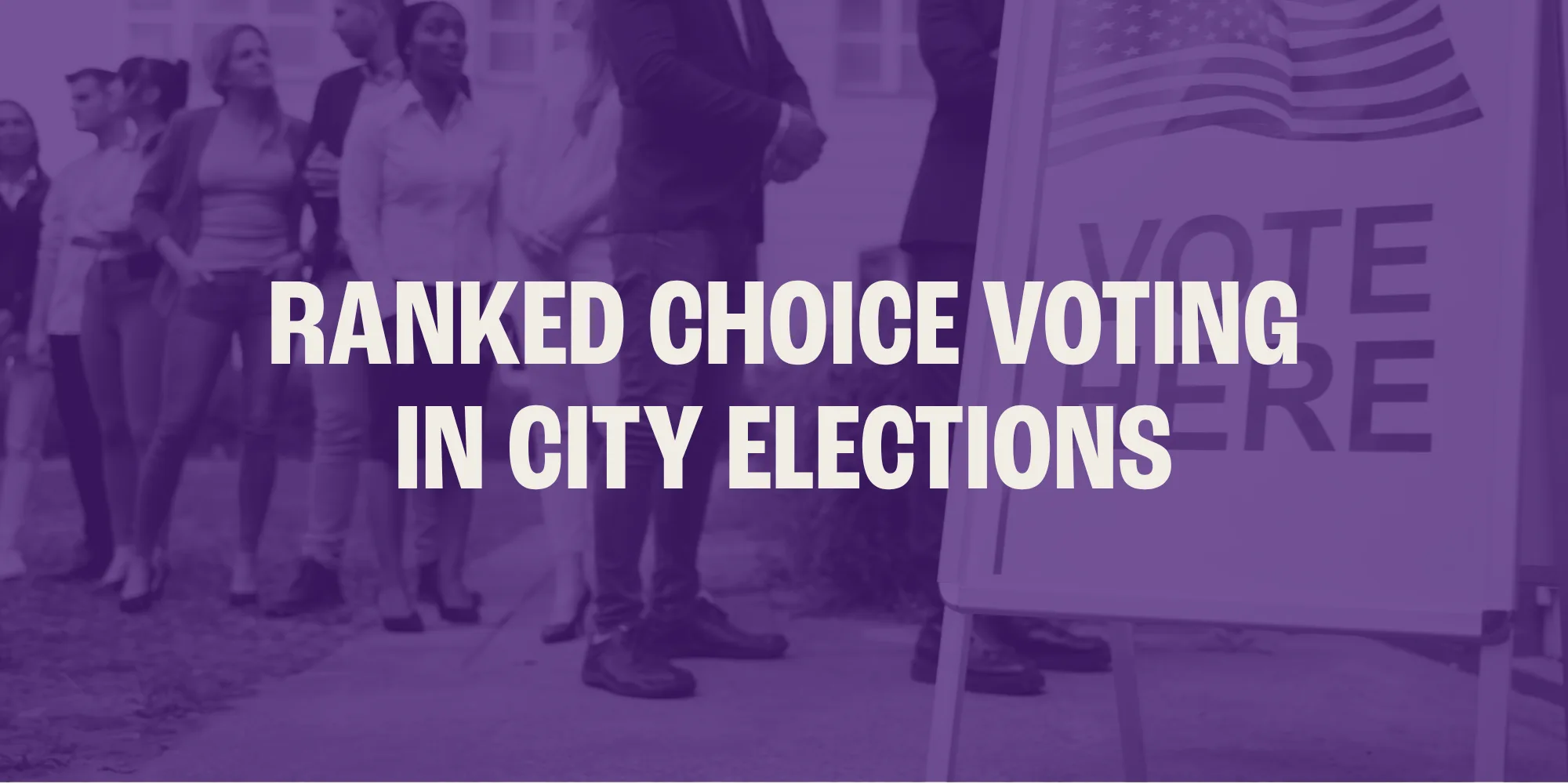
On Tuesday, as millions of Americans cast their ballots, a quiet but significant revolution in electoral mechanics took center stage. From the bustling streets of Portland, Oregon, to the mountain town of Boulder, Colorado, and across the diverse political landscape of the California Bay Area, voters participated in a democratic exercise designed to maximize the influence of every ballot: Ranked Choice Voting (RCV).
Across two states, two counties, and twelve cities, more than four million Americans utilized RCV to select their representatives, ranging from local city councilors to high-level county commissioners and mayors. While national eyes were fixed on the major races in Alaska, Maine, and Washington, D.C., the true success story of the 2026 election cycle emerged in the granular, local contests where RCV proved that a more nuanced voting system leads to more representative outcomes.
Main Facts: A Shift Toward Meaningful Representation
The core premise of RCV is straightforward yet transformative: instead of selecting a single candidate—often forcing voters to choose the "lesser of two evils" or fear "wasting" their vote on an underdog—citizens are empowered to rank candidates in order of preference.
Initial data analysis from FairVote indicates that the 2026 midterms were a landmark moment for this methodology. At least 70,000 voters in local contests who initially backed a lower-performing candidate found their voices still resonating in the final outcome. Through the process of elimination and transfer, these voters’ preferences were redistributed to viable contenders, ensuring that their ballots remained active until a winner was determined.
This mechanism eliminates the "spoiler effect" that frequently plagues traditional plurality voting, where a candidate can win despite a majority of the electorate preferring someone else. By ensuring that the eventual winner has the broadest possible support, RCV fosters a more collaborative political environment. Indeed, the 2026 cycle saw a notable uptick in candidate civility, with several hopefuls engaging in cross-endorsements and explicitly urging their supporters to rank rivals as second or third choices.
Chronology of the Count: Efficiency Meets Innovation
One of the most persistent myths surrounding Ranked Choice Voting is that it is administratively cumbersome or slow to tally. The results from Tuesday’s election decisively debunked this narrative.
Election officials in jurisdictions utilizing RCV demonstrated that modern ballot processing technology allows for rapid, accurate tabulations that rival—or in some cases outperform—traditional "choose-one" systems.
- 15 Minutes After Polls Closed: Portland, OR, and Multnomah County, OR, released their initial round of results, which included integrated RCV tallies.
- 30 Minutes After Polls Closed: Boulder, CO, and San Francisco, CA, followed suit, providing voters with transparent, round-by-round updates shortly after the conclusion of voting.
This speed is not an anomaly. According to historical data from FairVote, approximately 79% of jurisdictions that utilize RCV successfully release their final results within 24 hours. This timeline reinforces the fact that RCV is a scalable, efficient, and sustainable model for modern election administration.
Deep Dive: Key Contests and Local Impact
Multnomah County, OR: A Blueprint for Transition
Multnomah County, the most populous in Oregon, marked a historic milestone by utilizing RCV for the first time to elect its Commission Chair and District 2 Commissioner.
In the race for County Chair, Shannon Singleton emerged as the leader. While she secured 47% of the first-choice votes, the RCV tally allowed her to reach 56.3% once third-place finisher Sharon Meieran was eliminated. Crucially, the 34,682 voters who supported Meieran were not disenfranchised by her exit; instead, their ballots were transferred to their next preference, allowing them to exert a decisive influence on the final matchup between Singleton and runner-up Julia Brim-Edwards.
In District 2, the seven-candidate field provided a perfect case study for the "come-from-behind" capability of RCV. Serena Cruz led in first-choice tallies, but Bri Williams surged through the rounds of elimination as supporters of candidates like Nathan Ong Norris favored her. This consolidation of the progressive coalition proved that RCV acts as a filter, identifying which candidate truly possesses the most support within a broader ideological block.
Boulder, CO: Securing a Mandate
Incumbent Mayor Aaron Brockett secured another term in a race that saw him narrowly miss the 50% threshold on first-choice ballots. By the third round of the RCV tally, however, he had cleared the majority mark, effectively winning the support of a broad cross-section of the city. The 1,158 voters whose first choice was eliminated were granted a vital "second act," participating in the final determination of the city’s leadership.
California Bay Area: Proportionality in Action
In San Francisco, Berkeley, and Albany, RCV was deployed to resolve complex multi-candidate fields. In Berkeley’s City Council District 1, Laura Babitt saw her mandate grow from a 26.8% plurality to a 52.0% majority through the RCV process. Meanwhile, Albany utilized proportional RCV for its multi-winner races for City Council and the Board of Education, ensuring that diverse viewpoints within the community were accurately reflected in the final composition of those bodies.
Supporting Data: The Quantitative Advantage
The table below illustrates the tangible impact of RCV on voter agency. By counting "backup" choices, these jurisdictions ensured that over 70,000 ballots remained relevant in the final decision-making process.
| Race | "Backup" Votes Counted |
|---|---|
| Boulder, CO Mayor | 1,158 |
| Multnomah County, OR Chair | 34,682 |
| Multnomah County, OR District 2 | 18,408 |
| Berkeley, CA Council Dist. 1 | 1,640 |
| Portland, ME Council At-Large | 4,688 |
| Portland, OR Council Dist. 3/4 | 5,090 |
| TOTAL | At least 70,665 |
Official Perspectives and Implications for Future Elections
The implications of the 2026 midterms extend far beyond the immediate winners. As the nation grapples with high levels of political polarization, the success of RCV offers a structural solution to the feeling of alienation experienced by many voters.
Critics often argue that RCV is confusing or unnecessary, yet the ease with which voters in cities like Portland and Boulder navigated their ballots suggests the opposite. The system rewards candidates who build broad coalitions rather than those who rely solely on "base" politics. When candidates know they need second-choice votes from a rival’s supporters, they are incentivized to engage in constructive dialogue rather than negative campaigning.
In contrast, traditional plurality elections continue to produce results that leave large segments of the population feeling ignored. In parts of Orange County, CA, candidates won seats with less than 50% of the vote, effectively leaving a majority of their constituents unrepresented by the winner. Similarly, the expensive, low-turnout runoff elections required in cities like Austin, TX, highlight the financial and democratic costs of systems that fail to resolve contests in a single, decisive, and inclusive round.
Conclusion: The Momentum of Reform
The 2026 election cycle serves as a critical proof-of-concept for electoral reform advocates. Cities that have adopted RCV are not just changing how they count votes; they are changing how they govern. By ensuring that more voices are heard and that winners possess a clear mandate, these jurisdictions are building a more resilient democratic infrastructure.
As ballot measures to bring RCV to cities like Irvine, CA, and Longmont, CO, continue to gain traction, it is clear that the appetite for electoral reform is not a passing trend. The success of the 2026 RCV elections provides a robust foundation for future expansion. As election data becomes more granular and further analysis is conducted, the message remains clear: when voters are given the tools to express their full preferences, the entire democratic process is strengthened, creating a system that is more responsive, more representative, and fundamentally more meaningful for every citizen.

 Basiran

 Nana