

 Azzam Bilal Chamdy
By [Your Name/Journalist Desk]
The sprawling Volkswagen manufacturing complex in Puebla, Mexico—the automotive giant’s largest production facility outside of Germany—is currently the epicenter of a high-stakes labor confrontation. For weeks, the independent union SITIAVW (Independent Union of Volkswagen Automotive Workers) has navigated a volatile landscape of layoffs, wage negotiations, and the looming threat of a total work stoppage.
As of October 2, the SITIAVW bargaining committee has reached a tentative agreement with Volkswagen, offering a 13.16 percent combined increase in wages and benefits over the next two years. Crucially, this deal includes a commitment to rehire 611 workers laid off in September and provides job security for the current workforce. However, the final decision rests in the hands of the 6,500 union members who must now ratify the agreement. The outcome of this vote is set to reverberate far beyond the borders of Puebla, serving as a bellwether for the future of the global automotive industry.
The Anatomy of the Dispute
The tension in Puebla is rooted in a fundamental clash between corporate cost-cutting measures and the rights of a seasoned workforce. SITIAVW, one of Mexico’s most storied and fiercely independent labor organizations, has long been a bastion of worker advocacy in a country where the auto industry has historically been dominated by "protection unions"—organizations often aligned with employers to keep wages low and labor compliant.
The current crisis escalated on September 11, when the union membership delivered a decisive blow to management by rejecting a contract offer of a 10 percent combined increase in wages and benefits. The rejection, backed by 73 percent of the 5,925 voters who participated, was fueled by more than just salary dissatisfaction; it was a visceral reaction to the company’s decision to slash a production shift.
Days prior to the vote, Volkswagen eliminated one of three shifts in the segment of the plant responsible for the Jetta and Tiguan models, resulting in the immediate termination of approximately 800 workers. While the company cited the need to adjust to shifting global demand, the union perceived the move as a bad-faith tactic designed to weaken their bargaining position.
Chronology of the Conflict
The trajectory of this dispute reveals a rapidly deteriorating relationship between labor and management:
- August/Early September 2026: Volkswagen announces the elimination of a production shift, leading to the termination of 800 employees. The union responds by securing an agreement that 611 of those workers—those who refused to sign voluntary separation packages—would be eligible for reinstatement when the plant begins production of the Golf compact car in April 2027.
- September 11, 2026: The membership votes overwhelmingly (73 percent) to reject Volkswagen’s 10 percent wage and benefit increase. Union advisors note that this vote was a direct expression of anger regarding the recent layoffs and the company’s attempt to extend the contract reopener cycle from 12 to 18 months.
- Mid-September 2026: Following the vote, the union issues a fiery statement declaring that "corporate crises will not be resolved at the expense of the sweat, the rights, and the future of the Mexican working class."
- Late September 2026: The union exercises tactical patience, extending the strike deadline four times to allow for further negotiation, ultimately pushing the deadline to October 2.
- October 2, 2026: A new tentative agreement is reached, offering a 13.16 percent increase and guarantees for the rehiring of laid-off staff, subject to final ratification by the workforce.
Global Context: The "Largest Culling" in History
The situation in Puebla is not an isolated event but a local manifestation of a massive, structural transformation within the Volkswagen Group. In September, the automaker announced an aggressive plan to eliminate 100,000 jobs globally by 2030. This initiative represents the most significant workforce reduction by a single automotive manufacturer in modern history.
In Germany, the powerful IG Metall union, which represents 120,000 VW workers and holds a seat on the company’s supervisory board, has been engaged in its own intense negotiations. While IG Metall has managed to stave off the most extreme scenarios, the ripple effects of these cuts are now being felt acutely in Mexico.
Since 2012, the Puebla plant has seen its workforce shrink by 36 percent. Despite this, the facility remains a critical pillar of the Mexican economy. Roughly 6,500 production workers are directly employed by the plant, which exports a massive volume of vehicles to the United States. Beyond the factory gates, the ripple effects touch an estimated 30,000 additional workers throughout the state’s automotive supply chain.
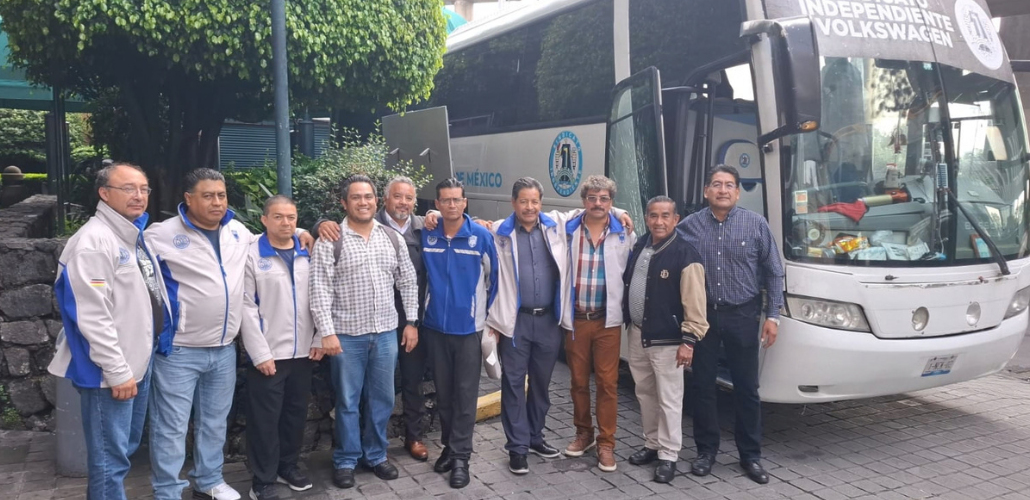
Willebaldo Gómez Zuppa, an advisor to SITIAVW, suggests that the company’s aggressive stance is a strategic choice. "I think the company, from the first moment, never wanted to negotiate," Zuppa said. "The fastest thing you can do to reduce costs is to fire workers. I think that in that sense, they are seeking a greater conflict to justify making greater cuts."
Official Responses and Tactical Realities
Volkswagen has maintained a policy of silence, failing to respond to multiple requests for comment throughout the duration of the negotiations. This absence of formal communication has only served to harden the resolve of the union leadership.
The tactical situation in Mexico is distinct from the United States. Under Mexican labor law, if a union votes to strike, the company is legally required to cease all production. Unlike in the U.S., where management can often utilize replacement workers or supervisors to maintain limited operations during a labor dispute, a strike in Mexico is a "total stop" event. This grants the union immense leverage, but it also carries significant risks.
Under current statutes, employers can justify permanent staff reductions by citing financial losses incurred due to a strike. This creates a "trap" for unions, as noted by Gómez Zuppa: "It opens the door before the government to say, ‘That’s why I have to fire so many people.’" Hugo Tlalpan, SITIAVW’s General Secretary, summarized the precarious nature of their position: "It’s not hard to go out on strike. The hard thing is ending it."
Historical Precedents and Future Implications
The history of the Puebla plant is a saga of resistance. Founded in 1967, the plant saw its workers break away from the pro-employer CTM (Confederation of Mexican Workers) in 1972 to establish the independent SITIAVW.
This history is marked by painful lessons. In 1992, 14,500 workers were locked out and subsequently fired following a strike, only to be rehired under significantly worse terms. In 2000, a strike was declared invalid by the Federal Arbitration Board simply because it began at 11:01 a.m. instead of 11:00 a.m.—a stark reminder of how political and judicial maneuvering has historically been used to suppress labor autonomy.
Today, the stakes are arguably higher than ever. The current negotiations are viewed by labor advocates as a defensive wall against the erosion of one of the most robust collective bargaining agreements in Mexico.
As the members of SITIAVW prepare to cast their ballots on the new 13.16 percent offer, the world is watching. The outcome will not only determine the immediate future of 6,500 families in Puebla but will also set a precedent for how multinational corporations manage their global labor force during the transition to new manufacturing realities. If the union ratifies the deal, it will be a rare victory for organized labor in an era of massive corporate restructuring. If they reject it, the plant will enter uncharted territory, potentially sparking a strike that could paralyze a significant portion of North America’s automotive supply chain.
Whatever the result, the message sent from the factory floor in Puebla has already reached Wolfsburg: the era of unilateral corporate mandates is being met with organized, democratic, and determined resistance.


 Nana Wu