



 Sagoh
Africa stands at a historic crossroads. As the global spotlight intensifies on the continent’s burgeoning technology ecosystem—evidenced by massive capital inflows and a vibrant startup culture—a critical disconnect remains. While Africa is rapidly digitizing its financial and service sectors, its agricultural backbone, which sustains the livelihoods of the majority of its population, remains largely reliant on traditional, low-efficiency practices. The challenge for the next decade is clear: bridging the gap between digital potential and food security.
The State of Play: A Continent of Paradoxes
Africa is currently the world’s fastest-growing technology market. Global investors are taking note, as seen in the European Investment Bank’s recent €40 million commitment to Speedinvest, a move designed to empower Africa’s next generation of tech champions. However, beneath the surface of this digital renaissance lies a stubborn reality: hunger, food insecurity, and poverty remain pervasive.
Agricultural productivity in Africa has historically been driven by land expansion—clearing more acreage—rather than the "innovation-first" approach that has defined agricultural revolutions in other parts of the world. This reliance on extensive rather than intensive farming is increasingly unsustainable. As the continent’s population hurtles toward a projected 2.5 billion by 2050, representing one-quarter of humanity, the pressure to produce more with less has never been greater.
Chronology: A Trajectory of Policy and Action
The push for a systemic agricultural transformation has been gaining momentum through a series of high-level continental engagements:
- 2020–2030: The African Union (AU) launches the Digital Transformation Strategy for Africa, a comprehensive framework aimed at harnessing digital technology for socio-economic development and poverty reduction.
- The Africa Food Systems Forum (Kigali): This pivotal gathering focused on the mechanics of attracting investment and building resilience against multidimensional climate and economic shocks.
- 9th Africa Agriculture Science Week (Abuja): A clarion call was issued by experts and policymakers, emphasizing that the continent’s future rests on its ability to integrate science, technology, and innovation (STI) into the agrarian sector.
- The Kampala Declaration: A recently adopted framework that serves as a cornerstone for technological acceleration, emphasizing collective continental action over fragmented national efforts.
- 2025 Annual Trends and Outlook Report (ATOR): This landmark study provided the roadmap for moving beyond pilot projects toward systemic, continental-scale modernization.
Supporting Data: The Productivity Gap
The current productivity gap is not a consequence of a lack of technological availability. Rather, it is a failure of integration. According to the 2025 ATOR report, the continent is already witnessing the deployment of "building block" technologies:
- Geospatial AI: In Mali and Senegal, AI-enabled tools are providing farmers with precise yield forecasting, allowing for better planning in an era of unpredictable weather.
- Digital Advisory Services: Kenya has become a case study for the success of digital platforms that provide real-time market data, significantly reducing transaction costs for smallholder farmers.
- Biotech Advancements: Nigeria is currently seeing measurable yield increases through the adoption of gene-edited, drought-tolerant, and pest-resistant maize and cowpea varieties.
- Financial Requirements: To achieve a total transformation of Africa’s agrifood systems by 2030, an estimated US$77 billion in annual financing is required. This capital must move beyond donor grants and into sustainable public-private partnerships.
Official Perspectives: The Path to Leadership
International bodies and continental leadership are shifting their focus from "innovation" as a buzzword to "innovation" as a functional system. The consensus among researchers at organizations like AKADEMIYA2063 is that the "technology frontier" is not a single, shiny breakthrough. It is the sophisticated integration of biology, engineering, and digital infrastructure within a supportive political economy.
"Africa does not need another wave of breakthrough inventions to transform its food systems," notes the 2025 ATOR report. "What it requires is a decisive shift from fragmented adoption to system-wide modernization."
Five Pillars for Systemic Transformation
To translate this potential into performance, experts identify five non-negotiable areas for coordinated continental action:
1. Strengthening Innovation Ecosystems
Innovation cannot thrive in a vacuum. It requires a robust foundation of science institutions, consistent R&D financing, and regulatory environments that encourage risk-taking. Africa must move away from the "pilot project" culture—where small, localized successes are celebrated but never scaled—toward long-term, regional collaborations that provide stable funding for agricultural research.
2. Inclusive and Structured Dissemination
Technology is only as effective as its reach. To bridge the gap, tech solutions must be embedded within trusted, local networks. This means leveraging digitally enabled producer organizations and extension services. By aggregating demand through these networks, the continent can lower transaction costs, ensuring that even the most remote, small-scale farmers have access to modern tools.
3. Investing in Digital Public Infrastructure
Just as roads and electricity were the foundations of the 20th-century economy, digital infrastructure is the prerequisite for the 21st-century agricultural economy. Precision agriculture, digital twins (which allow for simulated crop modeling), and AI forecasting are useless without reliable geospatial data, standardized data protocols, and robust rural internet connectivity.
4. Mainstreaming Climate Resilience
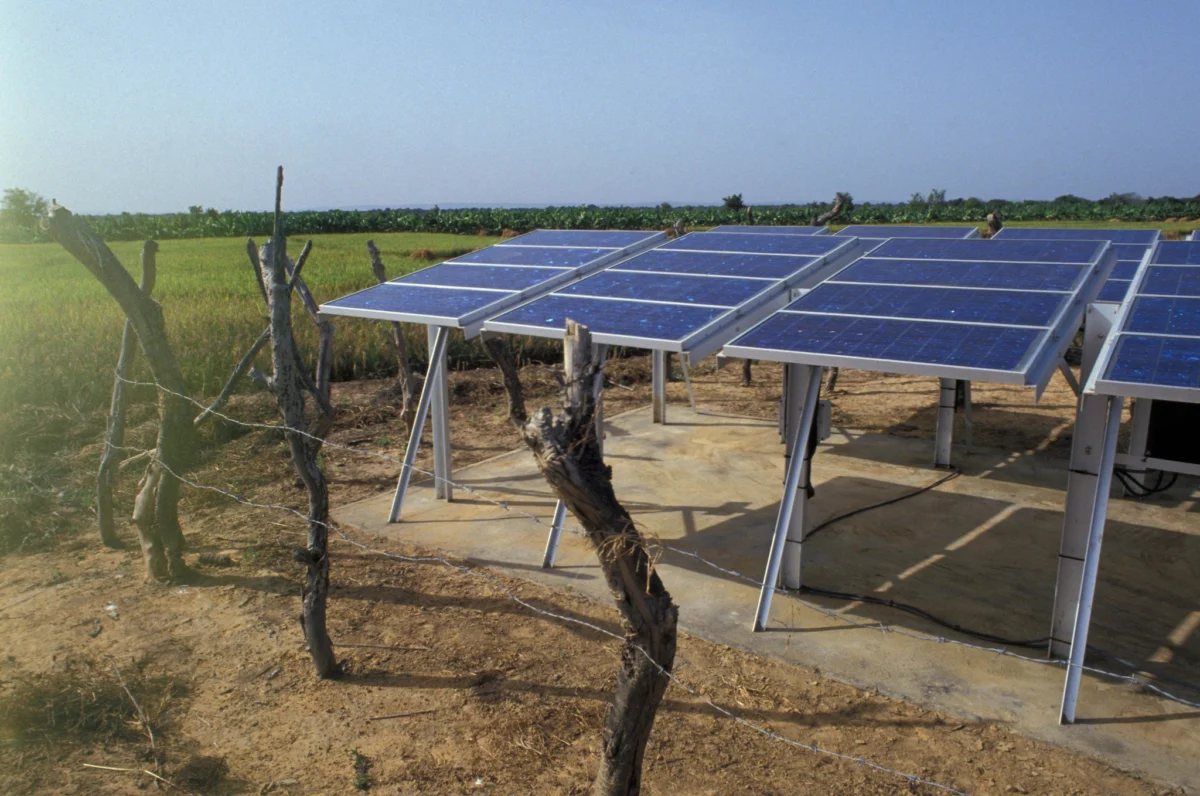
Climate change is no longer a distant threat; it is a present reality. Technologies that promote climate adaptation—such as solar-powered irrigation, water-efficient production systems, and low-emission livestock management—must be treated as foundational infrastructure. These are not luxury upgrades; they are essential survival tools for a continent on the front lines of global climate shocks.
5. Governance, Accountability, and Finance
Finally, the "money-to-impact" pipeline must be fortified. With a US$77 billion annual funding gap, the continent needs more than just capital; it needs transparent governance and harmonized regulatory frameworks. By creating a unified market, Africa can attract the institutional private capital necessary to scale innovation. Accountability mechanisms must ensure that these investments actually reach the farmers at the grassroots level, keeping them at the center of the transformation.
Implications: The Great Redesign
The implications of failing to scale these technologies are stark: continued reliance on food imports, persistent rural poverty, and vulnerability to global supply chain shocks. Conversely, the successful implementation of a tech-driven agricultural agenda offers a pathway to unprecedented prosperity.
Africa’s unique combination of vast arable land, a youthful, tech-savvy workforce, and a rapidly urbanizing consumer base creates the perfect environment for a "green-digital" hybrid revolution. The continent is essentially in a position to leapfrog traditional stages of agricultural development. By skipping the heavy-industrial model and moving straight to data-driven, climate-smart agriculture, Africa can position itself as a global leader in food security.
Conclusion: From Pilot to Scale
The era of experimentation at the margins is coming to an end. Africa’s technological transformation is already happening, but it is currently too fragmented to move the needle on poverty and hunger. The transition from "potential" to "powerhouse" requires a fundamental redesign of how the continent approaches development.
It requires moving beyond the excitement of new apps and gadgets toward a more rigorous, systemic approach: the creation of a supportive political economy that prioritizes scale, equity, and resilience. As the continent approaches 2050, the question is not whether Africa has the tools to feed itself, but whether it has the political and institutional will to weave those tools into a coherent, continent-wide fabric of progress. The technology is here; the infrastructure is being built. The next decade will define whether Africa realizes its dream of becoming the world’s breadbasket, or remains a continent of untapped, albeit digitized, potential.


 Ammar Sabilarrohman
 Lina Irawan