
 Asro
In the hyper-connected era of the 21st century, the morning hours have become a battlefield for human attention. For many, the first interaction with the world is reactive: a barrage of news alerts, urgent emails, and the mounting pressures of other people’s agendas. However, a growing movement of high-performance practitioners is reclaiming the “golden hour” of dawn, shifting the paradigm from passive response to intentional creation. At the heart of this shift is a simple, analog-inspired methodology known as the "Pick 6" habit—a ritual designed to architect the energetic tone of one’s day before the world interferes.
The Core Concept: Designing the Day Energetically
The fundamental premise of this practice is that time is not merely a sequence of tasks to be completed, but a vessel for emotional and energetic states. By spending the early morning—typically around 5:00 a.m.—in a state of stillness, meditation, and reflection, individuals can “design the day” before it begins.
This is not a traditional to-do list. Instead, it is an exercise in emotional governance. By consciously selecting the “vibes” or energies that will define the next sixteen hours, a person creates a psychological framework that guides their decision-making. When we fail to set this tone, we inadvertently outsource the design of our lives to external stimuli—the inbox, the news cycle, and the demands of colleagues—effectively becoming characters in someone else’s narrative rather than the authors of our own.
Chronology of the Ritual: A Morning Blueprint
The practice follows a deliberate, chronological sequence designed to isolate the practitioner from the noise of the external world:
- The Early Window (5:00 a.m.): The ritual begins with physical movement, such as a 30-minute run, followed by a period of silent meditation. This clears the cognitive clutter of the previous day.
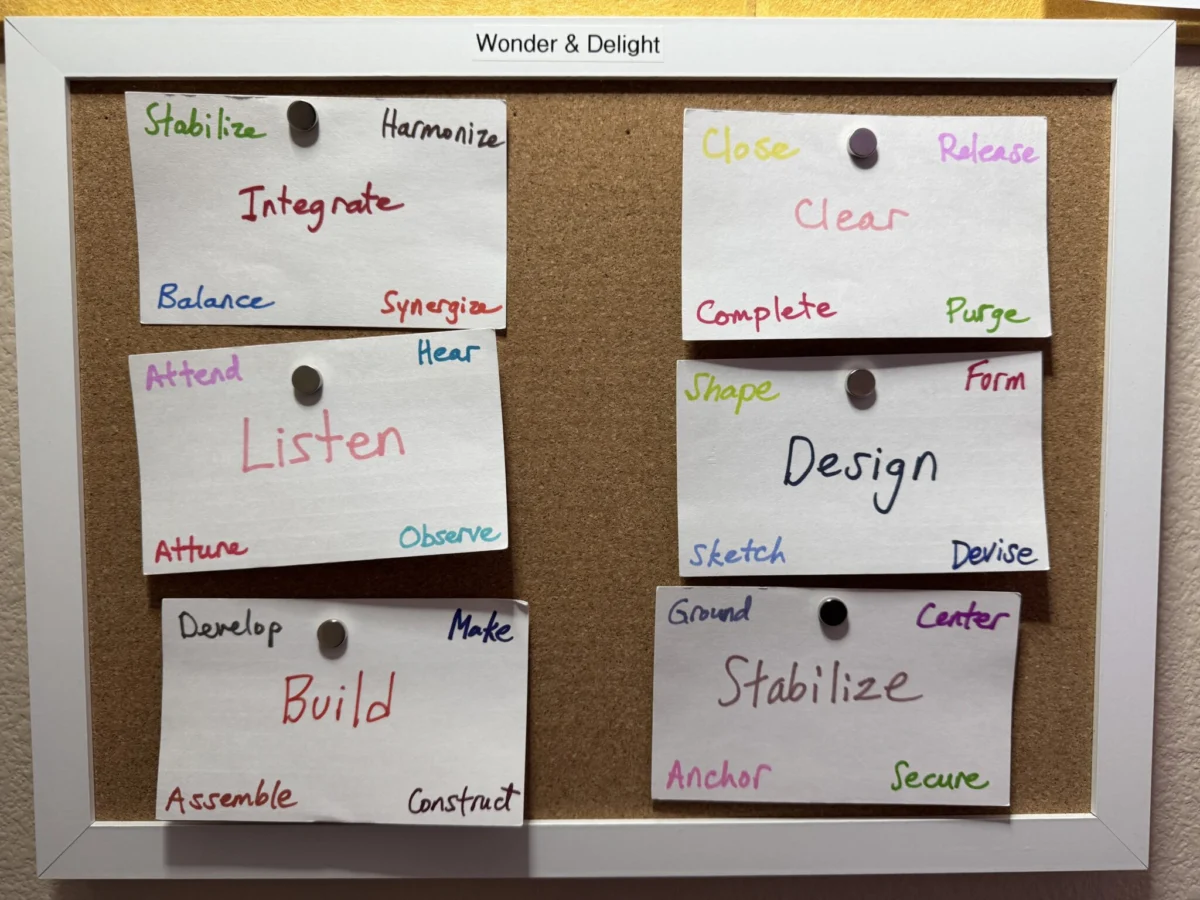
- The Selection Phase: Once the mind is centered, the individual turns to the “Pick 6” ritual. This involves selecting six cards from a curated deck, each representing a specific energy or “vibe.”
- The Placement: The chosen cards are displayed on a physical board in the workspace. The act of pinning them creates a visual anchor for the day’s intended focus.
- Integration: Throughout the day, these words act as a compass. They do not dictate specific tasks, but rather inform the “feeling space” of the day.
Supporting Data: Why "Vibe Design" Works
The science behind this ritual lies in the concept of priming. By explicitly naming the energy we wish to inhabit—such as "Integrate," "Clear," "Listen," or "Frolic"—we bias our brains toward recognizing opportunities that align with those states.
Psychologically, this acts as a filter for the Prefrontal Cortex. When the brain is primed for "Flow" or "Focus," it is more likely to ignore trivial interruptions that would otherwise disrupt a workflow. Conversely, if one starts the day in a state of "reactivity"—checking social media or emails immediately upon waking—the brain is primed for stress and defensive action, which can persist for the remainder of the day.
Furthermore, the practice highlights the power of subtraction. In the initial selection process, a practitioner might identify ten or twelve potential energies, but by whittling that list down to six, they are making a conscious decision about what to exclude. This narrowing of focus is a high-leverage mental exercise that sharpens resolve and eliminates the friction of decision fatigue.
Technological Evolution: From Analog to Digital
While the practice thrives on the tactile sensation of physical index cards, it has recently moved into the digital realm. Recent developments in personal life-navigation software have allowed for the digitization of this ritual. By leveraging artificial intelligence, users can transform their handwritten decks into digital interfaces, complete with emoji-based iconography and mobile accessibility.

Despite the digital convenience, the analog version remains a cornerstone of the practice for many. The physical act of handling cards, moving them across a desk, and physically pinning them to a board provides a sensory grounding that digital interfaces cannot replicate. It creates a "haptic memory" of the intention, linking the abstract concept of a “vibe” to a physical location in the room.
Implications for Personal Sovereignty
The implications of the "Pick 6" methodology extend far beyond personal organization; they speak to the broader issue of agency in the digital age. We live in an economy designed to capture attention. Algorithms are built to keep us in a state of low-grade anxiety, ensuring we remain "online" and "reactive."
By adopting a structured, intentional morning ritual, individuals are effectively building a firewall against the attention economy. The practice has several profound implications:
- Autonomy: It re-establishes the individual as the primary architect of their internal state.
- Focus: It minimizes the "context switching" that plagues modern professionals by providing a consistent theme for the day.
- Resilience: When the day inevitably deviates from the plan, having a pre-set "vibe" (e.g., "Stabilize") allows for a more graceful recovery than a rigid task-based schedule would permit.
- Creative Engagement: By choosing energies like "Ignite" or "Explore," the practitioner invites creative serendipity into their workflow, moving away from a purely transactional relationship with their labor.
Expert Perspectives on Intentionality
Behavioral scientists have long noted that "micro-rituals" play a significant role in long-term habit formation. The "Pick 6" ritual serves as a bridge between high-level goal setting and daily execution. It operates in the "messy middle"—the gap between long-term vision and the immediate, sometimes chaotic reality of daily life.
By treating the day as something to be "composed" rather than "survived," practitioners shift their nervous systems from the sympathetic (fight-or-flight) to the parasympathetic (rest-and-digest). This shift is critical for sustained cognitive performance. When the body feels safe and the intent is clear, the brain is capable of deeper, more complex analytical work.
Implementing the Practice: A Guide for the Uninitiated
For those looking to adopt this practice, the entry barrier is remarkably low. The requirement is not expensive software or a life-coach, but a handful of index cards and a set of markers.
- Preparation: Dedicate a quiet evening to writing down 15–20 words that describe the types of energy you find most productive or fulfilling. Examples include Savor, Ignite, Immerse, Explore, Stabilize, and Clear.
- The Morning Routine: Before touching your phone or checking your email, take three to five minutes to review your deck.
- The Selection: Select six cards. Do not overthink the choice. Trust your intuition; the words that "jump out" are usually the ones your system needs most that day.
- The Reflection: At the end of the day, assess how those six words influenced your mood and output. Did you feel more grounded? Was it easier to ignore distractions?
Conclusion: The Architecture of Tomorrow
The "Pick 6" ritual is a testament to the fact that the most effective tools for productivity are often the simplest. In an age of complexity, the ability to define one’s own mental environment is a superpower.
By choosing to set the tone of our days, we move from being victims of circumstance to masters of our own energetic landscape. The day will take a shape regardless of our efforts; it is far better to ensure that the shape is one we have consciously selected. As the practice continues to gain traction, it serves as a necessary reminder that while we cannot always control the events of our day, we have absolute jurisdiction over the energy we bring to them. In the quiet hours of the morning, we are not just preparing for work—we are building the foundation of the life we intend to lead.


 Azzam Bilal Chamdy