


 Siti Muinah
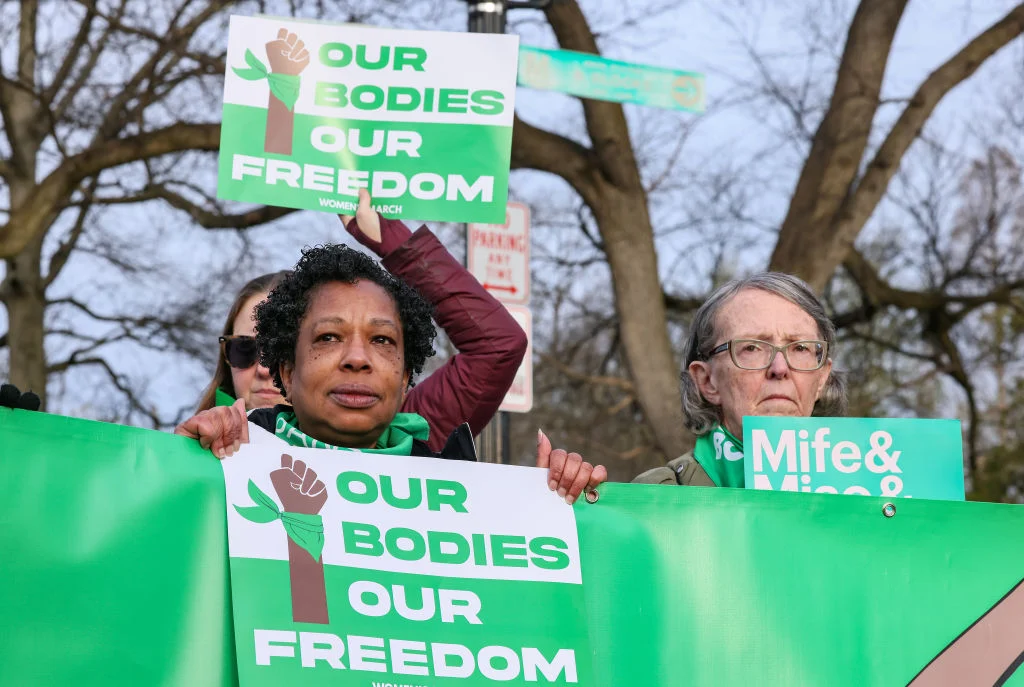
For millions of Americans, the landscape of reproductive healthcare is often viewed through the lens of political debate. However, for survivors of intimate partner violence (IPV), the accessibility of medical care is not merely a matter of policy—it is a matter of physical safety, autonomy, and survival. As the legal battle over mifepristone intensifies in the 5th U.S. Circuit Court of Appeals, a critical, often overlooked constituency remains at the center of the storm: women whose lives are already constrained by the coercive control of an abusive partner.
The Legal Crucible: Louisiana v. FDA
On September 9, the 5th U.S. Circuit Court of Appeals heard oral arguments in Louisiana v. FDA, a high-stakes legal challenge that threatens to dismantle the FDA’s long-standing approval of mifepristone, one of the two medications used in a standard medication abortion. At the heart of the case is the FDA’s decision to allow the drug to be prescribed via telehealth and dispensed through certified pharmacies, including by mail.
The legal assault on these protocols seeks to force a return to restrictive, in-person dispensing requirements that were largely dismantled during the COVID-19 pandemic. Earlier this year, the 5th Circuit briefly ruled in favor of these restrictions, effectively stalling telehealth access. While the Supreme Court intervened to put that decision on hold pending further litigation, the threat to national access remains acute. The case is widely expected to return to the Supreme Court, potentially setting a precedent that would undermine the FDA’s regulatory authority and create a patchwork of access that disproportionately punishes the most vulnerable.
A Chronology of Control: From FDA Approval to Current Litigation
The history of mifepristone in the United States is one of rigorous scientific validation followed by persistent political obstruction. Since its initial FDA approval in 2000, mifepristone has been used by more than 7.5 million people. Over more than two decades, the medication has been subjected to extensive clinical review, consistently proving to be remarkably safe—statistically safer, in fact, than common over-the-counter medications like Tylenol or Viagra.
However, the political climate surrounding the drug shifted dramatically following the overturning of Roe v. Wade in 2022.
- 2000: The FDA approves mifepristone for medical termination of pregnancy up to seven weeks (later expanded to ten).
- 2021: In response to the pandemic, the FDA permanently removes the in-person dispensing requirement, allowing for telemedicine consultations and mail-order pharmacy delivery.
- 2023: A lawsuit filed in Texas challenges the FDA’s approval of the drug, leading to a series of conflicting rulings.
- 2024: The 5th Circuit Court of Appeals reviews the Louisiana v. FDA challenge, which specifically targets the telehealth and mail-order components of current access.
- Present: The matter remains in legal limbo, with the Supreme Court acting as the final arbiter of whether the FDA can maintain its evidence-based protocols or must bow to judicial mandates that ignore scientific consensus.
The Reality of Coercive Control
To understand why the restriction of telehealth abortion is a humanitarian issue, one must first grasp the mechanics of intimate partner violence. Abuse is rarely confined to physical violence alone; it is fundamentally about the systematic erosion of a victim’s autonomy.
Abusers frequently employ "reproductive coercion," a specific form of abuse where the partner attempts to control the victim’s fertility. This can manifest as the sabotage of birth control, forced pregnancy, or the prevention of access to abortion services. By controlling a survivor’s finances, transportation, and communication, an abuser creates a closed loop where the victim’s world is entirely defined by the perpetrator.
For a survivor living under these conditions, the requirement to visit a brick-and-mortar clinic is not a minor inconvenience—it is a significant security risk. An in-person appointment requires explaining one’s absence, securing transportation (often monitored by the abuser), and navigating a public space where the survivor may be spotted. If an abuser tracks a partner’s movements or monitors their phone, the necessity of a physical clinic visit becomes a barrier that is often insurmountable.
Supporting Data: The Scope of the Crisis
The scale of the intersection between reproductive health and domestic violence is staggering. According to data from the National Domestic Violence Hotline, nearly 60 million women in the United States have reported experiencing physical, sexual, or stalking-related violence by an intimate partner in their lifetime.
Within this population, the prevalence of reproductive control is alarming:
- 23 percent of women seeking assistance from the hotline reported that a partner had pressured them to become pregnant against their will.
- 20 percent of the same cohort reported that a partner had actively prevented them from using birth control or other reproductive health services.
Furthermore, public health research underscores the lethality of these dynamics. Homicide is a leading cause of death for pregnant women in the United States. When an abuser’s control over a partner’s reproduction is challenged, the risk of escalating violence—including domestic homicide—rises significantly. By restricting access to discreet, telehealth-based healthcare, the legal system risks stripping away a critical safety valve for those trapped in dangerous homes.
Implications: The Intersection of Law and Safety
The arguments presented by the state of Louisiana in Louisiana v. FDA rely on the premise that restricting telehealth access protects patient health. However, this argument is framed in opposition to the overwhelming consensus of the medical community. Major organizations, including the American Medical Association (AMA) and the American College of Obstetricians and Gynecologists (ACOG), have consistently stated that mifepristone is safe and that telehealth access is a standard, evidence-based practice.
The Role of Amicus Briefs
The potential harm of these restrictions has not gone unnoticed by advocacy groups. Legal Voice, the National Network to End Domestic Violence (NNEDV), and the Center for Survivor Agency and Justice have filed an amicus brief in the case. Their argument is clear: the government’s desire to regulate the distribution of mifepristone is effectively acting in tandem with the tactics of abusers. By removing the option for private, remote care, the state is essentially acting as an extension of the abuser’s surveillance apparatus.
The "Sham Review" Concern
The FDA is currently conducting a review of mifepristone—a process that critics label a "sham" given that the drug’s safety profile is already well-established. The irony is palpable: while the state claims to be acting in the interest of public safety, its policies are systematically dismantling the very tools that allow survivors to seek care away from the watchful eyes of their oppressors.
Towards Agency and Autonomy
For a survivor, the ability to access mifepristone through a telehealth consultation offers more than just medical care; it offers a sliver of agency. It allows them to manage their reproductive health on their own terms, at a time and place of their choosing, without the need to involve an abusive partner in the logistics of their healthcare.
The principle at stake is simple: the decision to carry a pregnancy to term, or to end it, belongs to the patient. When the state mandates that a patient must physically present themselves at a clinic, it is not prioritizing health—it is prioritizing a specific, restrictive version of medical delivery that ignores the realities of domestic abuse.
Conclusion: A Call for Evidence-Based Policy
As the legal battle continues, the impact of these restrictions will be felt most acutely by those who have the least power to fight back. If the courts ultimately rule to restrict telehealth and mail-order access to mifepristone, they will be effectively closing a door that many survivors rely on for their independence and, in some cases, their physical safety.
The "Majority" of Americans who support reproductive freedom recognize that these decisions are deeply personal and essential to the health of our society. It is time for the judicial system to recognize that, too. Protecting access to mifepristone is not just a matter of upholding the FDA’s authority; it is a commitment to the safety of those who are most vulnerable to the reach of domestic abuse. In a nation that claims to value liberty, the right to make one’s own medical decisions in private—free from the coercive control of both partners and the state—must be preserved.


 Nana

 Lina Hope