


 Iffa Jayyana
For millions of students, the school hallway is a space of transition—a brief moment between lessons to gather thoughts or socialize with peers. However, for Fatimah Fair, a student activist and co-author of the seminal report Dress Coded: Black Girls, Bodies, and Bias in D.C. Schools, the hallway became a site of confrontation. Stopped by an administrator, Fair was subjected to a scrutinizing gaze that traveled from the top of her head to her feet, culminating in a reprimand regarding the length of her shorts. The administrator’s directive—that she should never wear those shorts again—left Fair feeling not only embarrassed but deeply alienated.
This experience is far from an isolated incident. It is a symptom of a systemic culture that disproportionately targets Black girls, policing their appearance and behavior through arbitrary dress codes and disciplinary practices. As the landscape of educational policy shifts, this systemic bias is being further entrenched, sparking a nationwide movement of students and advocates demanding an end to the criminalization of Black girlhood.
The Intersection of Dress Codes and Racial Bias
The practice of "dress coding" has long been defended by school administrators as a way to maintain decorum and focus. However, data and personal narratives suggest a darker reality: dress codes are frequently weaponized to target students of color.
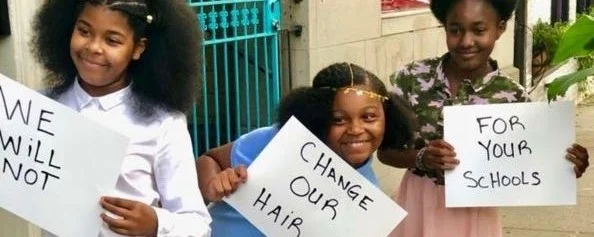
In the District of Columbia and across the United States, Black girls are disciplined for dress code violations at rates that vastly outpace their white peers. These policies often rely on vague, subjective standards—such as "modesty" or "professionalism"—which are frequently interpreted through the lens of racialized stereotypes. When a Black girl is sent to the principal’s office for wearing a tank top or having her hair in a particular style, she is not just being disciplined for a rule infraction; she is being told that her body is inherently inappropriate or disruptive.
This hyper-surveillance of Black female bodies is deeply rooted in the adultification of Black girls. Society often sexualizes the physical development of young Black women, leading educators to claim they are "protecting" these students by removing them from the classroom. In reality, this "protection" manifests as exclusionary discipline, stripping students of their right to an education under the guise of maintaining order.
A Chronology of Advocacy and Policy Reversal
The battle over school discipline in America reached a flashpoint during the Obama administration. In 2016, the U.S. Department of Education issued the "Rethink Discipline" guidance. This landmark document was designed to address the racial disparities in school discipline, urging districts to abandon "zero-tolerance" policies that were fueling the school-to-prison pipeline. It provided a framework for restorative justice and discouraged the suspension of students for minor, non-violent infractions.
The Turning Point: 2018
In early 2018, the climate shifted dramatically. Under the leadership of Secretary of Education Betsy DeVos, the Department of Education announced the revocation of the "Rethink Discipline" guidance. This decision sent a shockwave through the educational community. While the department claimed it was returning power to local districts, critics argued that it effectively greenlit discriminatory practices by signaling that the federal government would no longer prioritize the civil rights of students of color.
For activists like Fatimah Fair, the reversal felt like a personal betrayal. Having met with Department of Education officials to present Dress Coded—a report detailing the lived experiences of Black girls in D.C. schools—Fair had been optimistic. She had asked officials to commit to preserving the guidance. Despite their acknowledgment that disproportionate discipline was a systemic issue, the department proceeded with the revocation, demonstrating a clear disregard for the voices of those most impacted by these policies.
Supporting Data: The Disparity in Discipline
The numbers behind these anecdotes are stark and undeniable. Nationally, Black girls are six times more likely to be suspended than their white peers. In the District of Columbia, that figure is even more alarming, with Black girls facing suspension at rates up to 20 times higher than their white counterparts.
These disparities are not reflective of higher rates of misbehavior or disruption. Instead, they point to a systemic bias in how "misbehavior" is defined and punished. Black girls are frequently penalized for "talking back" or "being loud"—subjective behaviors that are often coded as defiance when performed by Black students, but viewed as "leadership" or "spirit" when performed by white peers.
Furthermore, research indicates that Black girls are often punished for having been victims of sexual harassment or violence. Rather than receiving support or trauma-informed care, these students are labeled as "promiscuous" or "troublemakers," further marginalizing them and exacerbating the trauma they have already endured.
Official Responses and the Push for Accountability
The Department of Education’s decision to revoke the "Rethink Discipline" guidance was met with intense criticism from civil rights organizations, educators, and parent groups. The official rationale provided by the Department—that the federal government should not overreach into local school policy—was viewed by many as a abdication of the Department’s core mission to protect all students from discrimination.
In the vacuum left by federal retreat, the onus has fallen on local communities to act. While the federal guidance was a vital tool for legal and policy advocacy, its absence does not absolve school districts of their responsibility to uphold the equal protection rights of their students. Advocacy groups, including the National Women’s Law Center, have shifted their focus to state and district-level policy, emphasizing that "Rethink Discipline" remains a standard that schools should follow, regardless of federal endorsement.
Implications: The Rise of Student Activism
The most significant consequence of these discriminatory policies has been the galvanization of a new generation of student activists. Across the country, students are no longer waiting for permission from the top down to change the culture of their schools.
Fatimah Fair’s own journey at her D.C. high school serves as a blueprint for this change. When faced with an oppressive dress code, she and her classmates did not simply accept the status quo. They drafted an alternative policy, held meetings with administration, and, when their concerns were dismissed, organized protests to make their voices heard. Their efforts were successful: the school eventually adopted a new, equitable dress code that removed the gendered and racialized language that had previously targeted Black girls.
This movement is not confined to the District of Columbia. A coalition of over 200 students from 14 states has emerged, demanding that schools abandon the "school-to-prison pipeline" and recognize that all students—regardless of race or gender—deserve to learn in an environment free from discrimination and stereotype.
Conclusion: A Future Free from Bias
The policing of Black girls in schools is a fundamental barrier to educational equity. When a student is removed from the classroom for a dress code violation, they lose more than just time; they lose the message that they belong in the academic space. They are pushed out, their academic potential undermined by the weight of systemic bias.
As the fight continues, the success stories of student-led initiatives offer a beacon of hope. From the hallways of D.C. to classrooms in California, Texas, and New York, the message is clear: students are watching, they are organizing, and they are holding their institutions accountable. If the federal government refuses to champion the cause of inclusive, safe learning environments, the students themselves will continue to step into the gap.
The path forward requires a fundamental shift in how educators view their students. It requires moving away from punitive, exclusionary measures and toward restorative, inclusive practices. It demands that we stop asking, "How can we control these students?" and start asking, "How can we ensure these students feel valued, safe, and empowered?" Until that shift occurs, the struggle for true educational justice will remain one of the most urgent civil rights battles of our time.

 Nana
 Lina Hope