


 Neng Nana
By Science Editorial Staff
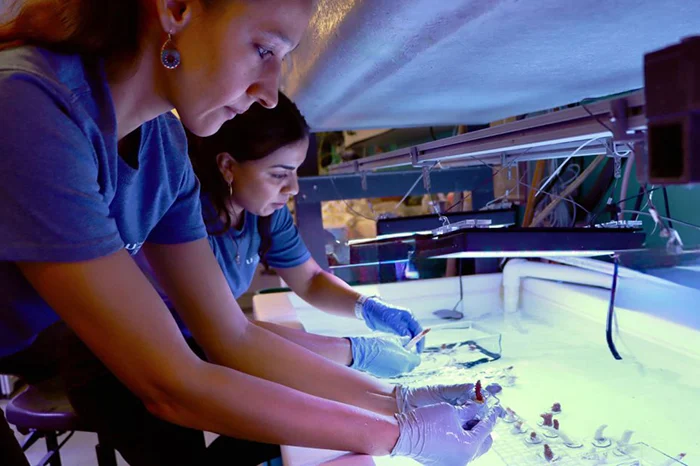
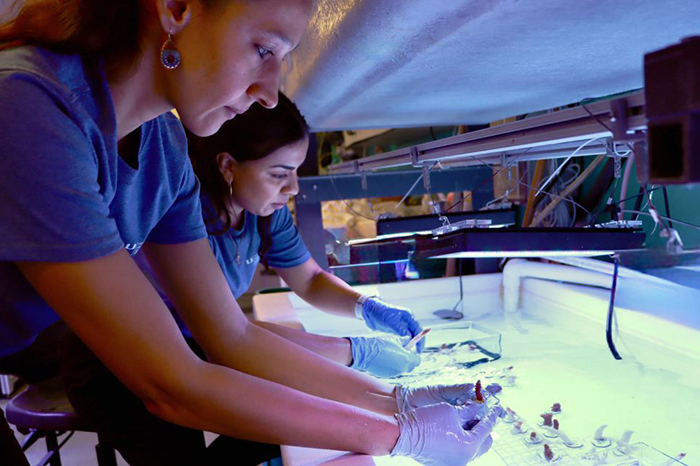
In the quiet, climate-controlled chambers of the Experimental Reef Lab, a critical investigation into the survival of one of the ocean’s most vital architects is underway. Scientists from NOAA’s Atlantic Oceanographic and Meteorological Laboratory (AOML) and the University of Miami’s Cooperative Institute for Marine and Atmospheric Sciences (CIMAS) have unveiled findings that complicate our understanding of coral resilience.
The study, which focused on the endangered Staghorn coral (Acropora cervicornis), indicates that while individual coral genotypes may possess the biological fortitude to withstand either nutrient pollution or disease in isolation, their defenses crumble when these stressors strike in tandem. This discovery serves as a sobering reminder that the compounding effects of human-induced environmental changes are far more lethal than the sum of their parts.
The Main Facts: A Tipping Point for Staghorn Coral
The Acropora cervicornis, commonly known as Staghorn coral, was once the primary reef-building species throughout the Caribbean and the Florida Keys. Its complex, branching structure provided essential habitat for countless species of reef fish and invertebrates. However, due to a combination of bleaching, disease, and habitat degradation, the species has suffered catastrophic declines, leading to its listing under the U.S. Endangered Species Act.
The core finding of the new study is a phenomenon known as "synergistic stress." By observing ten distinct genotypes—the genetic variations within the species—researchers identified that specific corals displayed a remarkable ability to process elevated nitrogen levels (specifically ammonium) without significant physiological decay. Similarly, some genotypes showed innate resistance to common pathogens.
However, the experiment revealed a "tipping point." When corals were subjected to both elevated nutrient runoff—often caused by agricultural fertilizers and wastewater—and pathogen exposure, the metabolic cost of maintaining homeostasis became insurmountable. The corals’ internal defense mechanisms, exhausted by the effort to process excess nutrients, were left defenseless against secondary infections. This suggests that as coastal waters become increasingly polluted, the entire population of Acropora cervicornis is being pushed closer to an ecological cliff.
Chronology of the Research
The path to these findings was paved by months of rigorous preparation and a collaborative effort between multiple scientific institutions.
Phase 1: Procurement and Acclimatization
The study began with the selection of ten unique genotypes of Acropora cervicornis. These specimens were not plucked from the wild at random; they were sourced from three established coral nurseries: the Florida Fish and Wildlife Conservation Commission (FWC), the Coral Restoration Foundation (CRF), and the University of Miami. By using nursery-grown corals, researchers ensured that the specimens were healthy and genetically diverse, providing a representative cross-section of the species’ current standing.
Phase 2: Experimental Design
Once transported to the Experimental Reef Lab, the corals were distributed across independently controlled tanks. The team established a control group, kept in pristine, seawater-appropriate conditions to serve as a baseline. The experimental group was subjected to a sustained regimen of elevated ammonium levels for a duration of six weeks. This timeframe was specifically chosen to simulate the chronic nature of nutrient runoff in coastal ecosystems.
Phase 3: The Monitoring Period
Throughout the six-week exposure, researchers employed high-frequency monitoring. They analyzed the physiological markers of the corals, measuring their growth rates, photosynthetic efficiency of their symbiotic algae (zooxanthellae), and their visible health markers. The final weeks of the study involved testing how these "nutrient-primed" corals responded to biological stressors, revealing the catastrophic collapse of their immune systems under combined pressure.
Supporting Data: The Science of Stress
The data gathered in the lab offers a granular look at the metabolic tax exacted by poor water quality.
Nitrogen Dynamics
The researchers utilized ammonium concentrations that mimicked two distinct environments: the typical nitrogen levels found in healthy reef ecosystems and the "excessive" levels observed in areas suffering from urban and agricultural runoff. The study found that while some genotypes maintained stable growth under elevated nitrogen, they were essentially "operating at a deficit."
Genotypic Variability
One of the most promising aspects of the research is the discovery of variable resilience. Not all genotypes reacted the same way. Some exhibited higher nitrogen tolerance, while others showed a greater resistance to disease. This variability is the "holy grail" of current coral restoration efforts. If scientists can identify the genotypes that are resilient to both stressors, they can prioritize these specific corals for propagation in nurseries, potentially creating a more robust reef population that is better equipped for the changing climate.
Metabolic Exhaustion
The data showed that when nitrogen levels are high, the coral’s symbiotic relationship with its algae shifts. The algae, which usually provide the coral with essential sugars, begin to compete for resources or behave differently due to the excess nitrogen. This creates a state of physiological stress that leaves the coral’s tissues weakened, making it significantly easier for pathogens to colonize the coral skeleton and cause tissue necrosis.
Official Responses and Scientific Perspective
The implications of this study have rippled through the marine biology community. Dr. [Name of Lead Scientist/Official], speaking on behalf of the AOML/CIMAS team, emphasized the importance of local water management.
"We often focus on global climate change, such as ocean warming, as the primary threat to coral reefs," the spokesperson noted. "While that is undoubtedly true, this study highlights that local-scale pollution—specifically nutrient runoff—is a significant, manageable factor that directly dictates whether a coral can survive a disease outbreak. By cleaning up our water, we are not just fixing a pollution problem; we are actively boosting the immune systems of these endangered species."
The partnership between the FWC, the Coral Restoration Foundation, and the University of Miami underscores a shift in conservation strategy. Rather than simply trying to "plant" more coral, the focus is now on "strategic outplanting"—placing corals that have been tested and proven to handle specific local stressors in the areas where they are most likely to thrive.
Implications: The Path Toward Resilience
The findings of this study offer both a warning and a roadmap for the future of reef restoration.
1. The Necessity of Integrated Water Management
The most immediate implication is for coastal management. The study proves that nitrogen pollution is a "force multiplier" for disease. Efforts to restrict fertilizer runoff and improve wastewater treatment are now objectively confirmed as vital components of coral conservation. Without improved water quality, restoration efforts are likely to fail, regardless of how many thousands of corals are planted.
2. A New Era of "Climate-Ready" Breeding
The existence of resilient genotypes suggests that the species is not doomed. By selectively breeding and outplanting genotypes that have demonstrated higher tolerance to the combination of nutrient and pathogen stress, conservationists can "engineer" a more resilient reef population. This approach moves away from simple preservation and toward active adaptation.
3. Broadening the Scope of Research
While the study focused on Acropora cervicornis, the biological mechanisms observed are likely applicable to other reef-building corals. The researchers anticipate that similar studies will be conducted on other species, such as the critically endangered Acropora palmata (Elkhorn coral). The goal is to create a "resilience map" of the Florida Reef Tract, identifying which areas are best suited for different types of corals based on current water quality and disease prevalence.
4. Public Awareness and Policy
Finally, the study serves as a powerful tool for public policy. When the link between backyard fertilizer use or city sewage treatment and the survival of a beautiful, endangered coral is made clear through empirical data, it becomes harder for policymakers to ignore the necessity of environmental regulation.
As the world continues to grapple with the broad, existential threat of rising sea temperatures, this study reminds us that the battle for the oceans is also fought in the small, controlled tanks of our laboratories—and the runoff pipes of our coastal cities. The survival of the Staghorn coral will depend on our ability to manage the environment on both scales: the microscopic and the systemic.
Through continued research and a renewed commitment to clean water, there remains a path forward for the reefs that guard our coastlines and support our marine biodiversity. The data is clear: the corals are ready to fight, provided we give them the clean, stable environment they need to defend themselves.

 Sagoh

 Basiran