

 Reynand Wu
BALTIMORE, MD – In the heart of "Charm City," a quiet revolution is taking place—one measured not in new developments or high-tech startups, but in the curated racks of vintage boutiques and the sprawling aisles of architectural salvage warehouses. As Baltimore grapples with a looming waste management crisis and the environmental toll of "fast fashion," the city’s secondhand economy has emerged as a critical pillar of local sustainability and social equity.
Main Facts: The Rise of the Circular Economy in Charm City
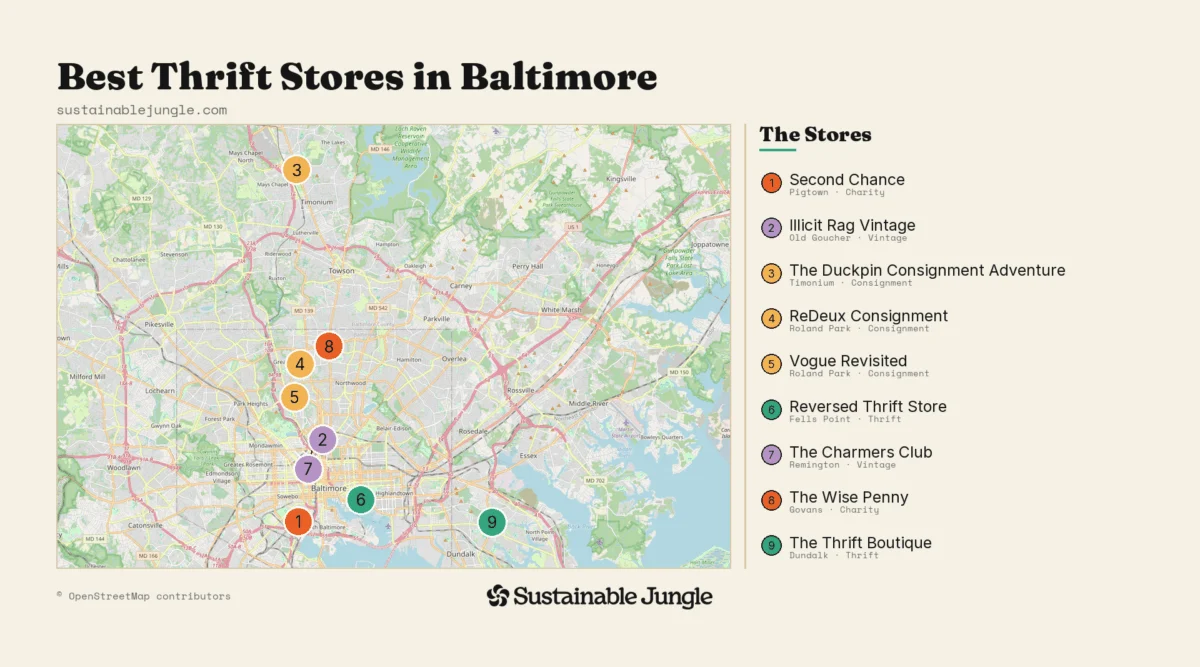
Baltimore’s thrift and consignment landscape has evolved far beyond traditional "junk shops." Today, it represents a sophisticated "circular economy" that serves diverse demographics—from budget-conscious students in Remington to luxury seekers in Roland Park. This sector is anchored by unique institutions like Second Chance, a 400,000-square-foot facility that combines retail with workforce development, and a cluster of high-end consignment stores that challenge the dominance of primary retail.
The growth of this sector is driven by three primary factors:

- Environmental Urgency: With the city’s primary landfill projected to reach capacity by 2028, diverting textiles and furniture from the waste stream has become a municipal necessity.
- Economic Accessibility: In an era of high inflation, thrift stores like Reversed and The Wise Penny provide essential goods at price points ranging from $1 to $5.
- Cultural Shift: A growing preference for "slow fashion" and unique, vintage aesthetics has turned thrifting into a lifestyle choice for younger Baltimoreans.
According to sustainability experts, including Joy McConnochie, co-founder of Sustainable Jungle, the shift toward secondhand is more than a trend. "Thrifting in Baltimore is kind to your wallet, and buying secondhand instead of new helps a city whose landfill is filling up fast," McConnochie notes. "It’s an easy way to avoid fast fashion and make a tangible impact."
Chronology: From Niche Markets to Mainstream Sustainability
The evolution of Baltimore’s thrifting scene follows a distinct timeline that mirrors the city’s broader socioeconomic changes.
The Foundation (Pre-2000s)
For decades, thrifting in Baltimore was dominated by charitable organizations and necessity-based shopping. Establishments like The Wise Penny, operated by the Junior League of Baltimore, established the model of "shopping for a cause," where proceeds funded community projects. During this era, consignment was a niche market, largely confined to affluent neighborhoods where stores like Vogue Revisited began their 20-plus-year tenure.

The Salvage Boom (Early 2000s)
The opening and expansion of Second Chance in the Pigtown neighborhood marked a turning point. By focusing on architectural salvage—deconstructing old buildings rather than demolishing them—the organization introduced the concept of large-scale material reuse to the Baltimore public. This period shifted the focus from just clothing to the entire lifecycle of home goods and building materials.
The Boutique and Digital Era (2015–Present)
The last decade has seen an explosion of curated vintage and luxury consignment. Stores like ReDeux Consignment and Illicit Rag Vintage have leveraged social media (particularly Instagram) to reach a global audience, proving that Baltimore’s secondhand finds have high market value. The recent emergence of "collective" spaces, such as The Charmers Club in Remington, which houses over 50 local makers and curators, represents the latest phase: the professionalization of the "micro-thrifter."
Supporting Data: The Environmental and Economic Stakes
The push for a robust thrift economy is backed by sobering data regarding Baltimore’s waste infrastructure.
The Landfill Crisis
The Baltimore Department of Public Works has sounded the alarm regarding the Quarantine Road Landfill. As of current estimates, the landfill is expected to reach maximum capacity by 2028. Currently, the BRESCO trash incinerator handles approximately 75% of the city’s waste, but the resulting ash must still be buried. By extending the life of clothes, furniture, and appliances, the thrift industry provides a vital "pressure release valve" for the city’s waste stream.
The Textile Problem
On a national scale, the Environmental Protection Agency (EPA) reported that the U.S. generated 17 million tons of textile waste in 2018 alone. Alarmingly, only 14.7% of that waste was recycled. In Baltimore, where "fast fashion" consumption mirrors national trends, the local thrift stores act as a primary defense against these materials entering the incinerator.
Economic Impact and Job Training
The secondhand sector also serves as a specialized labor market. Second Chance, for instance, utilizes its 400,000-square-foot retail footprint to fund hands-on job training for Baltimore residents facing significant barriers to employment. This creates a "double bottom line" of environmental sustainability and social mobility.

Market Leaders: A Survey of Baltimore’s Secondhand Landscape
To understand the health of the local economy, one must look at the diverse business models currently thriving in the city.
1. The Industrial Giant: Second Chance (Pigtown)
Second Chance is a cornerstone of the city’s green efforts. Their model involves the "deconstruction" of homes—carefully taking them apart to save lumber, windows, and fixtures—rather than traditional demolition. Their massive warehouse near the Ravens’ stadium is a destination for regional designers looking for everything from antique organs to modern kitchen appliances.
2. The Luxury Curators: ReDeux and Vogue Revisited (Roland Park)
These institutions prove that "used" does not mean "worn out." By offering Chanel, Gucci, and Louis Vuitton at a fraction of retail prices, these stores keep high-end goods in circulation for decades. They also offer a 50/50 split for consignors, providing a supplemental income stream for local residents.

3. The Youth and Arts Hub: Illicit Rag Vintage and The Charmers Club
Located in the Old Goucher and Remington areas, these shops cater to the city’s creative class. Illicit Rag focuses on bold, upcycled designs, while The Charmers Club functions as an incubator for over 50 small businesses, allowing vintage curators to share overhead costs while reaching a trendy demographic.
4. The Accessibility Leaders: Reversed Thrift (Fells Point)
While luxury consignment serves one end of the market, Reversed Thrift addresses the need for extreme affordability. With "dollar racks" featuring items from $1 to $5, it ensures that the sustainable fashion movement remains inclusive of all income levels.
Official Responses and Sustainability Perspectives
City officials and environmental advocates agree that the expansion of the secondhand market is a net positive for Baltimore’s urban planning.

The City of Baltimore’s "Less Waste, Better Baltimore" master plan emphasizes the need for a transition toward a circular economy. While the city continues to manage the aging BRESCO incinerator, the official stance has increasingly leaned toward "source reduction." By encouraging citizens to shop at places like Second Chance and The Wise Penny, the city effectively reduces the tonnage it must pay to incinerate or bury.
Joy McConnochie, writing for Sustainable Jungle, argues that the cultural heritage of Baltimore is actually preserved through these stores. "When we say ‘nevermore’ to the throwaway habit, we are following in the footsteps of famous Baltimoreans like Edgar Allan Poe—cherishing the history and the stories behind the objects we own," she states.
Implications: The Future of Retail in a Resource-Constrained City
The success of Baltimore’s thrift stores has several long-term implications for the city’s future:

1. Urban Revitalization
Thrift stores often occupy large, older buildings that might otherwise remain vacant. By turning these spaces into high-traffic retail hubs, the secondhand economy contributes to the revitalization of neighborhoods like Pigtown and Old Goucher.
2. Resilience Against Global Supply Chains
As global supply chains become more volatile, local secondhand markets provide a resilient alternative. Baltimore’s ability to "source from its own closets" reduces the carbon footprint associated with shipping new goods from overseas.
3. Redefining "Charm City"
The "charm" in Charm City is increasingly being defined by its unique, non-homogenized retail experience. In a world of identical big-box stores, Baltimore’s vintage and thrift scene offers a distinct identity that attracts tourism and encourages local pride.

4. A Model for Other Cities
Baltimore’s integration of social services (job training) with environmental services (salvage retail) serves as a blueprint for other post-industrial cities facing similar waste management and employment challenges.
In conclusion, the thrift stores of Baltimore are no longer just places to find a bargain. They are essential infrastructure. As the 2028 landfill deadline approaches, the work of curators, salvagers, and "thrifters" will be the difference between a city buried in its own waste and a city that has learned to value its past for the sake of its future. For residents and visitors alike, a trip to a Baltimore thrift store is an act of civic participation—one that keeps the "charm" in Charm City while ensuring its survival for generations to come.


 Jia Lissa
 Suro Senen






