
 Asro
By KFF Election Analysis Desk
Updated: November 4, 2026, 7:00 PM ET
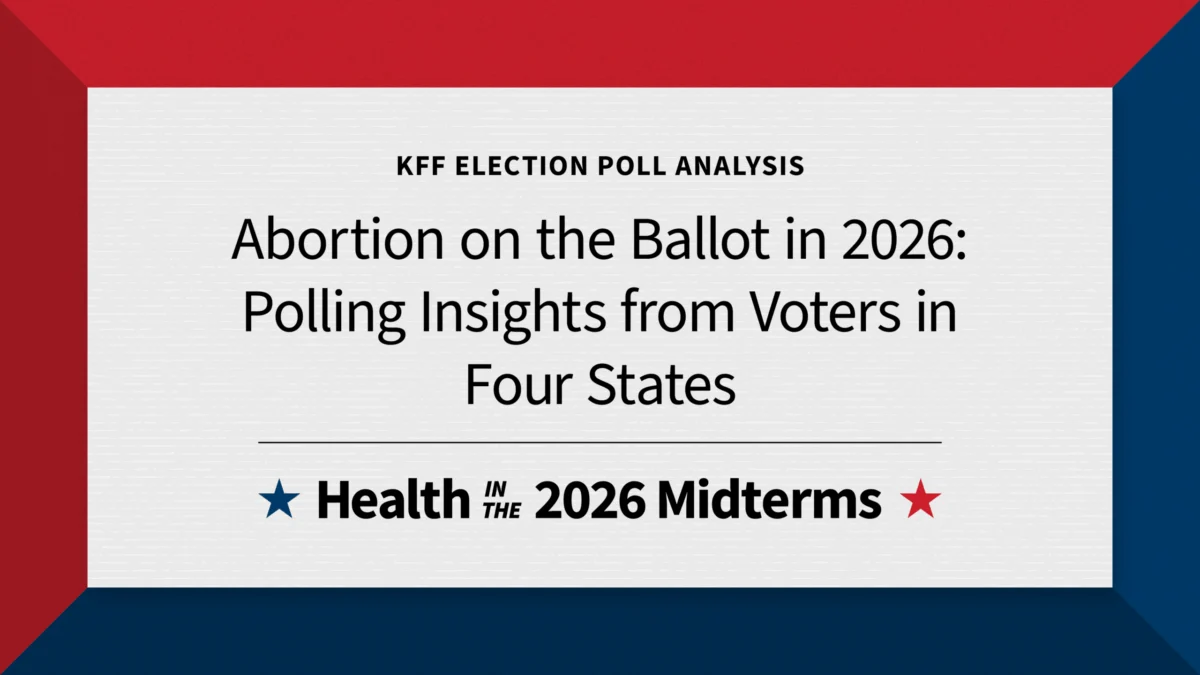
The 2026 midterm elections served as a critical stress test for American democracy, specifically regarding the bodily autonomy of millions. As voters across the United States headed to the polls, four states—Idaho, Missouri, Nevada, and Virginia—placed the issue of abortion directly into the hands of the electorate via high-stakes ballot measures. The results of these votes, analyzed by KFF in collaboration with the NORC Civic Health and Elections Project, offer a definitive look at how reproductive rights are shaping the political landscape in a post-Dobbs era.
Main Facts: A Divided Map of Reproductive Rights
The 2026 electoral map revealed a nation deeply conflicted yet increasingly assertive on reproductive policy. Across the four states under investigation, voters grappled with measures that either sought to enshrine abortion protections into state constitutions or, in the case of Missouri, sought to strip them away.
In Nevada and Virginia, voters decisively opted to protect abortion access, enshrining the right into their respective state constitutions. Conversely, Idaho—a state already operating under some of the most restrictive reproductive health laws in the nation—rejected Proposition 1, a measure that would have expanded access to abortion and reproductive care.
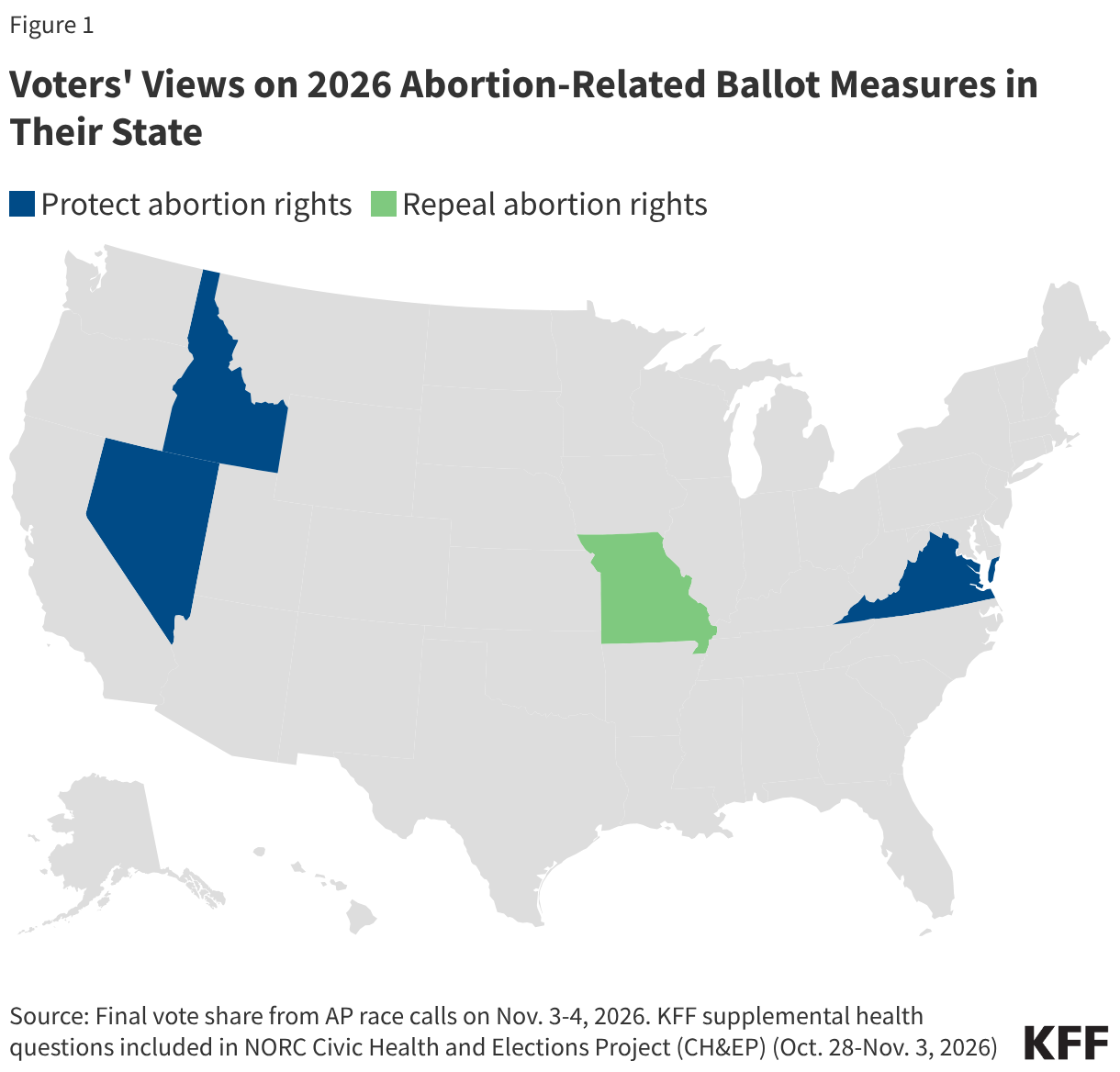
Perhaps the most complex drama unfolded in Missouri. Two years after voters successfully enshrined reproductive freedom into their constitution, the Republican-led legislature placed "Amendment 3" on the ballot. This measure served a dual purpose: it sought to repeal the 2024 abortion protections while simultaneously enacting a constitutional ban on gender-affirming care for minors. Missouri voters, however, rejected this attempt to roll back their previous decision, with 56% voting "no" on the amendment.
Chronology of the 2026 Abortion Ballot Initiatives
The road to the 2026 midterms was marked by a series of legislative and judicial skirmishes that set the stage for these ballot measures:
- 2024: Missouri voters pass a historic constitutional amendment (also titled Amendment 3) protecting reproductive freedom until fetal viability.
- 2024: Nevada voters approve a citizen-initiated constitutional amendment protecting abortion rights, marking the first of two required consecutive approvals.
- Early 2026: Legislatures and citizen groups finalize the language for the 2026 ballot measures, setting up a clash between statehouse efforts to regulate care and grassroots attempts to protect it.
- October 28 – November 3, 2026: The NORC Civic Health and Elections Project conducts a massive survey of 95,000 registered voters, capturing the pulse of the electorate as they weigh these decisions.
- November 4, 2026: Election Day. Voters cast their ballots, solidifying the legal status of abortion in four pivotal states.
Supporting Data: The Voter Impact
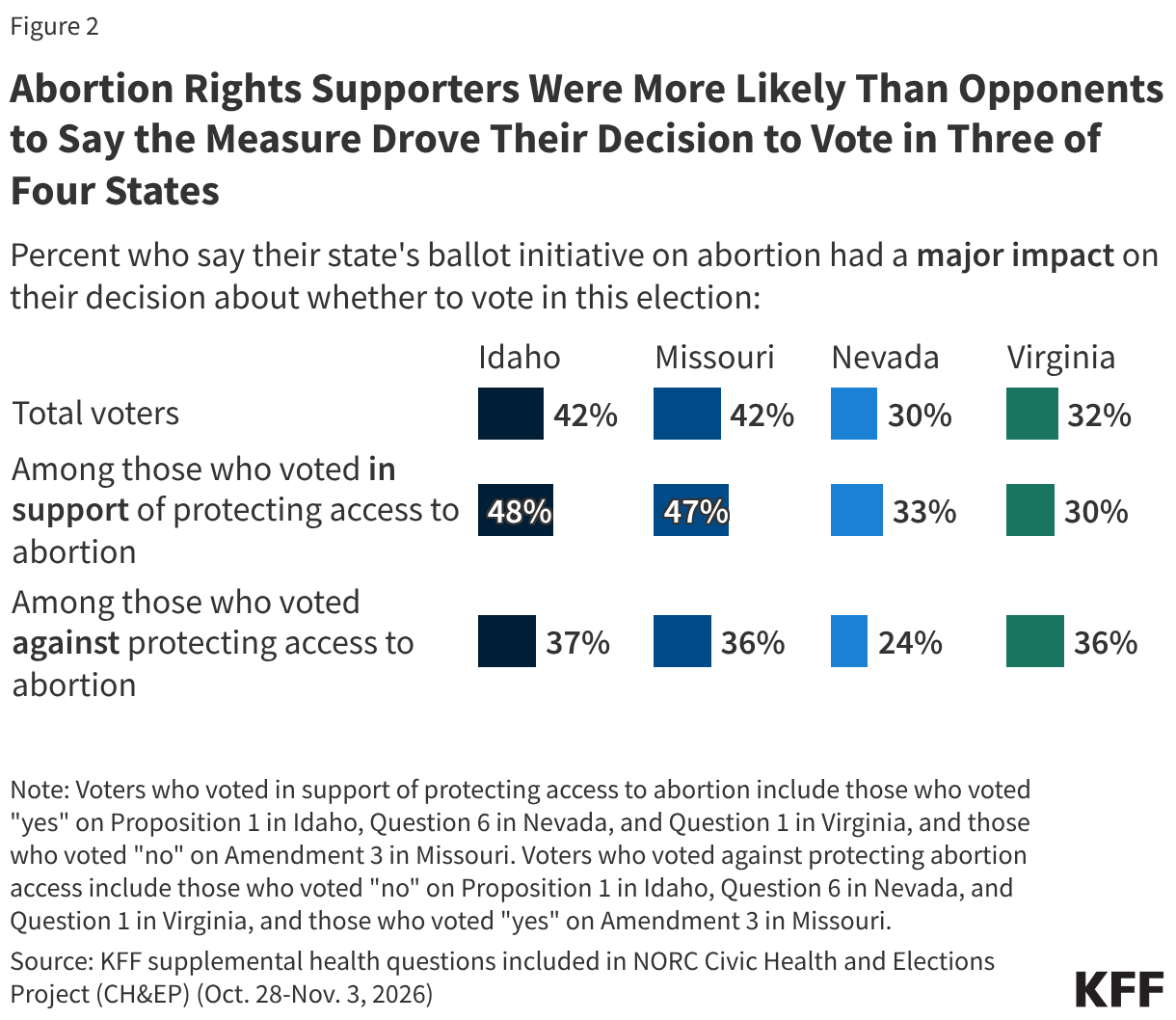
Data collected by KFF and NORC underscores the intense salience of these measures. In all four states, at least three in ten voters cited the abortion-related ballot measure as having a "major impact" on their decision to head to the polls.
The Missouri Case Study: A Nuanced Electorate
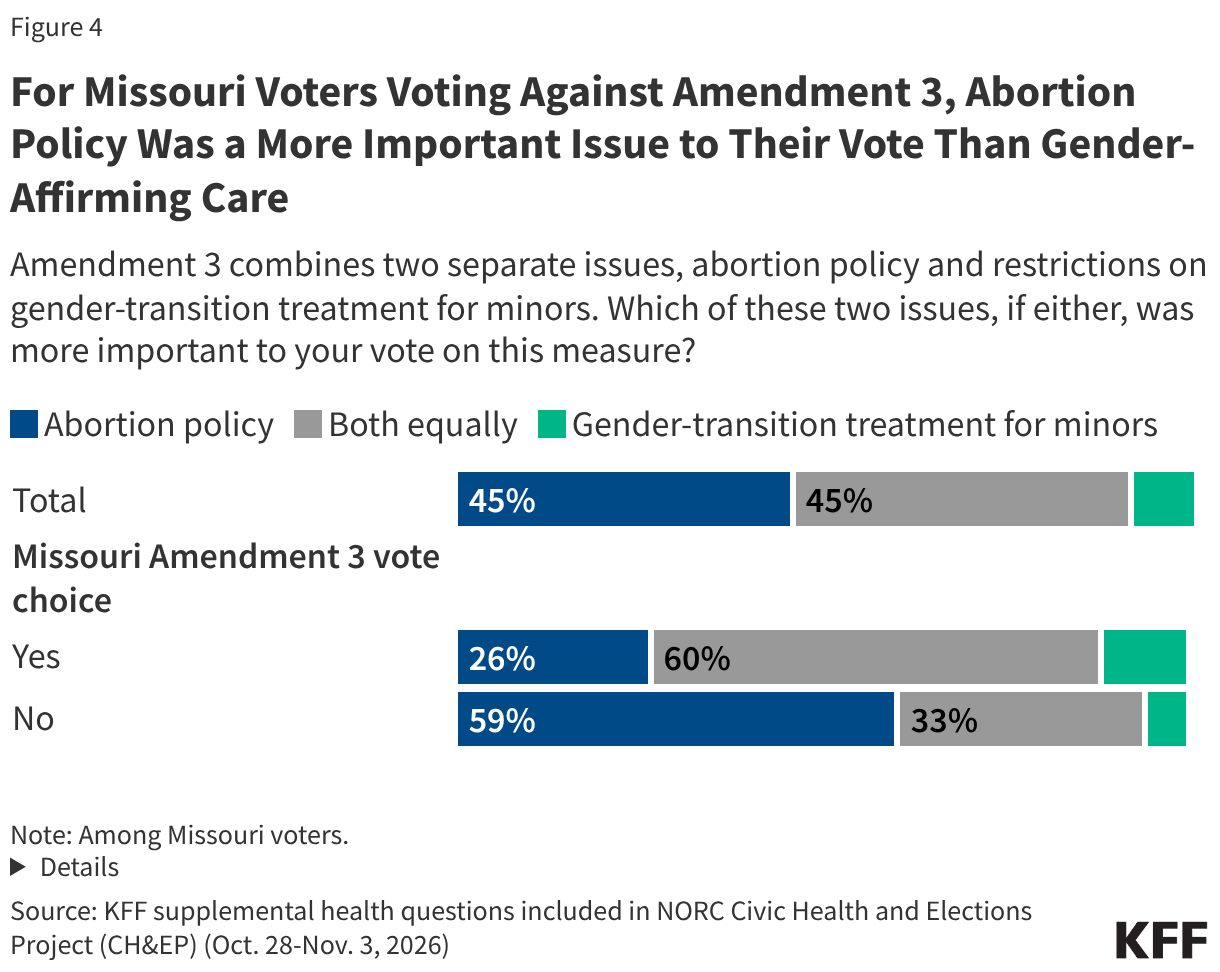
The Missouri ballot measure was unique because it combined two highly sensitive issues: abortion access and gender-affirming care. Analysis shows that for most Missourians, these were not weighed equally. When asked which was more important to their vote, 45% pointed to abortion policy, while only 8% prioritized the restrictions on gender-affirming care.
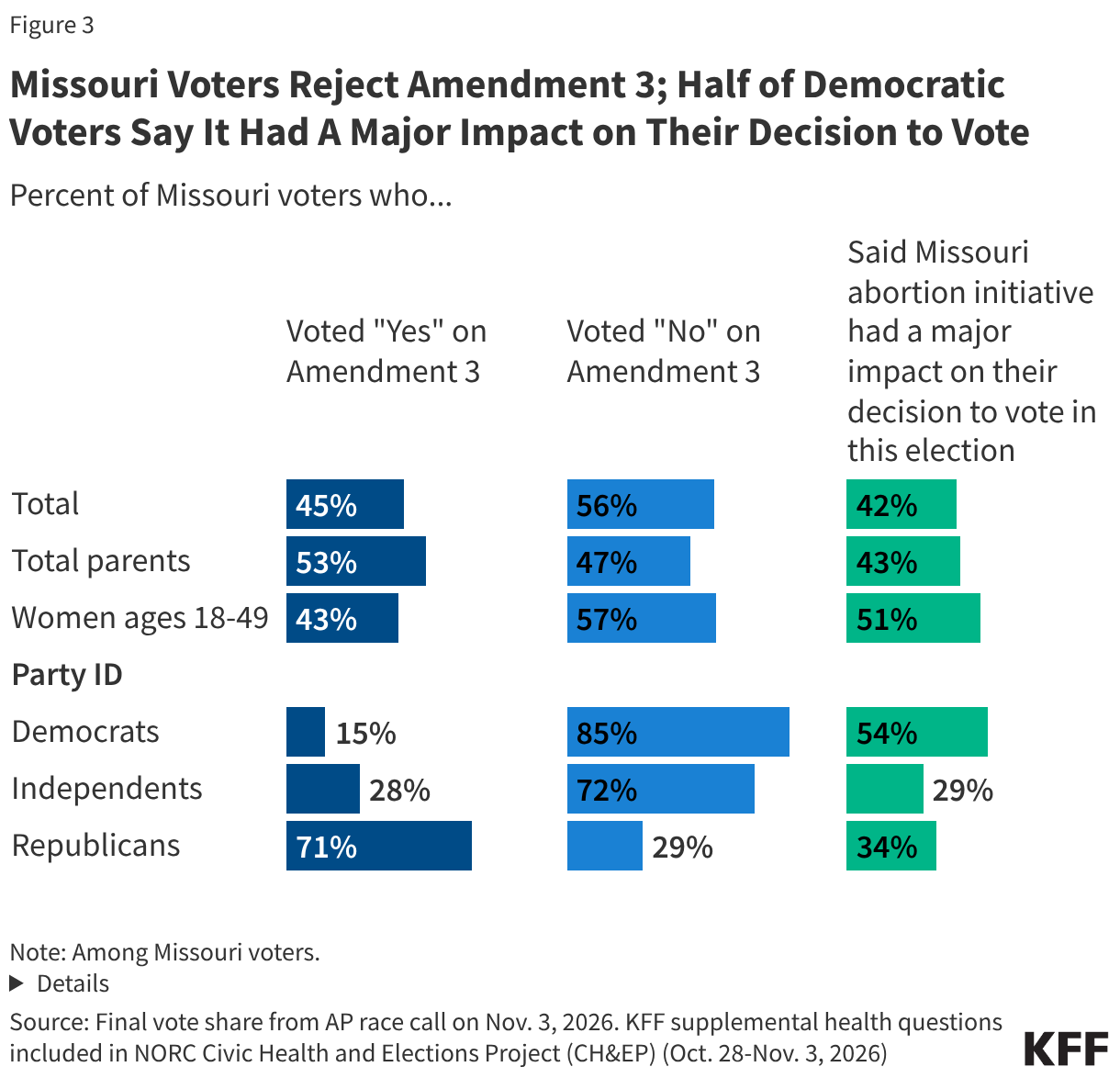
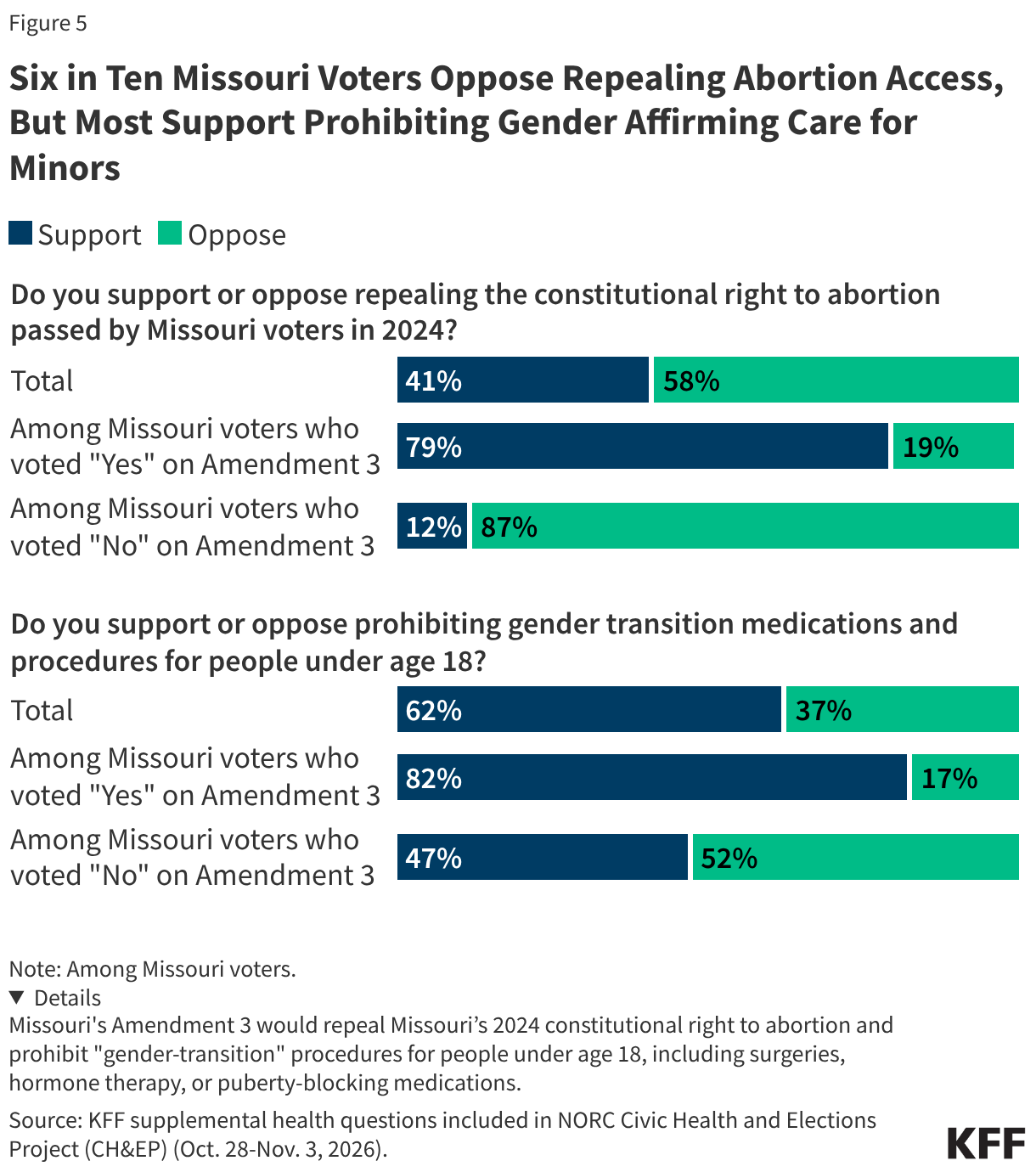
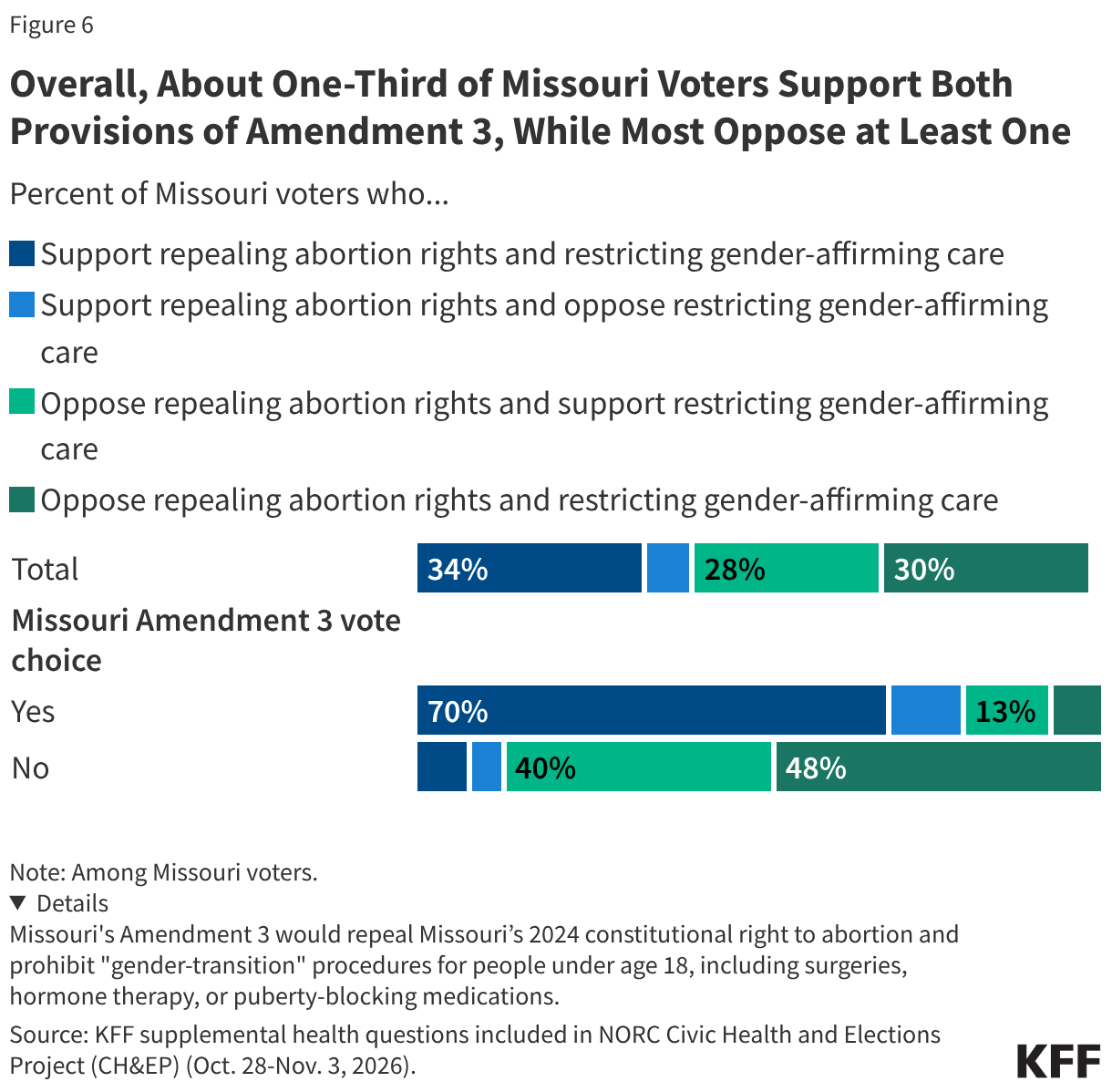
However, the "no" voters were driven primarily by the abortion component, whereas "yes" voters often viewed both issues as equally significant. Notably, the electorate displayed a high degree of ideological "split-voting": 28% of Missouri voters opposed the abortion repeal but supported the ban on gender-affirming care for minors. This suggests that the legislature’s decision to pair the two issues was a strategic attempt to bridge gaps within the conservative base, though it ultimately failed to overturn the 2024 abortion protections.
The Idaho Rejection
In Idaho, the failure of Proposition 1 signals a significant victory for anti-abortion activists. While the measure received overwhelming support from Democrats (98%), the Republican base remained largely opposed, with 79% voting "no." Even among women of reproductive age—a group expected to be the primary beneficiaries of the measure—the vote was a statistical dead heat, with 53% rejecting the proposal to expand access.
Official Responses and Political Context
The ballot measures did not exist in a vacuum; they were inextricably linked to the gubernatorial and legislative races of 2026.
- Idaho: The gubernatorial race became a proxy for the abortion debate. Republican Governor Brad Little, who previously signed the state’s restrictive 2020 abortion ban, successfully campaigned against Proposition 1. His opponent, Democrat Terri Pickens, stood in stark contrast, promising to defend the measure had it passed. The alignment of voters who chose Gov. Little while simultaneously voting "yes" on the abortion measure (19%) suggests a subset of the electorate that prefers Republican leadership but disagrees with the party’s hardline stance on reproductive health.
- Nevada: The success of Question 6, which passed with 63% of the vote, illustrates a bipartisan consensus. With 45% of Republicans and 91% of Democrats voting "yes," the measure transcended traditional party lines. Governor Joe Lombardo’s nuanced position—favoring a "leave it to the voters" approach—appears to have provided enough cover for moderate Republicans to support the amendment without abandoning their party leadership.
- Virginia: Following the passage of Question 1, Virginia has moved to cement its status as a state with broad protections for reproductive health. The measure, which includes protection for contraception and fertility treatments, gained 62% support. The Senate race, featuring incumbent Mark Warner, saw voters who prioritized abortion access overwhelmingly cast ballots in favor of the incumbent, further illustrating the electoral power of the reproductive rights movement in the state.
Implications for Future Elections
The 2026 midterms demonstrate that the abortion debate has moved beyond a simple binary choice. It has evolved into a complex series of constitutional questions that vary significantly from state to state.
1. The Strategy of "Bundling"
The Missouri experience serves as a cautionary tale for state legislatures attempting to use ballot measures to force voters into "all-or-nothing" decisions. By pairing abortion repeal with gender-affirming care restrictions, lawmakers hoped to secure a win by appealing to different segments of the conservative base. The failure of this strategy indicates that voters are increasingly savvy and capable of separating disparate policy issues when they feel their fundamental rights are under assault.
2. The Gender Gap and Reproductive Age
In every state analyzed, women of reproductive age proved to be a pivotal demographic. Their turnout and voting patterns were the primary drivers for the measures that succeeded. However, the Idaho results serve as a reminder that geography and political culture can create significant variations in how these groups vote. In deeply conservative states, the "abortion issue" does not automatically guarantee a win for progressive policies, suggesting that grassroots organizing must be tailored to specific regional values.
3. The Constitutionalization of Rights
By moving these issues into the state constitution, voters in Nevada, Virginia, and Missouri have made it significantly more difficult for future legislatures to unilaterally change the law. This trend of "constitutionalizing" reproductive rights represents a long-term strategic shift. Rather than relying on legislative majorities that can be overturned in the next election cycle, advocates are seeking to place these rights beyond the reach of day-to-day partisan politics.
Conclusion: The Path Ahead
The 2026 election cycle has confirmed that reproductive rights remain one of the most powerful motivators in American politics. As we look toward future elections, the data suggests that abortion is no longer just a partisan issue; it is a fundamental concern for a broad cross-section of the American public.
The battle for control over reproductive healthcare is far from over. With ballot measures expected in future cycles in other states, the KFF and NORC findings provide a roadmap for understanding the tensions that will continue to define the American political landscape. As voters, policymakers, and activists digest these results, the focus will undoubtedly shift to how these constitutional protections are implemented—and how future attempts to bypass them will be met at the ballot box.
For more detailed data, methodology, and state-by-state breakdowns, visit the KFF Civic Health and Elections Project portal.

 Lina Hope