



 Asep Darmawan
By Lul Ali and Pauline Hurungudo
September 24, 2026
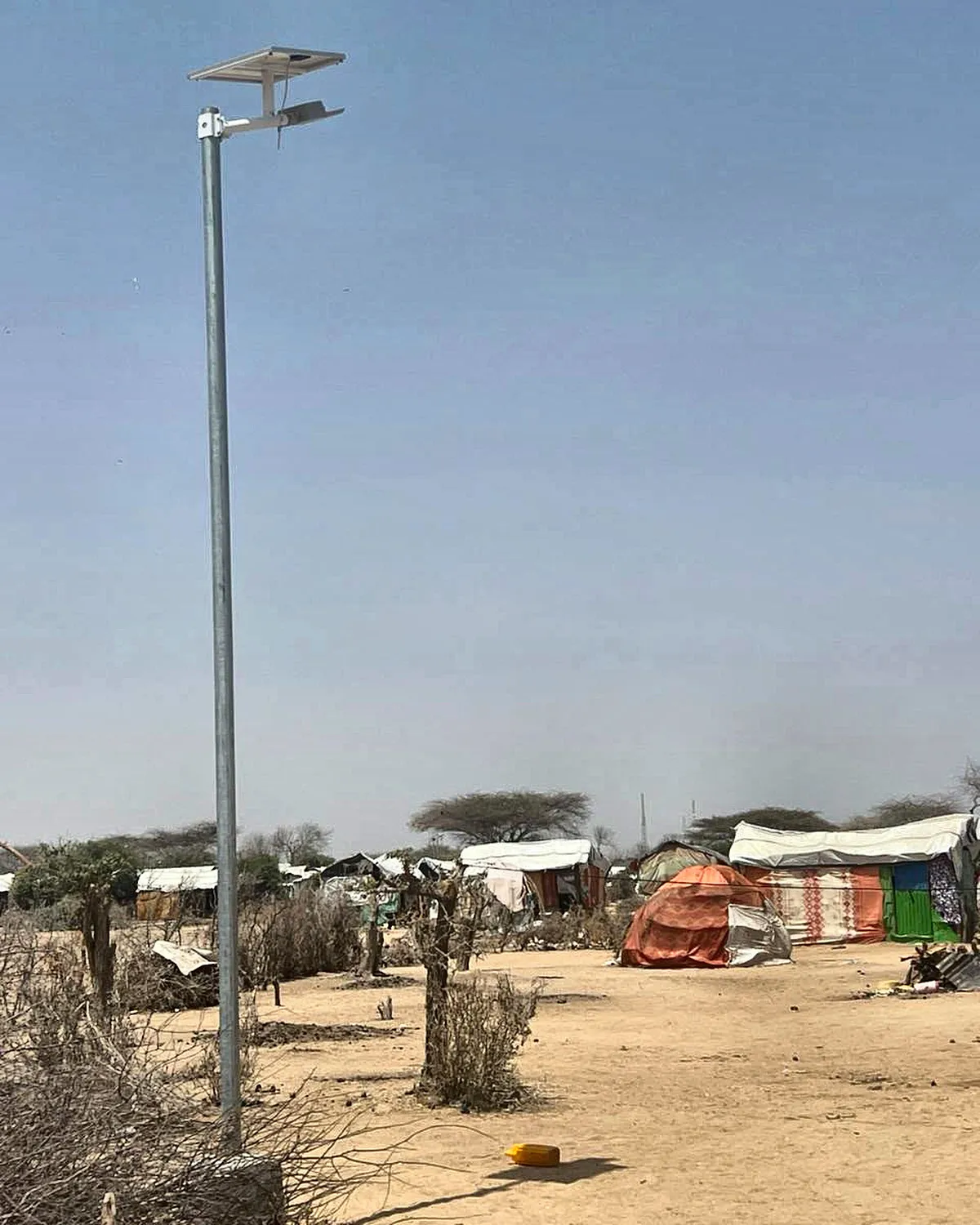
As the sun dips below the horizon in the Lower Juba region of Somalia, the landscape of the Daryel displacement camp undergoes a profound metamorphosis. For years, sunset acted as a rigid curfew, a boundary beyond which the 2,200 residents of the camp dared not tread. Today, however, the installation of four solar-powered streetlights is fundamentally altering the rhythm of life for families who have lost everything to conflict and climate instability.
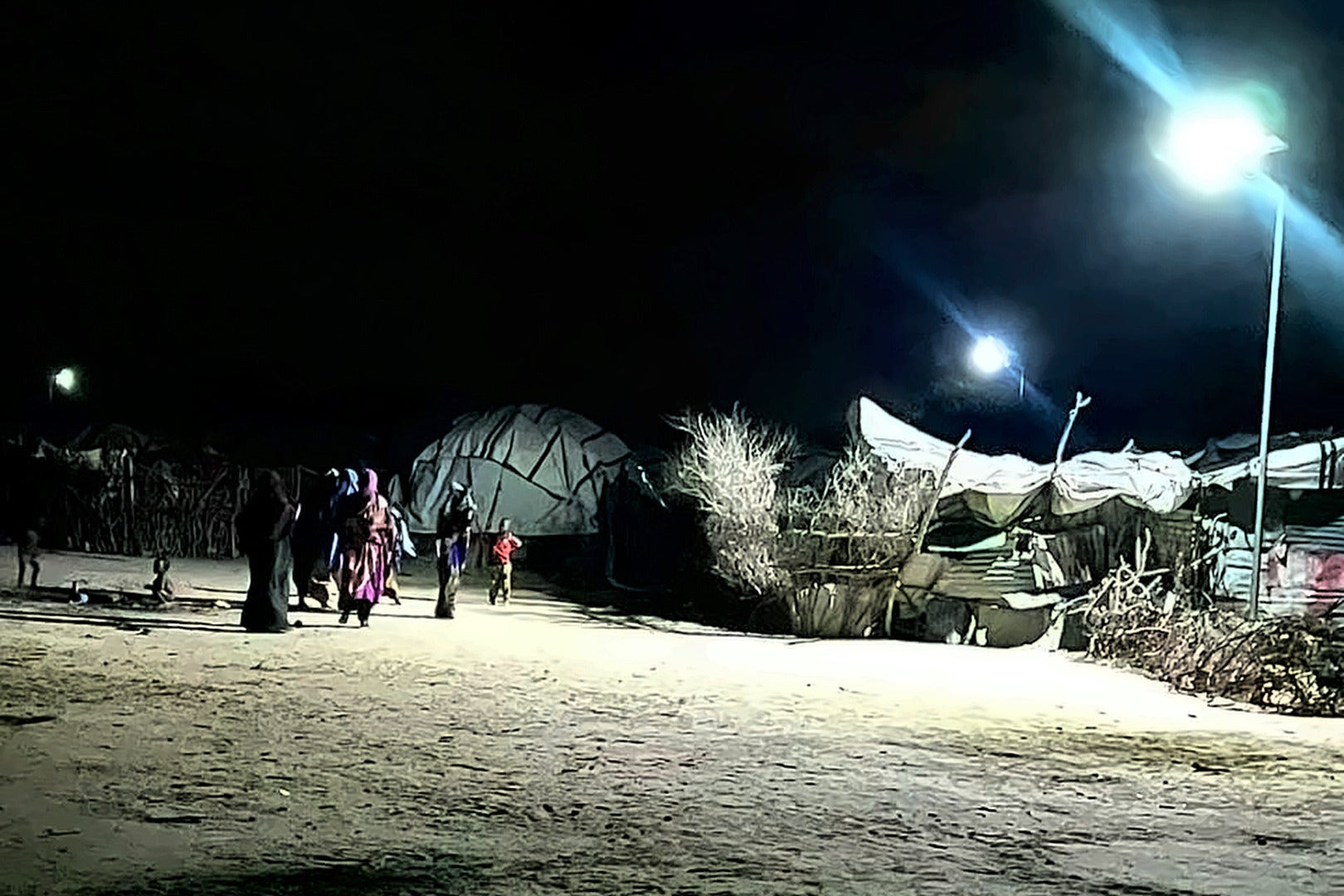
For mothers like Kusey Ali Abdi, who fled her home in Marka after armed groups seized her farmland, the simple act of walking to a latrine or fetching water after dark was once a high-stakes gamble. Today, those same pathways are bathed in a soft, steady glow, offering a newfound sense of security, agency, and community cohesion.
The Weight of Darkness: Main Facts of the Crisis
The Daryel camp is a microcosm of a much larger, harrowing reality in Somalia. The country remains mired in a complex web of displacement driven by the convergence of violent conflict, persistent drought, and catastrophic flooding. According to the United Nations High Commissioner for Refugees (UNHCR), the first three months of 2026 alone saw over 511,000 internal displacements across the country. Of those forced to flee, approximately 85% are women and children.
When families arrive in camps like Daryel, their survival hinges entirely on shared infrastructure: communal water points, sanitation facilities, and narrow, winding pathways that connect makeshift tarpaulin shelters. Before the arrival of solar technology, the absence of lighting created a "protection vacuum."
Residents reported that the pitch-black conditions of the camp after nightfall were not merely an inconvenience—they were a source of profound psychological stress. The fear of theft, harassment, and gender-based violence kept women and girls tethered to their shelters from dusk until dawn. Simple, essential tasks were delayed until the following morning, creating a cycle of inefficiency and anxiety that further marginalized an already vulnerable population.
A Chronology of Change: From Insecurity to Illumination
The transformation at Daryel was not an overnight miracle, but a carefully orchestrated process of community-led development.
- Phase 1: Identification and Consultation: Recognizing that humanitarian aid is most effective when it addresses the specific safety concerns of those it serves, the international humanitarian organization CARE initiated a dialogue. Rather than imposing a top-down solution, they worked alongside the Jubaland Commission for Refugees and Internally Displaced Persons (JUCRI) to consult directly with the women and girls of Daryel.
- Phase 2: Mapping the Risk: In collaborative workshops, the women mapped out the "danger zones"—the unlit routes to water points, the isolated pathways to latrines, and the neglected community spaces where they felt most exposed. This participatory approach ensured that the placement of the four solar lights would yield the maximum impact for the most vulnerable.
- Phase 3: Installation and Integration: Over the past two months, the solar streetlights have been operational. These units are autonomous, harvesting the abundant Somali sun during the day to provide reliable light throughout the night.
- Phase 4: Community Stewardship: A vital aspect of the project was the handover. CARE transferred the oversight of the lighting infrastructure to local camp management leaders. This model ensures local ownership: if a light malfunctions, the community has a direct line to JUCRI for repairs, ensuring the project remains sustainable long after the initial installation phase.
Supporting Data: Why Lighting is a Protection Priority
The efficacy of the lighting project is backed by a growing body of evidence in humanitarian protection circles. Lighting is categorized as a "low-cost, high-impact" intervention. While a solar light cannot prevent the underlying conflicts that cause displacement, it serves as a critical deterrent against opportunistic crime.
In Daryel, the impact is measurable in both logistics and human spirit:
- Reduced Bottlenecks: With extended operating hours, women can now access water points during off-peak times, reducing the congestion and frustration that often occur at dawn.
- Participation: Women’s groups, which previously had to hold meetings during the heat of the day, are now able to gather in the evenings, allowing more space for community organizing and psychosocial support.
- Child Safety: Children, who were once restricted to the confines of their tents, now gather in the pools of light to play. This "normalization" of the environment is a crucial step in helping children process the trauma of displacement.
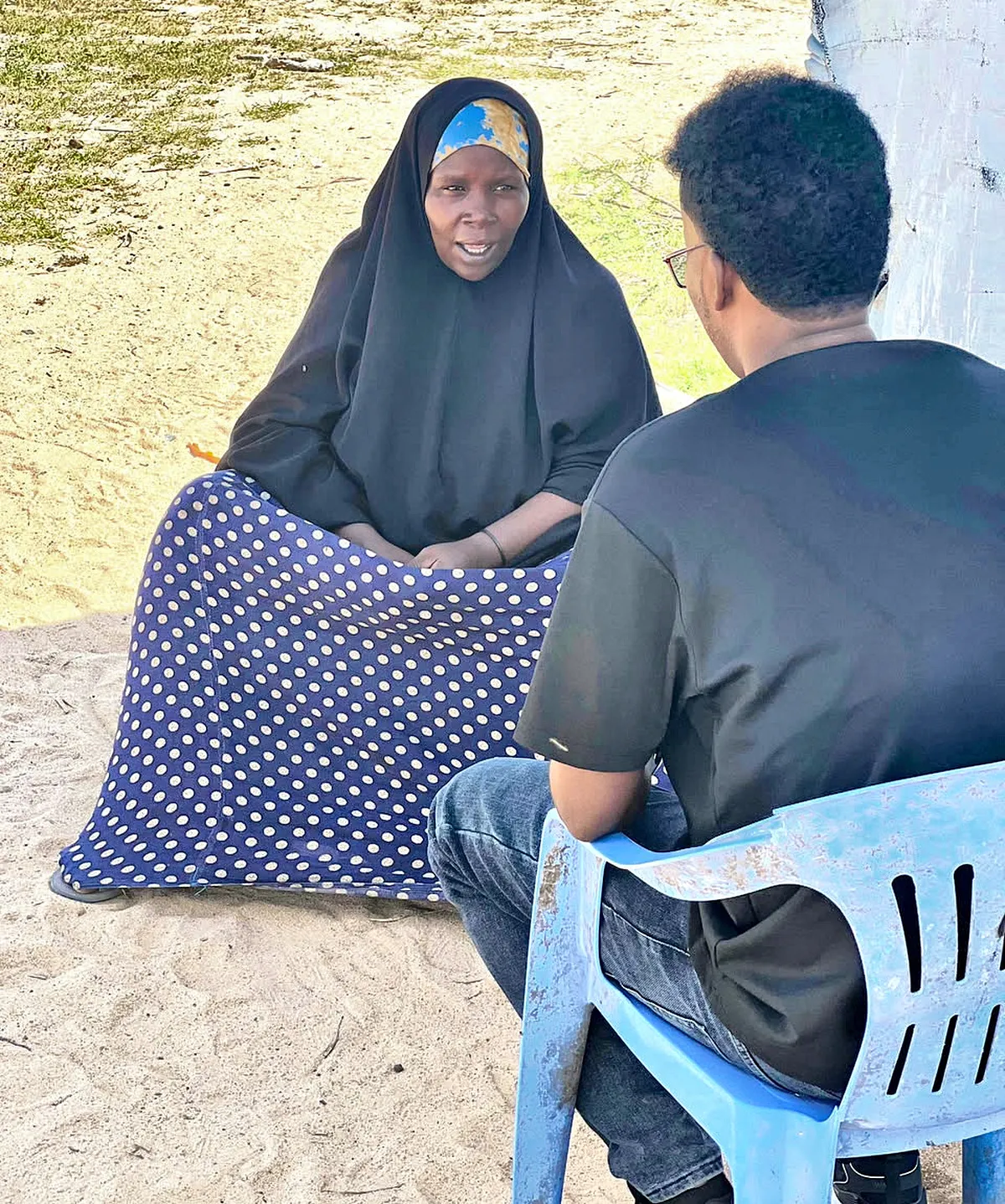
"Now, I can go out at night without fear," says Kusey Ali Abdi. "I can collect water when it is less crowded, and I attend meetings with other women in the community. The lights have given us freedom we didn’t have before."
Official Responses and Strategic Implications
The project is part of a broader initiative funded by the French Ministry of Foreign Affairs, titled Integrated Support through Protection and Resilience Action for Crisis-Affected and Displaced Communities in Lower Juba, Somalia.
Humanitarian experts stress that while the installation of four streetlights seems like a modest intervention against the backdrop of a nationwide crisis, its strategic value is immense. By addressing the "fear of the dark," aid agencies are helping to preserve the dignity of displaced people.
"We recognize that infrastructure is not just about concrete and metal; it is about the social fabric," says a spokesperson involved in the project. "When you provide light, you are providing a boundary against the darkness of uncertainty. You are telling the residents of Daryel that their safety matters and that their community deserves to function beyond the constraints of the sun."
The project also highlights a shift in the humanitarian sector toward "resilience-based programming." Instead of merely providing short-term aid like food rations, agencies are increasingly focusing on the environmental and structural factors that allow displaced people to regain a sense of normalcy.
Implications: A Glimmer of Hope in a Darkened Landscape
The success of the Daryel lighting project poses a critical question for future humanitarian policy: How can such small-scale, high-impact interventions be scaled up across other camps in Somalia and beyond?
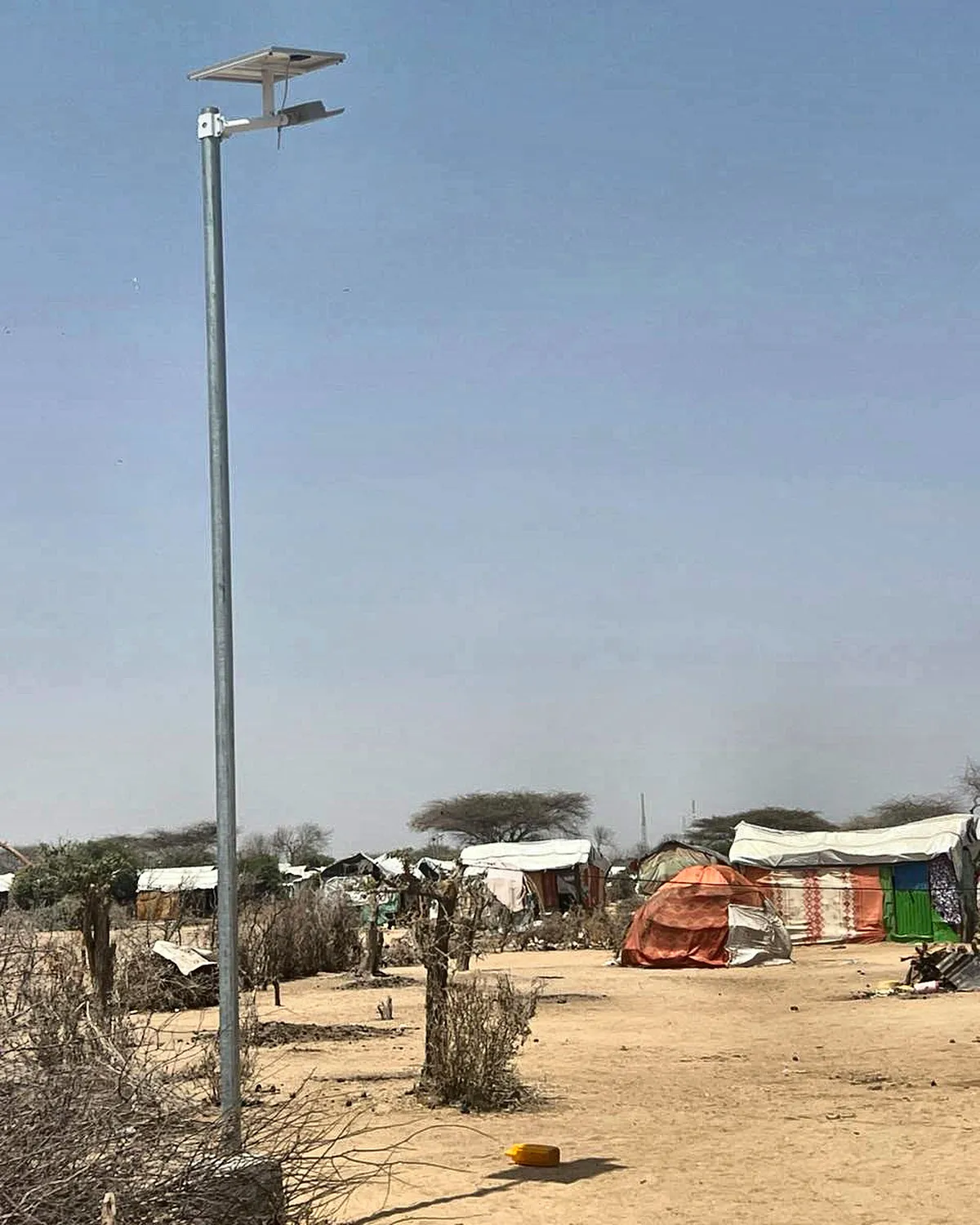
While the lights cannot solve the displacement crisis, they offer a blueprint for how to improve the quality of life within transit environments. The implications for the protection of women and girls are particularly significant. By reducing the physical risk associated with movement at night, these lights indirectly contribute to better maternal health outcomes, increased educational opportunities for girls who can now study after hours, and a more robust, connected community.
For the residents of Daryel, the transition is symbolic. As the four solar poles stand tall against the Somali sky, they represent a defiance against the circumstances that forced these families into the camp. Kusey Ali Abdi’s ability to watch her children play beneath the lights is a small, quiet victory in a long, difficult struggle for stability.
The path forward for Somalia remains fraught with systemic challenges—drought, conflict, and political instability continue to threaten millions. However, as the sun sets over the Lower Juba region, the residents of Daryel no longer face that darkness alone. In the glow of the solar streetlights, there is the undeniable, flickering promise of a community that refuses to be defined by its displacement, and instead, is finding new ways to claim its own space in the night.
As humanitarian efforts continue, the lesson of Daryel is clear: sometimes, the most effective way to help a community is to give them the light to see their own way forward.

 Reynand Wu
 Jia Lissa






