



 Neng Nana
As the 2020 presidential election cycle looms, the American political landscape remains deeply fractured by a debate over the core mission of the progressive movement. At the heart of this tension is Senator Bernie Sanders, a central figure in the Democratic left, whose rhetoric has ignited a contentious discourse regarding the role of "identity politics" in shaping the party’s platform. Critics argue that by framing social justice as a secondary concern to economic reform, and by centering the "white working class" as the primary victim of the status quo, prominent progressive leaders are inadvertently erasing the lived experiences of the very groups most harmed by systemic inequality.
The Sanders Doctrine: Prioritizing Economic Pain
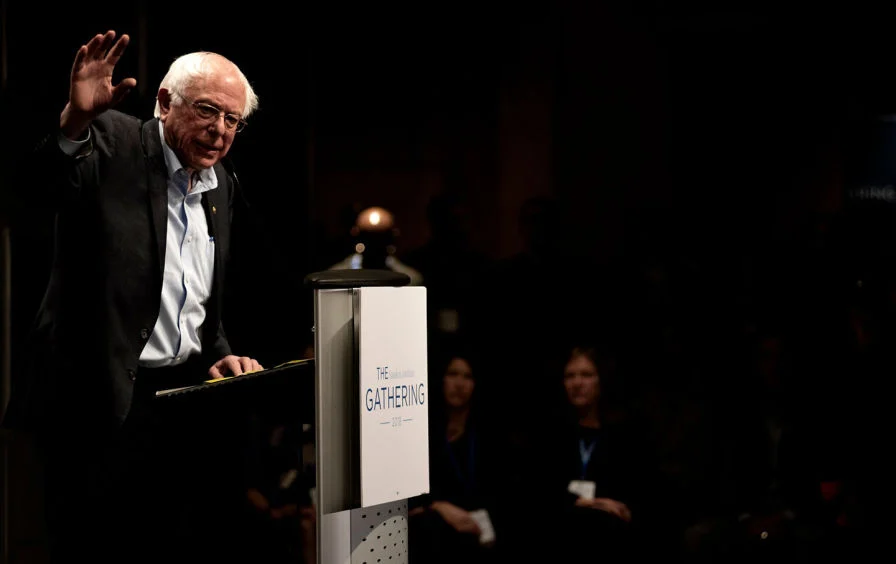
The debate gained significant traction following a Sanders Institute conference held last month. During a panel discussion, Sanders—speaking to an all-white cohort of peers—reiterated a familiar thesis: that the liberal mainstream has failed by ignoring the "massive amount of pain" felt by rural voters, many of whom supported Donald Trump in 2016.
"Please understand this," Sanders told the audience. "Trump became president of the United States because there is a massive amount of pain in this country, which is not seen on television, which many of my Democratic colleagues do not know about… and often that is taking place in rural areas."
For Sanders and his supporters, this argument is a call for a broader coalition. They contend that the Democratic Party has become too comfortable in coastal, affluent enclaves, effectively abandoning the white, rural base that was once a pillar of the New Deal coalition. By focusing on universal economic policies—such as tuition-free college, Medicare for All, and wealth redistribution—Sanders argues that the left can transcend the "divisiveness" of identity politics and reunite the working class under a banner of shared economic interest.
Chronology of a Disconnect
The tension between the "economic-first" faction and advocates for social justice is not a recent development. It has been punctuated by several key moments that have alienated many within the progressive movement:
- The 2016 Campaign: Throughout the primary, Sanders frequently critiqued the focus on social issues. In November 2016, regarding the candidacy of a high-profile woman of color, he noted, "It wasn’t enough to say, ‘I’m a woman, vote for me,’" a framing that many felt ignored the substantive, intersectional policy proposals she had actually presented.
- The Nebraska Endorsement: In 2017, Sanders faced backlash for endorsing a mayoral candidate in Nebraska who held anti-choice positions. When questioned, he suggested that the Democratic Party needed to "get off the social issue" of abortion to remain a "big tent" party.
- The Post-Midterm Analysis: Following the 2018 midterms, when asked about white voters in Georgia and Florida who refused to support black gubernatorial candidates Stacey Abrams and Andrew Gillum, Sanders offered a tempered analysis. He suggested these voters were "not necessarily racist" but were merely "uncomfortable for the first time in their lives" about voting for an African-American, a sentiment critics interpreted as a refusal to call out systemic racism.
Supporting Data: Debunking the "White Working Class" Monopoly
The narrative that Trump’s support stems solely from an ignored, struggling white working class is frequently challenged by electoral data. Statistics from the 2016 election reveal a more complex reality:
- The Income Split: According to New York Times exit polls, 53 percent of Americans earning less than $30,000 annually voted for Hillary Clinton, while only 41 percent voted for Trump.
- The Intersection of Identity and Economy: The poorest demographic in the United States, black women, voted for Clinton at a rate of 94 percent, directly contradicting the notion that the most economically marginalized are naturally inclined toward the Trumpian populism that Sanders seeks to court.
- Economic Priorities: Among voters who identified the economy as their primary concern, 52 percent chose Clinton, suggesting that voters who care about economic stability do not automatically default to the Republican platform.
These figures suggest that the "working class" is not a monolith, nor is it exclusively rural, white, and male. By centering this specific demographic, political observers argue, the movement risks alienating the very base—people of color, LGBTQ individuals, and women—that forms the backbone of the Democratic Party.
Official Responses and the "Default" Standard
The controversy centers on the definition of "identity politics." In current political discourse, Trump’s reliance on white anxiety and the grievances of white men is rarely labeled as "identity politics"; rather, it is often treated as a "unifying" message. Conversely, when marginalized groups advocate for policies addressing criminal justice reform, reproductive rights, or immigration, it is frequently dismissed as "identity politics" or "social issues."
Critics argue this reflects a deeply ingrained bias where white men are viewed as the "default" citizen, while the needs of everyone else are categorized as "special interests." As the 2020 election approaches, this binary creates a dangerous hierarchy of suffering. For women of color, LGBTQ individuals, and immigrants, issues like mass incarceration and reproductive healthcare are not "distractions"—they are matters of survival.
When progressives suggest that these concerns should be secondary to universal economic policies, they effectively signal that the specific, targeted violence experienced by marginalized communities is a "luxury" that can only be addressed once the white working class is appeased.
Implications for the 2020 Election
The implications for the upcoming presidential cycle are profound. If the left continues to prioritize a narrative that ignores the systemic nature of identity-based oppression, it risks losing the trust of the most loyal Democratic voters.
Economic justice is inextricably linked to social justice. The "pain" Sanders describes is indeed real, but it is not unique to rural white communities. It is found in urban housing crises, the lack of healthcare in marginalized neighborhoods, and the systematic devaluing of black and brown lives. By failing to acknowledge that economic disenfranchisement often follows lines of race and gender, the progressive movement risks missing the mark on effective solutions.
"Identity-neutral" rhetoric is not necessarily progressive. If a policy ignores the fact that a black woman experiences the economy differently than a white man, it may inadvertently perpetuate existing inequalities. For true progress to occur, the movement must move beyond the false dichotomy of "economic issues" versus "social issues."
Conclusion: A Path Forward
As the 2020 field takes shape, the burden is on all candidates to articulate a vision that integrates economic justice with a robust defense of human rights. Dismissing the lived experiences of women, people of color, and the LGBTQ community as mere "identity politics" is a regression, not an evolution.
To win and to govern effectively, the Democratic Party must prove that it can address the suffering of the rural working class without sacrificing the dignity and rights of those who have been systematically pushed to the margins. Failure to do so will not only leave the party vulnerable to further fragmentation but will also abandon the most vulnerable citizens to the ongoing, and often fatal, consequences of a policy landscape that refuses to recognize their humanity as a standard, rather than a side issue.


 Reynand Wu
 Jia Lissa






