


 Jia Lissa
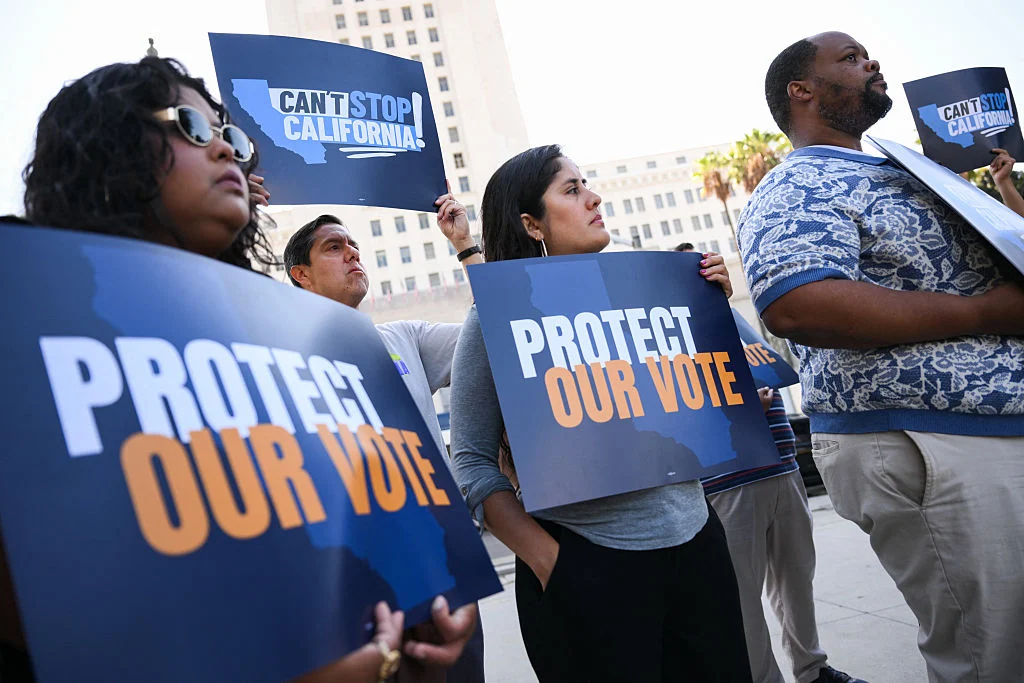
The right to vote—a cornerstone of American democracy won through generations of suffragist struggle and civil rights activism—is once again facing a period of profound instability. As the nation approaches the November 2026 midterm elections, the mechanisms of the ballot box are being subjected to unprecedented pressure. From executive attempts to centralize federal control over state-run elections to a pervasive climate of disinformation, the path to the polls has become increasingly complex. Protecting this fundamental right requires not only vigilance but a deep understanding of the structural and political threats currently in play.
The Evolution of Voter Turnout: A Century of Participation
To understand the stakes of the 2026 cycle, one must view it through the lens of historical participation. American voter turnout has historically lagged behind many of its democratic peers. According to the Pew Research Center, the United States ranked 31st out of 35 developed nations in voter turnout as of 2016. While interest in politics has surged in recent years—driven largely by intense polarization—the fact remains that in almost any given election cycle, nearly 40 percent of the eligible electorate remains sidelined.
The volatility of turnout is evident in the numbers:
- 2008: The election of Barack Obama saw a turnout of 61.6 percent.
- 2020: The presidential race between Joe Biden and Donald Trump reached a modern peak of 66.6 percent, the highest participation rate since the turn of the 20th century.
- 2024: Turnout remained high, landing at 63.9 percent.
Despite these figures, the current midterm cycle is defying historical trends. Primary participation in 2026 has reached levels not seen in decades, suggesting that despite—or perhaps because of—the intense political friction, the American public is increasingly aware that their participation is the ultimate check on executive and legislative power.
Chronology of Institutional Tension
The current crisis of confidence did not emerge in a vacuum. It is the culmination of years of escalating rhetoric and systemic challenges.
- January 6, 2021: The attack on the U.S. Capitol served as a stark reminder of the fragility of the peaceful transfer of power. The visual of a mob interfering with constitutional processes fundamentally altered the American perception of election security.
- Early 2026: President Donald Trump escalated efforts to pass the "SAVE Act," a legislative proposal requiring additional citizenship documentation for voter registration. While the House passed the bill in February, it stalled in the Senate due to lack of support and broad public skepticism.
- March 2026: President Trump issued Executive Order 14399, "Ensuring Citizenship Verification and Integrity in Federal Elections." This order sought to compel federal agencies to create master lists of confirmed citizens and restrict U.S. Postal Service protocols for mail-in ballots.
- September 2026: Federal courts issued preliminary injunctions blocking the administration’s mail-ballot restrictions. The Supreme Court subsequently denied the administration’s emergency request to lift these injunctions, maintaining the status quo for the November elections.
The Constitutional Conflict: Federalism vs. Executive Reach
At the heart of the current battle is a fundamental disagreement over the role of the presidency. As Michael Waldman, president and CEO of the Brennan Center, has noted, the Constitution is unambiguous: States run elections. The Elections Clause delegates the "times, places and manner" of elections to state legislatures, subject to congressional oversight, not executive whim.
Despite this, President Trump has advocated for the "nationalization" of elections, characterizing state-run processes as a "disgrace." His attempts to use the Department of Justice and the Postal Service to impose federal standards on local voting lists represent a significant departure from the decentralized model the Founding Fathers designed specifically to prevent national leaders from manipulating election outcomes.
Supporting Data: The Myth of Noncitizen Voting
A central pillar of the administration’s strategy involves the propagation of claims regarding noncitizen voting. Statistically, however, noncitizen voting is a nonissue. It is already a federal crime, and the risk of deportation and prosecution far outweighs any negligible influence an individual could have on an election.
The danger of this narrative lies in the "friction" it creates. By demanding additional proof of citizenship, the administration creates a barrier to entry that disproportionately affects legitimate, eligible voters. Data from the Center for American Progress (CAP) highlights the impracticality of these demands:
- Cost: A first-time passport costs $165, a significant barrier for low-income voters.
- Documentation: Millions of Americans lack easy access to birth certificates.
- Name Changes: An estimated 69 million women who have married face potential hurdles due to birth certificates that do not match their current legal names.
Requiring in-person documentation could, in effect, set voter registration back by decades, particularly for rural Americans who may lack transportation to government offices.
Implications for the Midterms: What Voters Must Know
The 2026 midterms will not be defined by a single "event," but by the cumulative effort to create uncertainty and voter fatigue.
1. Registration Integrity
Voters must take personal responsibility for their registration status. Utilizing nonpartisan tools like Vote.org is essential. Federal law prohibits the removal of voters from active rolls within 90 days of an election, providing a small window of security. However, voters should be prepared for last-minute administrative hurdles and maintain proof of their registration in physical or digital form.
2. The Resilience of Mail-In Voting
Mail-in voting has been a bipartisan practice since the Civil War. Despite the president’s rhetoric, the security features of modern mail-in ballots—including bar coding and rigorous verification—have been repeatedly proven effective. Voters should consult their specific state’s guidelines, as the rules for mail-in ballots remain subject to state-level legislation and local judicial rulings.
3. Protection of Election Workers
The harassment of election officials is perhaps the most dangerous trend, as it threatens to hollow out the experienced workforce required to conduct fair elections. The Department of Justice’s recent letters to state officials regarding noncitizen voting have created a climate of fear, potentially discouraging volunteers from serving. A lack of trained personnel inevitably leads to longer lines and higher rates of human error, which are then used as "proof" of systemic failure.
Conclusion: Participation as Power
The goal of current efforts to suppress the vote is simple: to make the process so cumbersome, confusing, and intimidating that eligible voters choose to "sit this one out." By creating a narrative that the system is broken, the administration hopes to manufacture a sense of apathy.
However, the legal and civic infrastructure to combat these efforts is robust. Organizations like the Election Protection coalition are preparing to assist voters in real-time, from navigating voting machine issues to handling reports of intimidation. Democracy in 2026 will not be written by those attempting to stifle it, but by the citizens who insist on participating.
As the November midterms approach, the directive is clear: Plan ahead, know the laws of your state, assist those in your community, and recognize that the intensity of the effort to keep you from the ballot box is the strongest evidence of how powerful your vote truly is. Protecting the future of the nation is not a spectator sport—it is a responsibility that rests with every voter.
This article also appears in the Fall 2026 issue of Ms. magazine. For more information on reproductive freedom and its role in building the lives we need, visit the Ms. magazine website to participate in "The Majority" campaign.

 Reynand Wu