


 Dwi Wanna
By Aruna D’Souza
In the rotunda of the Solomon R. Guggenheim Museum, Taryn Simon has constructed a labyrinth of secrets. Her latest exhibition, Father Country I Do Love You, is not merely an art installation; it is a sprawling, forensic investigation into the nature of truth, memory, and the unseen machinery of the American state. By weaving together the personal mythology of her own father—a man whose life was colored by the opaque world of intelligence—with the verified, yet equally surreal, career of a retired FBI agent, Simon poses a haunting question: In a world governed by bureaucracy and compartmentalized knowledge, is there such a thing as objective truth?
The exhibition is an exercise in systemic critique. Here, injustice is not portrayed as the result of individual malice or a "few bad apples," but as a structural inevitability. It is the output of a machine so vast that no single person, not even those operating it, can see the entire blueprint.
The Genesis of a Myth: Personal and Political Histories
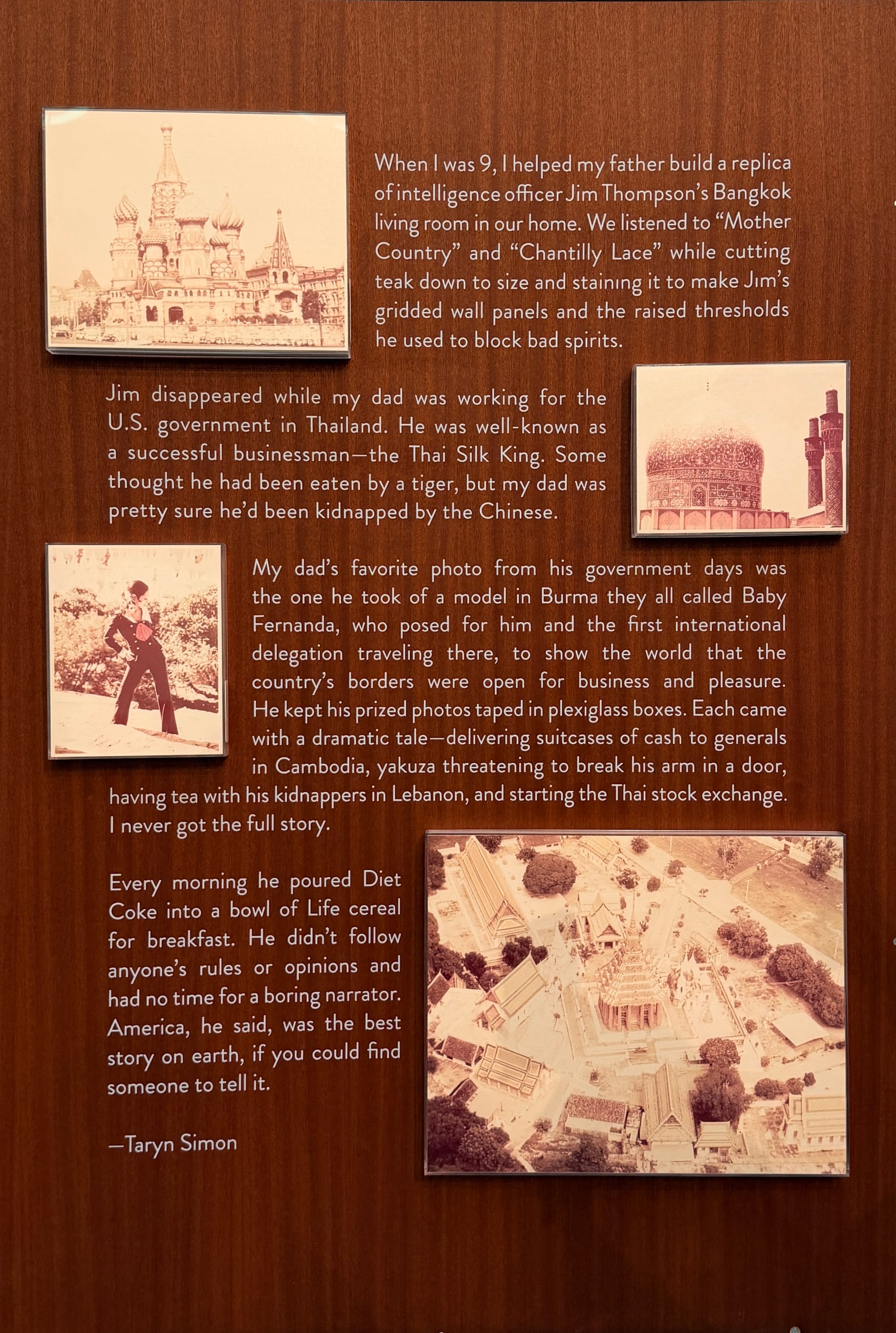
The exhibition opens with a jarring intimacy. Two text panels set the stage, framed against teak paneling that recreates a replica of a living room in Bangkok—a room Simon helped her father reconstruct when she was a child. The first panel details her father’s penchant for the dramatic: tales of delivering cash to Cambodian generals, confrontations with the yakuza, and clandestine tea sessions with kidnappers in Lebanon. These were stories of a life lived in the shadows, always delivered with a caveat: "I never got the full story."
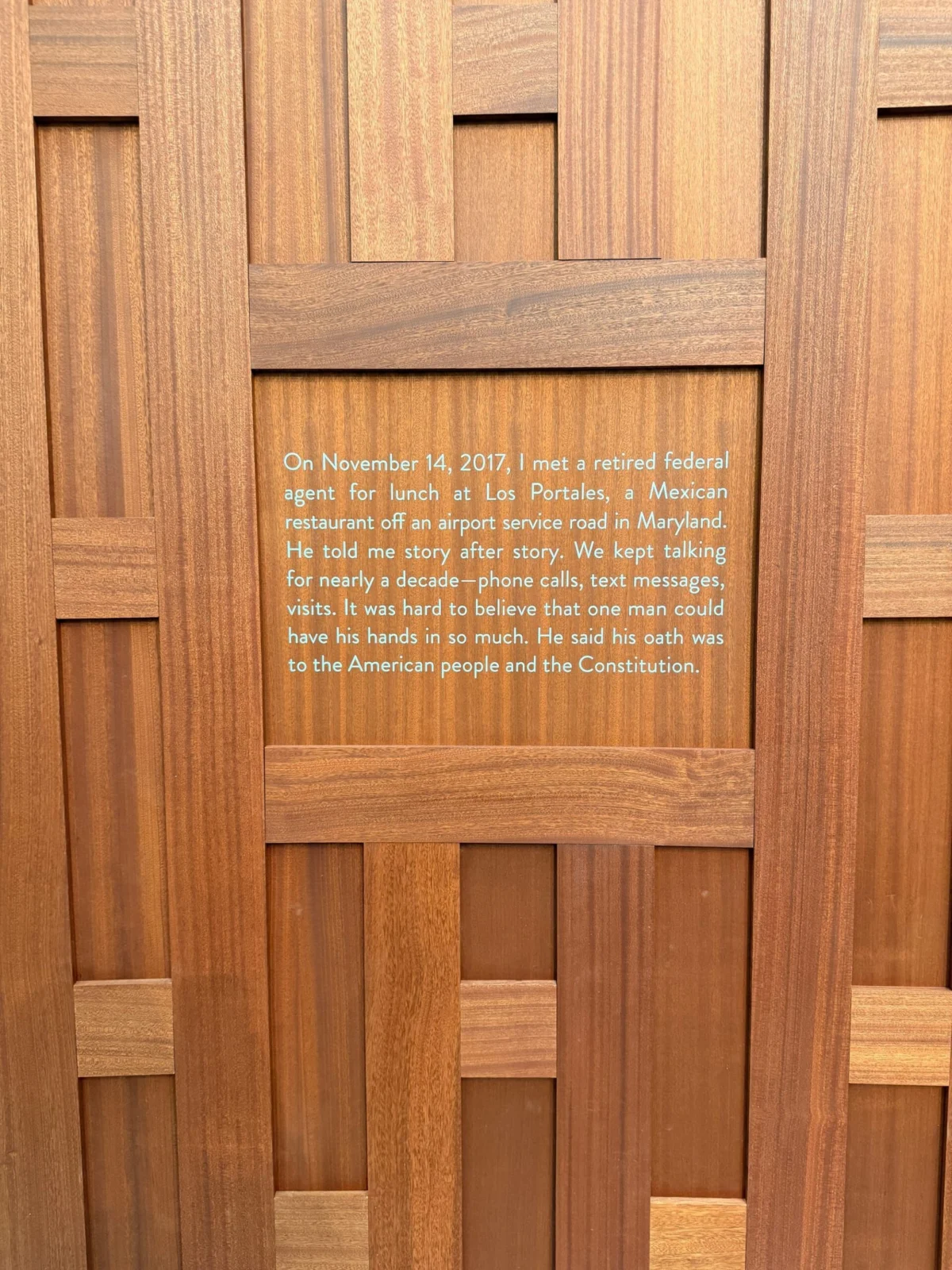
The second panel introduces the exhibition’s primary engine: a retired FBI agent. Over the course of a decade, Simon gathered his recollections—a collection of phone calls, texts, and meetings that serve as the foundation for the show’s exhaustive research. By juxtaposing her father’s unverifiable myths with the agent’s documented, yet often baffling, professional history, Simon forces the viewer into a state of perpetual uncertainty. We are asked to navigate a space where the line between conspiracy theory and state-sanctioned fact is not just blurred—it is erased.
A Chronology of Bureaucratic Surrealism
The exhibition is a deep dive into the "dirty work" of the late 20th and early 21st centuries. The FBI agent’s career reads like a syllabus for modern American trauma, placing him at the epicenter of events that define our collective consciousness.
- 1990: The Entrapment of Marion Barry. The agent was tasked with protecting the children of the woman sent to seduce and entrap the then-mayor of Washington, D.C. It is a detail that underscores the absurdity of the state’s methods—using the domestic sphere as a staging ground for political sabotage.
- 1996: TWA Flight 800. Following the catastrophic explosion of the flight off the coast of Long Island, the agent was part of the massive forensic team assigned to piece together the remnants. The psychological toll of assembling debris into a narrative of tragedy is a recurring theme in the work.
- 1998: The Nairobi Embassy Bombings. Deployed alongside 900 other agents, his work here reflects the global reach of U.S. interventionism and the staggering scale of the administrative response to terror.
- 1998–1999: The Clinton Impeachment. In a surreal turn, the agent was responsible for setting up the evidence room for the impeachment proceedings, bridging the gap between national security operations and the theater of partisan politics.
- 2001: The Pentagon Attack. In the immediate aftermath of 9/11, he was sent to sift through the wreckage, a task that highlights the visceral, physical reality of the "War on Terror."
These events, while historically distinct, are presented as a singular, cohesive narrative of bureaucratic effort—a relentless process of gathering, cataloging, and containing.
The Evidence: Methodology and Presentation
Simon’s methodology is one of radical transparency regarding the opacity of her subject. Through hundreds of photographs, sculptures, and video installations, she documents the physical artifacts of these events. However, she refuses to provide the "full story" that her father never gave her.
The exhibition design—with its heavy drapery, saturated, brightly colored walls, and immersive spatial layout—evokes the claustrophobia of a spy’s living room. It suggests that the history of the state is, at its core, a domestic construction: it is built by people who go home to families, sit in armchairs, and exist within the banality of everyday life.
The photographs themselves act as "proof," yet they are stripped of the sensationalism typically associated with these historical markers. By focusing on the mundane aspects of these events—the filing systems, the evidence bags, the debris, and the administrative paperwork—Simon highlights the "banality of evil" in a way that Hannah Arendt might recognize, though here it is the banality of bureaucracy.

Official Responses and the Weight of Silence
A critical component of the exhibition is the conspicuous absence of "official" closure. When Simon engages with the records of these events, she highlights the redacted, the missing, and the classified. The FBI agent serves as a witness, but he is a witness whose own memory is filtered through decades of government service.
There is an implicit critique of the "official record" here. In the case of TWA Flight 800 or the Nairobi bombings, the state provides a narrative, but the sheer volume of evidence—the physical fragments—often contradicts the neatness of those narratives. Simon’s work suggests that the state’s primary function is not to inform the public, but to manage the chaos of information. By refusing to clarify these stories, she allows the viewer to feel the weight of what is not being said.
Implications: The Systemic Nature of Injustice
Perhaps the most significant takeaway from Father Country I Do Love You is its thesis on the nature of injustice. In popular culture, we are taught to look for the "bad actor"—the corrupt official, the rogue agent, the mastermind. Simon’s exhibition argues that this is a distraction.
The injustice explored here is systemic. It is found in the protocols that require an agent to "babysit" the children of an informant, or in the processes that turn a national tragedy into a filing cabinet of evidence. When injustice is systemic, accountability becomes impossible. Who do you hold responsible when the outcome is the result of a million tiny, professional, and "correct" bureaucratic decisions?
The Specter of Conspiracy
Simon’s exhibition exists in the tension between legitimate history and the allure of the conspiracy theory. By prefacing the show with her father’s unverifiable tales, she ensures that the viewer enters the space with a healthy dose of skepticism. We are forced to consider whether our modern obsession with conspiracies is, in fact, a rational response to a world that has become too complex for any one individual to fully comprehend.
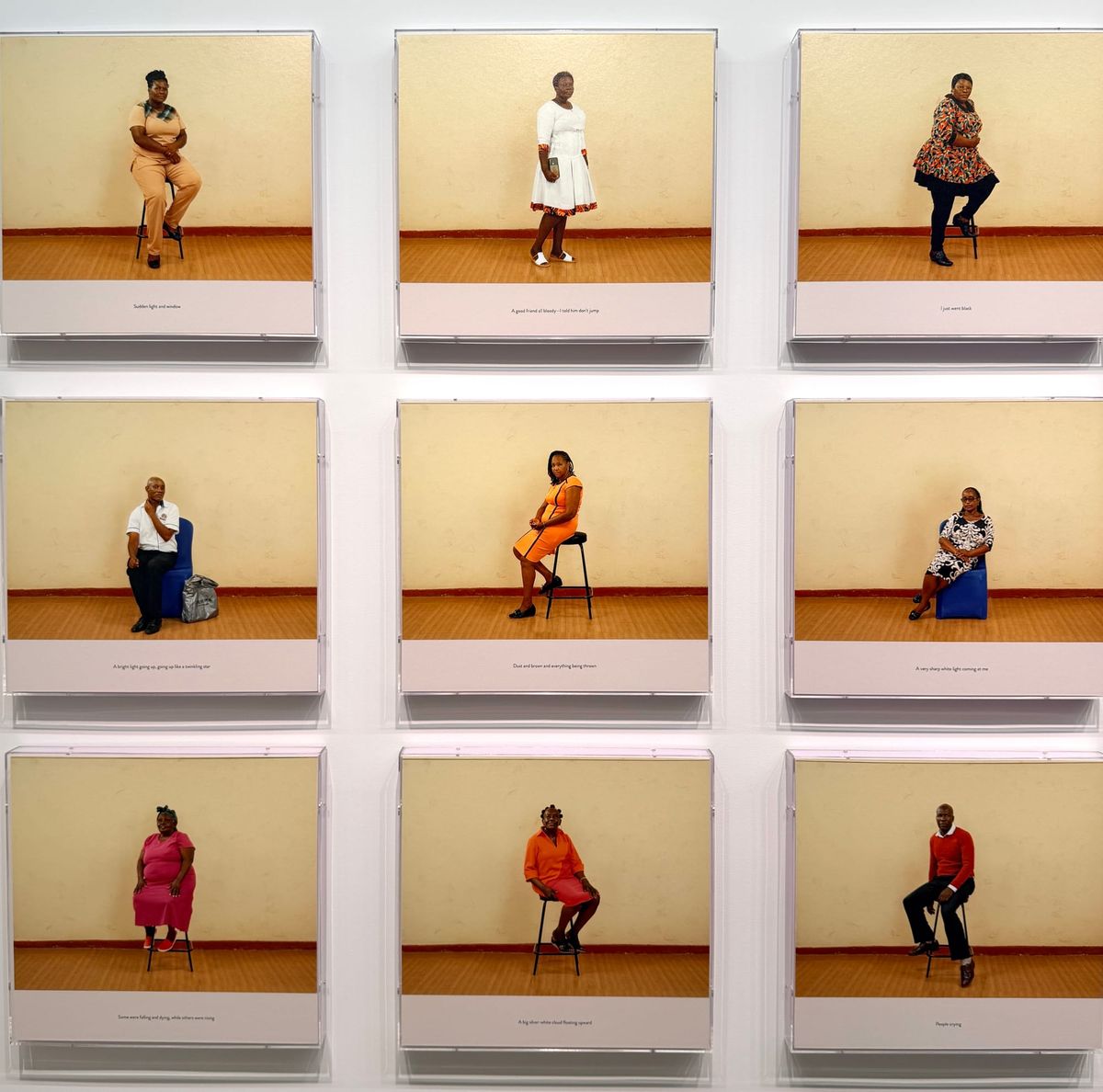
The "windows exploded" in her photographic series are not just broken panes of glass; they are metaphors for the fragility of the structures we rely on. When the system fails, it does so in ways that are loud, violent, and messy, yet the institutions behind them remain curiously intact, ready to move on to the next assignment.
Conclusion: Living with the Unknowable
Taryn Simon has achieved something rare: she has created an exhibition that is both intellectually rigorous and deeply personal. Father Country I Do Love You does not offer the comfort of resolution. It does not solve the mysteries of the past, nor does it provide a clear path forward.
Instead, it asks us to sit with the discomfort of the "partial story." In the Guggenheim’s rotunda, we are invited to look at the machinery of power—not from the perspective of the powerful, but from the perspective of the witness. We are left with the realization that the history of our time is being written in the margins of redacted documents and the half-remembered stories of those who served the state.
For the visitor, the exhibition is a reminder that while we may never get the "full story," we must remain vigilant in our interrogation of the structures that keep those stories hidden. The system may be vast, and the individuals within it may be shielded by their own professional anonymity, but the evidence—no matter how fragmented—remains. And as Simon demonstrates, the act of looking is, in itself, a form of resistance.

 Laily UPN
 Pevita Pearce