

 Nana Wu
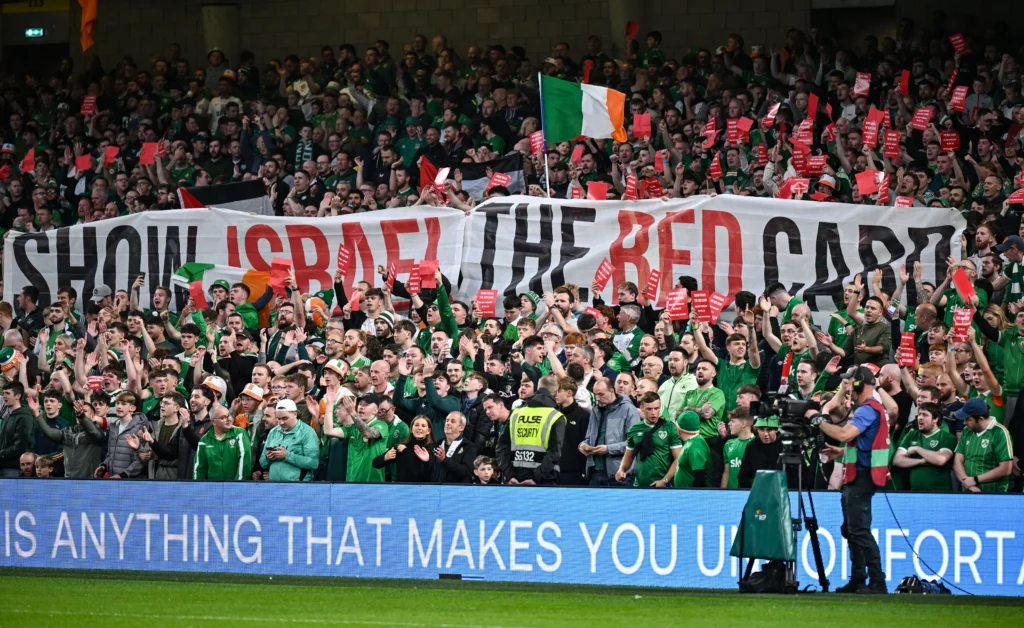
As the 2026/27 UEFA Nations League group phase approaches, the intersection of international sport and global geopolitics has reached a boiling point. The scheduled participation of the Israel men’s national football team in matches against Austria, Ireland, and Kosovo—set to take place during the international window of September 24 to October 6—has ignited a firestorm of controversy.
Leading human rights organizations, most notably Amnesty International, have condemned the decision, arguing that the inclusion of Israel in UEFA competitions grants legitimacy to a state currently accused of systemic human rights abuses and the maintenance of illegal settlements in the Occupied Palestinian Territory (OPT).
The Core Controversy: Sport as a Political Stage
The tension centers on the moral imperative of international sporting bodies to uphold human rights standards. Steve Cockburn, Amnesty International’s Regional Director for Europe, did not mince words regarding the upcoming fixtures.
"It is unconscionable that the Israel men’s football team will participate in the UEFA Nations League this autumn despite clear evidence that Israel’s football association continues to support illegal settlements," Cockburn stated. He further argued that by maintaining Israel’s status in its leagues, UEFA is effectively providing a "public relations spectacle" for a state currently engaged in a brutal occupation and a system of apartheid, as defined by various international human rights reports.
The contention is not merely about the game itself, but about the structural complicity of FIFA and UEFA. Critics argue that by continuing to facilitate these matches, the governing bodies are ignoring the International Court of Justice (ICJ) and the United Nations, both of which have issued rulings and resolutions condemning the unlawful nature of the Israeli occupation.
Chronology of the Dispute
To understand the current impasse, one must look at the sequence of diplomatic and athletic failures that have led to this moment:
- October 2025: Amnesty International formally petitioned FIFA and UEFA, demanding the suspension of the Israel Football Association (IFA) unless clubs based in illegal settlements in the OPT were immediately excluded from the Israeli domestic league structure.
- March 2026: FIFA announced its decision to take no action against the IFA regarding the settlement-based clubs. This decision was met with immediate backlash, with critics noting it effectively disregarded international law and the findings of the 2024 ICJ Advisory Opinion.
- April 2026: In response to the FIFA ruling, the Palestinian Football Association (PFA) escalated the matter by filing an appeal with the Court of Arbitration for Sport (CAS).
- June 2026: Amnesty International published a comprehensive report titled "Erasing anything Palestinian: Israel’s ethnic cleansing of West Bank," which provided evidence of state-backed policies aimed at the formal annexation of Palestinian land.
- September 2026: The UEFA Nations League matches are scheduled to proceed, with games between Ireland and Israel slated to be played in neutral venues—specifically in Hungary and Serbia—under closed-door conditions to mitigate the risk of protests.
Supporting Data and Human Rights Framework
The crux of the opposition lies in the IFA’s inclusion of clubs based in the West Bank. Under FIFA statutes, a member association’s territory is defined by the internationally recognized borders of the state. By hosting matches involving teams from illegal settlements, the IFA is accused of violating these core statutes.
Amnesty’s recent research suggests that the current political climate in the region has led to the "turbocharging" of settler violence and the systematic destruction of Palestinian infrastructure, including the uprooting of centuries-old olive trees. These actions, documented by the organization, serve to erase the historical and cultural presence of Palestinian families in the region.
From an ethical standpoint, the "Stop the Game" campaign in Ireland has mobilized a diverse coalition of artists, politicians, and trade unions, all of whom argue that the "beautiful game" is being used to "rubber-stamp apartheid." The coalition highlights that if UEFA can suspend other nations for political or human rights violations, the refusal to do so in the case of Israel represents a discriminatory double standard.
Official Responses and Tactical Adjustments
The Football Association of Ireland (FAI) found itself in an untenable position, caught between UEFA’s rigid competition mandates and intense domestic pressure. In a formal submission to UEFA, the FAI requested that Israel be suspended from the tournament, citing the severe geopolitical instability and the ethical concerns surrounding the matches.
UEFA’s response, however, was to maintain the integrity of the Nations League schedule while making logistical concessions. By designating the Ireland-Israel matches to be held in "neutral venues" in Hungary and Serbia, and ensuring they are played behind closed doors, UEFA is attempting to decouple the matches from the public eye.
Yet, human rights advocates argue that these measures are merely cosmetic. As Cockburn noted, "As political leaders and sporting authorities choose to stay on the sidelines, fuelling Israel’s impunity, fans are stepping onto the pitch to demand accountability, justice and fair play." The move to closed-door matches is seen by activists as an admission that the governing bodies are aware of the toxicity of the situation but are unwilling to address the root cause of the protest.
Implications for the Future of Global Sport
The implications of this standoff extend far beyond the pitch. We are witnessing a fundamental challenge to the neutrality of international sporting bodies.
1. The Erosion of Institutional Neutrality
For decades, FIFA and UEFA have operated under the banner of "keeping politics out of sport." However, as the world becomes increasingly interconnected and human rights become a central pillar of international relations, this stance is increasingly viewed as an abdication of responsibility. The refusal to suspend the IFA is seen by many as a political choice in itself—a choice to prioritize the status quo over the protection of human rights.
2. The Power of Fan Activism
The "Stop the Game" campaign highlights a shift in power dynamics. While institutional leaders remain cautious, fans and civil society organizations are using their collective voice to pressure governments and associations. This grassroots movement is challenging the assumption that the governance of football is an insulated, top-down process.
3. Legal Precedents and the Court of Arbitration for Sport
The outcome of the PFA’s appeal to the Court of Arbitration for Sport will be a landmark moment. A ruling in favor of the PFA would force a total re-evaluation of how international federations deal with members operating in disputed territories. Conversely, if the appeal is rejected, it may signal a period of deepening disillusionment with the CAS, potentially leading to further calls for structural reform within global sporting governance.
Conclusion: A Game Defined by Its Conscience
The 2026/27 UEFA Nations League matches will not be remembered solely for their scores or the tactical maneuvers on the grass. Instead, they will be remembered as a flashpoint in the ongoing battle for the soul of international football.
When the whistle blows in those empty stadiums in Hungary and Serbia, it will serve as a stark reminder that sports are not exempt from the realities of the world. As Amnesty International and various activist groups have underscored, the decision to proceed is not a neutral act. It is a choice to maintain the current trajectory, even as the human cost of the conflict in the OPT continues to mount.
Ultimately, the pressure on UEFA and FIFA is unlikely to dissipate. The debate has shifted from whether sports should be political to how sports can be ethical. If the organizations responsible for the beautiful game wish to maintain their legitimacy in the eyes of the public, they may soon find that the "sidelines" are no longer a safe place to stand. The demand for accountability is not going away; rather, it is becoming a central feature of the global sporting landscape, proving that when the world faces crises of human rights, the stadium is no longer a sanctuary, but a forum for the struggle for justice.


 Laily UPN
 Rifan Muazin