

 Evan Lee Salim
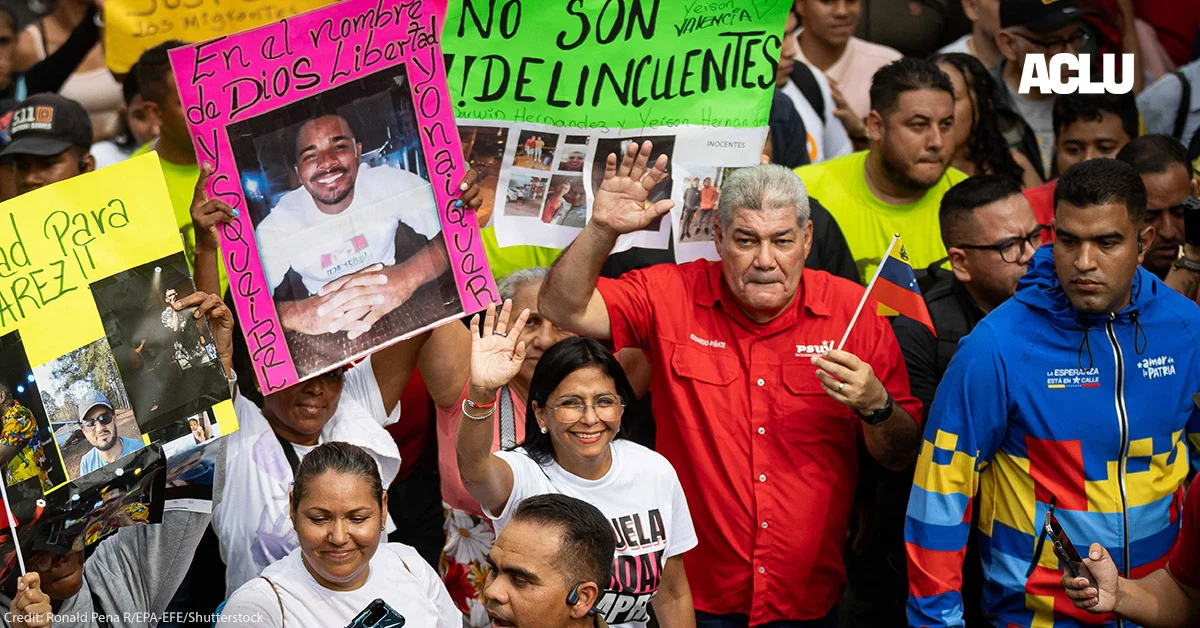
In a historic confrontation between the executive branch and the federal judiciary, the D.C. Circuit Court of Appeals is currently grappling with one of the most significant constitutional crises in modern American history. At the center of the dispute is J.G.G. v. Trump, a legal challenge originating from the clandestine deportation of over 100 Venezuelan men to El Salvador’s notorious Center of Confinement for Terrorism (CECOT) in March 2025.
The case, which centers on the Trump administration’s invocation of the 1798 Alien Enemies Act, has moved beyond a mere immigration dispute. It has evolved into a high-stakes inquiry into whether the executive branch can operate with impunity, effectively nullifying court orders through non-compliance and the denial of due process.
The Genesis of a Crisis: The March 15th Breach
The events leading to the current litigation began on a cloudy Saturday in March 2025. As federal immigration officials prepared to execute a mass deportation, a D.C. district judge convened an emergency hearing. The government’s justification for the rapid removal of these individuals was the Alien Enemies Act—a relic of the late 18th century intended for use during declared wars. Critics and legal scholars have long argued that invoking such a law during peacetime to bypass constitutional protections is a flagrant overreach.
The situation was dire. The men in question—some of whom had legitimate asylum claims—were being held in restrictive restraints, destined for a prison facility in El Salvador known for extreme human rights abuses. As attorneys for the American Civil Liberties Union (ACLU) and the Department of Justice (DOJ) engaged in a frantic, high-speed legal debate via a 5 p.m. Zoom conference, the judge issued a clear and unambiguous directive: "Any plane containing these folks that is gonna take off or is in the air, needs to be returned to the United States."
The directive was precise: if the planes had not yet landed, they were to be turned around. If they were on the ground, the men were not to be deplaned. Despite this explicit order, the Trump administration proceeded with the operation. In the dead of night, the men were transported to CECOT, effectively placing them beyond the immediate reach of the U.S. legal system and rendering the court’s order moot in the short term.
A Chronology of Legal Escalation
The fallout from the March 15th incident has generated a complex web of legal proceedings.
- March 15, 2025: The initial emergency order is issued by the district court, demanding a halt to the transfer. The administration defies the order, and the men are processed into the Salvadoran prison system.
- June 2025: A federal judge issues a landmark ruling, declaring the removal of the men under the Alien Enemies Act to be unlawful. The court mandates that the administration provide the detainees with due process to contest the government’s allegations.
- September 25, 2026: A panel of D.C. appellate judges hears oral arguments regarding whether the victims of this operation are entitled to formal hearings. The government’s defense relies on the claim that, having already transported the men to El Salvador, the administration is no longer obligated to provide them with the due process they were denied in the U.S.
- September 29, 2026: All 11 active judges of the D.C. Circuit Court of Appeals convene to address the issue of criminal contempt. The central question is whether the district court has the authority to investigate which specific administration officials orchestrated the defiance of the March 15th court order.
The Human Cost: Andry Hernández Romero
Behind the complex legal jargon and the high-level appellate arguments lies the story of individuals like Andry Hernández Romero. A Venezuelan makeup artist and LGBTQ+ asylum seeker, Romero fled his home country to escape persecution. After entering the United States lawfully in August 2024, he was swept up in the administration’s aggressive immigration dragnet.
In a translated interview with The Bulwark, Romero recounted his arrival at CECOT. "My first impression was: ‘What am I doing here? Why am I here?’" he stated. "More than worrying, I was scared, because my fellow companions said that anyone who entered there would never come out."
Romero’s case highlights the profound human rights implications of the administration’s policies. While he was held incommunicado in the Salvadoran facility, his U.S. immigration case was dismissed, and his appeals were denied. He was effectively "disappeared" by the state, stripped of his right to counsel and his right to be heard before an impartial arbiter.
The Constitutional Challenge: Executive Accountability
The core of the legal battle now rests on the principle of the separation of powers. The ACLU, represented by Lee Gelernt, Deputy Director of the Immigrants’ Rights Project, argues that the government is actively attempting to obstruct a judicial inquiry.
"The government’s trying to shut down the inquiry by the district court to find out who made the decisions to defy the order," Gelernt told the court. The administration’s refusal to provide clear, granular information regarding the chain of command for the flight operations has led the district court to seek testimony from two DOJ attorneys—one of whom has provided whistleblower evidence regarding the violation.
The administration has resisted these efforts, claiming that the judiciary lacks the scope to pierce the veil of executive decision-making. This, according to the ACLU, sets a dangerous precedent. If an administration can defy a federal judge, ignore a stay of deportation, and then argue that the resulting location of the victim immunizes the government from legal consequences, the judiciary loses its role as a check on executive power.
Implications for the Rule of Law
The arguments heard on September 29th before the full D.C. Circuit represent a defining moment for the American legal system. The DOJ’s stance—that the administration can admit to violating constitutional rights while simultaneously arguing that the victims have no remedy—strikes many legal experts as an untenable expansion of executive authority.
If the appellate court rules in favor of the government, it would effectively signal that the Alien Enemies Act, when invoked, creates a "rights-free zone" where neither due process nor judicial review holds sway. Conversely, a ruling in favor of the plaintiffs would reassert the supremacy of the rule of law and the sanctity of court orders.
Furthermore, the criminal contempt inquiry, if allowed to proceed, would represent a rare and potent exercise of judicial power. It would force a public accounting of how the order to ignore a federal judge was disseminated and carried out, potentially identifying the individuals responsible for the most egregious breach of the judiciary’s authority in recent memory.
Looking Forward: A System Under Pressure
The case of J.G.G. v. Trump is not merely about immigration; it is about the structural integrity of the United States government. As the D.C. Circuit prepares its decision, the legal community remains fixed on the outcome. The administration’s reliance on a 1798 statute to justify actions in 2025 and 2026 underscores a broader, more aggressive use of executive power that seeks to bypass established democratic safeguards.
For the men currently trapped in CECOT, the court of appeals represents their final hope for justice. For the American public, the case stands as a stark reminder that the rule of law is only as strong as the institutions—and the individuals—willing to enforce it. The judiciary is currently in the midst of a "direct test of executive accountability," and the final ruling will likely echo through the halls of government for decades to come, defining the boundaries of presidential power and the extent to which the law can protect individuals from the reach of an overextended state.
As the court deliberates, the question remains: Can a federal judge compel an administration to respect the Constitution, or has the executive branch successfully maneuvered itself beyond the reach of the law? The answer will determine the future of due process in America.

 Nana

 Layla Zulfa