
 Dwi Wanna
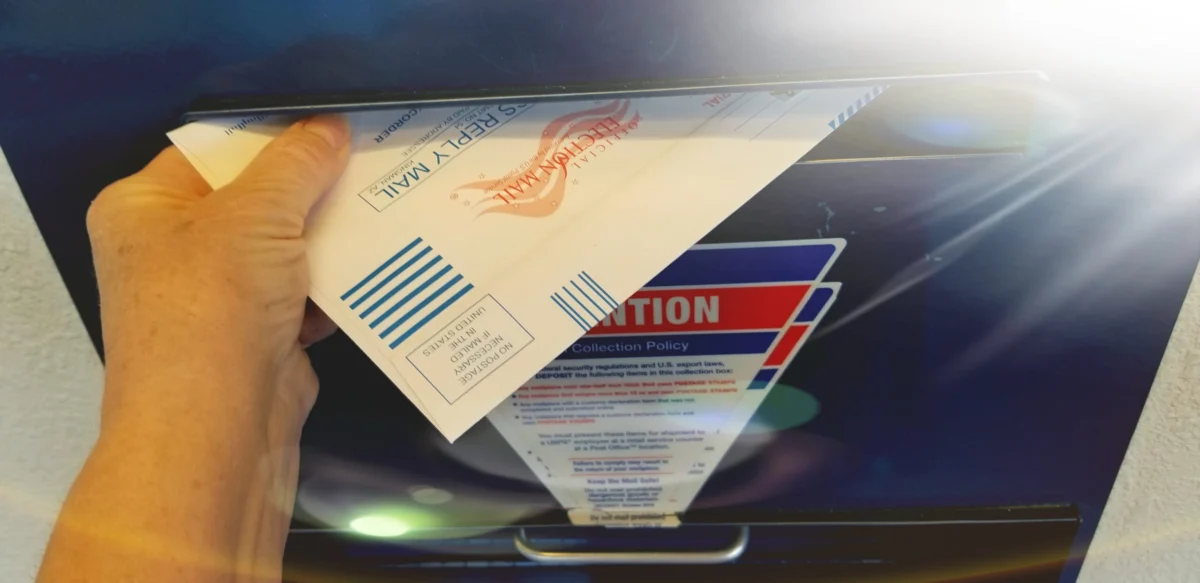
WASHINGTON — In a significant victory for voting rights advocates and the American electorate, a federal judge has issued a nationwide preliminary injunction, effectively blocking the Trump administration from implementing sweeping new restrictions on mail-in and absentee ballots. The ruling, handed down today, serves as a critical firewall against what civil rights groups have characterized as an unlawful attempt to weaponize the U.S. Postal Service (USPS) to disrupt the upcoming midterm elections.
The injunction, sought by the Lawyers’ Committee for Civil Rights Under Law on behalf of the NAACP, Common Cause, and Black Voters Matter, freezes a controversial USPS rule change that threatened to disenfranchise millions of eligible voters by imposing rigid, unauthorized mandates on the transmission and design of federal election ballots.
The Core Conflict: Overreach vs. Mandate
At the heart of the litigation is the question of whether the Postal Service—an agency historically tasked with the nonpartisan delivery of mail—possesses the statutory authority to unilaterally rewrite election procedures. The challenged rule, finalized by the USPS in August, required that absentee and mail-in ballots for federal elections be submitted in envelopes meeting specific, newly created design requirements. Furthermore, it restricted the distribution of these ballots to only those voters who were verified through a newly established, bureaucratic "Federal Ballot Mail Portal."
In granting the preliminary injunction, the court found that no existing federal statute grants the Postal Service the authority to issue such restrictive mandates. By attempting to impose these rules less than 60 days before the midterm elections, the administration created a volatile environment of uncertainty. The court’s decision effectively strikes down these barriers, ensuring that established state-level procedures—rather than top-down federal dictates—remain the standard for the upcoming election.
Chronology: A Multi-Front Legal Battle
The path to this injunction did not occur in a vacuum; it is the culmination of months of mounting tension between civil rights organizations and the executive branch regarding the integrity and accessibility of the mail-in voting system.
- April 2020: The Lawyers’ Committee for Civil Rights Under Law, alongside coalition partners, initiated a legal challenge against an executive order issued by the Trump administration that specifically targeted the expansion of mail-in voting. This initial suit set the stage for a broader fight over the administration’s role in election administration.
- August 2020: Despite ongoing legal scrutiny, the USPS formally finalized the new rules regarding the "Federal Ballot Mail Portal" and envelope design specifications. The timing of this release—coming during a global pandemic where reliance on mail-in voting had reached record highs—drew immediate fire from voting rights groups.
- September 2020: The coalition of civil rights groups renewed their request for emergency relief, arguing that the August rule was not merely a procedural update but a deliberate attempt to suppress voter turnout among vulnerable populations, including Black voters, seniors, and military personnel stationed overseas.
- Present Day: With the midterm elections just 49 days away, the federal court’s intervention provides a definitive "stop" order, preventing the implementation of the rules and providing a narrow window of stability for election officials and voters alike.
Supporting Data and the Risk of Disenfranchisement
The implications of the blocked USPS rule were far-reaching. Advocates argued that by introducing complex, non-standardized requirements shortly before Election Day, the administration risked creating mass confusion.
According to data presented by the plaintiffs, the restrictions disproportionately impacted those who rely most heavily on the postal system for their civic participation. This includes:
- Rural Voters: Those with limited access to in-person polling locations who rely on the USPS for ballot return.
- Voters with Disabilities: For whom mail-in voting is often the only accessible method of casting a ballot.
- Communities of Color: Who have historically faced systemic hurdles to the ballot box and would have been forced to navigate a "Federal Ballot Mail Portal" that lacked sufficient outreach, testing, or public education.
- Military and Overseas Voters: Who are uniquely reliant on the integrity of the international mail system to ensure their voices are heard in federal elections.
The legal teams argued that the administrative burden of the new portal, combined with the strict envelope design mandates, would have led to a high rejection rate for ballots that were otherwise validly cast.
Official Responses: "The Job of the Postal Service is to Deliver Mail"
The reaction to the ruling from civil rights leaders was one of cautious triumph.
Damon Hewitt, president and executive director of the Lawyers’ Committee for Civil Rights Under Law, was unequivocal in his assessment. "The court has made clear that the U.S. Postal Service exceeded its authority by adopting a rule to restrict mail-in voting," Hewitt stated. "The rule would have disenfranchised huge numbers of voters and created chaos during the upcoming Midterm Elections. There is no problem with voting by mail. The problem is the administration’s efforts to obstruct millions of people from the polls."
Kristen Clarke, NAACP general counsel, highlighted the broader judicial trend, noting that this is not an isolated win. "Two district courts and a federal circuit court have now blocked this administration’s unlawful attempt to weaponize the U.S. Postal Service to hijack our mail voting system," Clarke said. She urged the Supreme Court to uphold the injunction, should the administration choose to appeal, emphasizing that the current mail-in system is "safe, secure, and orderly."
Cliff Albright and LaTosha Brown, co-founders of the Black Voters Matter Fund, issued a joint statement focusing on the "damage" caused by administrative confusion. "Even when these efforts are blocked in court, the confusion they create can still do damage," they warned. "We want voters to hear us clearly: the new USPS restrictions are currently blocked, and eligible voters should continue following the mail-voting rules and deadlines established in their states."
Implications for the Midterm Elections and Beyond
The significance of this ruling extends beyond the immediate cessation of the USPS rule. It serves as a precedent for the limits of executive power in the context of federal elections. By confirming that the USPS cannot unilaterally override state-governed election procedures, the court has reinforced the principle that voting access is a right that cannot be curtailed by federal administrative decree.
Maintaining Vigilance
Despite the victory, legal experts involved in the case caution that the battle for electoral integrity is ongoing. Robert Weiner, director of the Voting Rights Project at the Lawyers’ Committee, noted that the administration’s focus on the USPS as a tool for election interference is unlikely to cease entirely. "We will remain vigilant against the further efforts, which we know are coming, to interfere with Americans’ fundamental right to vote," Weiner said.
For the average voter, the message from the legal community is one of reassurance and instruction:
- Ignore the Blocked Rules: The "Federal Ballot Mail Portal" and the specific envelope design changes are no longer in effect.
- Follow State Guidance: Voters are encouraged to check their local secretary of state’s office for the most accurate information regarding ballot deadlines, drop boxes, and mail-in procedures.
- Stay Informed: Because misinformation can travel faster than court rulings, voters should rely on official state portals rather than unsolicited federal mailers or third-party advertisements.
As the nation approaches the midterm elections, the role of the judiciary has proven to be the final arbiter in ensuring that the democratic process remains accessible. This injunction serves as a vital safeguard, protecting the franchise for millions of Americans and affirming that, in a democracy, the role of the government is to facilitate the expression of the people’s will—not to place barriers in its path.

 Jia Lissa

 Siti Muinah