


 Lina Hope
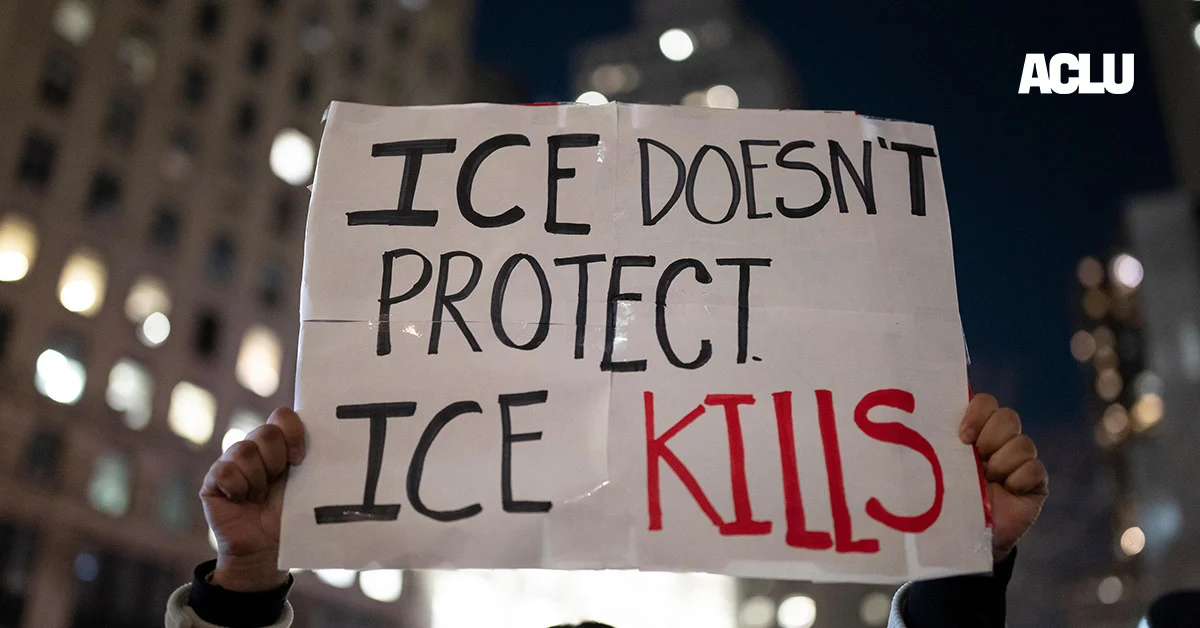
WASHINGTON — The American Civil Liberties Union (ACLU) has issued a seismic warning regarding the current state of American governance. In a comprehensive new report titled “76 Ways Mass Deportation is Breaking Our Democracy,” the organization details how the Trump administration’s immigration agenda has transcended mere border enforcement, functioning instead as a structural mechanism to dismantle civil liberties and bypass constitutional safeguards.
The report arrives at a precarious moment in American history. As Immigration and Customs Enforcement (ICE) arrest numbers reach historic peaks, the administration has pivoted its tactical approach—shifting away from the high-visibility, chaotic raids of the past toward more discreet, targeted arrests. However, the ACLU argues that this shift is not a moderation of policy, but rather a strategic evolution in the exercise of unchecked executive power.
The Trojan Horse of Immigration Enforcement: Core Findings
The central thesis of the ACLU’s report is that the administration’s immigration strategy serves as a "Trojan Horse," using the rhetoric of border security to erode the foundational pillars of the U.S. constitutional order. By normalizing the suspension of due process for noncitizens, the administration has created a legal framework that can be—and is being—applied to broader segments of the population.
The report categorizes these abuses into three interconnected spheres of influence:
1. The Assault on Civil Rights and Liberties
The administration has utilized mass deportation as both a pretext and a smokescreen for broader attacks on constitutional rights. These policies have not been confined to noncitizens; they have created a ripple effect that impacts citizens, protesters, and journalists. By targeting immigrants who participate in public discourse, the administration has effectively chilled the exercise of First Amendment rights. The erosion of due process in immigration courts—where individuals are often denied the right to counsel or a fair hearing—serves as a template for the degradation of legal protections that safeguard all Americans.
2. The Dismantling of Democratic Checks and Balances
A cornerstone of the U.S. government is the separation of powers. The ACLU report argues that the administration has aggressively expanded the reach of federal deportation police while simultaneously insulating these agencies from judicial and legislative oversight. The pattern is consistent: the executive branch defies court orders, ignores congressional mandates, and employs military-grade tactics within U.S. cities. This behavior represents a dangerous normalization of state violence, where agencies operate with near-total impunity, evading the checks and balances designed to prevent authoritarian overreach.
3. Attacks on a Multiracial, Pluralistic Democracy
Perhaps most controversially, the report alleges that the administration’s policies are motivated by a demographic agenda. Through the targeted revocation of Temporary Protected Status (TPS), attempts to end birthright citizenship, and the implementation of discriminatory visa and entry bans, the administration is actively seeking to alter the racial and ethnic composition of the United States. These efforts, the ACLU asserts, are a direct assault on the vision of a pluralistic, inclusive democracy, threatening the status of millions of people who have built their lives and contributed to the economy within the U.S.
A Chronology of Escalation: From Rhetoric to Policy
To understand the current crisis, one must look at the timeline of the administration’s immigration escalation.
- Initial Phase (The Rhetorical Shift): The administration’s early months were defined by the normalization of xenophobic rhetoric. This created the political capital necessary to justify the rapid deployment of resources toward enforcement over integration.
- Expansion of ICE Autonomy: Over the subsequent two years, the administration successfully lobbied for increased budgets and broader arrest authorities for ICE, effectively transforming the agency into a domestic federal police force with diminished oversight.
- The Shift to Discreet Enforcement: Following widespread public outcry and the backlash against high-profile raids, the administration pivoted to "stealth enforcement." This phase saw an increase in the use of intelligence-led arrests, often targeting individuals in sensitive locations, such as courthouses and schools, which further eroded trust in public institutions.
- Current State of Play: We are currently witnessing the institutionalization of these emergency measures. Policies that were once framed as temporary or "crisis-driven" have now been codified into the standard operating procedure of the Department of Homeland Security (DHS), signaling a permanent shift in how the U.S. manages its borders and its resident populations.
Supporting Data: The Cost of Enforcement
The ACLU report underscores its claims with a chilling array of data. Record-high arrest figures are only part of the story. The "76 ways" referenced in the title refer to 76 distinct policy shifts, executive orders, and administrative actions that have collectively hollowed out the immigration system.
Key data points highlighted include:
- The Surge in Unauthorized Detentions: The average length of detention has increased significantly, contributing to a backlog of millions of cases in immigration courts.
- The Economic Impact: By targeting the immigrant workforce—who make up vital segments of the agricultural, construction, and service industries—the administration’s policies have contributed to labor shortages and rising costs for American consumers.
- The Legal Failure: A substantial percentage of ICE enforcement actions have faced successful legal challenges in lower courts, yet the administration continues to bypass these rulings, creating a state of legal uncertainty that hampers businesses and communities alike.
Official Responses and the Call to Action
The ACLU’s report is not merely an indictment; it is a strategic blueprint for legislative intervention. Naureen Shah, director of immigration policy and government affairs at the ACLU, was unequivocal in her assessment of the current climate.
“For the past year and a half, the ACLU and advocates have warned that the Trump administration’s mass deportation agenda pulls straight from an authoritarian playbook,” Shah stated. “And now, we’re seeing the devastating impacts of those policies, with citizens and noncitizens alike paying the price and the state of our democracy in crisis.”
Shah and her colleagues are demanding that Congress move beyond performative outrage and engage in "transformative immigration reform." This includes:
- A Path to Citizenship: Providing a clear, legal framework for those already living and working in the U.S. to regularize their status.
- Modernization of Border Policy: Replacing the focus on militarized enforcement with a humane, technologically sound processing system that respects human rights.
- Strengthening Accountability: Implementing robust oversight mechanisms that force federal agencies to comply with congressional subpoenas and court orders.
Sarah Mehta, deputy director of immigration policy, echoed this sense of urgency. “From the cancellation of Congressionally mandated protections like TPS to the arrest of noncitizen students for exercising their First Amendment rights, the Trump administration has repeatedly violated bedrock democratic principles,” Mehta said. “As this administration has shown, no one is safe from its extreme mass deportation agenda. Our elected officials—and the state of our democracy—cannot afford to allow this lawlessness to continue.”
Implications: The Long-Term Consequences for Democracy
The implications of the ACLU’s findings extend far beyond the border. If the executive branch is permitted to continue using immigration enforcement as a tool for political consolidation, the precedent for future administrations is clear: constitutional rights are conditional and can be suspended in the name of "national security" or "law and order."
The "affirmative immigration vision" series, of which this report is the fourth installment, argues that the current path leads to a weakened workforce, a fractured society, and a diminished international standing. The report warns that the damage being done to the trust between the government and the governed is not easily repaired. When marginalized communities are the first to lose their rights, they are rarely the last.
The ACLU concludes that the future of American democracy depends on the ability of Congress to "inoculate" the nation against these attacks. By restoring the rule of law and reasserting the legislative branch’s authority over immigration policy, lawmakers have the chance to steer the country away from authoritarianism and back toward a pluralistic, constitutional framework.
As the 2024 political cycle intensifies, the report serves as a stark reminder that the immigration debate is, at its core, a debate about what kind of nation the United States intends to be. The choice, the ACLU suggests, is between a country that uses its power to protect the rights of all, or one that uses its power to dismantle the very democracy it claims to defend.
For those interested in the full scope of the legal and policy arguments, the complete report can be accessed via the ACLU’s official portal: https://www.aclu.org/publications/76-ways-mass-deportation-is-breaking-our-democracy

 Nana

 Layla Zulfa