




 Muslim
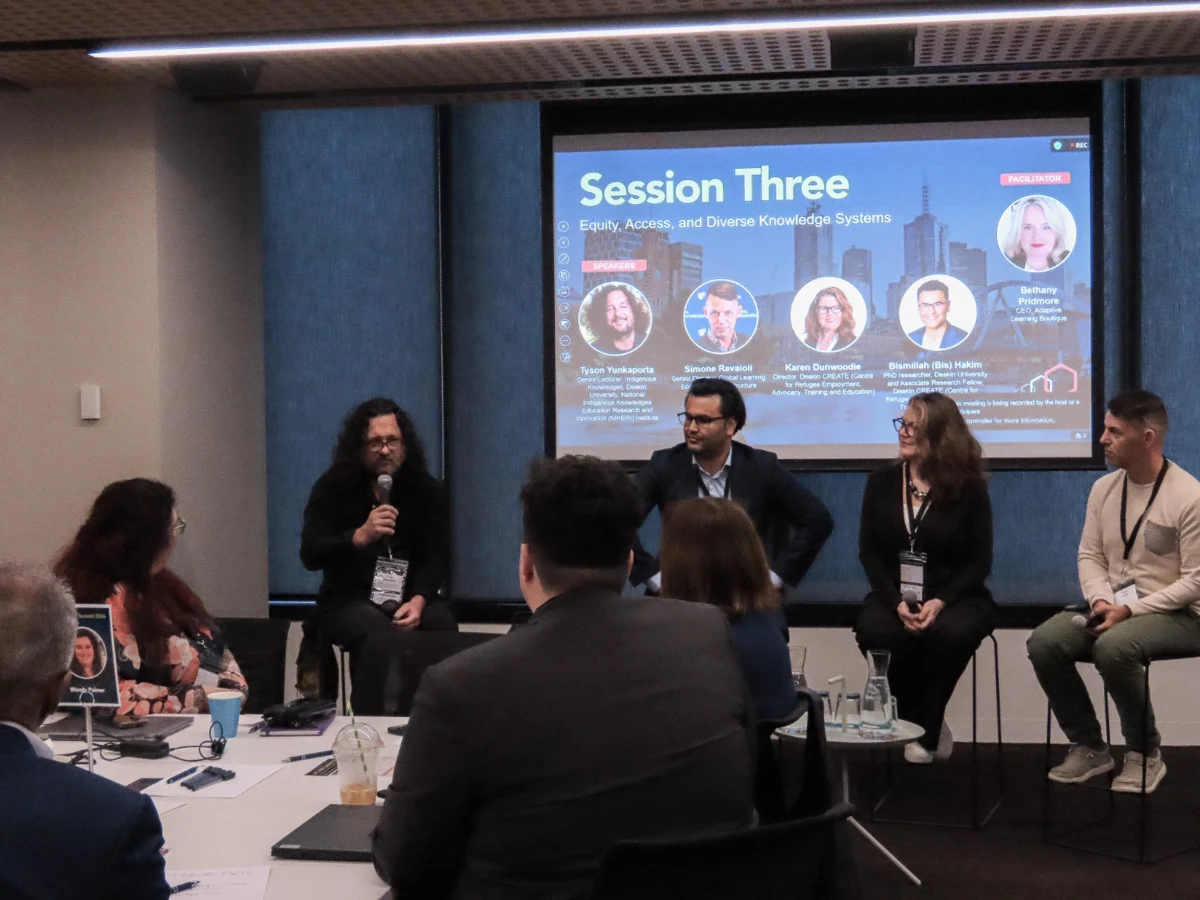
By: Simone Ravaioli
In the rapidly evolving landscape of global education, we are witnessing a fundamental shift in how human capacity is measured, valued, and validated. As we navigate the next decade, the "Recognition of Learning"—the mechanisms by which we acknowledge what individuals know and can do—stands as one of the eight most critical forces reshaping our systems. Yet, as a recent panel discussion featuring Indigenous thinker Tyson Yunkaporta highlighted, our current approach to this transformation remains fundamentally flawed. We are stuck in a cycle of assimilation, masquerading as progress.
The central challenge we face is not merely technical; it is philosophical. We are grappling with the limitations of "Westphalian" logic—the urge to build rigid, protective walls around knowledge systems. To move forward, we must transition from building defensive fortresses of isolation toward creating relational interfaces that allow for "creolization": a process where disparate knowledge systems meet, collide, and fundamentally transform one another.
The Illusion of Inclusion: Why Current Recognition Fails
For years, the standard policy response to the inclusion of informal or Indigenous knowledge has been the Recognition of Prior Learning (RPL). On paper, RPL is designed to bridge the gap between experiential learning and formal qualifications. In practice, however, it frequently functions as a tool of colonial assimilation.
The Translation Trap
When we subject experiential or land-based knowledge to traditional RPL frameworks, we are not truly recognizing that knowledge on its own terms. Instead, we force it through a "translation process." We carve up holistic, communal, and nuanced expertise into standardized, bite-sized competencies that fit neatly into national frameworks. By the time this knowledge is "validated," it has been stripped of the very context that made it valuable. The unspoken ultimatum of these frameworks remains: We will recognize you, provided you learn to speak in our terms first.
This pursuit of "one mind"—the cognitive standardization favored by Western qualifications frameworks—is increasingly at odds with a world that requires diverse, "lifewide" learning. The challenge is to pivot toward what Yunkaporta describes as "one belly": a relational, visceral capacity to feel and learn together, while maintaining the autonomy of the individual and the community.
Chronology of a Paradigm Shift: From Sovereignty to Interoperability
The discourse around recognition has undergone a significant evolution over the past decade, moving through distinct phases of conceptual development.
- The Era of Standardization (Pre-2015): The focus was primarily on global alignment, attempting to fit all learning into monolithic, national, and international frameworks.
- The Rise of Recognition Sovereignty (2015–2022): In response to the failures of standardization, advocates began pushing for "Recognition Sovereignty." This was a defensive move—an attempt to carve out space for communities to validate their own members, shielded from the extractive nature of traditional accreditation boards.
- The Creolization Pivot (2023–Present): Through the lens of Tyson Yunkaporta’s work, the field is beginning to recognize that sovereignty alone is not enough. If we simply build walls, we fall into the trap of mimicking the colonizer’s logic of enclosure. The current frontier is "Epistemic Interoperability"—designing interfaces that allow different systems to communicate without merging or consuming one another.
Supporting Data: The Case for Relational Intelligence
The push for a new model is supported by an increasing recognition of the failures of static, top-down regulatory instruments. Data from the Open Recognition Alliance suggests that when recognition systems are built on "distrust by design"—meaning they require constant external validation to prove value—they inevitably exclude marginalized and non-traditional learners.
The Shift Toward Intimacy as Trust
Serge Ravet, a pioneer in the field of open recognition, has long argued for a move toward "intimacy as trust by design." This requires shifting the technical architecture of credentials. Rather than relying on a single, centralized database that mandates uniformity, we are looking at decentralized standards such as:
- Open Badges: Flexible, portable, and stackable evidence of learning.
- Verifiable Credentials (VCs): Cryptographically secure digital representations of achievements.
- CARE Principles for Indigenous Data Governance: A framework that ensures data is used in ways that benefit the communities from which it originated, emphasizing collective benefit, authority to control, responsibility, and ethics.
When these technologies are governed by relational protocols rather than colonial ones, they cease to be tools of surveillance and instead become tools of empowerment.
Official Responses and Global Precedents
While the global North remains heavily tethered to traditional accreditation, there are early, promising signals of a shift toward "Epistemic Interfacing."
The South African Model
A key example of this shift is South Africa’s Indigenous Knowledge Systems (IKS) Act of 2019. This legislation represents a radical departure from the norm by housing the validation of Indigenous knowledge within a National Indigenous Knowledge Systems Office (NIKSO). Crucially, this office sits under community-led authority rather than an traditional accreditation board. Under this model, designations issued directly by elders and community councils are treated as legally valid, without requiring the "stamp of approval" from an external, Western-style academic body. This is the definition of interfacing as dialogue, not assimilation.
Implications: The Design Challenge for the Future
The path forward presents a profound design challenge for those working in the "Credentials Cartography" and educational policy space. We are at a crossroads:
Sovereign Fortresses vs. Relational Interfaces
If we continue to build "sovereign fortresses," we risk creating a fragmented world where knowledge systems remain isolated, unable to benefit from the wisdom of others. If we focus instead on "Relational Intelligence" (RI), we can design interfaces that respect boundaries while facilitating movement.
The Implications for Policy:
- Stop the Integration Obsession: We must abandon the attempt to integrate Indigenous Knowledge Systems directly into National Qualifications Frameworks. Such integration is almost always a form of appropriation.
- Adopt Epistemic Protocols: We should focus energy on developing "Protocols for Epistemic Interoperability." These protocols would function like digital diplomacy—respectful ways of crossing boundaries, seeking consent, and establishing reciprocity.
- Shift from Accreditation to Protocol: Governance should move away from the "accreditation board" model and toward a "protocol-based" model, where the validity of a credential is determined by the community that issued it and the shared protocol through which it is exchanged.
Conclusion: The Practice of Transknowledging
The ultimate goal is to foster a state of "Transknowledging," where different systems of understanding can meet as equals. As we look to the future of education, we must ask ourselves: are we building systems that allow us to hide, or are we building the infrastructure to meet?
The decolonial shield of sovereignty was a necessary first step, but it is not the final destination. The wall that protects us from extraction must also be a door that allows for genuine, transformative exchange. By leveraging open standards and centering the wisdom of those who have governed knowledge through relationship for millennia, we can build a recognition landscape that is not only inclusive but truly transformative.
The challenge of the next decade is not to standardize the world, but to learn how to exist within a world of multiple, overlapping truths. The technology to do this exists; the missing piece is the courage to redesign our governance to prioritize the relationship over the registry.
About the Author: Simone Ravaioli is a Recognition Technologist and Credentials Cartographer. As Senior Director of Global Learning Innovation at Instructure, he leads strategic initiatives aimed at making the global recognition ecosystem more transparent, portable, and equitable. He is a staunch advocate for "Policy as Data," believing that by reframing complex regulatory frameworks into machine-readable, human-centric data, we can bridge the persistent gap between education and employment.

 Laily UPN

 Nila Kartika Wati






