

 Ammar Sabilarrohman
Introduction: The Myth of Corporate Self-Correction
In an era defined by rapid technological shifts and the unchecked expansion of corporate conglomerates, the debate over regulatory oversight has reached a boiling point. From the consolidation of the media landscape to the burgeoning Wild West of AI and prediction markets, the prevailing trend among industry giants is a push for "self-regulation." However, as recent developments illustrate, this approach is increasingly viewed by economists and policy experts not as a solution, but as a mechanism to evade democratic accountability.
The Roosevelt Institute’s latest dispatch highlights a troubling pattern across three distinct sectors: media, artificial intelligence, and financial speculation. In each instance, the narrative of "efficiency" and "innovation" is being used to mask a fundamental shift away from public interest and toward the consolidation of private power.
Main Facts: The Paramount-Skydance Merger and Beyond
The most immediate flashpoint in this ongoing struggle is the recent settlement involving the Paramount-Skydance merger. Following a legal challenge from various states, the companies reached an agreement that clears the path for the finalization of the deal.
While proponents of the merger emphasize the inclusion of an "independent editorial board" for CNN as a safeguard for journalistic integrity, critics argue this is a cosmetic fix. The reality, according to policy analysts, is that ultimate power remains firmly in the hands of ownership. This consolidation threatens to exacerbate an already precarious information ecosystem, where a shrinking number of corporate entities control the flow of news and opinion. The risk is not merely theoretical; it involves tangible threats to job security for media professionals and the long-term degradation of the public square.
Chronology of a Regulatory Retreat
The trajectory toward unchecked consolidation did not occur overnight. To understand the current crisis, one must look at the historical erosion of antitrust enforcement:
- Pre-2020s: A period of aggressive M&A (Mergers and Acquisitions) activity in the media sector, leading to the "Big Tech" and "Big Media" dominance we see today.
- Early 2025: The Roosevelt Institute releases The Political Economy of the US Media System: Excavating the Roots of the Present Crisis, providing a foundational critique of how corporate control has hollowed out local and national newsrooms.
- September 2026: Paramount-Skydance reaches a settlement with state regulators, signaling the triumph of corporate scale over competition concerns.
- Present Day: As AI and prediction markets (such as Kalshi and Polymarket) gain mainstream traction, these industries have begun lobbying for light-touch federal regulation, citing the need for "agile innovation."
Supporting Data: The Case Against Self-Regulation
The argument against self-regulation is rooted in historical precedent. In his recent analysis, Roosevelt Senior Fellow Graham Steele draws a direct line between the failures of the financial sector leading up to the 2008 crisis and the current approach to AI.
The AI Regulatory Landscape
Steele notes that policymakers are currently debating the role of Self-Regulatory Organizations (SROs) in the AI space. The danger, Steele warns, is that SROs often prioritize the interests of their corporate members over the safety of the public. If AI oversight is left to the companies building the models, the industry will inevitably gravitate toward "regulatory capture," where rules are designed to protect incumbents from competition rather than to mitigate social harm.
The Gambling Paradigm: Prediction Markets
The discrepancy between how different industries are regulated is stark. In a detailed breakdown, policy analyst Brad Lipton contrasts state-level gambling regulations with the federal landscape currently governing prediction markets.
Prediction markets, which effectively operate as high-stakes gambling platforms, are aggressively lobbying to avoid state-level oversight—regulations that are typically much more stringent regarding consumer protection and transparency. By positioning themselves as "information markets" rather than "betting platforms," these companies seek a regulatory loophole that allows them to bypass the rigorous scrutiny applied to traditional casinos or sportsbooks.
Official Responses and Expert Perspectives
The Roosevelt Institute has been at the forefront of challenging these corporate narratives. Their research suggests that the "efficiency" of these markets is a secondary consideration to the systemic risk they pose.

- On Media Concentration: Bilal Baydoun, Shahrzad Shams, and Victor Pickard, authors of the 2025 report on media systems, argue that "the crisis in our media is not a result of bad luck, but of a design choice." Their work contends that democratic societies cannot function without a diverse, non-concentrated media landscape.
- On Financial Oversight: Experts argue that the lessons of the financial crisis remain unlearned. When industries are permitted to write their own rules, the result is almost always a "race to the bottom" regarding ethics, labor standards, and consumer safety.
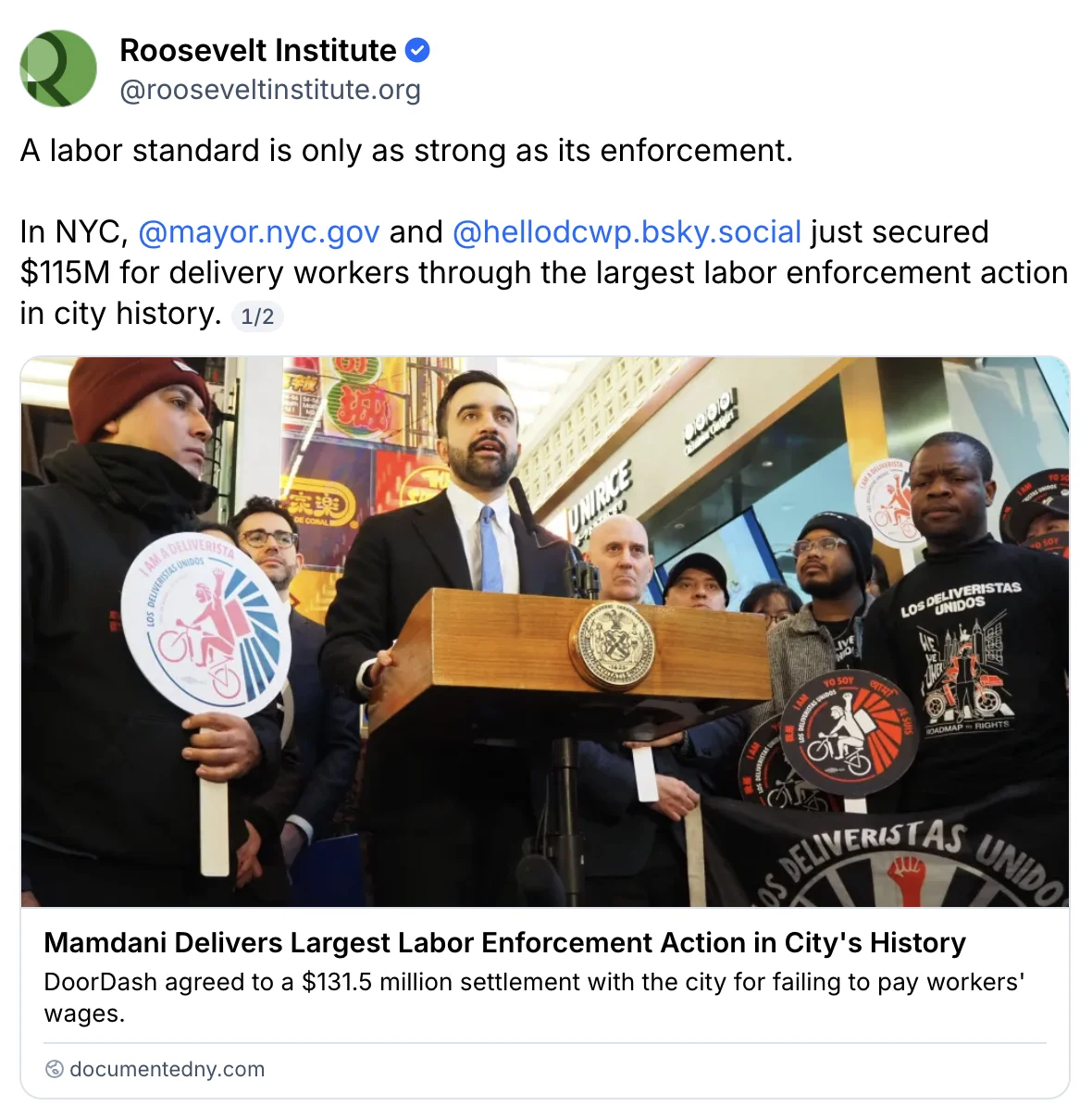
- On Labor and Enforcement: Recent actions in New York City regarding labor enforcement—highlighted by high-profile victories for delivery workers—serve as a reminder that when the government exercises its power to regulate, it can achieve material gains for the working class. This stands in stark contrast to the voluntary "pledges" and "codes of conduct" often promoted by corporate lobbying arms.
Implications: The Path Toward Transformational Reform
The implications of these trends are profound. If we continue to allow corporations to bypass democratic oversight through self-regulation, we risk the further entrenchment of oligarchy.
1. The Threat to Democracy
When media ownership is concentrated, the diversity of the information ecosystem suffers. A "deteriorated information ecosystem" is not just a nuisance; it is a fundamental threat to the democratic process, as citizens are deprived of the varied perspectives necessary to make informed decisions.
2. The AI Risk
The integration of AI into the economy must be guided by public policy that prioritizes labor, equity, and safety. If the regulatory framework is left to the corporations, the deployment of these technologies will likely favor automation that undermines working families, rather than tools that enhance human productivity and well-being.
3. The Need for Structural Change
The Roosevelt Institute emphasizes that "combating oligarchy requires transformational reform, not tweaks." This means:
- Robust Antitrust Enforcement: Challenging mergers that create dominant market power, regardless of the "editorial boards" or "independent oversight" proposed by the firms involved.
- Standardized Federal Regulation: Bringing prediction markets under the same level of scrutiny as other financial services to protect consumers from predatory practices.
- Independent Oversight: Ensuring that regulatory bodies—whether for AI, finance, or media—are staffed by independent experts and empowered to enforce laws that serve the public, not the shareholders.
Conclusion: A Call for Democratic Accountability
The intersection of media, technology, and finance represents the defining policy challenge of our time. As we look toward the future, the choice is clear: we can continue to allow corporate interests to dictate the rules of the game, or we can reaffirm the role of government as a protector of the public interest.
Self-regulation is a mirage. It offers the appearance of accountability while preserving the status quo. To truly serve the needs of working families and protect the foundations of our democracy, we must move beyond the era of corporate self-governance and embrace a robust, transparent, and democratic regulatory framework.
As the Roosevelt Institute continues to advocate for these shifts, their work serves as a vital reminder: the power to shape our economy and our society should rest in the hands of the people, not the boardrooms of the few.
Further Reading
For those interested in exploring these topics in greater depth, the following resources are essential:
- The Political Economy of the US Media System: Excavating the Roots of the Present Crisis by Bilal Baydoun, Shahrzad Shams, and Victor Pickard.
- Financial Crises Teach Us That AI Self-Regulation Must Not Replace a Broader Regulatory Framework by Graham Steele.
- How the Federal Rules for Prediction Markets Fall Short of State-Level Gambling Laws by Brad Lipton.
Join us in New York City for upcoming discussions on how these regulatory shifts impact the future of working families.

 Muslim

 Rifan Muazin






