




 Pevita Pearce
This report is based on original investigative work by Mongabay and is republished through the Indigenous News Alliance.
The promise of a high-tech future, powered by artificial intelligence and semiconductor manufacturing, has collided with the harsh realities of displacement and environmental anxiety in the Philippines. As President Ferdinand Marcos Jr. courts foreign investment for the Luzon Economic Corridor (LEC)—a sprawling, U.S.-backed industrial strategy—a growing coalition of scientists, activists, and Indigenous leaders is raising alarms over the true cost of this "innovation."
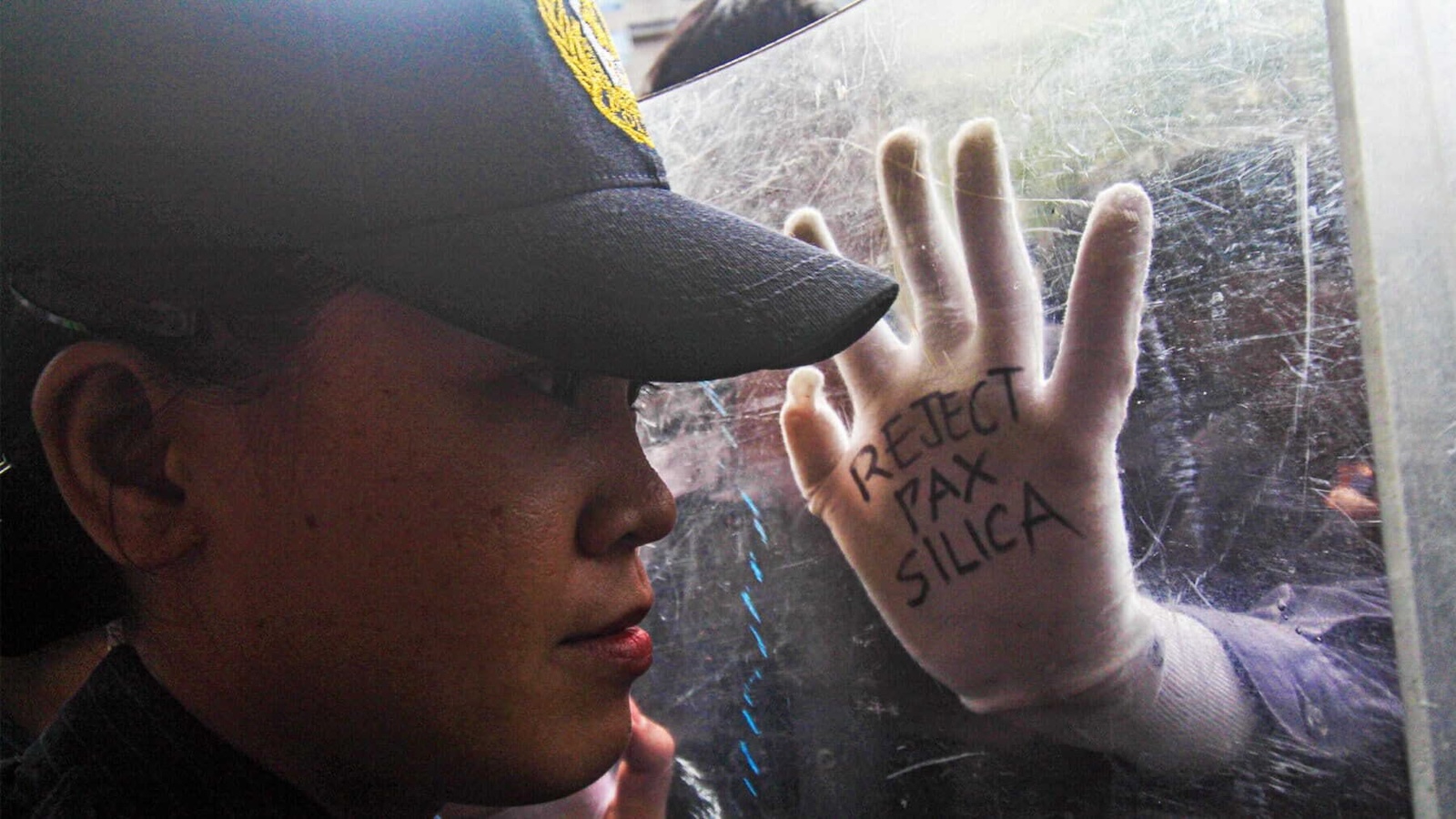
The tension reached a breaking point on September 10, 2026, at the Grand Hyatt Manila. As Marcos Jr. addressed hundreds of international delegates, a violent confrontation erupted between protesters and riot police. The scene outside the luxury hotel was a stark manifestation of a nation caught between the allure of global technological integration and the protection of its most vulnerable communities.
Main Facts: The Pax Silica Initiative
At the heart of the controversy is "Pax Silica," a U.S.-led global pact designed to establish an AI and semiconductor supply chain intentionally decoupled from Chinese manufacturing. The initiative, first unveiled in 2024, aims to position the Philippines as a primary node in the global tech infrastructure.
The centerpiece of this project is a 4,000-acre "economic security zone" slated for construction within the New Clark City region—a 79,000-acre expanse of land previously occupied by U.S. military bases. Proponents, including the Marcos administration and U.S. State Department officials, frame the project as a monumental economic boon. However, the designation of this land as an industrial hub has sparked intense scrutiny regarding the potential for an "international land grab" that threatens the ancestral domains of the Aeta people and places an unprecedented strain on local resources.
Chronology of Conflict: A Long History of Displacement
The history of the Clark area is deeply intertwined with the Philippines’ colonial past and its ongoing struggle for sovereignty.
- 1903: The United States establishes a military base on the site during its colonial rule of the Philippines.
- 1991: After 88 years, the base is finally returned to the Philippine government.
- 1994: Aeta communities living within the Clark region begin their decades-long struggle to obtain a Certificate of Ancestral Domain Title (CADT), a process they claim has been deliberately stalled by government red tape.
- 2024: The Luzon Economic Corridor (LEC) is officially launched, setting the stage for major industrial development in Central Luzon.
- April 2026: Washington and Manila formally announce the "Pax Silica" initiative, confirming plans for the 4,000-acre high-tech manufacturing hub.
- July 2026: U.S. Secretary of State Marco Rubio visits Manila to reaffirm the bilateral commitment, signaling that a final, binding agreement is imminent.
- September 10, 2026: Protests erupt outside the Grand Hyatt Manila during the LEC investors’ forum. At least 27 protesters are injured and five arrested as police use riot shields and batons to disperse the crowd.
- November 2026: The target date for the signing of the final agreement between the U.S. and the Philippines.
Supporting Data: Resource Scarcity and Industrial Demand
The scale of the Pax Silica project is difficult to overstate. According to Joshua Bingcang, head of the Bases Conversion and Development Authority (BCDA), the facility will require approximately 3 gigawatts of energy to operate. Independent analysis suggests this translates to a demand of roughly 26.3 terawatt-hours (TWh) annually. To put this into perspective, the entire Philippine service sector consumed approximately 28 TWh in 2024.
Energy is not the only resource at stake. The facility is expected to consume between 16 million and 24 million gallons of water daily—a figure that officials claim could be scaled up to 79 million gallons using advanced impounding technology.
Giovanni Tapang, former dean of the University of the Philippines’ College of Science, argues that these demands create a zero-sum game. "How many thousands of hectares will they be taking from farmers to build solar panels?" Tapang asked. "If we’re generating all this clean energy, why let the U.S. use it instead of local households?"
Furthermore, the dry season in the Philippines (December to May) creates a critical conflict point. As industrial water demand spikes, local farmers fear their access to irrigation will be severely compromised, threatening the food security of the region.
Official Responses and Bureaucratic Stance
The government’s defense of the project rests on the narrative of national progress. Angela Ignacio, an undersecretary at the Department of Finance, described the project as a vital opportunity for the Philippines to become a "global player" in the technologies that will define the coming century.
U.S. officials echo this sentiment. Heather Variava, senior adviser to the U.S. State Department’s Bureau of Economic, Energy, and Business Affairs, stated, "The goal of the U.S. is always to be an additive, to bring more power, to bring water, to bring more benefits to the Philippines."
However, the BCDA’s narrative has been marred by inconsistent messaging. While initial project documents listed data centers—which are notoriously water- and energy-intensive—as part of the New Clark City infrastructure, the president’s office and the BCDA have issued contradictory statements, at times denying the inclusion of data centers in favor of describing the project strictly as a semiconductor hub.
Regarding the Aeta people, BCDA chief Joshua Bingcang remains dismissive of displacement concerns. "There is no ancestral domain title in that area," he stated, asserting that because the community has not yet secured formal government recognition, the land is effectively "empty" for the purpose of development.
Implications: The Human Cost of Sovereignty
For the Aeta people, the absence of a formal title is not evidence of a lack of ownership, but rather a reflection of a broken system. The National Commission on Indigenous Peoples (NCIP) has maintained a process for land rights that critics like Professor Arnisson Andre Ortega describe as "Indigenous-unfriendly." The requirements—which include detailed population censuses, three generations of genealogy, and complex mapping—are nearly impossible for impoverished, marginalized communities to satisfy without significant state support.
"The absence of a formal title does not invalidate their claim to their ancestral lands; rather, it highlights a critical lack of government support," says Ortega, who conducted a mapping study showing that the proposed Pax Silica footprint overlaps with at least three Aeta villages.
The implications are far-reaching. By leveraging the new "Investor’s Lease Act," which allows foreign entities to lease land for up to 99 years, the government is essentially bypassing local land rights in favor of long-term international capital.
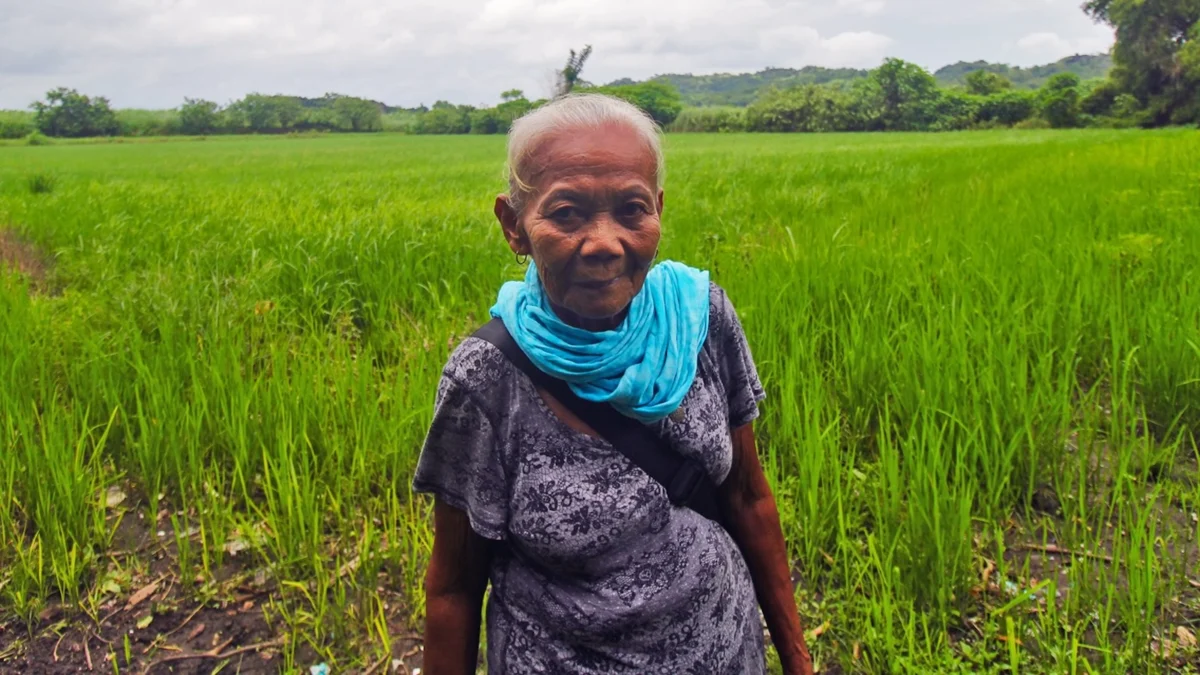
Gloria Capiz-Estabillo, a 76-year-old elder of the Aeta Hungey tribe, expressed the desperation felt by those on the front lines. "They’re setting up right in the middle of our land," she told Mongabay. "Where are we going to live? How about our crops? Where will they take us, just drop us in the ocean?"
As the November deadline for the final agreement approaches, the "Pax Silica" project has become a lightning rod for broader questions regarding the Philippines’ development trajectory. Is the promise of semiconductor dominance worth the sacrifice of ancestral lands, the depletion of precious water resources, and the erosion of local food security?
For the protesters who continue to hound investors during field visits to New Clark City, the answer is clear. As the government looks toward a high-tech future, the Aeta people and their allies are fighting to ensure that they are not left in the past, or worse, written out of the map entirely. For the Aeta, the stakes are not merely economic—they are existential. As Capiz-Estabillo put it, "They’ll have to kill us to take us off this land."


 Nila Kartika Wati

 Dwi Wanna




