


 Muslim
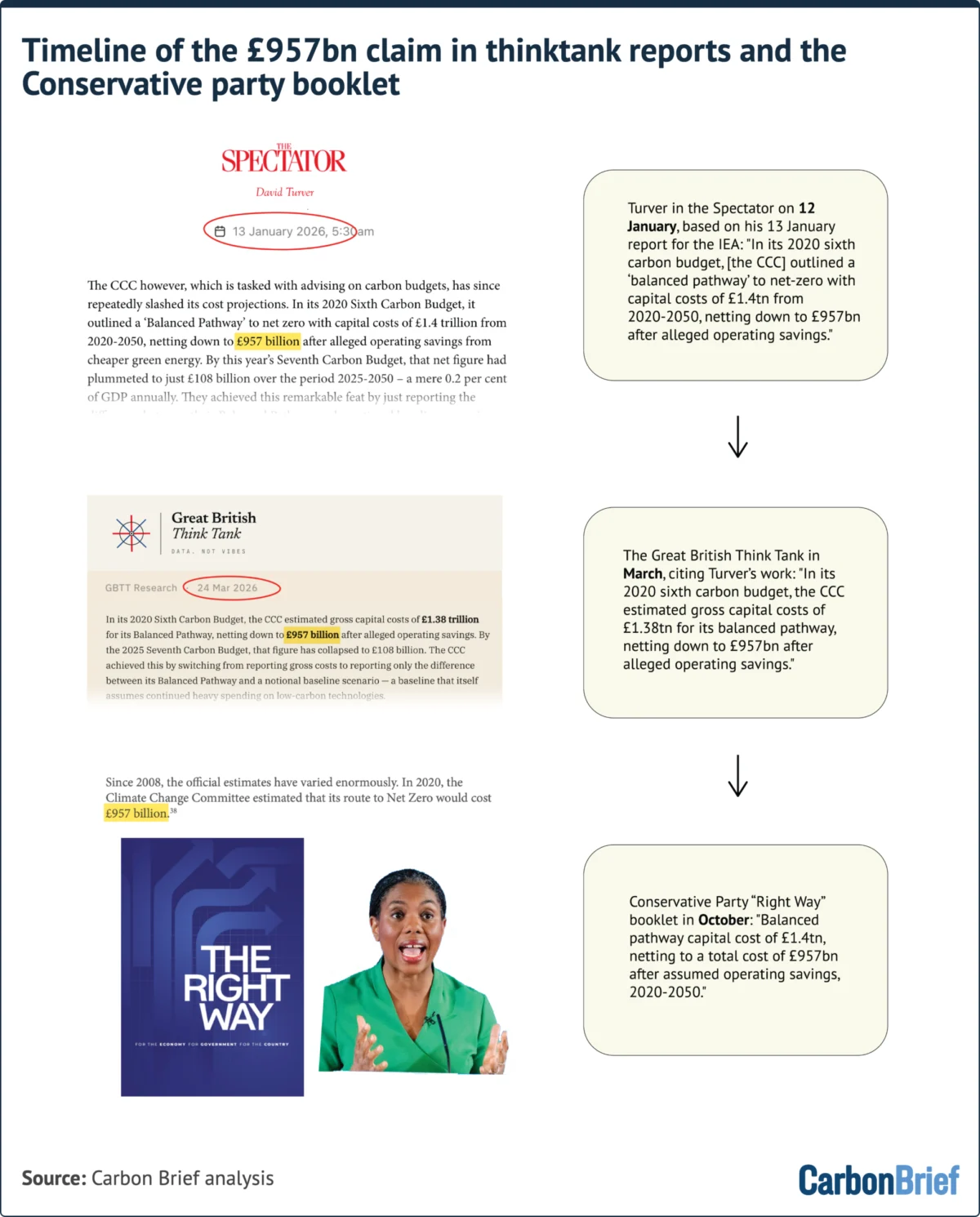
In a striking example of how technical errors can cascade through political discourse, a flagship policy document published by the UK’s opposition Conservative Party has been found to rely on a major financial miscalculation. The document, titled "The Right Way," attempts to frame the party’s stance on the nation’s climate commitments by disparaging the economic modeling used to support net-zero targets. Central to its argument is the claim that the government’s official advisor, the Climate Change Committee (CCC), estimated the cost of reaching net-zero at nearly £1 trillion.
Analysis confirms that this figure is not only inaccurate but appears to be the result of a elementary "double-counting" error found in a 2020 spreadsheet—a mistake that has traveled through think-tank reports and political rhetoric for nearly a year.
The Genesis of the Error: A Spreadsheet Misstep
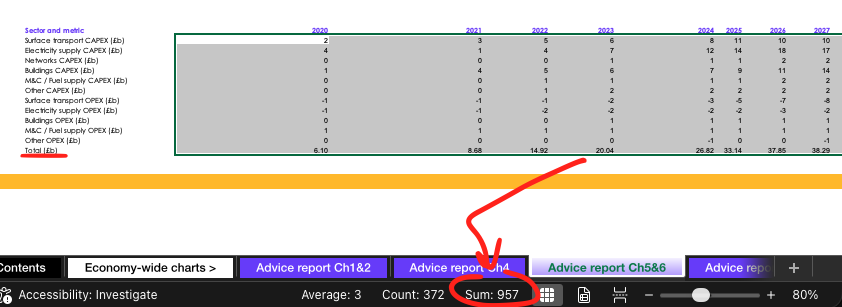
The root of the inflated £957 billion figure lies in the 2020 data accompanying the CCC’s Sixth Carbon Budget. The original spreadsheet provided a comprehensive breakdown of the capital expenditures (CAPEX) required for a net-zero transition—spanning investments in low-carbon electricity generation, the mass adoption of heat pumps, and the shift to electric vehicles (EVs)—as well as the operational savings (OPEX) generated over the period of 2020–2050.
The correct total cost, as verified by the CCC at the time, was £478 billion. This figure represented the net cost, accounting for both the heavy initial investments and the subsequent long-term savings.
However, the CCC spreadsheet also included a summary row at the bottom of the data set that calculated the aggregate annual totals. It appears that an external analyst, in attempting to verify the data, mistakenly added the individual annual line items to the pre-calculated summary total. By doing so, the individual cost components were effectively counted twice. This mathematical oversight resulted in the erroneous sum of £957 billion.
A Chronology of Contagion
The journey of the £957 billion figure from a flawed spreadsheet cell to the heart of Conservative Party policy highlights the fragility of data integrity in high-stakes political debate.
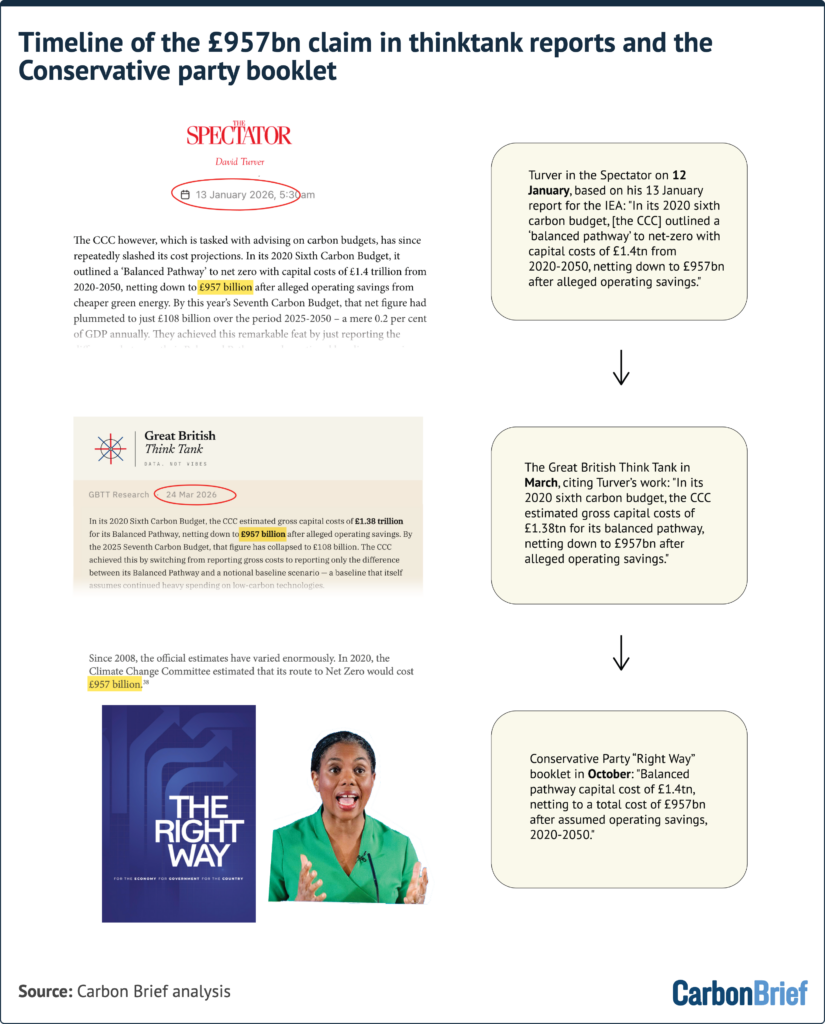
- January 12, 2026: The figure makes its public debut in an article published by The Spectator, written by David Turver, a retired engineer and self-styled "accidental energy analyst."
- January 13, 2026: Just one day later, the figure is canonized in a formal report for the Institute of Economic Affairs (IEA). Despite the IEA’s reputation as a think-tank, the report uncritically cites the erroneous sum, attributing it to Figure 5.3 of the CCC’s 2020 advice.
- The Ripple Effect: Following the IEA report, the figure fueled a wave of sensationalist media headlines. Some reports, building on the foundation of the initial error, claimed the cost of net-zero could reach as high as £7.6 trillion or even £9 trillion. These extreme figures relied on the additional, flawed assumption that the infrastructure for fossil fuels—such as cars, gas boilers, and power plants—would essentially have zero cost to replace or maintain.
- March 2026: The "Great British Think Tank," which uses the tagline "data, not vibes," incorporated the £957 billion figure into its own advocacy, claiming that all its figures were "sourced from official public bodies."
- October 2026: The Conservative Party officially adopted the figure in its "The Right Way" document, using it to argue that the government lacks the "competence" to manage the financial burden of the net-zero transition.
The Reality of Net-Zero Economics
While the Conservative document argues that "sophisticated modeling" should be replaced by "political judgement," the actual economic landscape of the energy transition looks drastically different from the party’s claims.
The CCC’s original assessment from 2020 was that the £478 billion net cost amounted to less than 1% of UK GDP over the 30-year period. Furthermore, the committee noted that the massive infrastructure investment would likely act as a stimulus, boosting GDP by approximately 2% by creating new industries and reducing the UK’s dependency on volatile global fossil-fuel markets.
By 2025, the picture had improved further. Advances in technology, particularly the plummeting costs of electric vehicle batteries and renewable energy, led the CCC to revise its net cost estimate downward to just £108 billion over the 2025–2050 period. This represents less than 0.2% of GDP.
Current advice from the committee suggests that the cost of inaction far outweighs the cost of transition. The committee has repeatedly emphasized that the economic benefits of achieving net-zero—including protection from fossil-fuel price shocks—are worth roughly £110 billion per year to the UK economy.
Implications for Policy and Public Trust
The use of the £957 billion figure by a major political party raises critical questions about the vetting process for policy documents. When a technical error is used to undermine long-term national strategy, it risks distorting the public’s understanding of the climate crisis and the genuine economic opportunities inherent in the transition to green energy.
The Erosion of Evidence-Based Governance
When political actors prioritize "common sense" over rigorous data verification, the result is a policy landscape built on shaky foundations. By disparaging official climate advice while simultaneously misusing that same advice to create "scare" statistics, the Conservative Party has created a circular logic that evades accountability.

The "Fossil-Fuel" Misconception
A recurring theme in the reports that propagated this error is the failure to account for the baseline costs of the status quo. To argue that net-zero is "too expensive" often requires ignoring the fact that the current fossil-fuel system is inherently expensive, subject to global price shocks, and increasingly inefficient. Analyses have consistently shown that the cost of continuing with gas-heavy electricity generation is the primary driver of rising household bills—not the investment into renewables.
Moving Forward: Transparency and Rigor
The incident serves as a stark warning for policymakers, journalists, and think-tanks alike. As the UK continues to navigate its path toward 2050, the demand for high-quality, transparent, and accurate data will only increase.
The fact that an error as simple as double-counting in a spreadsheet was able to survive scrutiny for nearly a year suggests a need for better "data hygiene" in political research. Organizations that claim to be "data-led" have a responsibility to perform basic sense-checks before incorporating figures into public discourse.
Furthermore, the incident highlights the vital role of independent, transparent institutions like the Climate Change Committee. While the CCC remains a target for political rhetoric, its work remains the most comprehensive, peer-reviewed, and rigorously tested economic forecast available to the British public.
As the political debate over net-zero intensifies, the primary lesson of the "£957 billion error" is that facts remain stubborn things. No matter how many times a miscalculation is repeated in policy pamphlets or think-tank reports, it does not gain truth. True political competence, as the Conservative document itself notes, requires solving problems—and that requires, first and foremost, a clear and accurate understanding of the world as it is, rather than as it is miscalculated to be.
Summary of Findings
- The Error: The £957 billion figure was the result of a double-counting error where annual line items were added to an already-calculated summary total.
- The Source: The figure originated in an outside analysis of a 2020 CCC spreadsheet and was subsequently promoted by non-official entities.
- The Reality: The actual net cost estimated by the CCC in 2020 was £478 billion, and subsequent 2025 revisions have lowered that estimate to £108 billion.
- The Impact: The error has been used to frame net-zero as an unaffordable burden, potentially delaying critical infrastructure investment and misinforming the public on the long-term savings associated with renewable energy.
The path to net-zero is undeniably complex, involving massive shifts in how we power our homes, heat our buildings, and transport our goods. However, if that path is to be navigated successfully, it must be paved with verified facts rather than the echoes of a broken spreadsheet.


 Siti Muinah

 Nila Kartika Wati





