


 Evan Lee Salim
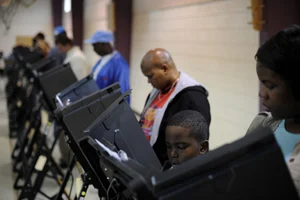
WASHINGTON, D.C. — In a landmark development for American democracy, Virginia voters have overwhelmingly approved a constitutional amendment to effectively dismantle the state’s long-standing felony voting rights ban. This historic decision marks the conclusion of nearly two centuries of exclusionary policy, signaling a profound shift in how the Commonwealth—and, by extension, the nation—views the intersection of criminal justice and the fundamental right to participate in the democratic process.
For advocates, the passage of this measure is not merely a policy victory; it is a moral reckoning with a system rooted in the post-Civil War era designed to systematically strip Black citizens and those impacted by the legal system of their political voice.
The Weight of History: A 196-Year Legacy
The journey to this amendment has been long and arduous. For 196 years, Virginia’s Constitution included provisions that effectively barred individuals with felony convictions from the ballot box. These policies, largely solidified during the Jim Crow era, were weaponized to limit the political power of marginalized communities.
"This victory is generations in the making," said Sheba Williams, founder and executive director of Nolef Turns, an organization that has been at the forefront of the advocacy effort. "For nearly two centuries, Virginia’s Constitution carried forward a policy designed to exclude people from democracy. Virginians chose a different future, one that recognizes that people deserve a voice in the decisions that shape their lives."
The amendment serves to codify a permanent, fair, and consistent process for the restoration of voting rights, stripping away the arbitrary nature of previous executive-driven restoration processes that left thousands in a state of political limbo depending on who sat in the Governor’s mansion.
A Chronology of Change: From Courts to the Ballot Box
The path to this constitutional reform was paved by a combination of grassroots activism, federal litigation, and executive intervention. The events leading to this moment reflect a turbulent, yet ultimately progressive, trajectory:
- 1870–2025: Virginia maintains a restrictive, often opaque process for restoring voting rights to individuals with felony convictions. This system was widely criticized as a "Jim Crow relic" that disproportionately disenfranchised Black Virginians.
- Early 2026: The legal landscape shifted dramatically when the U.S. District Court for the Eastern District of Virginia issued a ruling in King v. O’Bannon. The court determined that the state’s lifetime voting ban violated the Virginia Readmission Act of 1870. The mandate required election officials to cease denying voter registration to non-incarcerated individuals, unless their conviction was for specific, serious common-law offenses, such as murder or manslaughter.
- 2026 (Mid-year): Governor Abigail Spanberger took decisive action, utilizing her executive authority to restore voting rights to more than 100,000 individuals with felony convictions. This served as a vital bridge between the court ruling and the ultimate constitutional amendment.
- Late 2026: Virginia voters head to the polls to approve the constitutional amendment, officially enshrining these rights and removing the barriers from the state’s governing document once and for all.
Supporting Data: The Scale of Disenfranchisement
Despite these significant strides, the data underscores the massive scale of the challenge that remains across the United States. According to research conducted by The Sentencing Project, approximately four million Americans were denied the right to vote in the 2024 general election due to a felony conviction.
In Virginia, the impact of these policies has been starkly inequitable. As of 2024, more than a quarter-million Virginians were barred from the ballot box. Perhaps most telling of the racialized impact of these laws is that, in that same year, one out of every 10 Black Virginians was ineligible to vote because of a felony conviction.
These figures illustrate why the Virginia victory is being viewed as a bellwether for the rest of the country. Since 1997, 27 states and the District of Columbia have enacted reforms to expand voting rights to individuals with felony convictions, yet the patchwork of laws remains inconsistent. The Virginia model—moving from executive discretion to constitutional mandate—provides a roadmap for activists in states like Kentucky and Texas, where similar bans continue to suppress participation.
Official Responses: A Consensus on Democracy
The reaction from civil rights organizations and advocacy groups has been one of cautious optimism and strategic resolve.
"Virginians sent a clear message," said Nicole D. Porter, Senior Director of Advocacy at The Sentencing Project. "The state’s electorate believes democracy is stronger when more people have a voice in it. We will continue working with advocates, lawmakers, and election officials in every state until voting rights are protected and accessible for all eligible citizens regardless of conviction status."
The sentiment across the advocacy community is that the "seat at the table" argument won the day. By framing the issue not as a "softness on crime" debate, but as a "strength of democracy" imperative, the coalition behind the amendment successfully shifted the narrative. The argument is simple: when individuals are re-integrated into society, their participation in the democratic process acts as a stabilizing force, reinforcing their commitment to the communities they live in.
Implications: The Road Ahead
The passage of this amendment in Virginia is likely to trigger a ripple effect in other states grappling with similar constitutional questions. However, experts warn that the work does not end with a constitutional amendment.
1. The Challenge of Implementation
While the constitutional barrier is removed, the practical reality of voter registration for formerly incarcerated individuals remains a hurdle. Many citizens are unaware of their restored rights due to a lack of formal notification systems. The Sentencing Project has called for robust voter education campaigns and streamlined registration processes that proactively notify eligible citizens of their status.
2. Eliminating Outdated Policies Nationwide
Virginia’s success highlights the potential for federal intervention when state policies fail to meet basic democratic standards. However, relying on the courts is a slow and costly process. The movement is now shifting its focus toward legislative reform and state-level referendums to ensure that the "four million" disenfranchised Americans mentioned in the 2024 report are brought back into the fold.
3. Strengthening Institutional Trust
The implications for the criminal legal system are significant. By ending the "civil death" that often accompanies a felony conviction, Virginia is taking a step toward restorative justice. Allowing people to vote helps them feel connected to their government, which is a key component in reducing recidivism and increasing public safety.
Conclusion: A New Chapter for Democracy
As the dust settles in Richmond, the national implications are clear: the momentum toward enfranchisement is accelerating. The Virginia experience demonstrates that when the debate moves away from political polarization and toward the core tenets of universal suffrage, the public is increasingly willing to support reform.
"As Americans look ahead to the next chapter of our democracy, this election offers a clear reminder that expanding participation strengthens communities and institutions alike," Porter concluded. "The future of our democracy depends on ensuring that every eligible voice can be heard."
The Commonwealth of Virginia has effectively closed the door on a dark chapter of its history. In doing so, it has opened a window for the rest of the country to view what a more inclusive, representative, and fair democracy might look like—one where the right to vote is not a privilege to be earned or denied, but a fundamental right that remains intact, regardless of one’s past.

 Rifan Muazin
 Jia Lissa