




 Iffa Jayyana
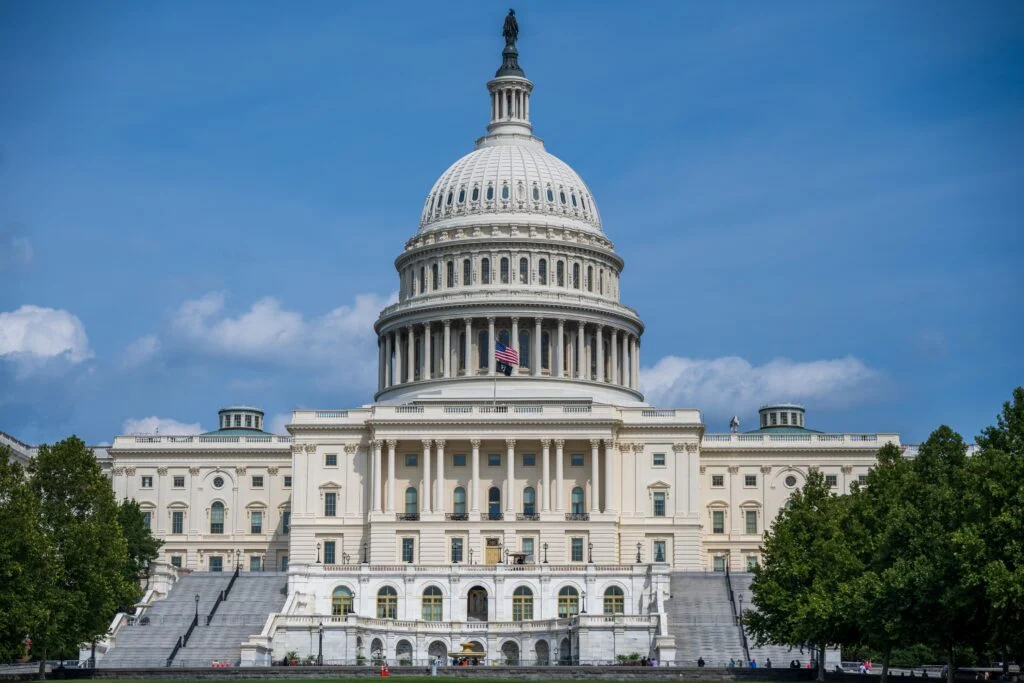
WASHINGTON – In a scathing assessment of the current legislative landscape, The Leadership Conference on Civil and Human Rights released its highly anticipated 2026 Congressional Voting Record on Tuesday, characterizing the 119th Congress as the most destructive body in the organization’s 76-year history. The report, which serves as a definitive scorecard of legislative performance on human rights, offers a grim portrait of a government that many advocates argue has abandoned its mandate to protect vulnerable populations.
For nearly eight decades, The Leadership Conference has tracked the legislative behaviors of federal lawmakers. However, the 2026 findings suggest a profound shift in American governance, marking a departure from established civil rights protections and signaling what the organization describes as a “permanent stain” on the nation’s constitutional history.
The Architecture of Decline: A Summary of the 119th Congress
The report arrives at a volatile time in American politics. Analyzing 24 House votes and 23 Senate votes taken between January 2025 and September 2026, the document scrutinizes legislative action across a broad spectrum of issues, including economic justice, voting rights, immigration reform, healthcare accessibility, and LGBTQ+ equity.
According to Maya Wiley, president and CEO of The Leadership Conference, the 119th Congress has effectively abdicated its constitutional duty as an independent check on executive overreach. Wiley argues that the legislative body consistently prioritized the interests of billionaire donors and corporate entities over the needs of working-class families and marginalized communities.
“From the day its members were sworn in, a majority of the 119th Congress turned a blind eye to their constituents’ needs, as well as this administration’s abuses of power, corruption, and cruelty,” Wiley stated during the report’s release.
A Chronology of Legislative Erosion
The report identifies several key milestones that define the “harmful” nature of the 119th Congress. The descent, according to the Leadership Conference, began almost immediately upon the inauguration of the current legislative session.
The “Big Ugly Bill” and the Economic Pivot
The legislative session was marked early on by the passage of H.R. 1, colloquially dubbed the “Big Ugly Bill” by critics. The legislation served as a centerpiece for the administration’s economic agenda, which the Leadership Conference contends focused on systematic dismantling of the social safety net. By slashing health care funding and food assistance programs, the bill reallocated resources toward tax breaks for the ultra-wealthy. Furthermore, the legislation authorized aggressive immigration enforcement measures that advocates claim violated fundamental due process protections.
The Era of Shutdowns
The 119th Congress oversaw some of the longest government shutdowns in American history. These episodes were not merely bureaucratic failures but represented a direct assault on the economic security of federal employees and the millions of Americans who rely on government services. The resulting months of lost wages and administrative instability weakened the federal workforce and crippled the operational capacity of essential agencies.
Administrative Dismantling
Throughout the 2025-2026 period, the legislative branch largely stood by as the executive administration dismantled the regulatory infrastructure designed to protect citizens. Key departments, including the Department of Education, the U.S. Agency for International Development (USAID), and the Consumer Financial Protection Bureau (CFPB), saw their mandates significantly eroded.
The report specifically highlights the role of Elon Musk’s Department of Government Efficiency (DOGE). The Leadership Conference argues that the agency’s actions, sanctioned by Congressional inaction, resulted in the mass erosion of privacy rights and the unchecked gutting of government programs that once provided a baseline of equity for the American public.
Supporting Data: By the Numbers
The quantitative data provided by the Voting Record offers a stark view of polarization. While the overall trend was one of regression, the report does identify a segment of lawmakers who remained committed to civil rights advocacy.
- Participation: The study evaluated 47 total votes (24 House, 23 Senate) conducted over two sessions.
- The Pro-Rights Contingent: 158 House members and 44 senators maintained a record of supporting civil rights positions on more than 90 percent of the tracked votes.
- The Majority Trend: The remainder of the legislative body consistently voted in favor of measures that curtailed voting rights, restricted LGBTQ+ protections, and limited access to essential healthcare.
Complementing this, the Leadership Conference’s fifth annual Civil Rights Monitor poll—conducted between August 23 and September 6, 2026—provides a counter-narrative to the legislative record. Surveying 1,000 likely voters, the poll found that 54% of Americans support a systemic, constitutional, and cultural overhaul to secure a robust, multiracial democracy. This suggests a significant disconnect between the legislative priorities of the 119th Congress and the expressed desires of the electorate.
Official Responses and Advocacy Perspectives
The reaction from civil rights leaders has been one of both indignation and resolve. Maya Wiley emphasized that the current situation requires a “Third Reconstruction” of American democracy, drawing a parallel to the post-Civil War era and the mid-20th-century Civil Rights Movement.
“This congress has chosen the dark past over the responsibility to brighten our shared future,” Wiley said. She highlighted that the administration is not merely ignoring civil rights; it is actively attempting to unravel the foundational protections established during the First Reconstruction—the period following the Civil War that abolished slavery and sought to codify equal protection under the law.
The Leadership Conference maintains that the public is far ahead of their representatives. According to their Civil Rights Monitor, there is broad, cross-partisan support for:
- Voting Rights Protections: A mandate to secure the ballot box against suppression.
- Judicial Reform: The implementation of term limits for Supreme Court justices to ensure accountability.
- Economic Justice: A desire for an economy that prioritizes broad-based prosperity over corporate concentration.
Implications: The Road to 2027 and Beyond
The 2026 Congressional Voting Record serves as more than just a historical account; it is a call to action. As the nation looks toward the next election cycle, the data underscores the high stakes of legislative representation.
The Constitutional Crisis
The report posits that the 119th Congress has created a “permanent stain” on American history. By failing to intervene in the systematic dismantling of federal agencies and the erosion of due process, lawmakers have invited an era of executive autocracy. The implication is that the structural integrity of the U.S. government has been fundamentally compromised.
The Call for a Third Reconstruction
Advocates are framing the current moment as a turning point. The “Third Reconstruction” described by the Leadership Conference is envisioned as a legislative and social movement aimed at reclaiming the rights of people of color, immigrants, religious minorities, and the LGBTQ+ community. The goal is to move beyond mere resistance and toward a proactive re-envisioning of American democracy—one that aligns with the nation’s stated ideals of equality and justice for all.
Strengthening the Advocacy Front
The coalition of more than 240 national organizations represented by The Leadership Conference is signaling a shift toward more aggressive lobbying and public mobilization. With the polling data showing that a majority of Americans support a major overhaul of the current system, the strategy for the coming months will likely focus on bridging the gap between voter sentiment and legislative reality.
In conclusion, the 2026 Congressional Voting Record serves as a sobering indictment of a legislative body that failed to meet the challenges of its time. As The Leadership Conference notes, the task ahead is immense, but the data confirms that the American public is increasingly aware of the rights they have lost and is eager to fight for a future that is more inclusive, equitable, and democratic. The 119th Congress may be remembered as a period of profound regression, but for those organizing for the Third Reconstruction, it may also serve as the catalyst for a new era of civic engagement and reform.


 Lina Irawan

 Neng Nana






