

 Siti Muinah
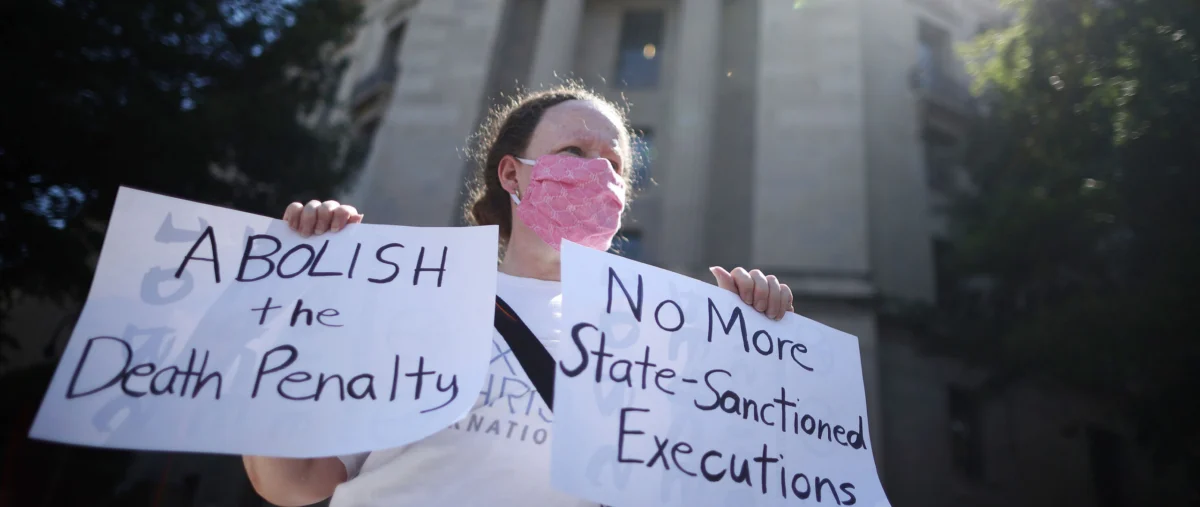
In a move that has sent shockwaves through the global human rights community and reignited the fierce debate over the morality of state-sanctioned killing, the U.S. federal administration has finalized plans to carry out the first military execution in the United States since 1961. The execution, scheduled for December 3, 2024, concerns a man convicted of the 2009 mass shooting at the Fort Hood military base in Texas, an atrocity that claimed the lives of 13 individuals.
Beyond the finality of the sentence itself, the government’s stated intent to execute the prisoner by firing squad—and, perhaps more controversially, to broadcast the event via public livestream—has prompted a wave of condemnation from legal experts, ethicists, and human rights advocates. As the clock ticks toward December, the administration’s decision has thrust the U.S. justice system into the international spotlight, raising profound questions about the nature of modern punishment and the limits of state power.
The Context: A Dark Milestone in Military Justice
The upcoming execution marks the first time the U.S. military has exercised its ultimate punitive power in over 60 years. The last military execution occurred in 1961, when Army Private John A. Bennett was hanged at Fort Leavenworth for the rape and attempted murder of an 11-year-old girl. Since then, while federal and state jurisdictions have continued to carry out capital punishment, the military justice system had effectively moved toward a de facto moratorium.
The case at hand involves the tragic events of November 5, 2009, at Fort Hood, Texas. The convicted individual opened fire inside the Soldier Readiness Processing Center, resulting in one of the deadliest mass shootings on a domestic military installation in U.S. history. The subsequent court-martial resulted in a death sentence, a rarity in modern military jurisprudence.
On October 8, 2024, Secretary of Defense Pete Hegseth confirmed that the execution would proceed, explicitly noting the administration’s plan to livestream the event. This administrative choice represents a radical departure from contemporary norms, where executions in the U.S. are generally conducted behind closed doors, witnessed only by a select group of officials, media, and family members.
Chronology of a Controversial Path
The road to this execution has been long and fraught with legal maneuvers. Following the 2009 mass shooting, the military trial process concluded with a conviction and a death sentence. However, the subsequent decades involved a labyrinthine appeals process common to capital cases in the United States.
- November 2009: The mass shooting occurs at Fort Hood, Texas, leading to 13 fatalities and over 30 injuries.
- 2013: The court-martial concludes, and the perpetrator is sentenced to death by a military panel.
- 2014–2023: The case undergoes extensive mandatory appellate reviews, typical of military capital cases, which are subject to rigorous scrutiny by the Court of Appeals for the Armed Forces.
- October 2024: Secretary of Defense Pete Hegseth announces the scheduling of the execution, confirming the method (firing squad) and the intent to livestream the event.
- December 3, 2024: The scheduled date for the execution.
The Human Rights Perspective: Amnesty International’s Stance
Amnesty International has emerged as a leading voice of opposition against the administration’s plans. Justin Mazzola, Deputy Director of Research at Amnesty International USA, has characterized the decision as "reprehensible," arguing that it demonstrates a fundamental disregard for the right to life.
Mazzola’s critique centers on the inherent arbitrariness of the death penalty. "The announcement by the Trump administration that it has set the first military execution in more than six decades is reprehensible and showcases the inherent arbitrariness of the death penalty and the authorities’ utter disregard for the right to life," Mazzola stated.
Amnesty’s position is rooted in the belief that the death penalty is a violation of fundamental human rights regardless of the crime. Furthermore, the organization highlights that international human rights bodies have long categorized public executions as a form of cruel, inhuman, and degrading treatment. By livestreaming the event, the U.S. government risks normalizing state violence under the guise of transparency.
Debunking the Deterrence Myth
A central pillar of the administration’s justification for the death penalty—and particularly for high-profile, public executions—is the theory of deterrence. Proponents argue that the severity of the punishment serves to discourage future heinous crimes. However, criminological data consistently fails to support this assertion.
Research conducted over several decades by organizations such as the National Research Council has concluded that there is no credible evidence that the death penalty serves as a greater deterrent to crime than long-term imprisonment. In fact, many experts argue that the application of the death penalty may even have a "brutalization effect," where the state’s involvement in killing reinforces the legitimacy of violence as a problem-solving tool.
"The claim that the death penalty serves as a greater deterrent is simply unfounded," Mazzola noted. "There is no evidence that it has a unique deterrent effect. The death penalty does not make us safer."
The Ethics of the "Livestream"
The decision to livestream the execution is perhaps the most unprecedented element of this announcement. Public executions were once common in Western society but were largely abandoned by the 20th century due to the recognition that they serve to commodify death and incite public voyeurism rather than deliver justice.
By broadcasting the use of a firing squad, the administration is effectively transforming a state-sanctioned execution into a piece of digital content. Critics argue that this does not promote accountability; rather, it compounds the cruelty of the act. The spectacle of a public death is viewed by many ethicists as a regression into retributive practices that undermine the dignity of a society that claims to value human rights.
Amnesty International has warned that such an action "would only compound the cruelty of the death penalty and perpetuate the cycle of violence that the authorities purportedly seek to end."
The "Irredeemably Broken" System
The announcement regarding the Fort Hood perpetrator comes amidst broader concerns about the integrity of the U.S. death penalty system. Recently, the attempted execution of Christa Pike in Tennessee sparked national outrage following a botched execution attempt, highlighting the frequent technical, legal, and moral failures that plague capital punishment in the U.S.
When the machinery of death fails—whether through medical errors during lethal injection or the psychological toll of prolonged death row confinement—the credibility of the entire justice system is eroded. For critics, the U.S. death penalty is not a precise instrument of justice, but a "broken" system that disproportionately affects vulnerable populations and is prone to irreversible error.
Implications for the Future of U.S. Policy
The decision to proceed with this execution will likely have long-term implications for the standing of the United States in the international community. Many democratic allies, particularly in Europe, have abolished the death penalty and view its continued use in the U.S. as a significant human rights failure.
Furthermore, the precedent of a public military execution could embolden calls for similar transparency in civilian executions, potentially leading to a new era of "televised justice" that could alter the American public’s relationship with state violence. If the government moves forward with the livestream, it will effectively be testing the limits of public tolerance for state-sanctioned killing in the digital age.
Conclusion: A Call for Leadership
As December 3 approaches, the debate serves as a stark reminder that the death penalty remains one of the most contentious issues in American life. While the administration argues that it is fulfilling a mandate of justice for the victims of the 2009 tragedy, human rights advocates maintain that true justice cannot be achieved through the commission of another death.
"It is high time that the US authorities, at all levels, use their power to show human rights leadership and end this ultimate cruel, inhuman and degrading punishment once and for all," Amnesty International concludes.
Whether the administration will heed these calls or proceed with a move that risks cementing a new, darker chapter in American military history remains to be seen. What is clear, however, is that the eyes of the world will be on the execution chamber—and the screens of the public—come December.



 Ali Ikhwan