
 Azzam Bilal Chamdy
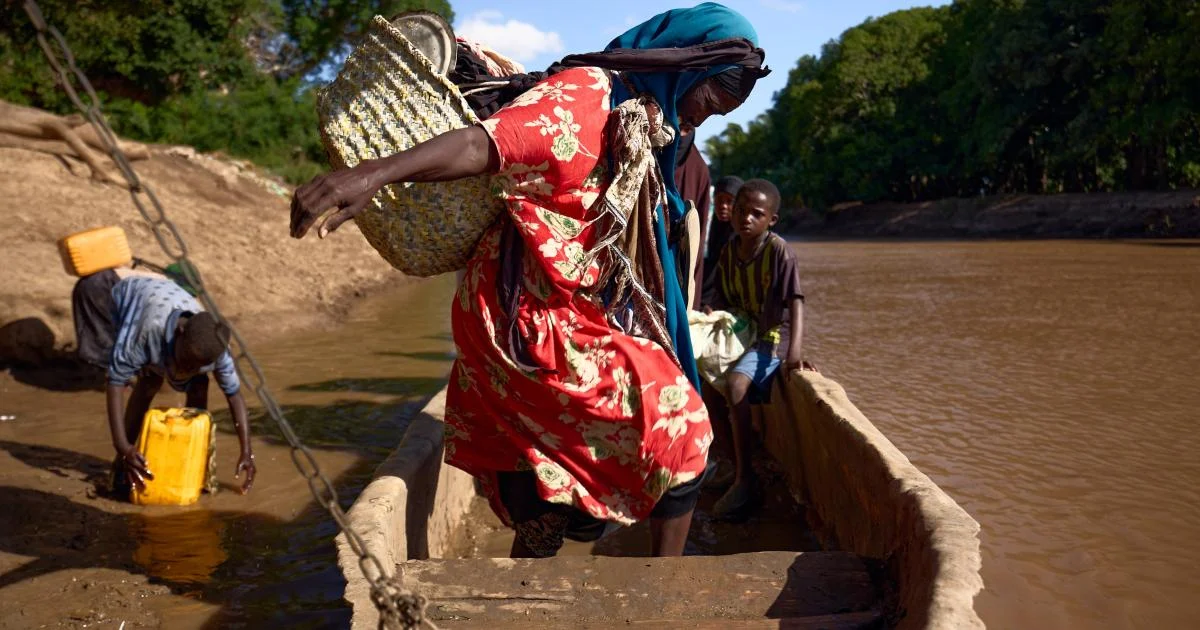
For the farmers of Bayahaaw, a village on the fertile, yet treacherous, outskirts of Jowhar in central Somalia, the passage of time is measured not by clocks, but by the swelling of the Shabelle River. As the seasonal Deyr rains approach, these agricultural communities find themselves trapped in a harrowing, high-stakes gamble: plant their crops and risk total annihilation by floodwaters, or leave the land fallow and face the near-certainty of starvation in the coming year.
For Nuh Adan, a local farmer and community leader, the anxiety is palpable. He knows the geography of his home all too well—a landscape defined by thin, vulnerable levee walls that act as the only barrier between survival and total displacement. "If the river breaks and the floods hit us, the effects will last until the next rainy season in March," Adan says, his voice reflecting the weariness of a man who has seen his life’s work washed away before.
The Recurring Nightmare: A Chronology of Climate Crisis
The specter of 2023 looms large over Somalia. Last year, the nation was brought to its knees by unprecedented flooding, a climatic disaster that affected nearly two million people and forced over 500,000 from their homes. For those living along the arteries of the Shabelle and Juba rivers, the catastrophe was not merely a temporary inconvenience; it was an existential reset.
The chronology of Somalia’s climate struggle is a cycle of extremes. Following years of punishing drought that decimated livestock and withered crops, the pendulum swung violently toward excessive rainfall.
- 2020–2022: A multi-year, historic drought pushed Somalia to the brink of famine, depleting household assets and forcing mass migration into informal displacement camps.
- Late 2023: The onset of El Niño-induced rains triggered widespread flooding, destroying critical infrastructure, submerged farmlands, and undoing the marginal recovery gains of the previous period.
- October 2026: As the country prepares for the Deyr seasonal rains, meteorologists and humanitarian agencies warn that the climate patterns of 2023 are repeating, threatening to catch communities in a state of chronic vulnerability.
For farmers like Adan, the lesson of 2023 was bitter. "We have seen maize cobs that were not yet fully developed, only needing 15 to 25 days to be ready for harvest, being destroyed by floods," he recalls. "And we just had to bear the loss. But abandoning the farms is not an option. We have no other way to survive."
Supporting Data: The Anatomy of Hunger
The latest Integrated Food Security Phase Classification (IPC) analysis paints a grim portrait of the months ahead. The synergy of above-normal rains and the destruction of agricultural capacity is expected to deepen hunger levels across the nation.
The data indicates that the threat is not confined to the riverbanks. Somalia is currently home to an estimated 3.3 million internally displaced persons (IDPs). These families, often forced from their ancestral lands by a combination of conflict and climate, reside in informal settlements on the fringes of urban centers like Jowhar.
These settlements are "cities of sticks and rags"—cramped, precarious networks of shelters made from discarded cloth, iron sheets, and scavenged timber. Here, the lack of basic sanitation and clean water is the norm, and a heavy downpour is not a life-giving event, but a public health crisis waiting to happen.
Kamillo Muse, a 59-year-old resident of the Ceeynu Nasri displacement camp in Jowhar, encapsulates the collective dread of the camp’s inhabitants. "We are terrified of the upcoming rains," she says. "After three years of not having good rainfall, it feels like it will return with a vengeance. If it pours, forget those living in displacement camps. Even people in proper houses will be forced to flee. So what do you expect will happen to us?"
Official Responses and the "Anticipatory Action" Dilemma
In the face of these warnings, international humanitarian agencies are scrambling to implement "anticipatory action"—a strategy that seeks to mitigate damage before the waters crest, rather than simply responding to the aftermath.
The International Committee of the Red Cross (ICRC), working in close partnership with the Somali Red Crescent Society (SRCS), has been at the forefront of these efforts. Their strategy is twofold: physical mitigation and emergency preparedness. This includes the distribution of sandbags to reinforce weak points along riverbanks, the prepositioning of essential survival items—such as tarpaulins, mosquito nets, and hygiene kits—and the stocking of health facilities with life-saving nutrition and medical supplies.
Perhaps most tellingly, the SRCS has invested in specialized training for volunteers in Kismayo, Bardere, Jowhar, and Beletweyne, teaching them how to navigate flood-prone regions by boat. This preparation acknowledges a sobering reality: when the levees break, traditional aid delivery becomes impossible.
However, there is a yawning gap between the need and the capacity. Antoine Grand, the head of the ICRC in Somalia, offers a candid assessment of the current environment. "Better preparation and better data. That’s the good news compared to 2023," Grand notes. "The bad news is that humanitarian funding and capacity in general have seriously decreased."
The contraction of humanitarian funding—a global trend driven by donor fatigue and competing international crises—leaves organizations like the ICRC operating with less reach than they had during the 2023 disaster. This leaves a dangerous void where local resilience is already at a breaking point.
Understanding the Catalyst: What is El Niño?
The current state of emergency is largely driven by El Niño, a complex climate phenomenon originating in the equatorial Pacific. El Niño manifests through the warming of surface ocean temperatures, which disrupts global atmospheric circulation. While the effects are varied, in the Horn of Africa, it typically translates to significantly above-average rainfall.
For Somalia, this means the Deyr season—the secondary rainy season—carries the potential for extreme volatility. When the Shabelle and Juba rivers, which snake through the heart of the country, reach capacity, the surrounding lowlands act as a basin. In a nation where infrastructure is largely degraded by decades of conflict, the natural drainage systems are insufficient to handle the influx of water. This leads to the catastrophic levee breaches that have defined the Somali flood narrative for generations.
Implications for the Future: A Country on the Brink
The implications of these recurring floods extend far beyond the immediate loss of crops or shelter. Each flood cycle erodes the social fabric of rural Somalia. As farmers lose their harvests and livestock, they are pushed into the growing ranks of the urban displaced, placing immense pressure on cities like Jowhar and Mogadishu, which lack the infrastructure to support them.
The reliance on humanitarian aid is becoming a permanent state rather than a stopgap measure. As the climate continues to oscillate between extremes, the "gamble" that Nuh Adan describes is becoming a losing proposition. Without significant investment in climate-resilient infrastructure—such as permanent, reinforced flood defenses, improved irrigation management, and long-term land-use planning—the communities along the Shabelle and Juba will continue to live in a state of perpetual emergency.
For now, the people of Bayahaaw wait. They look at the sky, they monitor the river levels, and they weigh the cost of hope against the price of survival. As Kamillo Muse noted, for the most vulnerable, the rain is not a blessing. It is a siren call for an uncertain future, echoing the harsh reality that in a world of changing climates, the most vulnerable are forced to pay the highest price for a disaster they did not create.
For More Information:
- Abdikarim Mohamed, ICRC Somalia: +254 770 171 756 | [email protected]
- Mateo Jaramillo, ICRC Nairobi: +254 716 897 265 | [email protected]
The International Committee of the Red Cross (ICRC) is a neutral, impartial, and independent organization with an exclusively humanitarian mandate that stems from the Geneva Conventions of 1949. It helps people around the world affected by armed conflict and other violence, doing everything it can to protect their lives and dignity and to relieve their suffering, often alongside its Red Cross and Red Crescent partners.


 Siti Muinah
 Ali Ikhwan