
 Lina Hope
Editorial Note: Originally published on July 29, 2026, this report has been updated to incorporate the latest federal guidance from the Centers for Medicare & Medicaid Services (CMS) regarding the "medical frailty" exemption, a critical safeguard for low-income adults with disabilities.
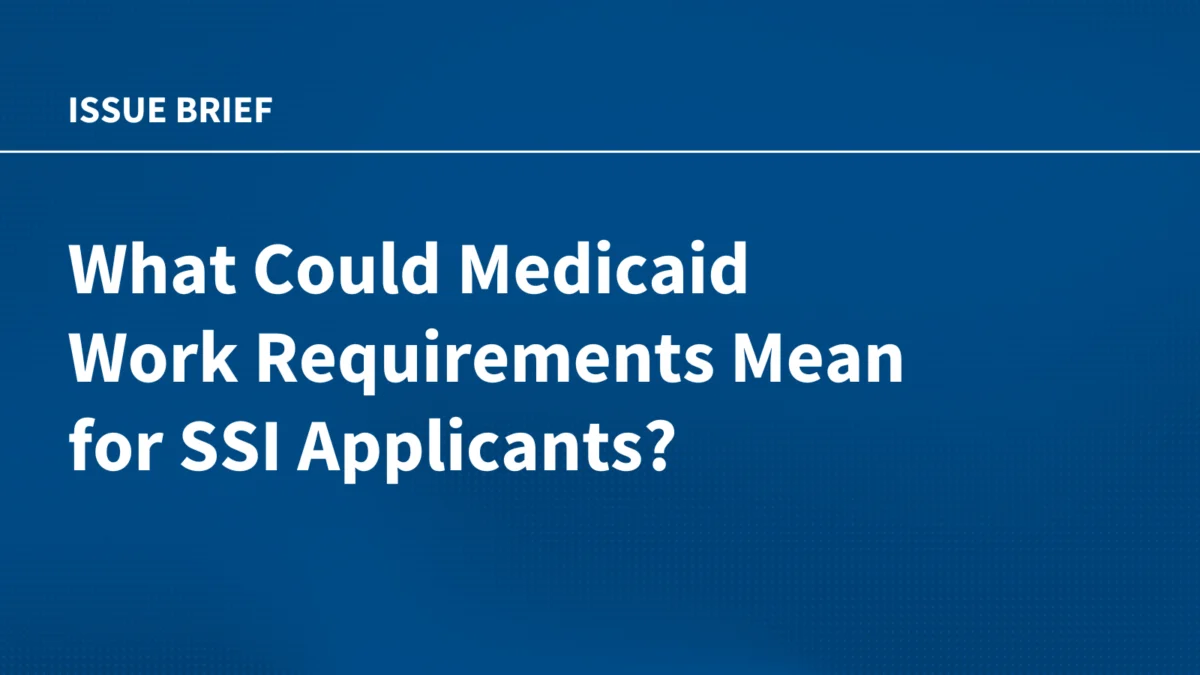
As the United States approaches a significant shift in its social safety net, millions of low-income adults are bracing for the implementation of new, stringent federal regulations. Starting January 1, 2027, a landmark 2025 reconciliation law will mandate that 44 states tie Medicaid eligibility for Affordable Care Act (ACA) expansion enrollees to rigorous work requirements. While policymakers have carved out an exemption for those deemed "medically frail," recent regulatory guidance suggests that the path to proving this status may be fraught with administrative hurdles, potentially stripping coverage from those who need it most—specifically those currently navigating the arduous, years-long process of applying for Supplemental Security Income (SSI).
The Collision of Two Systems: SSI and Medicaid
The American disability support system relies heavily on the Supplemental Security Income (SSI) program. Administered by the Social Security Administration (SSA), SSI provides vital monthly cash assistance to individuals with limited resources who cannot work due to a significant disability. For most recipients, an SSI approval is a "golden ticket" to health coverage, as it automatically qualifies them for Medicaid.
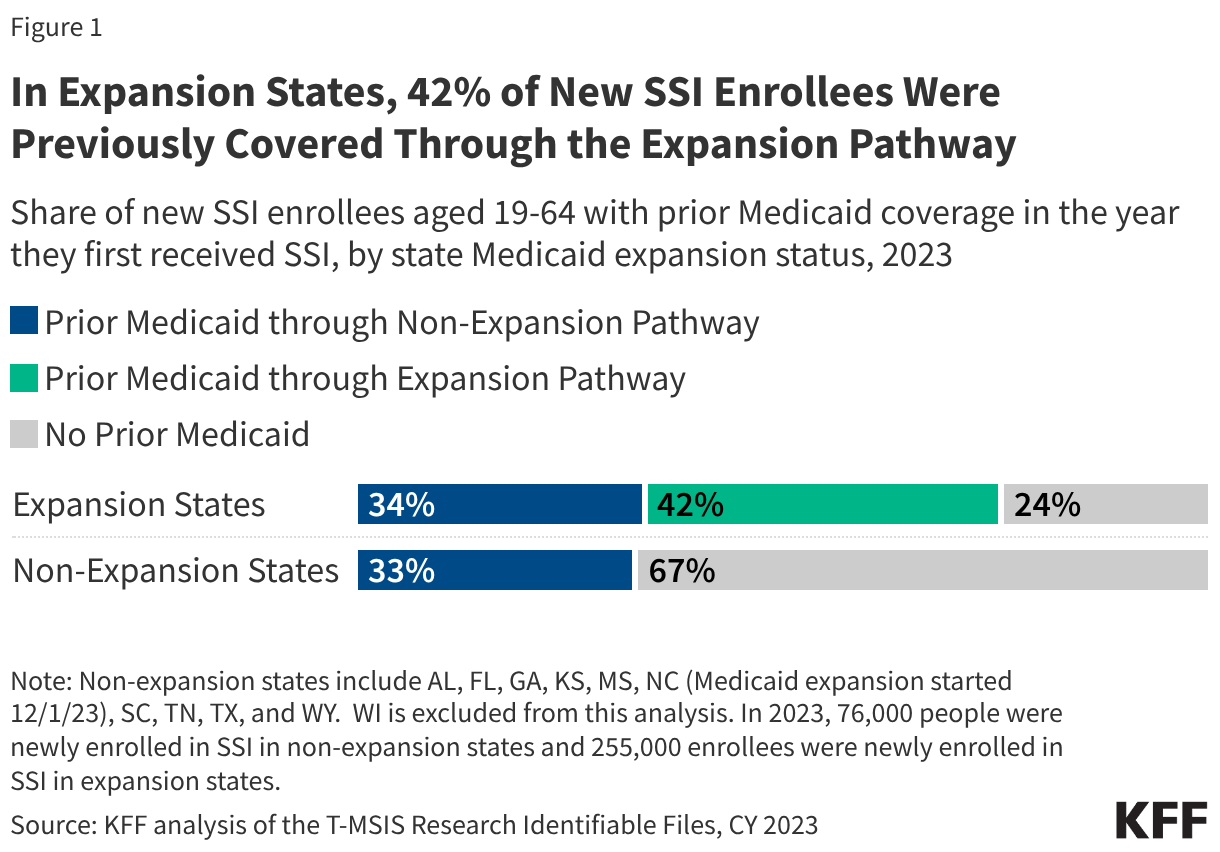
However, the application process for SSI is notorious for its complexity and glacial pace. It often spans months or even years, during which applicants are—by definition—unable to work. In states that expanded Medicaid under the ACA, these individuals have historically been able to bridge the gap between their health crisis and their eventual SSI approval by enrolling in the expansion program. As of 2023, over 100,000 new SSI enrollees had relied on this ACA coverage to remain insured while waiting for their disability determination.
The looming 2027 mandate threatens to break this bridge. If applicants cannot prove their "medical frailty" to state Medicaid offices before their work requirements kick in, they face the loss of their primary health insurance at the very moment their health is most precarious.
A Chronology of the Regulatory Shift
The trajectory of this policy change reflects a growing tension between state-level administrative efficiency and federal mandate compliance:
- 2025: The federal government passes the reconciliation law requiring 44 states to implement work requirements for Medicaid expansion groups, with a hard deadline of January 1, 2027.
- June 2026: CMS releases an interim final rule establishing the criteria for the "medical frailty" exemption. While designed to protect the vulnerable, the rule introduces a complex, two-part testing process for applicants.
- Late 2026: CMS releases additional technical guidance (a "tiered framework") to assist states in using existing claims data to automatically flag medically frail individuals, attempting to preempt administrative collapse.
- January 1, 2027: The statutory deadline for states to begin enforcing work requirements.
- 2028: Stricter documentation standards take effect, phasing out the ability to rely on self-attestation for medical frailty during renewal periods.
Supporting Data: The Medicaid Bridge
The importance of the Medicaid expansion as a safety net for SSI applicants cannot be overstated. KFF’s analysis of 2023 administrative data reveals a stark divide between expansion and non-expansion states.
In states that expanded Medicaid, 76% of new SSI enrollees between the ages of 19 and 64 had prior Medicaid coverage through a non-SSI pathway—with 42% of those specifically using the expansion. In contrast, in non-expansion states, only 33% of new SSI enrollees had such coverage. When these individuals are denied access to the expansion due to a failure to meet work requirements, they are not simply "encouraged to work"; they are often left completely uninsured, with no income and no access to the medical care required to treat the very conditions that qualify them for disability support.
The administrative burden is compounded by the outdated nature of the SSA’s own criteria. The SSA still relies heavily on the Dictionary of Occupational Titles, a document last updated in 1991. Despite the SSA spending $300 million between 2012 and 2024 to develop a modern occupational database, the project remains incomplete, leaving applicants to be judged against a labor market that effectively no longer exists.
Official Responses and the "Tiered Framework"
In response to concerns that the new work requirements would result in mass disenrollment, CMS has proposed a "tiered" medical frailty framework. This approach aims to reduce the burden on patients by allowing states to verify disability status through three distinct tiers:
- Tier 1 (Automated Verification): States use existing medical claims data to automatically identify individuals with chronic conditions or disabilities, requiring no action from the applicant.
- Tier 2 (Combined Data): States combine claims data with encounter logs or other secondary digital records to confirm frailty.
- Tier 3 (Manual Verification): When digital data is insufficient, states must use an individualized manual process, which typically requires the applicant to submit new, burdensome medical documentation from their providers.
While CMS has allowed for self-attestation during the first year of implementation (2027), the policy explicitly states that by 2028, self-attestation will be limited to once per continuous enrollment period. This means that even if a person is granted a reprieve in 2027, they will be forced to undergo a rigorous documentation process at their next renewal, creating a "documentation cliff" that many disabled individuals may struggle to climb.
The Human and Systemic Implications
The potential for a "coverage gap" is not merely theoretical; it is a structural inevitability. Because Medicaid eligibility renewals for expansion enrollees are required every six months, while the average SSI initial processing time is approximately 184 days (and often much longer due to appeals), many applicants will face a "double jeopardy" scenario.
They will be required to prove their disability to the SSA to receive federal benefits, while simultaneously proving their "medical frailty" to state agencies to keep their Medicaid. These are two distinct bureaucratic processes with different timelines, different documentation requirements, and different decision-makers.
The Risk of Disenrollment
The administrative complexity of the medical frailty exemption poses a three-fold threat:
- Administrative Disenrollment: Many individuals with cognitive or physical impairments may struggle to navigate the documentation required by state agencies. If a letter is missed or a form is filled out incorrectly, the individual is disenrolled for "non-compliance" with work requirements, even if they are fundamentally eligible for an exemption.
- The Appeal Delay: The SSI appeal process is lengthy. A person who loses Medicaid coverage due to a denied frailty claim may be unable to afford the doctors’ appointments needed to generate the very medical evidence required to win their SSI appeal.
- Systemic Inefficiency: Requiring state agencies to manually verify medical frailty for thousands of applicants—while the SSA is simultaneously doing the same work—is a massive duplication of administrative effort that diverts resources away from actual healthcare delivery.
Conclusion: A Fragile Safety Net
The 2025 reconciliation law, while focused on promoting workforce participation, risks undermining the health stability of the most vulnerable citizens. By conditioning health coverage on employment for people who are, by definition, in the process of proving their inability to work, the system creates an inherent contradiction.
As states move to implement these rules, the success of the medical frailty exemption will depend entirely on how aggressively they utilize Tier 1 and Tier 2 automated verifications. If states rely too heavily on the manual, Tier 3 documentation requirements, the result will almost certainly be a decline in insurance coverage for people with disabilities. For these individuals, the "bridge" to financial and medical stability is being narrowed at the exact moment the water beneath it is rising.
Without robust federal oversight and a simplified, streamlined approach to verifying medical frailty, the 2027 transition threatens to trade the health security of hundreds of thousands of disabled Americans for the pursuit of an administrative objective that may, in the end, cost more to enforce than it saves.