


 Lina Hope
By [Your Name/News Outlet]
Introduction: Rethinking Economic Success in an Era of Transformation
In a world increasingly defined by abstract financial metrics and the relentless march of technological advancement, a growing chorus of voices is calling for a fundamental reevaluation of what constitutes true human thriving. This past week, the spotlight turned to the cities of Chicago and Tulsa, Oklahoma, as a confluence of impact investors, community leaders, and economic thinkers gathered to explore a new paradigm. The question at the forefront: how can we measure and cultivate genuine prosperity not by the fluctuating whims of the stock market or the aggregated output of Gross Domestic Product, but by the tangible well-being of our communities and the equitable opportunities available to their residents? These gatherings, held against the backdrop of a volatile, K-shaped economy and the looming specter of advanced artificial intelligence, underscored a pressing need for radical transformation and a bold reimagining of economic systems.
The SOCAP Conference in Chicago: A Call for Wholesale Transformation
Chicago played host to a significant milestone this past week: the midwest debut of the SOCAP (Social Capital Markets) conference. This influential gathering, typically rooted in the Bay Area, brought its focus on impact investing and social innovation to the heartland. The conference agenda was deliberately crafted to address the pressing challenges of our time, with sessions promising to illuminate "pathways to shared prosperity" and envision "a future that works for everyone."
Katie Macc of the Sorenson Impact Institute, in her opening remarks, did not mince words. "This time of crisis is not asking for incremental changes," she declared. "This crisis moment that we’re in is asking for wholesale transformation." Macc emphasized the critical need for "boundary pushers"—individuals and organizations willing to challenge existing structures and embrace audacious solutions. This sentiment resonated deeply within the conference halls, even as the stark realities of economic precarity played out just a stone’s throw away.
A Labor Dispute Casts a Shadow
The very fabric of the economic discourse at SOCAP was underscored by a potent demonstration of labor unrest. Union workers at a hotel partnering with the conference staged a vocal protest, their demands for higher pay, improved health benefits, and robust pensions echoing through downtown Chicago. Unite Here Local 1 members from the Palmer House Hilton and five other downtown hotels walked off the job, their actions a powerful reminder that while investors and entrepreneurs were discussing future prosperity, many workers were struggling to secure basic economic security in the present.
This juxtaposition served as a critical counterpoint within the conference itself. As attendees engaged in discussions about innovative investment models and community development, they were simultaneously confronted with the immediate needs and struggles of the very people whose lives these initiatives aimed to improve. Inside the conference, however, a parallel narrative unfolded: investors and entrepreneurs showcased local projects meticulously designed to foster quality jobs, prioritizing not only fair compensation but also the holistic well-being of workers’ families and the vitality of their communities.
The Aspen Institute: Ideas Festival in Tulsa – Confronting History, Building Resilience
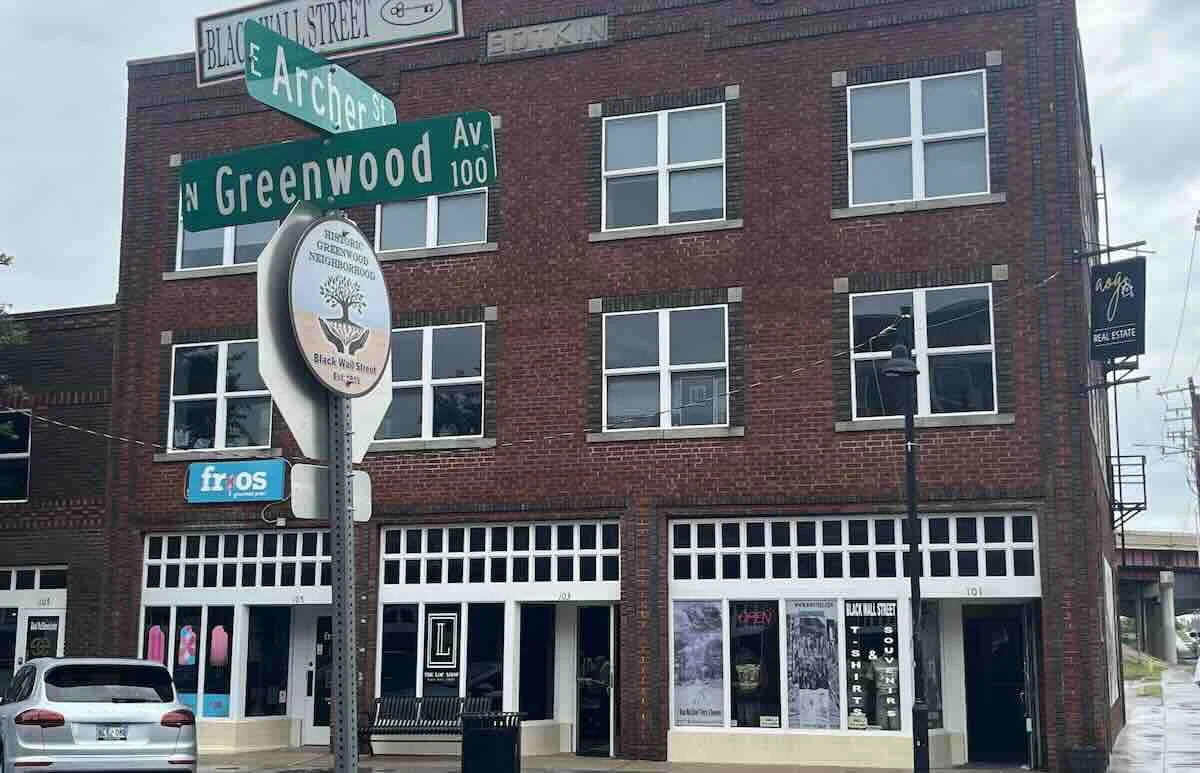
Seven hundred miles away, in Tulsa, Oklahoma, another significant gathering was underway. The Aspen Institute’s Ideas: Economy festival drew approximately 800 attendees to its rainy downtown venues. The festival’s mission was clear: to dissect policy and market strategies that could empower overlooked individuals and places to not just survive, but thrive amidst seismic economic shifts. Tulsa, a city deeply marked by the historical trauma of its Black Wall Street and the enduring legacy of the Cherokee Nation, provided a poignant backdrop for these critical conversations.
The festival offered a unique opportunity to confront America’s often discriminatory and violent past, while simultaneously celebrating the remarkable resilience of communities that have persevered in the face of immense adversity.
The Cherokee Nation’s Journey of Resilience
Chuck Hoskin Jr., the Principal Chief of the Cherokee Nation, shared a powerful account of his people’s enduring spirit. He recounted the devastating impact of forced removal from their ancestral lands in the late 1830s, a period that left the Cherokee people with "very little left," having been "ripped apart politically, almost destroyed economically." He described the profound loss of "a quarter of our population."
"What did our people do?" Hoskin Jr. asked rhetorically, his voice resonating with a deep sense of pride and determination. "They picked themselves back up." He highlighted the nation’s subsequent commitment to education and, more recently, a fervent focus on entrepreneurship as key drivers of their resurgence. Today, the Cherokee Nation generates an estimated $3 billion in economic impact. However, Hoskin Jr. stressed that economic output is merely one dimension of success. "You can measure economic impact," he stated, "but is it equitable? Is everybody succeeding? And no matter where you live, do you have a chance?" This question cuts to the heart of impact investing’s core objective: ensuring that economic growth translates into widespread, inclusive prosperity.
Echoes of Black Wall Street and the Power of Generational Wealth
The Tulsa festival also provided a platform for individuals whose family histories are inextricably linked to the city’s complex narrative. John Rogers Jr., the esteemed founder of Ariel Investments, shared a deeply personal story. His great-grandfather established the Stratford Hotel in Tulsa, which, for a time, stood as the largest Black-owned hotel in the nation. Tragically, this beacon of Black enterprise was destroyed during the 1921 Tulsa Race Massacre, a horrific event where a mob of white Tulsans unleashed a wave of violence and arson upon the vibrant Greenwood district.
This historical trauma profoundly influenced Rogers’ family. His mother’s decision to pursue a career in law was a direct response to the injustices she witnessed. Rogers himself learned the critical importance of wealth building from an early age. He recalled his father gifting him shares of stock in lieu of toys for birthdays and holidays, instilling in him a lifelong passion for investing that ultimately led him to found Ariel Investments at the young age of 24. "What I learned from my mother and my grandfather who were standing up and fighting for fairness, it’s in our DNA," Rogers affirmed, underscoring the enduring legacy of resilience and advocacy within his family.
Pathways to Reparations and Data Sovereignty in the AI Era
Legal scholar and author Dorothy Brown, whose seminal work "Getting to Reparations" was recently published, presented a compelling blueprint for enacting reparations. She outlined a plan for a federal commission, under a future administration, to recommend concrete pathways for reparations and to cultivate broad public support for such initiatives.
"It will be an opportunity to educate if it’s done properly," Brown stated, speaking from a location just blocks from the historic site of the Tulsa Race Massacre. She referenced a Georgetown University study indicating that when Americans learn about discriminatory practices like redlining and the historical injustices faced by groups such as Japanese Americans, who were interned during World War II, their support for reparations for Black Americans increases significantly. This highlights the educational power of confronting historical truths and acknowledging past wrongs.
In a session focused on investing in the next generation of American businesses, Damien Dwin of Lafayette Square emphasized the critical need for communities to retain "sovereignty and dominion of their proprietary data, of their complex workflows, and their deep relationships" to truly flourish in the emerging era of advanced technology. Lafayette Square, an organization dedicated to financing mid-sized companies that support working-class communities and jobs, is reportedly considering a significant "eight-figure-plus" capital investment in Tulsa. Dwin’s engagement with Tulsa Mayor Monroe Nichols, initiated by a cold call from the mayor, exemplifies the direct and proactive approach being taken to foster economic development. Mayor Nichols’ establishment of the Greenwood Trust, a private charitable trust aimed at reinvesting in Tulsa’s historically vibrant Black Wall Street, further underscores this commitment. A private meeting of funders convened on the sidelines of the conference, signaling a concerted effort to mobilize capital for pooled investments across a network of cities.
Revisiting Adam Smith: Beyond the "Invisible Hand"
The Aspen Institute’s festival coincided with the 250th anniversary of Adam Smith’s foundational text, "The Wealth of Nations." The gathering offered a timely opportunity to re-examine the core tenets of economic thought, particularly Smith’s concept of the "invisible hand."
Glory Liu, an assistant professor of political theory at Georgetown University and author of "Adam Smith’s America: How a Scottish Philosopher became an Icon of American Capitalism," noted that Smith’s ideas are often oversimplified. "People have latched into Smith’s idea ‘that simply by pursuing your own private interest, the public good can be promoted without central direction or intention’," Liu explained. "The wider context for that passage is far more complicated."
Liu posited that Smith was writing during a period of immense global transformation, a context that renders his work remarkably relevant to today’s AI-driven, tumultuous times. However, she cautioned that just as transformative advancements like railroads and oil have historically concentrated wealth, the unique nature and velocity of the AI boom, with its potential for massive job displacement, could lead to a societal structure resembling "feudalism within a few decades," as warned by Joseph Blasi of Rutgers University’s Institute for the Study of Employee Ownership and Profit Sharing.
The "Citizens Dividend Fund" and a Broader Vision of Wealth Building
In a dialogue with Santhosh Ramdoss of Gary Community Ventures and Ida Rademacher of the Aspen Institute, Blasi elaborated on his proposal for a "citizens dividend fund." This concept, modeled on Alaska’s sovereign wealth fund, which was capitalized by oil profits, envisions AI companies contributing 5% of their revenues to a fund managed by leading financial institutions on behalf of U.S. citizens.
Ramdoss, however, argued for a broader approach to wealth-building solutions, suggesting that an exclusive focus on AI could be a distraction. He advocated for a more comprehensive portfolio that includes home and business ownership, urging, "Let’s get away from the breadcrumbs, let’s focus on the slice." This sentiment aligns with a deeper understanding of Smith’s work. Liu observed that in "Wealth of Nations," Smith was grappling with how to harness productive labor in a way that would benefit the poor without concentrating wealth in a manner that leads to "private domination and collusion with the state that rigged the economy." This, she argued, is the central problem Smith sought to illuminate.
Roy Swan of the Ford Foundation, author of the recent book "Positive Sum," also referenced Smith, drawing attention to "The Theory of Moral Sentiments," a precursor to "Wealth of Nations." Swan advocates for a "positive-sum" approach to capitalism, where the goal is not to maximize individual gain at the expense of others, but to create a system where all participants can thrive.
Indigenous Power and the Urgency of Action
Both conferences, coincidentally opening on or just after Indigenous Peoples’ Day, featured prominent Native American leaders and cultural perspectives. Alexander Sterling, CEO of Turtle Island Community Capital, and Vanessa Roanhorse, CEO of Roanhorse Consulting, who are serving as SOCAP’s 2026 advisors on Indigenous-led content, set a powerful tone.
"We live in a world that was created by people who understood that belief is a core feature of what allows us to imagine that next future, and right now that world is in crisis," Sterling stated. He underscored the urgency of the moment, arguing against complacency: "If I’m looking at a world that is currently literally on fire, and I’m thinking maybe I’ll hedge for another six months, that is a risky investment because I’ve now chosen to delay the solution in favor of my own comfort, and that comfort is the thing that we’ve got to shake out in order to make these solutions possible."
Roanhorse offered a perspective of hope and regeneration, suggesting that "out of crisis can come opportunity." She drew a parallel to nature: "Some of the hardiest things that grow is [after] a fire. When things burn down, it allows for new life. It allows for new nutrients. It can take the hard shell of certain seeds and open it up."
Crucially, Roanhorse emphasized the necessity of engaging directly with financial mechanisms: "We can’t shy away from the conversation on money." She explained that achieving the ambitious visions for the future requires capital. "Ten years ago, I don’t think there were this many Indigenous people at this conference, or this many Indigenous people with vehicles ready to receive capital," she observed, encouraging open dialogue about money as a vital tool for progress in the contemporary world.
Local Economic Development: Tangible Impact in Chicago and Tulsa
The importance of local economic development was a recurring theme at both gatherings. In Chicago, Jesse Green of the North Lawndale Community Coordinating Council and Chris Eagan of the Steans Family Foundation led tours of the West Side, a key area targeted by Chicago’s INVEST South/West initiative. This program aims to revitalize commercial corridors. The Lawndale Christian Development Corporation is spearheading a significant revitalization effort, planning to develop 500 affordable housing units and launching a $57 million capital campaign for a business hub, trade school, and recreation center.
LiftUp Enterprises, a Chicago-based incubator of social enterprises that prioritizes worker well-being, has experienced remarkable growth, expanding by over 40% annually for the past seven years. The organization, which encompasses cleaning, landscaping, painting, and home-buying companies, now employs 150 individuals. Julian Posada of LiftUp shared their commitment to providing annual raises and fostering "dignity-centered" workplace practices that significantly reduce employee turnover. "We’re working on codifying tools that are based in grace, and finding ways that we can operate a business that takes a holistic approach of what that human being is dealing with when they come into work," Posada explained, highlighting a deeply humanistic approach to business operations.
Conclusion: A Shared Vision for a More Equitable Future
The converging events in Chicago and Tulsa served as powerful testaments to a growing movement seeking to redefine economic success. By shifting the focus from abstract financial indicators to the tangible well-being of communities, these gatherings underscored the critical role of cities and their residents in measuring true human thriving. As the world grapples with unprecedented economic volatility and the transformative potential of artificial intelligence, the conversations and initiatives emerging from these influential gatherings offer a hopeful roadmap towards a more equitable, resilient, and truly prosperous future. The emphasis on community sovereignty, historical reckoning, generational wealth, and Indigenous-led innovation, coupled with a renewed engagement with foundational economic principles, suggests a collective commitment to building an economy that works for everyone.


 Muslim

 Ali Ikhwan






