


 Asep Darmawan
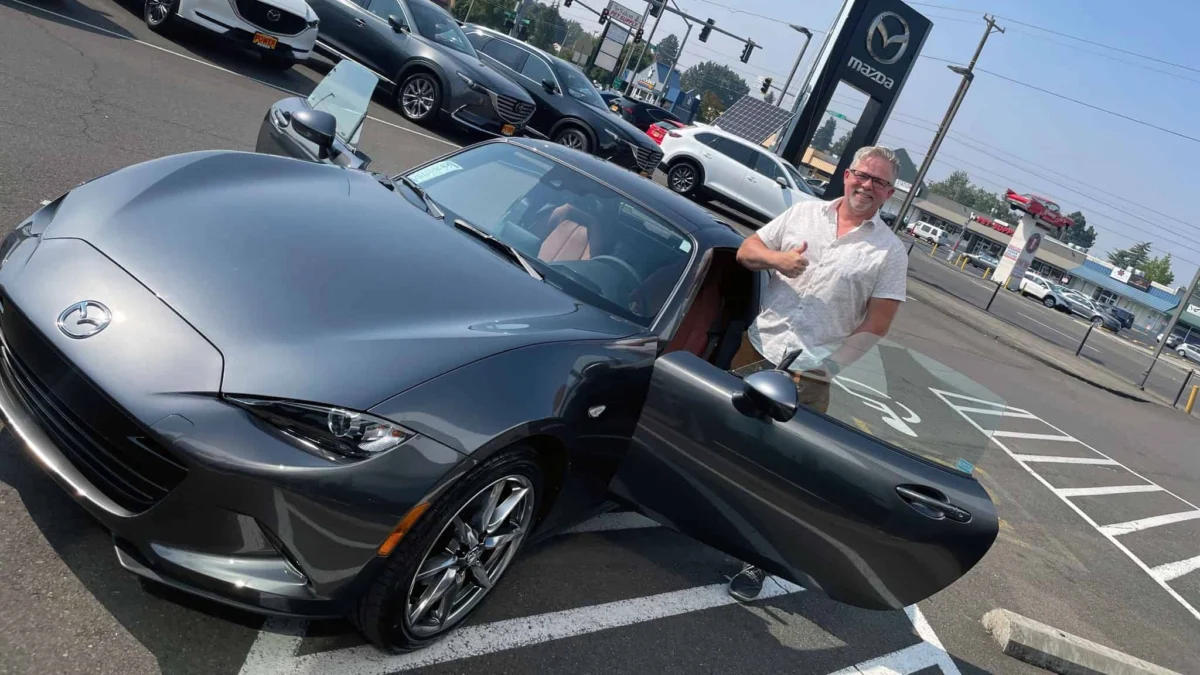
At 53 years old, I have spent a lifetime adhering to the pragmatic school of automotive ownership. I have driven beaters, hand-me-downs, and sensible commuters. I have prioritized fuel economy, cargo space, and long-term reliability over the visceral, inexplicable thrill of the open road. I have, in short, spent decades compromising.
But recently, the paradigm shifted. In a move that defied my lifelong fiscal conservatism, I allowed myself to make a significant, seemingly impulsive purchase—not out of necessity, but out of the pursuit of pure, unadulterated joy. This is the story of how an unexpected market anomaly turned a “sensible” SUV owner into the driver of a brand-new Mazda Miata, and why sometimes, building a “rich life” means finally ignoring the spreadsheet.
The "Maxi Cooper" Mistake
The story begins in July 2020, during the height of the global pandemic. Seeking to replace my aging 2004 Mini Cooper, I found myself steered away from my preference for small, nimble vehicles and into the driver’s seat of a 2019 Mini Countryman SE All4. I paid $35,990 for the vehicle. I immediately dubbed it the "Maxi Cooper," a tongue-in-cheek nod to its bloated dimensions.
For two years, I lived with this compromise. The Countryman was objectively a "good" car—safe, reliable, and practical. But it was fundamentally the wrong car for me. I am, at my core, a small-car enthusiast. Driving an SUV felt like wearing a suit that didn’t fit; it functioned, but I never felt comfortable in it. I had let the siren song of “utility” drown out my own automotive identity.
A Market Anomaly: The Miraculous Buy-Back
The turning point arrived quite by accident last month. While waiting for a routine oil change at the Mini dealership, a sales representative approached me with an unexpected proposition: the dealership wanted to buy my Countryman back.
To understand the gravity of this offer, one must look at the state of the U.S. automotive sector. The pandemic-induced supply chain crisis created a perfect storm for used-car sellers. According to data from the U.S. Federal Reserve, used vehicle prices have surged roughly 55% since July 2020. Even new car prices, while rising, have only climbed by about 18% in the same period.
When the dealer offered me $33,000 for a car I had purchased 26 months prior, the numbers were staggering. I reached out to a contact in the industry, a former car salesman named Jeremy, to gut-check the deal. His assessment was blunt: "It’s not just a good deal; it’s a miracle. It’s as if you leased that car for $115 per month. Take the offer now, before they change their mind."
The Philosophy of "Self-Centered Shopping"
With the "Maxi Cooper" gone, I faced a rare blank slate. I had two options: I could remain car-free, relying on my 1993 Toyota pickup for heavy lifting and my own two feet for daily transit in my hometown of Corvallis, or I could finally, for the first time, buy exactly what I wanted.
I decided to apply my "self-centered shopping" strategy. This philosophy posits that when you are in a position to spend, you shouldn’t aim for the "good enough" option that you’ll eventually resent. I began an intensive, 24-hour research deep dive, filtering out the noise of market trends and social pressure. I wanted a car that prioritized the driver’s experience above all else.
My criteria were clear: I wanted a small, fun, manual-transmission vehicle. I looked at the Kia Niro, the Ford Mustang Mach-E, and the Tesla Model 3. However, I found that many of these options failed the "joy" test or were laden with compromises regarding reliability or physical form factor. The Consumer Reports car finder tool kept pushing me toward SUVs—a category I had explicitly excluded—but one name kept rising to the top of the list: the Mazda MX-5 Miata.
The Case for the Mazda Miata
The Miata is, by almost any standard of modern practicality, a failure. It offers a cramped cabin, almost zero cargo space, and significant road noise. Yet, it is precisely these "flaws" that make it a masterpiece of engineering. It is an intimate machine. It is designed for the singular purpose of driving.
As one automotive reviewer put it, "It’ll bring joy to your heart every time you drive it."
When I compared the Miata to the Mini Cooper and the Subaru Outback, the choice became clear. The Miata didn’t offer the most interior space or the highest safety rating—it offered the most "smiles per gallon." I stopped looking for reasons to buy a sensible car and started looking for reasons not to buy the Miata. I couldn’t find a single one that held up under scrutiny.
The Negotiation and the "Four-Square"
Armed with my decision, I headed to a Mazda dealership in Salem. The process was a study in modern sales tactics. When I arrived, the salesman attempted to use the "four-square" negotiation method—a technique designed to keep the buyer focused on monthly payments rather than the total cost of the vehicle.
I stayed firm. I wasn’t looking for a deal on a car I didn’t want; I was looking for the specific gray hardtop manual-transmission model I had scouted online. When they didn’t have it on the lot, I didn’t settle for a different color or an automatic transmission. I agreed to pay the sticker price—including a $1,995 market adjustment—and waited.
Some might call this bad fiscal management. I call it intentional spending. I asked myself: Would I rather have the 2019 Countryman and $7,000, or a brand-new 2022 Mazda Miata? The answer was immediate and unequivocal. The Miata won.
The Psychological Shift: Beyond the "Poor" Mindset
Growing up in a household with limited resources leaves a mark. It creates a lingering sense of guilt whenever one spends money on "Nice Things." For years, I viewed my frugality as a badge of honor, even when it led to choices that made me unhappy.
Buying the Miata was a test of my own growth. As I drove it home from the dealership—top down, winding through the riverside roads, with the sun on my face—the guilt didn’t arrive. Instead, I felt a sense of clarity.
This decision wasn’t about the car; it was about the life I am building. As financial educator Ramit Sethi often argues, the goal of money is to "build a rich life"—one that is aligned with your personal values and sources of happiness. For some, a rich life is a massive house; for others, it’s early retirement. For me, at this moment, it is the feeling of the road through the steering wheel of a car I actually love.
Implications for the Consumer
This experience offers a lesson for anyone currently trapped in the cycle of "sensible" consumption. We are often told to optimize for resale value, fuel efficiency, and utility. But when you optimize your life for everyone else’s standards, you end up with a garage full of cars you don’t enjoy driving.
The used-car market may be cooling, but the lesson of my "miracle" trade-in remains: life is too short to drive a car you don’t love. If you find yourself in a position to prioritize joy over compromise, do it. The numbers might not always align with the textbooks, but the dividends paid in happiness are, as I’ve discovered, entirely worth the cost.


 Reynand Wu

 Pevita Pearce





