




 Lina Irawan
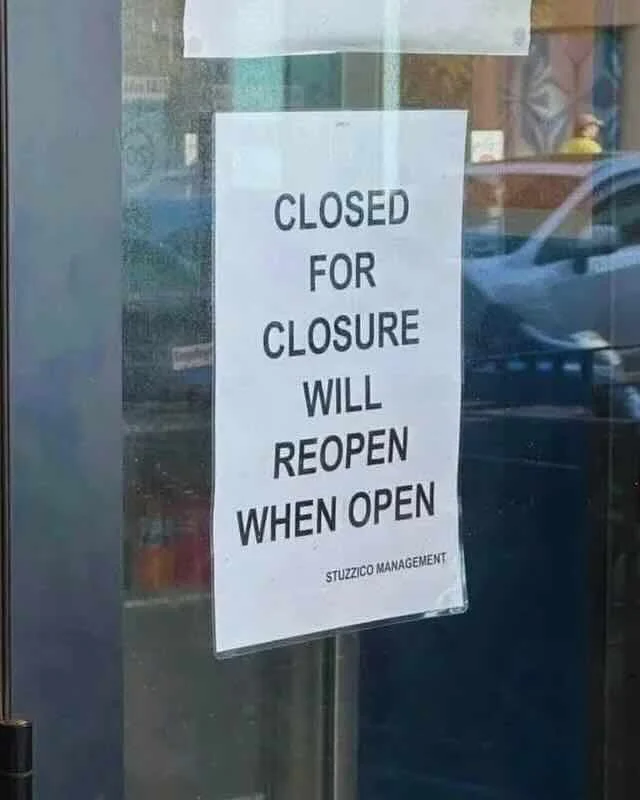
Something happened. Perhaps a long-term relationship has imploded, a mentor has betrayed your trust, or a loved one has vanished without explanation. The event itself has concluded, the dust has settled, and the calendar has moved forward. Yet, your internal state remains anchored in the past. Your emotions refuse to respect the timeline of the outside world.
In moments like these, society offers a singular, seductive prescription: "Closure."
Friends, family, and even self-help gurus use the word as a panacea. It is presented as the final chapter of a painful book—a psychological state where questions are answered, pain recedes, and the individual can finally "move on." But as we delve into the sociopolitical and psychological architecture of grief, we must confront an uncomfortable truth: Closure, as it is commonly understood, may be one of the most damaging illusions of the modern era.
The Origins of a Cultural Construct
It is a common misconception that the human need for closure is an evolutionary imperative. In reality, the concept is remarkably recent. While humanity has navigated the depths of bereavement and betrayal for millennia, the obsession with achieving a tidy, singular end-point is a product of late-20th-century pop culture and misapplied psychological theory.
The "Friends" Effect and the 1995 Shift
The term entered the mainstream vernacular with significant force in 1995, famously popularized by the sitcom Friends. When the character Rachel Green leaves a drunken voicemail for Ross Geller claiming she has achieved "closure," the humor lies in the obvious irony: she is clearly still deeply attached. Yet, the cultural footprint was cemented. We began to view grief not as a process to be navigated, but as a project to be completed.
Gestalt Psychology: A Misappropriation of Science
The intellectual roots of the term trace back to 1923, within the school of Gestalt psychology. Max Wertheimer coined "closure" to describe a cognitive phenomenon: the brain’s tendency to perceive an incomplete image as a whole. If you see a circle with a small gap in the line, your brain "closes" it to see a complete circle.
However, there is a profound difference between the brain’s desire to complete a geometric shape and the human heart’s desire to resolve the death of a spouse or the collapse of a life’s work. A finding regarding visual perception is not, by any scientific standard, evidence that grief possesses a definitive finish line.
Six Definitions of Nothing: The Fragmentation of Closure
If we are to pursue closure, we must first agree on what it is. Sociologist Nancy Berns, in her seminal work Closure, identifies six distinct and often contradictory definitions used by the public:
- Closing a Chapter: The act of formally moving on to a new life stage.
- Everlasting Remembrance: The commitment to never forget the past.
- Erasure: The active attempt to forget or remove all reminders of the painful event.
- Vengeance: Achieving a sense of balance through retribution.
- Information Retrieval: Finally getting the "answers" to haunting, unanswered questions.
- Moral Resolution: The act of forgiving or receiving a confession.
The inherent problem is that these definitions are mutually exclusive. One cannot simultaneously "erase" a memory and "remember forever." Because the term is so broad, it is used to describe everything from a wedding to an airstrike. It is a linguistic catch-all that obscures the nuance of individual pain.
The Social Half-Life of Grief
Society provides a tacit, invisible set of rules regarding how long we are permitted to grieve. Sociologist Arlie Hochschild terms these "feeling rules." The standard script is predictable: suffer a loss, experience a period of acute shattering, perform the required rituals, learn a profound lesson, achieve closure, and return to productivity.
The Penalty of Prolonged Sorrow
When an individual’s sorrow persists beyond the socially acceptable window, they violate these rules. The sympathy that was initially offered begins to evaporate. The grieving person, sensing they are "making it weird" or disrupting the social order, learns to mask their pain. This creates a feedback loop of isolation: because people hide their ongoing grief, society assumes grief is short-lived, which in turn pressures the next grieving person to hide their own, creating a collective, false consensus.
Why Revenge is a Path to Nowhere
When an individual has been wronged, the desire for retribution is a natural, visceral response. We live in an economy of "mock vengeance"—from divorce parties where former spouses burn effigies to voodoo dolls marketed as stress-relief tools. This industry is built on "catharsis theory," the idea that venting aggression "drains" the anger.
The Scientific Reality of Retaliation
Extensive research in social psychology has consistently debunked catharsis theory. Studies published by researchers like Brad Bushman have demonstrated that venting aggression does not discharge rage; it fuels it. When individuals are encouraged to lash out or punish an offender, they do not find closure. Instead, they remain fixated on the person who wronged them. Revenge keeps the grievance alive, effectively renewing the "terrible show" for another season. If the goal is to make the offender less relevant in your life, vengeance is the most inefficient tool available.
Beyond Detachment: The Continuing Bonds Model
For those dealing with the most profound form of grief—the death of a loved one—the traditional advice has long been to "detach" and "let go." However, in the 1990s, bereavement scholars introduced the "Continuing Bonds" model.
This framework acknowledges that humans rarely heal by deleting the dead from their lives. Instead, they heal by finding a new way to relate to them. The deceased may no longer participate in the physical world, but they remain an active part of the individual’s internal landscape. By asking, "What form can this relationship take now?" rather than "How do I cut this tie?", the grieving person validates their history while continuing to exist in the present. It is a recognition that someone can be gone, but still matter.
Progress, Not Closure: The Coexistence of Joy and Grief
The most damaging implication of the "closure" myth is that joy and grief are sequential. We are led to believe that we must reach the end of the grief-tunnel before we are allowed to enjoy the light of life again.
This is patently false. The human capacity for emotion is vast enough to contain contradiction. Psychiatrist Frank Ochberg famously noted, "Closure is a myth, but progress is not."
Recovery should not be measured by the total victory of happiness over sorrow. Rather, it is the growing capacity to hold both simultaneously. It is possible to enjoy a morning coffee, a conversation with a friend, or a new project while still carrying the weight of a loss. The expansion of one’s life to include pleasure alongside grief is a sign of health, not disloyalty.
Implications for Support: Being the Person Who Stays
If we accept that closure is a myth, how do we support those around us? The answer is as simple as it is difficult: Be the person who stays.
Society is excellent at offering support during the first three days of a crisis. It is abysmal at offering support during the sixth month. To truly help someone, one must be willing to sit with their grief long after it has stopped being "interesting" to the broader social circle.
This requires:
- Patience: Listening to the same stories repeatedly without checking your phone or offering premature solutions.
- Presence: Accepting that you cannot "finish" someone else’s grief for them.
- Authenticity: Not panicking when they cry, and not assuming the grief has vanished just because they laugh.
Conclusion
We have spent millions of years evolving into creatures capable of love so profound that the absence of the beloved changes the very architecture of our lives. It was always an act of desperate optimism to imagine we could "sort" that reality out with a pithy phrase or a sitcom-style resolution.
The next time you are told you need "closure," recognize it for what it is: a well-intentioned but misguided attempt to make you feel "normal" again. Instead of hunting for a phantom endpoint, focus on the expansion of your life. Accept the presence of your grief as a testament to the depth of your connections, and give yourself the grace to carry both the sorrow and the joy as you move forward. You are not "doing it wrong." You are simply human.


 Reynand Wu

 Pevita Pearce





