


 Nana Muazin
This report was originally published by The Guardian and is reproduced here as part of the Climate Desk collaboration.
In a move that has sent shockwaves through the global scientific community, the Trump administration has officially withdrawn federal support for the Arctic Report Card, an essential annual assessment that has served as the definitive baseline for monitoring environmental change in the rapidly warming North for two decades.
The decision, confirmed on Tuesday by National Oceanic and Atmospheric Administration (NOAA) communications director Kim Doster, marks the latest chapter in a broader federal campaign to decouple government operations from climate change research. As the Arctic continues to heat up at four times the global average, the loss of this coordinated, federally backed synthesis threatens to leave policymakers, local communities, and global researchers navigating the climate crisis in the dark.
A Legacy of Scientific Vigilance
Since its inception in 2006, the Arctic Report Card has functioned as a vital diagnostic tool. Peer-reviewed by experts across the globe, the report tracks the complex, interconnected shifts in the region’s atmosphere, oceans, cryosphere, and tundra. It has provided the data necessary to understand not just the warming of the poles, but the resulting chain reactions—from sea ice decline and carbon sink reversals to the profound upheaval of delicate ecosystems.
The most recent edition, the 2025 Arctic Report Card, painted a sobering picture. It revealed that surface temperatures across the region between October 2024 and September 2025 were the highest recorded since 1900. Furthermore, in March 2025, winter sea ice reached the lowest annual maximum extent in the 47-year satellite record. These are not merely statistics; they are early-warning signals for the entire planet.
Chronology of a Disappearing Baseline
The abrupt nature of this withdrawal has left the scientific community scrambling. While NOAA officials maintain that the raw data previously contributed to the report will continue to be collected and made public, the synthesis—the process of turning raw data into actionable intelligence—is now effectively orphaned.
- 2006–2024: NOAA facilitates the production of the annual Arctic Report Card, establishing it as the "gold standard" for environmental monitoring in the region.
- January 2025: The Trump administration resumes power, initiating a series of moves to restrict government-led climate research.
- April–July 2025: A succession of climate-focused reports are removed from government websites, and contributors to federal preparedness reports are dismissed.
- August 11, 2026: Reports surface indicating the potential end of the Arctic Report Card.
- August 12, 2026: NOAA confirms the withdrawal of support. Communications director Kim Doster states: “Coordination of the 2026 Arctic Report Card will not be facilitated through NOAA.”
Rick Thoman, the lead editor for this year’s project, expressed both frustration and a sliver of hope. “We are scrambling to pull the pieces together,” Thoman noted. “I am optimistic that we can find a path forward for 2027 and beyond. Given the late date, whether we can pull it together for 2026 is an open question, but we’re trying to make it happen.”
The Physical Cost of Environmental Change
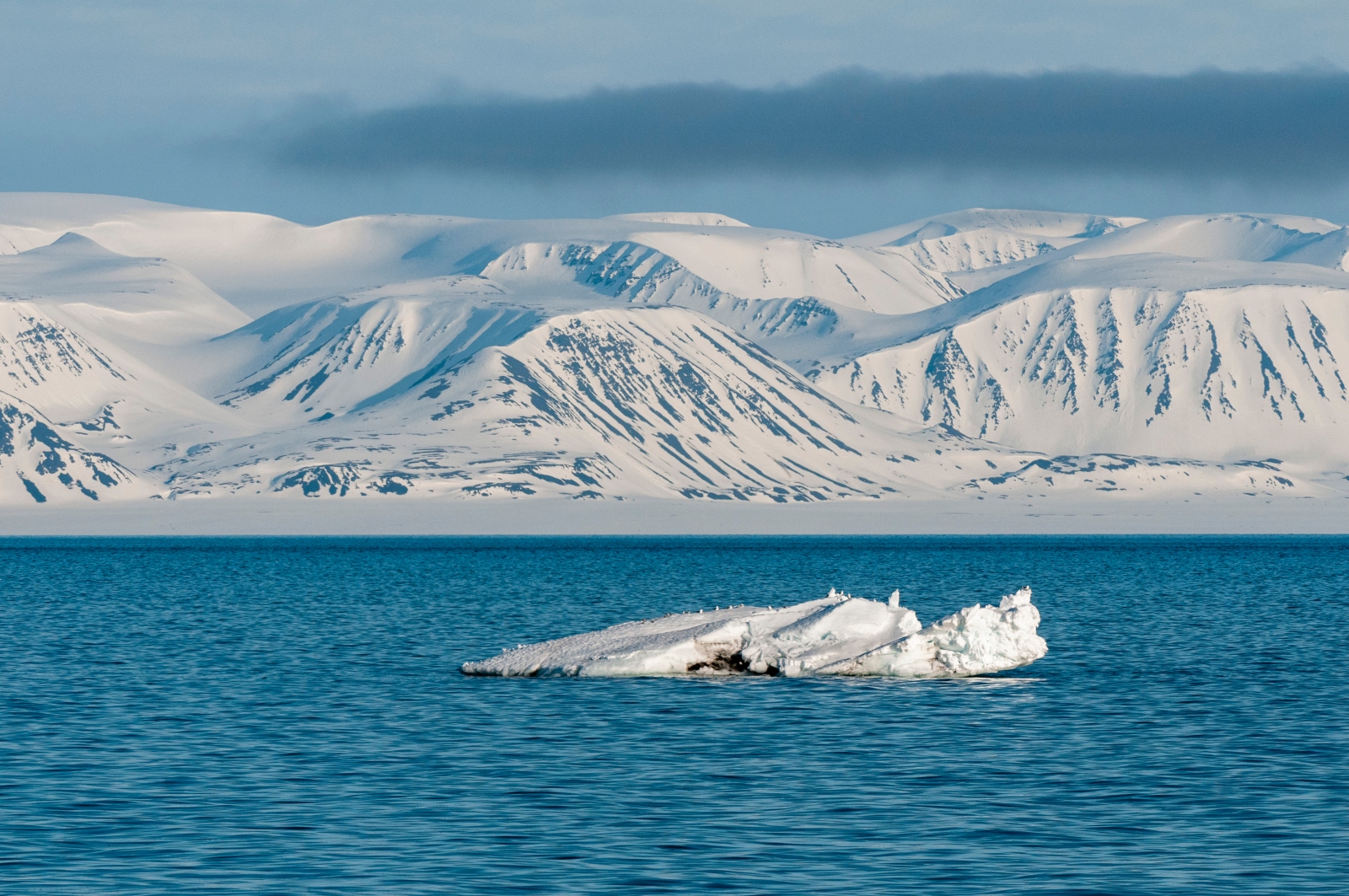
The impact of the changing Arctic is not confined to the polar circle. It is a fundamental driver of global sea-level rise and extreme weather patterns. As glaciers melt, the freshwater influx threatens water supplies, exacerbates flooding, and increases the frequency of landslides and tsunami hazards for northern coastal towns.
Perhaps most visibly, the degradation of the landscape has taken a bizarre and dangerous turn in Alaska. In more than 200 watersheds, thawing permafrost has released iron and other minerals, literally turning rivers and streams bright orange. These "rusting rivers" have seen a spike in acidity and toxic metal levels, devastating aquatic habitats, contaminating rural drinking water, and crippling subsistence fishing—the lifeblood of many Indigenous communities.
Official Responses: From Denial to Defiance
The administration’s rationale remains opaque. In her statement to The New York Times, Doster framed the change as a restructuring of priorities, claiming that NOAA programs would continue to support research related to “national security, weather prediction, safety of navigation and the economic vitality of coastal communities.”
However, the scientific community sees the move as a deliberate, ideologically driven erosion of institutional memory. Rick Spinrad, the former NOAA administrator during the Biden administration, did not mince words, labeling the decision “really unconscionable.”
“It provides the baseline of what’s happening in the Arctic,” Spinrad said. “Then, in terms of value for future planning, you can imagine anybody who’s dependent on Alaskan infrastructure—the oil pipeline, the fishing community, or local municipalities—they rely on this. Now, they will not have that tool. It will be up to them to try to ferret out where the data are, and then to find somebody who can do the analysis.”
Spinrad added that the motivation seems clear: “I can only infer that it’s tied to their aversion to anything associated with having a better understanding of climate change.”
Implications for U.S. Global Leadership
The ramifications extend beyond the loss of a single report. Twila Moon, an editor for the report and a scientist at the National Snow and Ice Data Center, highlighted the loss of the United States’ standing in the international scientific arena.
“The U.S. is an Arctic nation,” Moon said. “It’s not just a distant place. It’s also our national place. So many of the changes there have impacts that reach down into our mid-latitudes, even farther south.” She warned that even if the scientific community manages to produce a "shadow" version of the report, the loss of a federal stamp of approval is a profound retreat. “That’s a real stepping back of U.S. leadership in the science arena, in the environmental intelligence arena, and that kind has a whole other flavor of harm as well.”
A Broader Pattern of Institutional Dismantling
The cancellation of the Arctic Report Card is not an isolated incident; it is a systemic effort to dismantle the infrastructure of climate science. Over the past 18 months, the administration has aggressively sought to scrub the word "climate" from government research, shuttered the National Center for Atmospheric Research (NCAR) laboratory in Colorado, and moved to scrap a $368-million deep-sea observation system.
Furthermore, the administration has stopped tracking the financial costs of climate-fueled disasters—a move that effectively hides the economic burden of the crisis from the American taxpayer. By dismissing the contributors to the government’s flagship climate preparedness reports, the administration has signaled that it is no longer interested in the data-driven reality of the warming world, preferring to operate in a vacuum where environmental crises go unmeasured and, therefore, unaddressed.
As the Arctic continues to transform, the loss of the Report Card leaves a dangerous vacuum. Scientists remain committed to documenting the thaw, but without the authority and resources of the federal government, the effort to understand our changing planet has been rendered significantly more difficult, fragmented, and vulnerable. The question remains: when the consequences of a changing Arctic inevitably reach the heart of the lower 48 states, will the government have the information it needs to respond, or will the silence of the North have become a permanent feature of national policy?

 Ammar Sabilarrohman
 Lina Irawan