
 Laily UPN
Five years ago, the world watched in horror as the final U.S. military transport planes taxied down the runway at Kabul’s Hamid Karzai International Airport. The images—desperate families passing infants over razor-wire fences, men clinging to the exterior of aircraft, and the chaotic collapse of a two-decade-long state-building project—became the defining epitaph of the American war in Afghanistan.
However, while those dramatic scenes captured the global imagination, the true tragedy of U.S. policy toward Afghanistan has unfolded in the years since, far from the glare of television cameras. Washington has pivoted from a failed military intervention to a policy of economic strangulation, imposing aid cuts that have triggered a quiet, systemic collapse of the nation’s public health apparatus. This is a failure not defined by burning embassies, but by the rising death toll of mothers and newborns—a crisis that the current U.S. administration has largely refused to acknowledge.
A Legacy of Withdrawal: The Chronology of Collapse
To understand the current humanitarian catastrophe, one must look at the transition of U.S. strategy from late 2021 to the present. For the first few years following the Taliban’s return to power, Washington maintained a careful, if strained, policy of "firewalling" essential humanitarian assistance from its political opposition to the de facto government. The U.S. Agency for International Development (USAID) continued to fund life-saving maternal and child health programs, recognizing that the health of the Afghan population was distinct from the political legitimacy of the regime in Kabul.
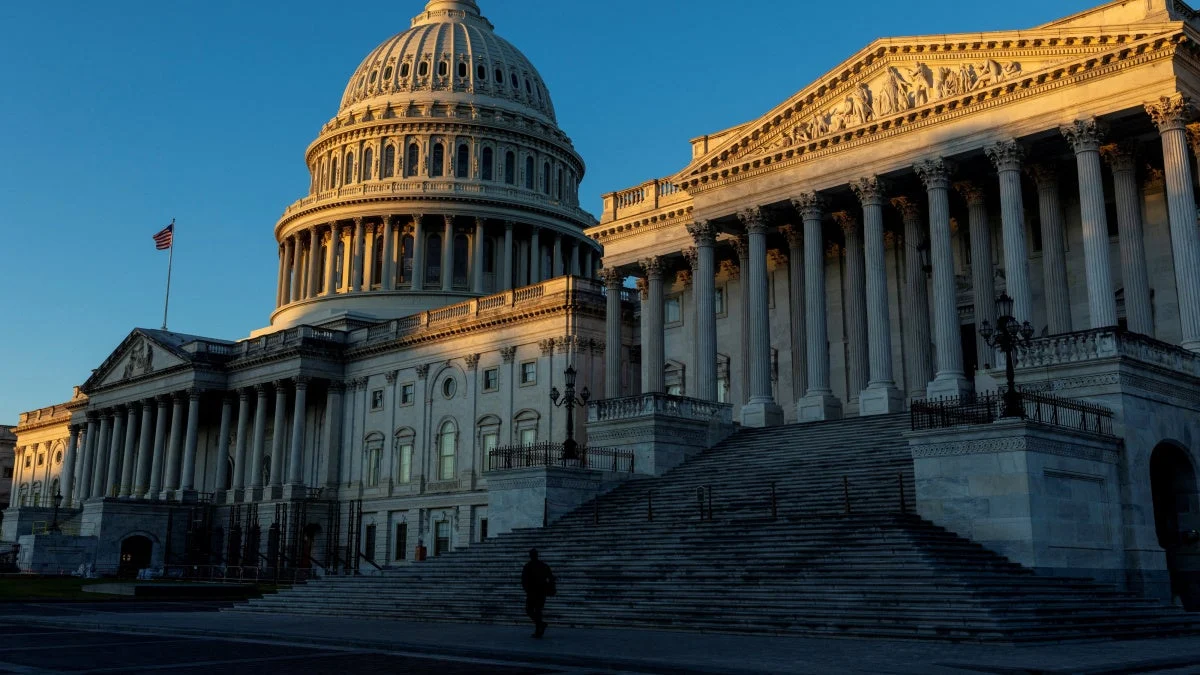
That policy shifted abruptly in early 2025. In a move that signaled a hardline departure from previous humanitarian commitments, the Trump administration terminated or froze over $1.7 billion in aid, including approximately $736 million explicitly earmarked for humanitarian relief. This represented nearly half of the country’s total international aid influx.
The impact was near-instantaneous. By October 2025, the World Health Organization (WHO) reported that over 420 health facilities across Afghanistan had been forced to shutter or suspend operations. The result was the severance of basic medical access for more than 3 million people. In the span of a few months, decades of investment in public health infrastructure were effectively dismantled, leaving a void that no domestic actor in Afghanistan has the resources to fill.
The Data of Despair: Quantifying the Preventable
A comprehensive six-month investigation conducted by Refugees International has provided a harrowing look at the reality on the ground. By partnering with a vast network of health providers and examining records from over 320 hospitals and clinics across six provinces, the investigation reveals a health system in freefall.
The numbers are stark. In Herat, maternal mortality rates have surged fivefold since the 2025 aid cuts. In Nangarhar, neonatal mortality rose by nearly 60 percent compared to the previous year. Perhaps most chilling is the data from Kunar, where neonatal deaths attributed specifically to asphyxia—a condition treatable with basic oxygen and resuscitation equipment—skyrocketed by 156 percent.
The investigative team surveyed 555 front-line health workers, 70 percent of whom were midwives. These professionals, who once represented the vanguard of Afghan public health, now find themselves working in environments devoid of basic electricity, clean water, and medicine. The survey documented at least 161 deaths directly linked to the lack of U.S.-funded services: 80 mothers, 30 newborns, 14 children, and 26 adults.
Crucially, leading public health experts who reviewed the data suggest that these figures are a significant undercount. Many deaths in rural, mountainous provinces go unrecorded, and the psychological and physical trauma suffered by those who survived is currently beyond calculation. Two out of every five health workers surveyed reported that they personally knew someone who died because they could not reach a functioning clinic in time.
Front-Line Testimonies: The Human Cost of Policy
Behind the statistical increases lie stories of profound, individual tragedy. Shah Mohammad, a physician who worked on a USAID-funded project in Jalalabad, describes the systemic failure of the facility’s oxygen plant. When the funding ceased, the plant ceased operations.
"We were forced to watch children die because we had no way to keep them breathing," Dr. Mohammad explained. He estimates that 3 to 4 percent of all pediatric admissions at his facility resulted in death as a direct consequence of the loss of oxygen, a preventable outcome that has decimated families in the region.
In Kabul, the situation is equally dire. At the Ahmad Shah Baba Hospital, the maternity unit was once a beacon of progress, employing 52 midwives. Post-cuts, that number was slashed to just one or two per shift, attempting to manage roughly 100 births every 24 hours. The result was inevitable: a pregnant woman in her final trimester arrived in critical condition, was turned away due to lack of staff, and died shortly after, unable to access the emergency obstetric care she required.
In the southern province of Nimroz, a man recounted the agonizing journey of his sister, who was in labor with twins. Upon arriving at their local health center, they found the doors locked. The family traveled for hours to reach the provincial hospital, only to encounter severe staffing shortages that delayed her treatment further. Both she and her twins were dead within two hours of arrival.
Official Rationales vs. The Reality on the Ground
The Trump administration’s defense of these policies rests on the argument that providing aid risks legitimizing the Taliban, a regime that enforces a system of "gender apartheid." By withholding funding, the administration claims it is maintaining a principled stance against a government that bars women from secondary education and public employment.
However, critics, including Rina Amiri, the former U.S. envoy for Afghan women and girls, argue that this logic is fundamentally flawed. "These cuts do not punish the Taliban; they punish the Afghan women and girls who have the least power in this society," Amiri has stated.
The irony of the current policy is that it has exacerbated the very gender-based subjugation the U.S. claims to oppose. Healthcare was one of the final sectors in Afghanistan where women were permitted to work and where female patients could receive care from female providers. By cutting funding, the U.S. essentially fired 70 percent of the surveyed midwives, effectively erasing one of the few remaining professional footholds for women in Afghan public life. The policy has not weakened the Taliban’s grip; it has instead ensured that Afghan women are further isolated, impoverished, and dependent on a system that systematically denies their rights.
A Broader Pattern: The Betrayal of Trust
The humanitarian crisis in Afghanistan is not an isolated incident; it is part of a wider, troubling pattern of U.S. abandonment of those who stood with American interests over the past two decades.
After the withdrawal, the U.S. had promised a path to stability for the 70,000 Afghans who served as interpreters, fixers, and partners to U.S. forces and diplomats. The current administration has since walked back these commitments, terminating humanitarian parole and Temporary Protected Status (TPS) for Afghans. Reports of deportations to third countries—or, in some cases, back to the Taliban-controlled territory—have cemented a perception among the Afghan people that the United States is not a reliable ally, but a fair-weather partner that discards its responsibilities once the political climate shifts.
Implications and the Path Forward
The situation remains dire, but it is not irreversible. There are tangible steps that could mitigate the ongoing catastrophe. Experts suggest that the U.S. could restore targeted funding for midwifery training, hospital maintenance, and the operational costs of essential infrastructure like oxygen plants—programs that have successfully functioned in other conflict zones under similar international oversight.
Furthermore, the U.S. could facilitate the involvement of the United Nations in managing critical relief operations, bypassing direct funding to the Taliban while ensuring the survival of the Afghan population. Finally, a commitment to systemic mortality tracking by the State Department would force a level of transparency that is currently absent.
None of these measures will resurrect the mothers and children already lost to preventable illness and exhaustion. However, they represent a moral imperative. The current policy of indifference toward the health of the Afghan people is a stain on the record of U.S. foreign policy. If the United States truly stands for the dignity of women and the protection of the vulnerable, it must reconcile its actions with its rhetoric. The "quiet" failure in Afghanistan is no longer quiet; it is a loud, daily indictment of a policy that values geopolitical posturing over the fundamental right to life.

 Siti Muinah
 Ali Ikhwan