


 Layla Zulfa
By CARE Nigeria Communications Team
November 2, 2026
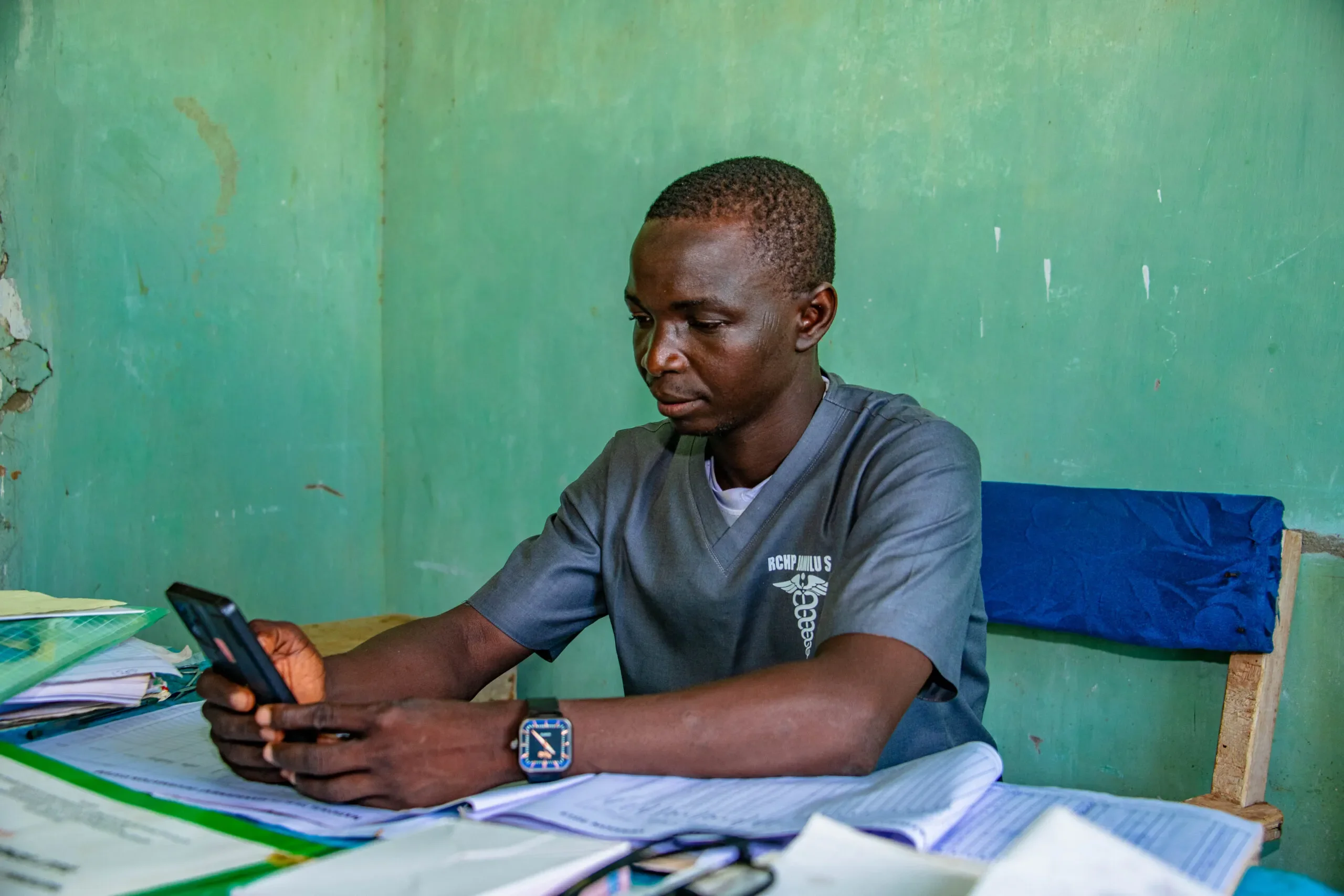
In the quiet, sun-baked landscape of the Charanchi Local Government Area in Katsina State, Nigeria, the survival of a community rests on the shoulders of one man. Jamilu Sani, 34, is the sole frontline community health worker (FCHW) at the Tiki Health Clinic. For nine years, he has served as the village’s primary medical lifeline, navigating the immense pressures of rural medicine with little more than his own expertise and a recently introduced digital training tool.
While innovative technology is beginning to modernize his approach, Sani’s daily reality highlights a sobering truth: in the most remote corners of Nigeria, digital progress cannot compensate for a systemic deficit in staffing, infrastructure, and basic medical supplies.
The Daily Reality: A Solo Mission in Tiki
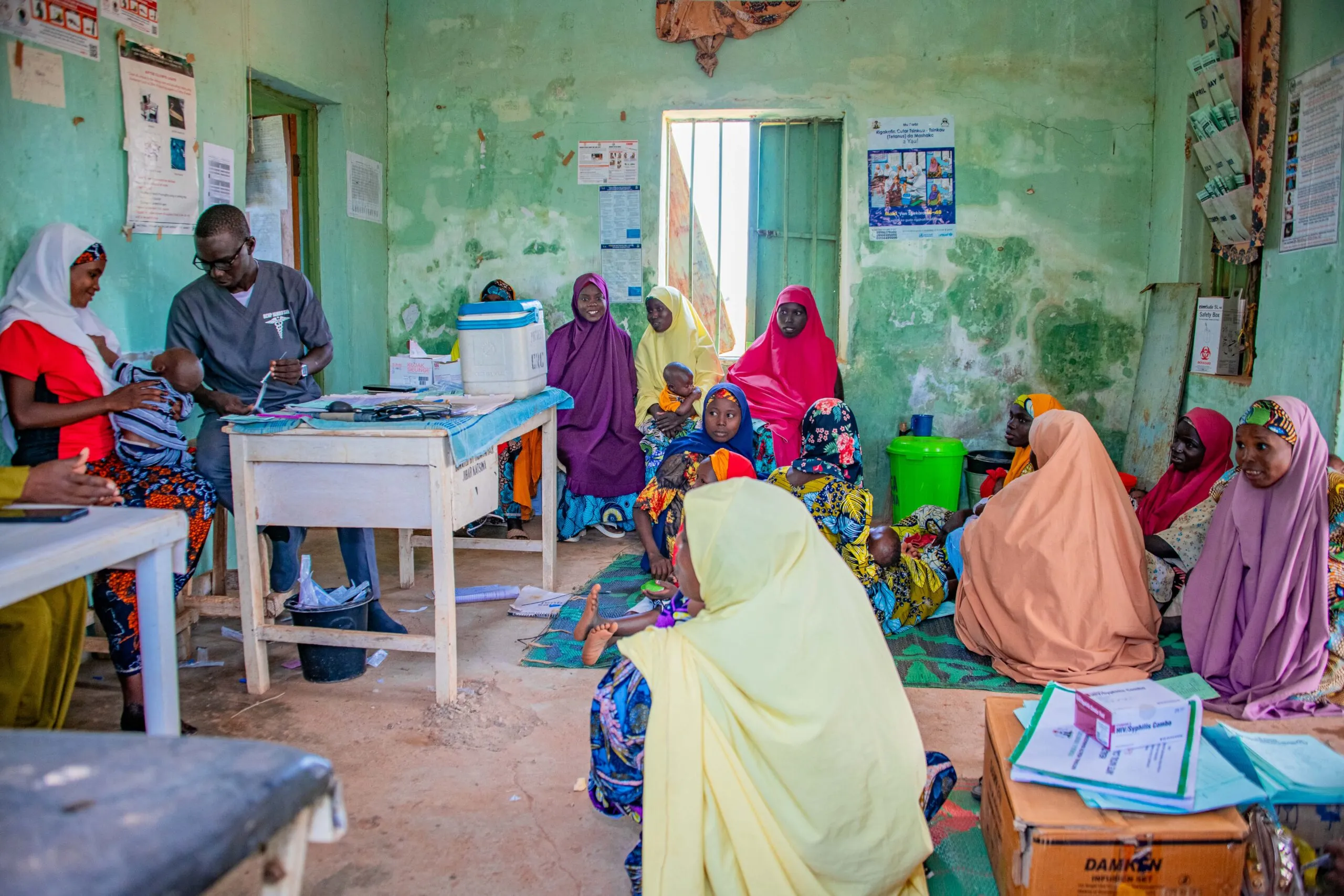
Every morning, the doors of the Tiki Health Clinic open to a queue of patients that rarely dissipates. On any given day, Sani attends to more than 30 people. His patient demographic is as diverse as it is demanding: pregnant women requiring prenatal care, parents cradling feverish infants, and elderly residents managing chronic conditions.
Sani is the sole practitioner. He is the intake clerk, the diagnostician, the pharmacist, and the administrator. When he is under the weather, there is no one to cover his shift. When he encounters a complex case that requires a second opinion, there is no one to consult.
"I am overwhelmed," Sani admits. "If I don’t stand strong to fill the gap for my people, who else will?"
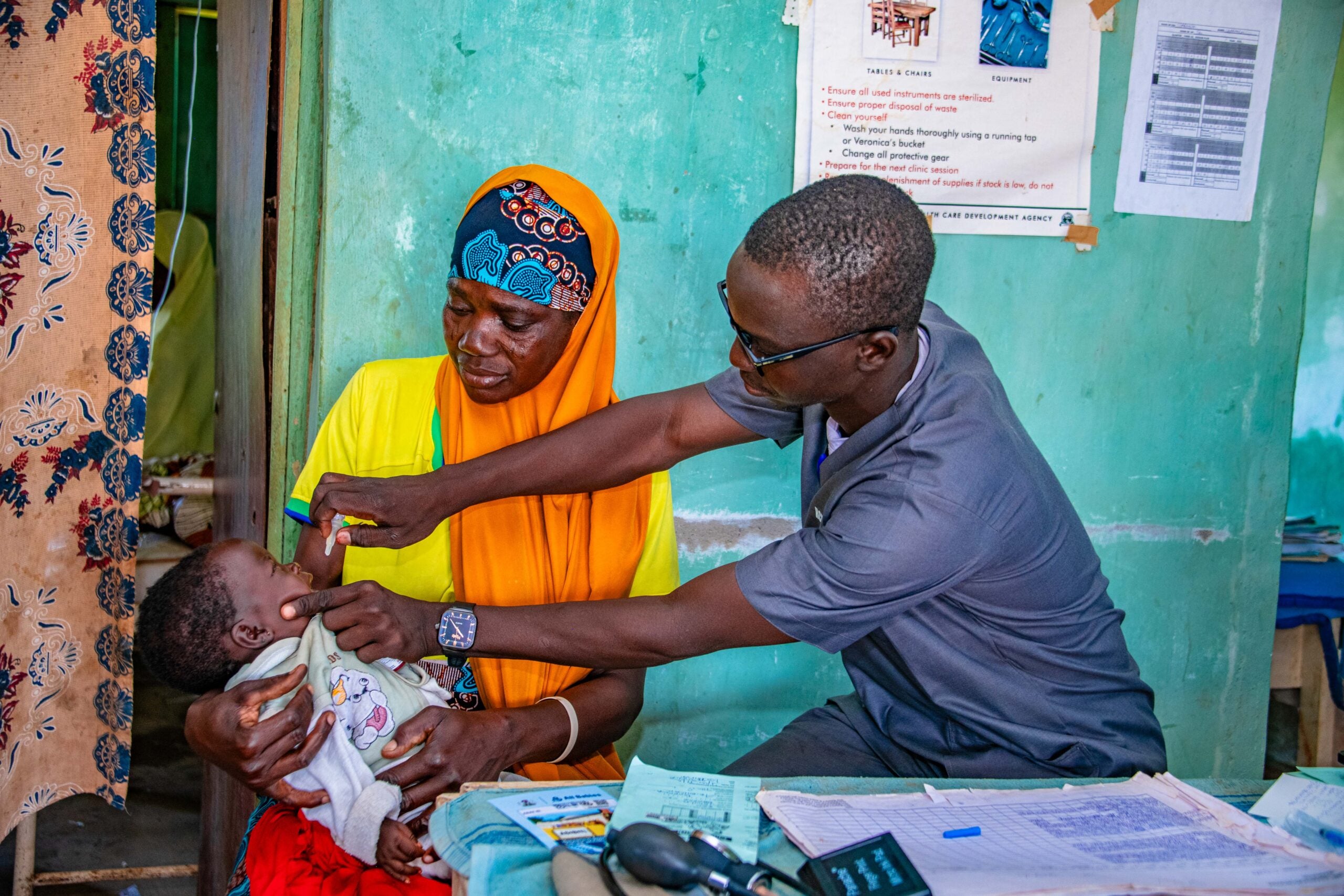
This sense of duty drives him to work through illness and fatigue. For the 50 households that rely on the clinic, Sani is the only barrier between them and a long, often prohibitive, journey to the nearest urban hospital. His situation is not unique; across rural northern Nigeria, frontline health workers are the bedrock of the national health system, often operating in isolation without the safety net of a multi-disciplinary team.
The EnRiCH Intervention: Digital Empowerment
To address the limitations of operating in a knowledge vacuum, CARE Nigeria launched the Enhancing Resilience in Frontline Community Health Care (EnRiCH) project. The initiative is designed to empower health workers like Sani by providing a digital learning platform that functions even in areas with inconsistent or non-existent internet connectivity.
Chronology of the EnRiCH Implementation
- 2025: CARE Nigeria, in partnership with the Life Helpers Initiative and the Katsina State Ministry of Health, rolls out the digital library and training curriculum.
- Early 2026: Sani begins his enrollment in the platform, marking the first time in his nine-year tenure that he has had structured, ongoing professional development.
- Late 2026: Having completed five core courses—covering maternal health, child nutrition, and patient-provider communication—Sani reports a tangible shift in his clinical practice.
"It has changed how I attend to people," Sani says. "I feel like I have updated, like software, and I can respond better to their needs."
The platform serves as a virtual mentor, offering a repository of medical information that allows workers to verify treatments and protocols in real-time. According to project coordinators, the goal is not merely to provide information but to standardize the quality of care across hundreds of disparate, rural facilities.
Supporting Data: The Scale of the Challenge
The EnRiCH project is ambitious, aiming to professionalize the role of the FCHW on a massive scale. Currently, the program supports approximately 1,500 health workers across 343 facilities in Katsina State. The expansion roadmap is clear:
- Target Reach: The project aims to support 2,000 health workers in the near term.
- Population Impact: These 2,000 workers are projected to serve upwards of 1 million people across 200,000 households.
- Programmatic Goals: Beyond clinical training, the project focuses on:
- Formal professional certification for FCHWs.
- Economic empowerment through community-led savings and loan groups.
- Advocacy for fair compensation and official integration into the state health workforce.
Despite these promising metrics, the data reveals a stark gap between "skill" and "capacity." While Sani is now better trained, the facility itself remains under-equipped.
What Training Cannot Replace: The Infrastructure Gap
The most poignant aspect of Sani’s story is the mismatch between his newfound digital knowledge and his physical environment. Training provides the how, but it does not provide the what.
Critical Shortfalls Identified at Tiki Health Clinic:
- Staffing: Sani lacks support for laboratory work and immunization services, which forces him to prioritize care based on triage rather than comprehensive coverage.
- Medical Equipment: The clinic suffers from chronic shortages of rapid diagnostic test kits, thermometers, and reliable weighing scales.
- Privacy and Sanitation: Inadequate facility design—specifically the lack of privacy screens—hampers the quality of care, particularly for maternal health services.
"I need more hands," Sani says. His plea is echoed by health experts who argue that digital health tools are only as effective as the physical infrastructure that houses them. A well-trained worker without a thermometer is like an architect without a ruler; the knowledge exists, but the ability to act on it is severely constrained.
Official Perspectives: The Path Forward
Aminu Rimaye, the EnRiCH project coordinator with CARE Nigeria, acknowledges the complexity of the task. While the initial results show shorter waiting times and fewer unnecessary referrals, the systemic issues require a multi-stakeholder response.
"Jamilu’s contributions to quality healthcare delivery have helped strengthen community members’ confidence in the health system," Rimaye notes. "However, our hope is to sustain and scale up the EnRiCH project to reach more FCHWs across additional states. We recognize that digital training is one pillar; the other must be the physical and economic empowerment of the workforce."
The implication is clear: the sustainability of rural healthcare in Nigeria cannot rest solely on the shoulders of individuals or the success of a single NGO project. It requires a sustained commitment from the government to invest in rural infrastructure, regularize the pay and status of frontline workers, and ensure that rural clinics are treated as vital nodes in the national health architecture rather than isolated outposts.
Implications for Global Health
The narrative emerging from Tiki highlights a critical pivot point in development work. For years, the global health community focused heavily on capacity building through training. Today, that focus is shifting toward "systems resilience."
If Nigeria—and other nations facing similar challenges—is to meet the Sustainable Development Goals (SDGs) regarding universal health coverage, the model must evolve. The "Tiki Model" suggests that the future of rural health depends on a three-pronged approach:
- Digital Integration: Utilizing tools like the EnRiCH platform to overcome geographical isolation and provide continuous education.
- Structural Investment: Ensuring clinics have the physical tools and staffing ratios required to handle patient volume safely.
- Professional Recognition: Transforming the role of the FCHW from a volunteer or peripheral worker to a recognized, compensated, and respected professional within the formal health hierarchy.
For Jamilu Sani, the daily grind continues. He remains the first and last line of defense for the 50 households in his care. He is, by all accounts, a hero of the medical frontlines. Yet, as the sun sets over the Katsina landscape, the hope remains that his dedication will eventually be matched by the resources his community deserves.
CARE Nigeria, which has operated in the country since 2017, continues to advocate for these systemic shifts, focusing on nutrition, reproductive health, and economic empowerment. But as Sani’s experience proves, the ultimate success of these programs will be measured not just in digital modules completed, but in the presence of a second nurse, a fully stocked pharmacy, and a facility that provides dignity alongside medicine.
The message to the world is simple: provide the heroes of the frontlines with the tools they need, and the entire health system will rise to meet them.
CARE’s ongoing work in Nigeria includes, but is not limited to, nutrition, security and livelihoods, reproductive health, and the prevention of violence against women and girls. To learn more or support these critical initiatives, visit the CARE official website.



 Reynand Wu




