


 Lina Hope
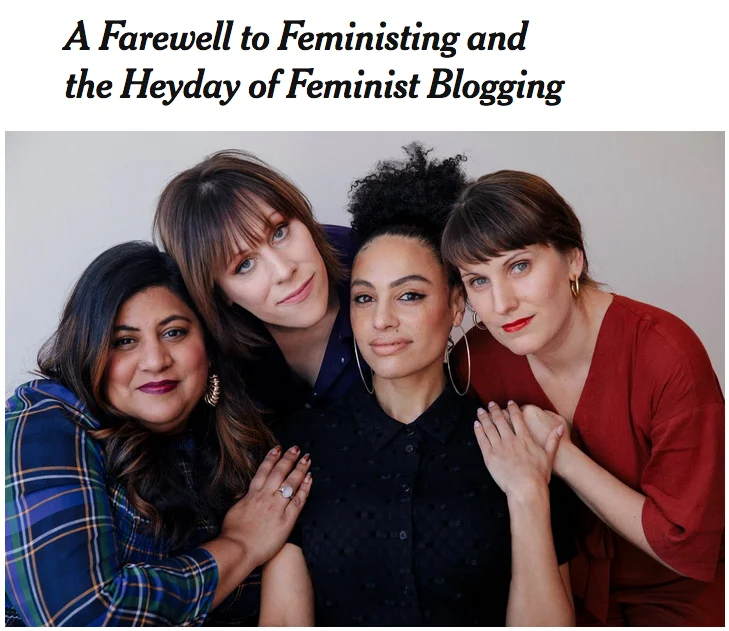
The landscape of independent digital media underwent a seismic shift this week as Feministing, the trailblazing feminist blog that defined the early 21st-century online discourse, announced it is ceasing operations. After 15 years of providing a platform for bold, intersectional, and uncompromising feminist analysis, the site is logging off for the final time. The closure serves as a poignant, if sobering, marker of a changing media ecosystem where the promise of the “independent blogosphere” has increasingly succumbed to the pressures of corporate consolidation and the volatility of digital advertising.
The End of a Digital Institution
For a decade and a half, Feministing functioned as more than just a website; it was a digital nerve center for a generation of activists, scholars, and media creators. The announcement, which confirmed the site’s closure, highlighted the persistent difficulty of sustaining independent, mission-driven journalism in an era where venture capital and corporate mergers dominate the digital space.
Despite achieving significant milestones—including a peak of 1.2 million unique monthly visitors—the editorial team could not reconcile their commitment to fair, equitable compensation for their contributors with the unstable funding models available to independent outlets. Unlike many of its contemporaries that pivoted toward corporate acquisition, Feministing remained fiercely independent until the end, refusing to dilute its voice or suppress “controversial” topics to appease commercial interests.
A Chronology of a Feminist Movement
To understand the impact of Feministing, one must look at the digital climate of 2004, when the site was founded. At the time, the mainstream media was largely dismissive of feminist concerns, and the internet was still finding its footing as a tool for social movement building.
- 2004–2008: The Formative Years: Feministing emerged as a critical corrective to the male-dominated tech and media landscape. It provided a space for young feminists to dissect pop culture, politics, and reproductive rights with a lens that was both academic and deeply personal.
- 2009–2014: The Peak of Influence: During this period, the site solidified its role as a power player in the media ecosystem. It set the agenda on critical issues, from campus sexual violence to the structural nuances of intersectionality. It was a primary source for journalists, researchers, and activists seeking a perspective that ignored the "both-sides" approach of legacy media.
- 2015–2019: The Struggle for Sustainability: As the digital advertising market shifted, the "blogging" era began to wane. Increased competition for attention, combined with the rise of social media platforms that prioritized algorithm-friendly content over deep-dive analysis, put immense pressure on the site’s financial independence.
- December 2019: The Final Hurrah: The editorial team announced the closure, choosing to shutter the project on their own terms rather than compromise their mission.
The Ecosystem of Independent Media
Feministing was never an island. It operated as part of a robust, interconnected web of progressive media outlets that fundamentally altered the American public consciousness. The site’s editors were quick to acknowledge their peers in the farewell announcement, noting the "legendary" status of publications like Jezebel, Feministe, Racialicious, Tiger Beatdown, Crunk Feminist Collective, The Hairpin, The Toast, and Bitch Media.
This ecosystem was characterized by a shared commitment to anti-racist, anti-capitalist, and feminist analysis. These sites did not merely comment on the news; they created it. By prioritizing voices that were traditionally marginalized—women, people of color, and trans individuals—these platforms ensured that the digital landscape was not a mirror of the status quo, but a blueprint for a more inclusive future.
The struggle of Feministing is emblematic of the "death of the blog." As media outlets like Truthout, Jacobin, and Talking Points Memo navigated their own paths, many found that the reliance on independent, community-driven funding was insufficient against the backdrop of an internet economy that incentivized scale over depth.
Institutional Impact: The "Feministing Pipeline"
Perhaps the most enduring legacy of Feministing is not the thousands of articles archived on its server, but the network of thinkers it nurtured. The site served as an unparalleled incubator for feminist thought leadership.
The "Feministing alumni" network reads like a list of the most influential figures in contemporary media and politics. Former contributors have ascended to roles as best-selling authors, high-level political strategists, and editors of major publications. Alumni have taken the helm at outlets like Teen Vogue, spearheaded award-winning podcasts like Call Your Girlfriend, and led national policy initiatives such as Know Your IX.
This pipeline illustrates that Feministing succeeded in its primary goal: to professionalize and center feminist critique in the public sphere. When the New York Times or the Washington Post cites these voices today, they are essentially citing the legacy of the community built on the Feministing platform.
Implications for the Future of Media
The closure of Feministing raises urgent questions about the future of independent, mission-driven journalism. In a media environment where corporate dollars often dictate the parameters of "acceptable" discourse, the loss of an outlet that explicitly rejects these constraints is a blow to the diversity of thought in the public square.
The Financial Challenge
The core of the issue remains the "funding model." The editorial team noted that despite a loyal readership and improved financial sustainability over the years, the gap between "financially sustainable" and "fairly compensating a team" proved unbridgeable. The reliance on labor from individuals who had to work full-time jobs elsewhere while managing the site is a testament to their dedication, but also a indictment of a system that fails to reward independent, high-impact journalism.
The Loss of Institutional Memory
The internet is often described as permanent, but the closure of these sites proves that digital archives are fragile. The team has promised to keep the archives available in some capacity, but the loss of the site as a living, breathing entity means the loss of a specific type of cultural responsiveness—the ability to act as a source of hope and solidarity when the world feels "upside down."
Looking Ahead: A Final Farewell
While the blog will no longer update, the Feministing team is not disappearing into the ether. Plans are underway to host a farewell project—a "last hurrah"—to celebrate the community’s achievements. Furthermore, the organization is working to ensure that its 15-year archive remains accessible, preserving the history of a pivotal era in feminist activism.
For those who grew up reading the site, Feministing was more than a blog; it was a home base. It provided the intellectual vocabulary for a generation to name the injustices they witnessed and the tools to fight them. As the editors stated in their final sign-off, "We’ll see you in the streets."
The digital platform may be closing, but the movement it helped build has long since moved into the offices, the lecture halls, the podcasts, and the political movements that define our current moment. The site’s closure is not an end, but a transition—a closing of one chapter in a much larger, ongoing struggle for equity and liberation. The "Feministing" project may be logging off, but its fingerprints remain on every aspect of the modern feminist conversation.

 Reynand Wu

 Muslim