
 Nana
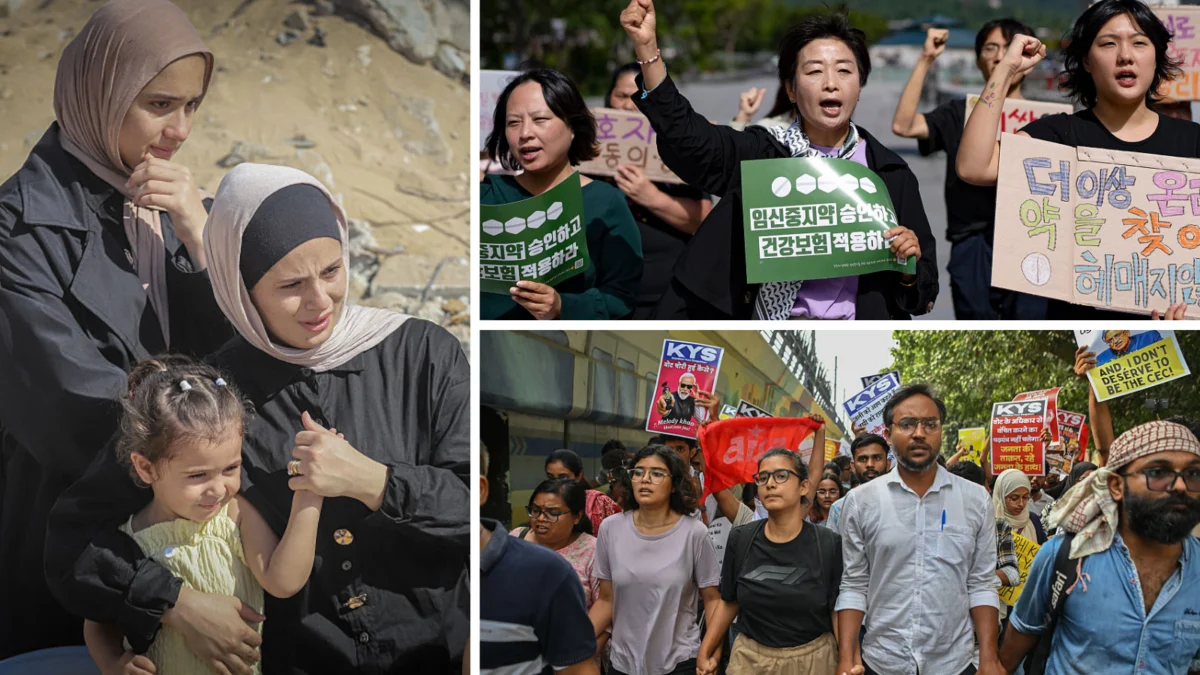
The United States currently faces a sobering reality regarding gender equality. With rankings that place the nation 31st globally for women’s safety, 55th in maternal mortality, 43rd in closing the gender pay gap, and a staggering 85th in women’s political representation, the U.S. remains a cautionary tale of stalled progress. The systemic absence of federal paid family leave and equitable healthcare access further compounds these challenges.
Yet, as the global landscape shifts, it becomes increasingly clear that the solutions to these intractable problems are not found in isolation. Feminist movements worldwide are currently forging paths, winning legislative victories, and confronting authoritarianism with a tenacity that offers a blueprint for the future. Ms. Global continues to monitor these critical developments, recognizing that the struggle for women’s rights is a universal endeavor.
I. Reproductive Autonomy: South Korea’s Legislative Turning Point
The Shift Toward Medical Abortion
After years of legal limbo following the 2019 Constitutional Court ruling that decriminalized abortion, South Korea has reached a pivotal juncture. On September 16, 2026, the government announced that abortion pills will be authorized for public use by the first quarter of 2027 for pregnancies up to nine weeks.
Chronology and Regulatory Framework
For decades, South Korea maintained some of the most restrictive abortion laws among industrialized nations, permitting the procedure only in cases of rape, incest, or severe health risks. The 2019 decriminalization created a legislative vacuum; while the act was no longer a crime, the lack of a legal framework for medical abortion left both patients and practitioners in a state of dangerous uncertainty. Women were frequently forced to rely on unregulated online markets, risking their health through illicit, unverified pharmaceuticals.
The government’s new plan mandates that for the initial two-year rollout, abortion pills must be prescribed and dispensed in person by medical professionals. This decision prioritizes a cautious, clinical approach over telehealth options, reflecting the government’s desire to balance reproductive access with conservative societal pressures.
Official Responses and Implications
Prime Minister Han Seong-sook emphasized that the measure is intended to safeguard public health rather than promote abortion, a rhetorical stance designed to appease religious and conservative critics who remain vocal on the "value of life." Meanwhile, President Lee Jae-myung acknowledged the systemic failures of the past, noting that the move is a pragmatic step toward ensuring safety. "Doing what we can now, rather than waiting for a perfect solution, is a slightly better decision," the President stated.
Advocacy groups like the Korea Women’s Associations United have lauded the announcement as a "first step," while simultaneously lobbying for the integration of abortion services into the national health insurance system to ensure affordability and equity.
II. The Price of Dissent: The Crisis in Myanmar
Human Rights Violations
The situation for women in Myanmar has devolved into a humanitarian catastrophe. According to a September 2026 report by Human Rights Watch (HRW), the military junta’s crackdown on dissent has disproportionately targeted women. Since the February 2021 coup, at least 30,000 political prisoners have been detained; of these, over 7,000 are women and children.
Evidence of Systematic Abuse
HRW’s investigation—based on interviews with 17 former prisoners—paints a harrowing picture of life in interrogation centers. Reports of beatings with metal pipes, electric shocks, cigarette burns, and prolonged solitary confinement are rampant. Perhaps most disturbing is the use of sexual violence as a tool of coercion, with female detainees forced into sexual acts in exchange for basic medical supplies.
The health implications are equally dire. Pregnant women are routinely denied prenatal care, leading to tragic outcomes. In the last five years, at least 43 women and children have died in custody, and 125 women were incarcerated while pregnant or with young children, forced to raise them in squalid, inhumane conditions. HRW continues to demand the unconditional release of these prisoners, including former leader Aung San Suu Kyi.
III. Gaza: The Gendered Toll of Prolonged Conflict
Supporting Data on Casualty Rates
A comprehensive report from UN Women highlights a staggering statistic: since October 2023, nearly 50,000 women and girls in Gaza have been killed or severely injured. This represents roughly one in every 21 females in the territory, leaving thousands to grapple with lifelong disabilities. Despite a ceasefire established in October 2025, the violence has not fully abated; 277 women and girls have lost their lives in the last year alone due to ongoing military operations.
Implications for Survival
With nearly one million women and girls displaced—effectively the entire female population—the physical and mental toll is catastrophic. The lack of basic infrastructure, including clean water and hygiene supplies, has created a secondary crisis for reproductive health. The number of miscarriages tripled in the first half of 2026 compared to the previous year, as pregnant women are forced to give birth in unsanitary, makeshift conditions.
Thirteen of 14 surveyed women’s organizations report that gender-based violence, poverty, and child marriage are on the rise. With funding drying up, these organizations are increasingly forced to turn away women in desperate need, creating a vacuum of support that threatens the future of an entire generation.
IV. Femicide and Political Change: Cameroon and Brazil
Cameroon: The Fight Against Impunity
In Cameroon, a surge in femicide—nearly 70 deaths recorded this year alone—has ignited nationwide protests. Cases like the murder of teacher Geraldine Achiah have served as flashpoints for a population tired of government inaction. Activists argue that the absence of specific, punitive laws against femicide allows perpetrators to operate with relative impunity. A proposed bill, set to be submitted to parliament in November, seeks to establish femicide as a standalone criminal offense, though activists warn that systemic judicial reform is the only true remedy.
Brazil: A Historic Re-election Amid Division
On October 25, 2026, President Luiz Inácio Lula da Silva secured a historic fourth term. His victory, in a polarized contest against Flávio Bolsonaro, marks a significant moment in South American politics. Lula campaigned on a platform of social spending and regional influence, yet he inherits a deeply divided nation.
The election process was fraught with controversy, including last-minute extensions to voting hours and allegations of voter suppression. Despite his victory, Lula faces a right-leaning congress that threatens to stall his agenda. Central to his platform is a pledge to combat Brazil’s alarming rate of femicide, which saw nearly 400 cases in the first quarter of 2026 alone.
V. The United Kingdom: Tackling the "Manosphere"
Misogyny as a Public Health Issue
The U.K. government has taken an unprecedented step by allocating 15 million British pounds to a dedicated "Misogyny Prevention Fund." This initiative aims to address the rising influence of the "manosphere"—a network of online spaces that propagate toxic masculinity and anti-feminist rhetoric.
Policy and Cultural Shifts
The fund will provide resources for school mentoring, workplace training, and awareness campaigns. Minister for Women and Equalities Bridget Phillipson characterized the move as a mission to "confine misogyny to the history books." Parallel to this, a report published in The Lancet in October 2026 argues that the manosphere should be treated as a public health issue. Experts contend that these online movements commodify harmful masculine identities, necessitating a coordinated government response to protect young men from radicalization and young women from resulting violence.
VI. Global Legislative Movements: Somalia and India
Somalia: The Rape and Indecency Crimes Bill
Somalia’s Lower House recently approved the Rape and Indecency Crimes Bill, a project over a decade in the making. While it represents a major milestone, the bill has yet to be finalized as law. Contentious debates continue regarding the legal definition of rape, particularly the inclusion of "lack of consent." International bodies like the UN are watching closely, as previous drafts have been criticized for failing to protect victims adequately or for conflating sexual assault with other moral offenses.
India: The Rise of Gen Z Activism
In India, the "Cockroach Janta Party" movement has emerged as a symbol of youth-led resistance against the government of Narendra Modi. Initially sparked by failures in college entrance exams, the movement has expanded to include demands for electoral transparency following the controversial "Special Intensive Revision" of voter rolls, which removed 130 million names.
The rise of nonbinary activist Neha Bora as a face of this movement highlights a broader, intersectional shift in Indian politics. As the UN calls for an end to the "excessive force" used against protesters, the success of these youth-led rallies signals that a new, politically active generation is unwilling to accept the status quo, demanding accountability, economic opportunity, and the protection of fundamental rights.
Conclusion: The Path Forward
The global state of women’s rights remains a paradox of progress and regression. While legislative victories in South Korea and the U.K. offer hope, the existential threats faced by women in Myanmar and Gaza, and the persistence of femicide in Cameroon and Brazil, underscore the urgency of the moment. These movements, led by students, advocates, and survivors, prove that the fight for equity is not merely a regional issue but a global imperative. By observing these international efforts, activists in the United States and beyond can find the strategies necessary to dismantle the structural barriers that continue to define the current, insufficient status quo.

 Lina Hope
 Reynand Wu