

 Reynand Wu
By International Affairs Desk
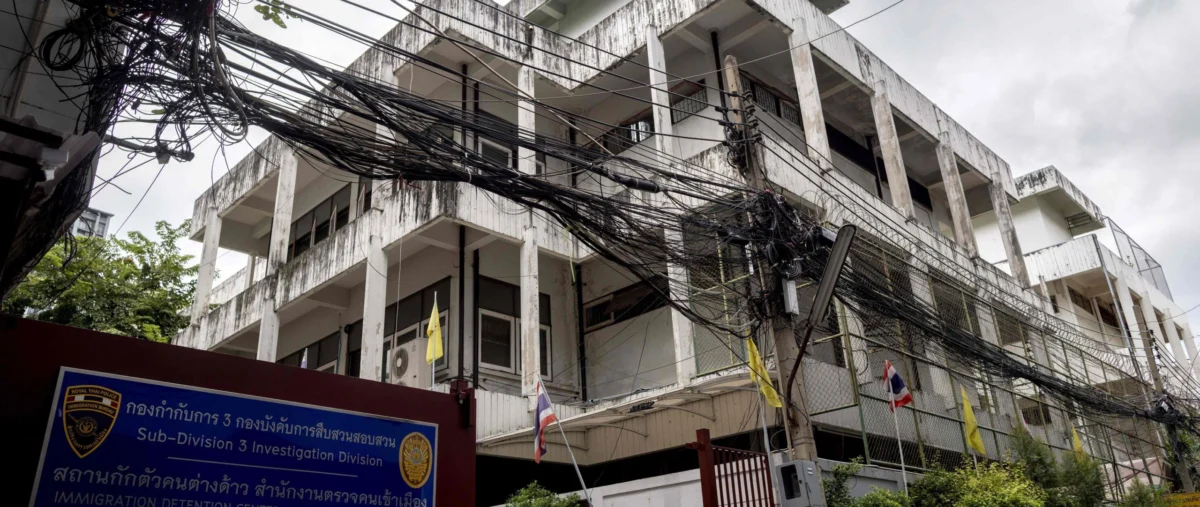
The fate of two Uyghur men currently held in a Bangkok Immigration Detention Centre has ignited an urgent international outcry, placing Thailand at the center of a deepening humanitarian crisis. Amnesty International, joined by a coalition of global human rights observers, is demanding that the Thai government halt any plans for the forced repatriation of these individuals to China, warning that such an action would constitute a catastrophic breach of international law and a death sentence for the detainees.
The two men are the latest casualties of a decade-long ordeal, having spent over 12 years in custody after fleeing systemic persecution in China’s Xinjiang Uyghur Autonomous Region. Their situation has become a litmus test for Thailand’s adherence to the principle of non-refoulement—the bedrock of international refugee law—which prohibits the transfer of any person to a country where they face a credible risk of torture, arbitrary detention, or enforced disappearance.
The Immediate Crisis: A Call for Intervention
Agnès Callamard, Secretary General of Amnesty International, issued a stark warning regarding the imminent threat posed to the detainees. “Thai authorities must immediately halt any plans to forcibly return these two Uyghur men to China,” she stated. “These two men fled persecution only to spend more than a decade detained in Thailand. Returning them would expose them to the very abuses they sought to escape.”
The urgency of the situation is compounded by the fact that the detainees have been denied legal counsel since their transfer from prison to the Immigration Detention Centre on October 21, 2026. This isolation, combined with the lack of access for international NGOs and the National Human Rights Commission of Thailand, has created a "black box" environment, shielding potential human rights violations from public scrutiny.
Chronology of a Decade-Long Struggle
The ordeal of these men is rooted in the events of March 13, 2014, when a group of over 300 Uyghurs were apprehended by Thai authorities while attempting to transit through the country. Fleeing what they described as state-sponsored discrimination and cultural erasure in Xinjiang, the group sought safety, only to find themselves ensnared in a protracted legal and diplomatic limbo.
A Pattern of Unlawful Deportations
The history of this group is marked by erratic and often cruel treatment by the Thai state:
- June 2015: In a rare moment of reprieve, Thailand allowed 173 women and children from the group to travel to Türkiye. However, this was overshadowed by the simultaneous, unlawful deportation of at least 109 individuals back to China.
- January 7, 2025: A leaked document revealed that the Chinese embassy in Bangkok sent a formal request to the Thai Ministry of Foreign Affairs demanding the “repatriation” of 45 remaining Uyghur men.
- February 2025: Complying with the request, Thailand forcibly deported 40 of these men. The move was widely condemned by the international community as a blatant violation of international law.
- October 21, 2026: Two of the final five remaining men were released from prison under a royal pardon, only to be immediately transferred to the Immigration Detention Centre, where they remain incommunicado.
The Xinjiang Context: Crimes Against Humanity
The fear expressed by the detainees is not speculative; it is grounded in a well-documented reality. Amnesty International’s 2021 report, supported by subsequent United Nations assessments in 2022, concluded that the policies enacted by the Chinese government against Uyghurs, Kazakhs, and other predominantly Muslim ethnic groups in Xinjiang constitute crimes against humanity.
These crimes include mass arbitrary imprisonment, state-sponsored torture, forced labor, and systematic efforts to eradicate the religious and cultural identities of the Uyghur population. Despite the international community’s call for accountability, Beijing has remained defiant, dismissing these reports as "anti-China propaganda" and continuing its assimilationist policies.
For the two men in Bangkok, the prospect of return is not merely a matter of administrative processing; it is an existential threat. Both men have repeatedly informed their former legal representatives that they fear for their lives and do not consent to being sent back to the country they fled.
Official Responses and Diplomatic Assurances
A point of contention between human rights organizations and the Thai government is the reliance on "diplomatic assurances." China has consistently claimed that those repatriated would be treated humanely. However, human rights experts argue that such assurances are entirely unreliable.
Following the deportation of 40 men in February 2025, Thai authorities were invited by Beijing to visit Xinjiang. The subsequent report was, at best, inconclusive. Independent observers noted that Thai officials were only permitted to meet a fraction of the deportees, and to date, there has been no verified evidence that the 40 men are alive, let alone safe. Their current status remains a state secret, heightening the fear that the two men currently in detention will face a similar, potentially fatal, fate.
Thailand’s Legal Obligations
Thailand is a signatory to the Convention against Torture. Furthermore, in 2023, the country enacted the Prevention and Suppression of Torture and Enforced Disappearance Act. Article 13 of this domestic law explicitly prohibits the deportation of any person if there are substantial grounds to believe they would face torture, cruel or inhuman treatment, or enforced disappearance.
Legal analysts suggest that if the Thai government proceeds with the deportation of these two men, it would not only violate international treaty obligations but also directly contravene its own national legislation.
Implications: The Moral Cost of Silence
The case of the Uyghur detainees presents a profound moral and legal dilemma for Thailand. By succumbing to diplomatic pressure from Beijing, Thailand risks eroding its international reputation and becoming complicit in the suppression of a marginalized minority.
A Third-Country Solution
Amnesty International and other rights groups are urging the Thai government to shift its strategy toward a “safe and voluntary third-country solution.” This would involve:
- Granting Access: Allowing the detainees immediate access to legal counsel of their choice.
- Transparency: Providing international monitors and the National Human Rights Commission of Thailand access to the detention facility to verify the wellbeing of the men.
- Collaborative Resettlement: Working with the international community to identify nations willing to accept the men, thereby ensuring their protection without forcing them back into the hands of their persecutors.
The international community must recognize that diplomatic pressure is not a valid justification for human rights abuses. As the world watches, the Thai government stands at a crossroads. It can choose to uphold the dignity of the individuals in its custody and adhere to the rule of law, or it can succumb to the demands of a powerful neighbor, potentially sentencing two individuals to a life of torture or death.
"No amount of diplomatic assurance from China can override Thailand’s obligations," Callamard concluded. "After more than a decade in detention, these men must be released and given the chance to rebuild their lives in safety and freedom."
As the clock ticks, the eyes of the world are fixed on Bangkok. The decision to release these men or deport them will serve as a defining moment for Thailand’s commitment to human rights in an era of increasing geopolitical pressure. The international community, through the UN and global diplomatic channels, must now act with urgency to ensure that these two men are not forgotten in the dark corners of a detention center, and that the principle of non-refoulement remains a shield against tyranny rather than a casualty of politics.

 Dwi Wanna

 Ali Ikhwan