
 Nana
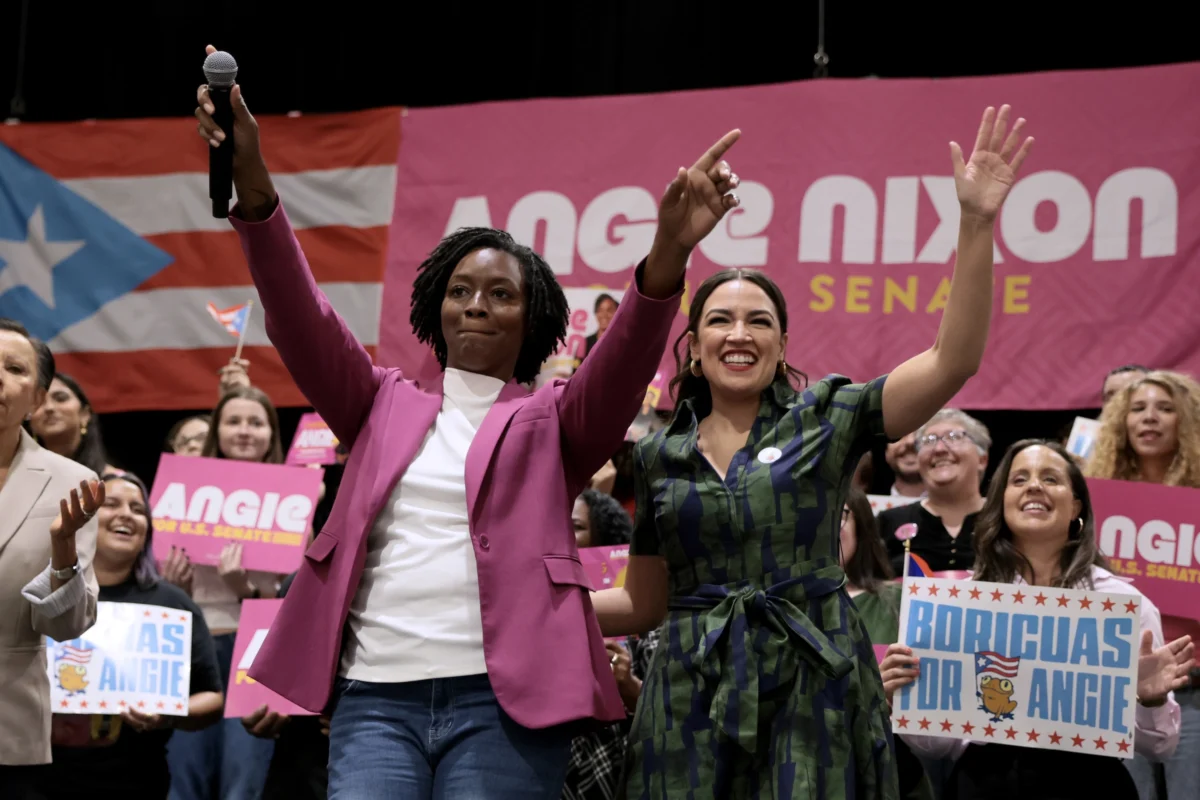
TALLAHASSEE, FL — In an election cycle defined by shifting political allegiances and a national debate over the soul of the Democratic Party, the 2026 Florida special election for the U.S. Senate has emerged as a watershed moment. Florida State Representative Angie Nixon, a progressive firebrand who rose from the grassroots to challenge the Republican establishment, narrowly lost her bid to unseat incumbent Republican Senator Ashley Moody.
Despite a massive financial disadvantage and a lack of support from national Democratic leadership, Nixon’s performance has sent shockwaves through the political landscape. Her narrow defeat—falling just three percentage points short in a state recently characterized as a Republican stronghold—has reignited a fierce debate over whether the Democratic establishment’s decision to "write off" Florida was a historic tactical error.
Main Facts: A Defeat That Felt Like a Warning
The final results of Tuesday’s special election saw Senator Ashley Moody secure 50.9 percent of the vote, with Angie Nixon garnering 48 percent. While the victory remains with the GOP, the margin represents a staggering 10-point swing toward the Democrats compared to the 2024 general election results.
Moody, the former Florida Attorney General, was appointed to the seat by Governor Ron DeSantis after Marco Rubio resigned to serve as Secretary of State. This election was held to determine who would fulfill the remainder of Rubio’s term, which expires in 2028. Because of the special election format, the seat will be back on the ballot in just two years, a fact Nixon emphasized in her concession speech.
Nixon’s performance was particularly notable when compared to other high-profile Florida Democrats. She matched the vote share of David Jolly, a former Republican congressman who ran for governor as a newly registered Democrat. However, while Jolly enjoyed more traditional support, Nixon’s campaign was a "DIY" operation, fueled by small-dollar donations and the backing of progressives like Senator Bernie Sanders and Representative Alexandria Ocasio-Cortez.
The central tension of the race lies in the funding gap. Nixon was outspent nearly four-to-one in television advertising alone. More significantly, the Democratic Senatorial Campaign Committee (DSCC) and the Senate Majority PAC—the two primary engines of Democratic Senate funding—provided zero financial assistance to her campaign.
Chronology: From Grassroots Rebellion to the General Election
The path to the 2026 special election began with the vacancy left by Marco Rubio’s departure for the Cabinet. Governor Ron DeSantis quickly appointed Ashley Moody, a loyal ally, to hold the seat, setting the stage for a high-stakes special election.
The Primary Upset
Nixon’s journey was improbable from the start. In the Democratic primary, she faced Alex Vindman, a former national security official and a darling of the party’s moderate wing. Vindman entered the race with significant name recognition and a war chest of $16 million. Nixon, by contrast, raised less than $1 million.
Despite being outspent 13-to-1, Nixon leveraged a robust ground game and a message focused on economic justice and healthcare. Her victory over Vindman was the first sign that the Florida electorate was hungrier for a populist message than the national party anticipated.
The General Election Campaign
Following her primary win, Nixon faced an immediate "cold shoulder" from national party organs. While Republicans consolidated behind Moody, Nixon was forced to build an independent coalition. On October 27, 2026, she held the "Boricuas for Angie" rally in Kissimmee, appearing alongside Rep. Alexandria Ocasio-Cortez. The event targeted the critical Puerto Rican and broader Latino vote in Central Florida, a demographic that has seen significant movement toward the GOP in recent years.
Nixon’s platform remained uncompromising. She advocated for Medicare for All and took the controversial step of calling for an end to military aid to Israel—a stance that further alienated her from centrist party donors but galvanized a younger, more diverse base of volunteers.
Election Night and the Aftermath
On Tuesday night, as the results trickled in, it became clear that Florida was not the "red sea" many pundits predicted. Nixon’s strength in urban centers and her ability to claw back margins in suburban counties kept the race within the margin of error for hours. In her concession speech, Nixon remained defiant, telling supporters, "The war is not over. 2028 is around the corner. So Ashley Moody, you better get it right. Cause we’re coming for you."

Supporting Data: The Cost of Abandonment
The disparity in resources between the two campaigns provides a stark look at the hurdles faced by progressive candidates in "red" states. According to data from AdImpact, the financial landscape of the race was heavily tilted:
- Total TV Ad Spending: Republicans spent $28.7 million in support of Ashley Moody. In contrast, total Democratic spending (including Nixon’s campaign and outside groups) reached only $7.9 million.
- PAC Involvement: Neither the Senate Majority PAC nor the DSCC allocated funds for Nixon. In other battleground states, these organizations often spend tens of millions on "get out the vote" (GOTV) efforts and attack ads.
- The Primary Disparity: In her primary against Alex Vindman, Nixon’s $1 million was dwarfed by Vindman’s $16 million, yet she won the nomination, suggesting her "retail politics" approach was highly efficient.
The 10-point swing in Florida is perhaps the most significant data point for future strategists. In 2024, Republicans won the state by double digits. Nixon’s ability to bring the margin to 2.9 points—without national help—suggests that Florida may be more competitive than the "safe red" label suggests.
Official Responses: A Party Divided
The fallout from the election has sparked a public war of words between the progressive and establishment wings of the Democratic Party.
The Progressive Critique
Representative Ayanna Pressley (D-Massachusetts) was among the first to criticize the national party’s lack of investment. "It is shameful that we are not seeing an equitable investment in progressive and diverse candidates like Angie Nixon," Pressley stated. She argued that by ignoring candidates like Nixon, the party is effectively suppressing the very diverse coalitions it needs to win a national majority.
Kevin Lata, Nixon’s deputy campaign manager, took to social media to defend the role of Senator Bernie Sanders, who was one of Nixon’s few national allies. "Bernie’s impact on our campaign was immeasurable," Lata said. "I can almost guarantee that the Democrats who are blaming Bernie did very little themselves to help, and should instead be looking inward."
The Establishment Defense
While the DSCC has not issued a formal post-mortem on the Florida race, sources close to the committee have previously suggested that their resources were focused on defending vulnerable incumbents in states like Montana and Ohio. The prevailing wisdom among centrist strategists has been that Florida is too expensive a media market to "gamble" on a candidate with democratic socialist leanings.
The Republican Victory Lap
Senator-elect Ashley Moody focused her victory speech on a message of stability and alignment with Governor DeSantis’s "Florida Blueprint." Republican strategists have pointed to Nixon’s progressive stances—specifically her views on Israel and healthcare—as the reason she was unable to cross the finish line, arguing that her "radical" platform is a non-starter for the broader Florida electorate.
Implications: The 2028 Horizon and the "Invest in the South" Movement
The 2026 Florida Senate race is likely to be studied as a case of "what might have been." The implications of Nixon’s near-win are three-fold:
1. The Viability of the Progressive Populist Model
Nixon’s ability to outperform traditional spending models suggests that a populist, grassroots-heavy campaign can resonate even in hostile territory. Her success with Latino voters in the I-4 corridor provides a potential roadmap for Democrats to reclaim ground lost during the 2020 and 2024 cycles.
2. The Strategic Debate over the South
Following the election, Nixon posted a simple but pointed message on X (formerly Twitter): "Invest In The South." This has become a rallying cry for activists who argue that the Democratic Party’s "coastal" strategy ignores millions of potential voters in states like Florida, Mississippi, and South Carolina. With Scott Colom’s Senate race in Mississippi also trending closer than expected, the pressure on the DSCC to rethink its map for 2028 will be immense.
3. The 2028 Rematch
Because this was a special election, Ashley Moody will only serve a two-year term before having to defend the seat again in 2028. Nixon has already signaled her intent to remain a presence in Florida politics. If the national party views her 48 percent finish as a proof of concept rather than a fluke, the 2028 race could see the kind of massive investment that was absent this year.
In the end, Angie Nixon’s 2026 campaign may be remembered not for the loss, but for the moment the "Florida is a red state" narrative began to crack. As the Democratic Party begins its post-election soul-searching, the question remains: If $8 million and a grassroots movement can get to 48 percent, what could $30 million and a united party have achieved?


 Laily UPN

 Pevita Pearce