

 Ali Ikhwan
Main Facts: A Race Against Time
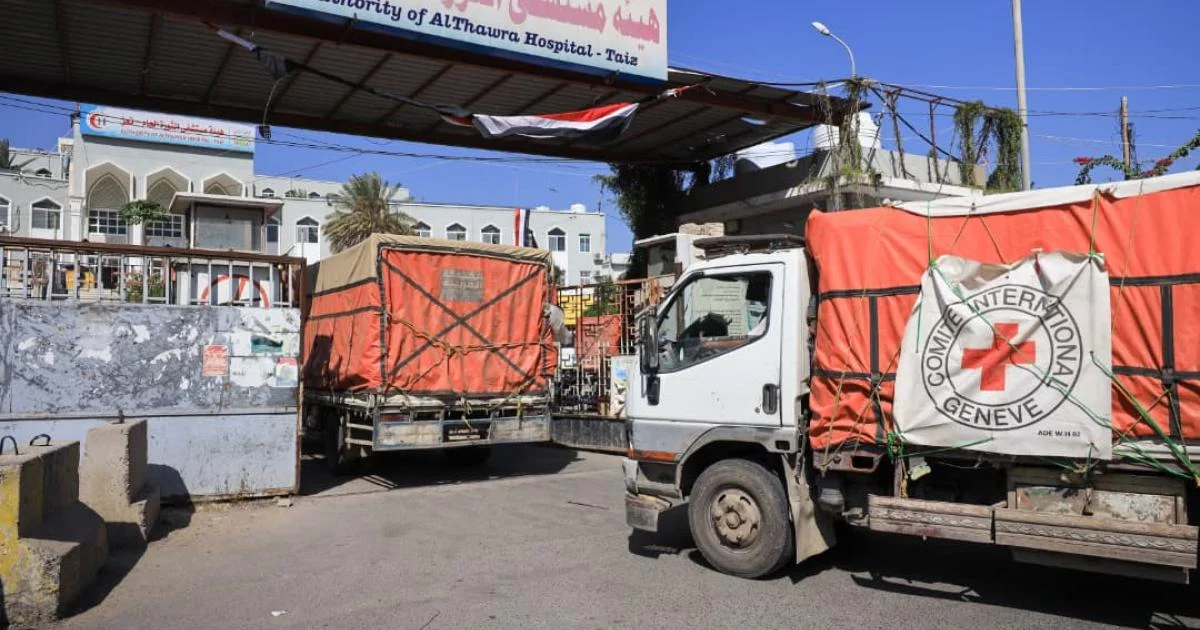
In a significant humanitarian development, the International Committee of the Red Cross (ICRC) has successfully navigated the volatile front lines of Yemen’s protracted conflict to deliver essential medical supplies to a network of besieged health facilities in and around Taiz. This intervention arrives at a critical juncture, as the region’s medical infrastructure—already reeling from years of systemic neglect and war-related damage—faces an unprecedented surge in pressure due to renewed hostilities.
The delivery, characterized by the ICRC as a vital step in safeguarding human life, encompasses a comprehensive range of surgical kits, trauma supplies, and life-saving medication. These resources are destined for facilities that have become the final barrier between life and death for civilians and combatants alike, regardless of their political or territorial affiliation. The operation highlights the ICRC’s commitment to neutrality, ensuring that medical relief is distributed based solely on urgency and clinical need, rather than the shifting dynamics of the front lines.
Chronology of the Crisis and Intervention
The situation in Taiz has long been a focal point of the Yemeni conflict. Since the escalation of hostilities, the city has been effectively partitioned, with residents trapped in a cycle of sporadic shelling and restricted movement.
- Pre-Conflict Context: Before the current conflict, Taiz served as a hub for regional healthcare. However, the onset of hostilities transformed these hospitals into battlegrounds and triage centers.
- Recent Escalation: Over the past few months, intensified fighting near the city’s perimeter has pushed local hospitals to the brink of collapse. Power outages, severe fuel shortages, and the departure of specialized medical staff have exacerbated the crisis.
- The ICRC Mission: In recent weeks, the ICRC mobilized a high-risk logistics operation to breach the "ring of fire" surrounding the city. Despite significant security challenges, including active combat zones and bureaucratic hurdles, ICRC teams successfully reached seven key medical facilities.
- The Delivery Phase: The distribution occurred in a staggered sequence, prioritizing the most heavily impacted hospitals near the front lines. By establishing secure corridors for transport, the organization managed to deliver supplies to:
- Taiz Al Rahidah Hospital
- Taiz Military Hospital
- Hayfan Hospital
- Taiz Central Hospital
- Taiz Demnat Khadir Primary Health Care (PHC)
- Al-Dumay Al-Ahkum Hospital
- The Taiz Health Office
This phased approach ensured that even the most isolated clinics received a share of the emergency cargo, preventing a total shutdown of primary care in the hardest-hit districts.
Supporting Data: The Anatomy of a Healthcare Collapse
To understand the gravity of the ICRC’s intervention, one must examine the state of healthcare in Taiz. According to local health monitors and internal ICRC reports, the region is experiencing a "perfect storm" of medical deprivation:
- Capacity Strain: Many of the hospitals receiving aid have reported patient occupancy rates exceeding 150% of their designed capacity. In wards meant for ten patients, upwards of twenty-five are often treated on mattresses placed in hallways.
- Resource Depletion: The cost of medical consumables—gauze, antibiotics, anesthetics—has risen by over 400% in local markets due to inflation and supply chain blockages. Hospitals that were previously self-sufficient are now entirely reliant on external humanitarian assistance.
- The "Front Line" Penalty: Patients suffering from chronic conditions such as diabetes or renal failure are dying in preventable numbers, as resources are diverted almost exclusively to trauma surgery. The ICRC’s delivery specifically targets the "surgical gap," providing the specialized equipment needed to stabilize those with severe injuries from explosive weaponry.
- Personnel Shortage: The brain drain of medical professionals is a silent killer. With many doctors having fled the region or being unable to commute through checkpoints, the remaining staff are often working 24-hour shifts without adequate protective equipment or rest, leading to high rates of burnout and medical error.
Official Responses: Voices from the Front
The ICRC’s leadership has been vocal about the necessity of protecting the sanctity of medical care in Yemen. Christine Cipolla, the ICRC head of delegation in Yemen, emphasized that the mission is not merely about supplies, but about upholding the fundamental principles of international humanitarian law.
"For patients with severe injuries or critical medical conditions, regardless of where they live or which side of the front line they find themselves on, timely access to medical care can be a matter of life or death," Cipolla stated. Her remarks underscore the ICRC’s mandate to remain an impartial mediator in a conflict characterized by deep ideological divisions.
Cipolla further issued a stern appeal to all parties involved in the fighting: "We urge parties to the conflict to continue facilitating safe and sustained access so that impartial humanitarian aid can reach people in need, wherever they are. Health facilities, as well as the wounded and the sick, must be protected and medical personnel allowed to continue their work."
This plea is aimed at both state and non-state actors, reminding them that under the Geneva Conventions, hospitals are protected entities. The ICRC’s presence in Taiz serves as both a logistical lifeline and a symbolic deterrent against the targeting of civilian health infrastructure.
Implications: The Road Ahead
The delivery of these supplies is a tactical success, but its long-term strategic implications remain a subject of intense debate among aid organizations.
The Sustainability Challenge
While the ICRC’s intervention provides a critical "bridge," it is not a long-term solution. The dependency on external emergency aid highlights the structural fragility of Taiz’s health sector. Without a political resolution to the conflict that allows for the restoration of public services, the cycle of emergency aid delivery followed by depletion will likely continue indefinitely.
Security and Access
The success of these missions is entirely contingent on the consent and cooperation of local commanders. Every ICRC convoy requires intense negotiation to navigate the front lines. The implication here is that the safety of the civilian population is directly linked to the strength of humanitarian diplomacy. If communication channels between the ICRC and local forces falter, the lifeline to Taiz could be severed overnight.
The Moral Imperative
The presence of international aid serves as a reminder to the global community that the war in Yemen remains one of the world’s most severe humanitarian crises. By documenting the condition of facilities like the Taiz Military Hospital and the Hayfan Hospital, the ICRC provides the international community with objective data on the human cost of the conflict. This data often proves essential in advocating for broader peace negotiations and maintaining the pressure on belligerents to respect human rights.
A Call for Protection
The ultimate implication of this mission is the call for a "humanitarian space" where healthcare is off-limits to military strategy. If the parties to the conflict continue to view medical facilities as targets—or as legitimate casualties of collateral damage—the ability of aid agencies to operate will shrink, leading to a rapid spike in mortality rates across the region.
Conclusion: A Fragile Hope
The ICRC’s recent delivery to Taiz is more than just a shipment of medicine; it is a manifestation of resilience in a landscape defined by suffering. While these supplies will undoubtedly save hundreds of lives in the coming months, the reality remains that the people of Taiz require more than humanitarian aid—they require an end to the hostilities that have turned their hospitals into fortresses and their streets into battlegrounds.
As the ICRC continues its work, the international community must remain vigilant. The protection of medical staff and the assurance of safe, sustained access to aid are not merely suggestions—they are the minimum requirements for a society to survive the ravages of war.
For more information, please contact:
- Iscander Saeed, ICRC Sana’a: +967 730500719, [email protected]
- Press Office, ICRC Geneva, Tel.: +41 22 730 34 43, [email protected]


 Sagoh
 Reynand Wu