



 Evan Lee Salim

Tokyo, Japan – [Insert Date] – In a significant evolution of its long-standing commitment to emerging markets, Tokio Marine Group, one of Japan’s leading insurance conglomerates, has transitioned from its role as a credit risk insurer to become the anchor investor in a new, ambitious funding initiative. This strategic shift sees the firm deploy substantial capital into a $2 billion strategy spearheaded by the International Finance Corporation (IFC), a member of the World Bank Group, and the Swiss impact investment firm BlueOrchard Finance. The move signals a growing confidence in the untapped potential and improving risk profiles of developing economies, and is expected to unlock crucial private capital for much-needed development.
Tokio Marine’s $300 million investment marks a pivotal moment, underscoring a decade-long partnership with the IFC that initially focused on mitigating the perceived risks associated with emerging markets debt. Now, by directly investing its own capital, Tokio Marine is not only deepening its relationship with these vital markets but also sending a powerful signal to other institutional investors who may still harbor reservations about their viability and performance.
The Genesis of a Strategic Partnership: From Insurance to Investment
The collaboration between Tokio Marine Group and the IFC is not new. For over a decade, the Japanese insurance giant has served as a vital credit risk insurer for the IFC, providing a crucial layer of protection for lenders engaging in emerging markets debt. This established track record has fostered a deep understanding of the nuances and opportunities within these dynamic economies.
The current initiative represents a natural and logical progression of this partnership. Tokio Marine is now channeling its own capital into investment strategies designed to harness the growth potential of emerging markets. As the anchor investor in this new funding initiative, Tokio Marine’s substantial commitment is poised to catalyze significant investment flows into regions across Africa, Asia, and Latin America.
The new strategy, spearheaded by the IFC and BlueOrchard, aims to raise a total of $2 billion. The core of this strategy lies in investing in emerging market debt deals that are meticulously sourced and rigorously vetted by the IFC, leveraging its extensive global network and deep development expertise. Tokio Marine’s $300 million commitment, split between its U.S.-based specialty insurance arm, Tokio Marine HCC ($100 million), and its Japan-based non-life insurer, Tokio Marine & Nichido Fire Insurance ($200 million), underscores the group’s holistic approach and conviction in this venture.
Masahiro Koike of Tokio Marine Group articulated the strategic rationale behind this pivot, stating, "Combining IFC’s origination capabilities with BlueOrchard’s 25-year track record in managing diversified emerging market debt portfolios gives us access, at scale, to a segment of private credit that has traditionally been difficult for institutional investors to reach." This statement highlights the synergistic strengths of the partnership, where the IFC’s deal-sourcing prowess meets BlueOrchard’s seasoned portfolio management expertise, creating a formidable vehicle for accessing underinvested markets.
Jerome Swinscoe of Tokio Marine HCC further elaborated on the historical context and the forward-looking nature of this investment. "We wrote our first policy for the IFC in 2013, and since then we have provided credit insurance across multiple programs to support IFC’s economic and social development work," Swinscoe remarked. "Our $100 million investment in the fund builds on that experience and marks the next step in our longstanding relationship." This sentiment is echoed across the group, emphasizing a deliberate and phased approach to deepening their engagement with emerging markets.
Addressing Perceptions: Debunking "Mispriced Risk" in Emerging Markets
A persistent hurdle for channeling much-needed private capital into emerging markets has been the institutional investor perception of outsized risk. This apprehension, often rooted in historical narratives or a lack of granular data, has prevented capital from flowing into regions that are ripe for climate resilience, economic growth, and social development. However, mounting evidence from organizations like the Global Emerging Markets (GEMs) risk database and independent research firms such as Tameo, suggests that these perceptions are increasingly misaligned with the actual performance and risk-adjusted returns of emerging market debt.
Tokio Marine’s strategic shift from a credit risk insurer to a direct investor serves as a powerful testament to this evolving reality. By placing its own capital at risk, the company is actively challenging the prevailing narrative and offering a compelling vote of confidence in the economic fundamentals and growth trajectories of developing economies. This move is intended to encourage other hesitant institutional investors, currently on the sidelines, to re-evaluate their exposure to these markets.
Historically, credit risk insurance, like that previously provided by Tokio Marine for the IFC, has been a cornerstone product for emerging market debt fund providers. This insurance has been instrumental in enabling these funds to attract capital from institutional investors by mitigating the financial consequences of potential borrower defaults. In parallel, blended finance structures, employing instruments such as first-loss guarantees or concessional capital, have also played a role in de-risking investments and attracting a broader investor base.
However, the landscape is shifting. Michael Wehrle of BlueOrchard observes a growing appetite among institutional investors for long-term private credit opportunities in emerging markets. This burgeoning interest is driven by a dual objective: seeking attractive financial returns and achieving crucial portfolio diversification. This trend is further corroborated by reports from the Global Impact Investing Network (GIIN), which consistently highlight an increasing investor demand for strategies focused on Africa and Latin America.
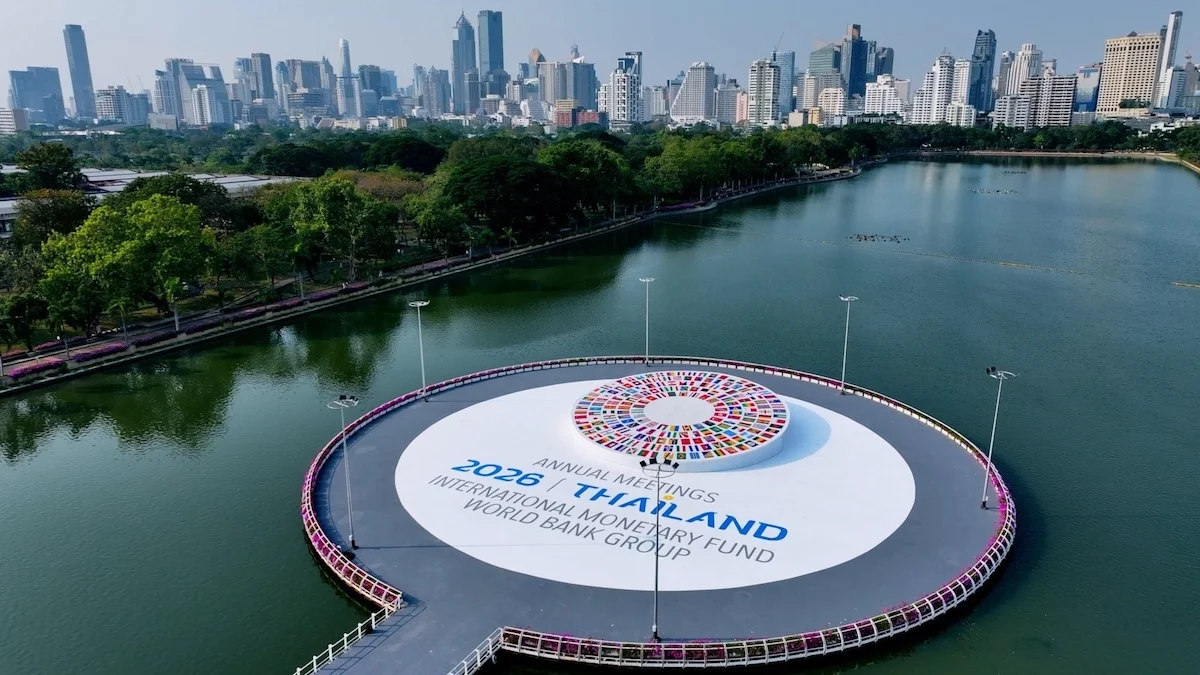
Wehrle, who recently attended the annual meetings of the World Bank and the IMF in Bangkok, where the mobilization of private investment for emerging market development was a prominent agenda item, points to several compelling factors contributing to this growing attractiveness. Robust economic growth, increasing productivity, and favorable demographic trends are all converging to make emerging market credit a more appealing asset class. He specifically highlights Africa’s burgeoning working-age population, which necessitates significant investment to support job creation and offers a substantial opportunity for investors, especially when contrasted with the aging populations in many developed economies.
An Innovative Model for Unlocking Capital
The partnership between BlueOrchard and the IFC is built upon an innovative model designed to channel long-term institutional capital into underinvested emerging markets. The core of this model involves providing private investors, including pension funds, insurance companies, and sovereign wealth funds, with direct access to loans originated by the IFC.
The IFC, as the world’s largest development institution, is uniquely positioned to identify and underwrite high-impact projects in developing countries. In the past year alone, the IFC committed a record $71.7 billion to private companies and financial institutions in these regions, demonstrating its significant reach and commitment.
BlueOrchard, with its extensive 25-year history of investing in these very markets, brings invaluable experience in portfolio management and risk mitigation. Since its acquisition by Schroders in 2019, the firm has further enhanced its ability to serve a broader institutional investor base with its sophisticated emerging market debt strategies.
The operational framework of this new fund is characterized by a clear division of responsibilities and a powerful synergy. The IFC is entrusted with the crucial tasks of originating investment opportunities and conducting thorough credit analysis. Subsequently, BlueOrchard leverages its deep market insights to select from this pipeline of IFC-vetted deals, meticulously constructing and managing the fund’s portfolio.
"The IFC has the transaction view, and BlueOrchard has the portfolio view," explained Wehrle, underscoring the distinct yet complementary roles. "It’s an innovative model combining the strengths, experience, capabilities, and track records of the two organizations in order to create something which is differentiating." This collaborative approach ensures that investments are not only rigorously assessed at the individual deal level but also strategically allocated to create a diversified and resilient portfolio.
Furthermore, the fund’s evergreen structure is a key innovation, offering investors flexibility. This structure allows for continuous subscription and redemption, enabling the fund to build its portfolio without the constraints of a fixed fundraising deadline. This adaptability is crucial in the dynamic emerging markets landscape, allowing the fund to seize opportunities as they arise.
The investment mandate of the fund is broad, encompassing exposure to financial institutions, corporate debt, and infrastructure debt. The overarching objective is to generate stable financial returns for investors while simultaneously driving economic development, fostering job creation, and financing climate action initiatives, including the expansion of renewable energy infrastructure. Geographically, Wehrle anticipates a diversified portfolio, with approximately half allocated to the Asia-Pacific region, a third to Latin America, and the remainder spread across Africa and other emerging markets.
A Vote of Confidence and Future Implications
The initial reception to this new funding initiative has been overwhelmingly positive. Wehrle reported that discussions at the World Bank and IMF meetings in Bangkok yielded "very positive" reactions. BlueOrchard is actively engaged in conversations with a range of potential institutional investors across Asia and Europe, as well as with Development Finance Institutions (DFIs).
The fund is being positioned to investors not as a replacement for their existing private credit strategies in developed markets, but as a valuable complement. Wehrle emphasizes that it offers "additional diversification and an attractive financial return," addressing key investor objectives.
The substantial $300 million commitment from Tokio Marine Group at the initial close is a significant catalyst. It not only provides the fund with the necessary capital to commence its investment activities and begin building a portfolio but also serves as a powerful endorsement for prospective Limited Partners (LPs). The presence of such a reputable and substantial investor significantly enhances the fund’s credibility and attractiveness, making it easier to secure further commitments. DFIs have also expressed strong interest, recognizing the fund’s potential to mobilize private capital for critical development objectives.
While there is no fixed timeline for reaching the $2 billion fundraising target, Tokio Marine’s initial injection is instrumental in operationalizing the strategy. "Having an existing portfolio obviously also helps in investor conversations," Wehrle noted, highlighting the tangible impact of this early investment.
Tokio Marine’s strategic pivot represents more than just a financial transaction; it signifies a profound shift in how institutional capital can be deployed to address global development challenges. By moving beyond insurance and embracing direct investment, Tokio Marine is not only unlocking its own capital but also paving the way for a new era of partnership between developed financial markets and the vast, often underestimated, potential of emerging economies. This initiative is poised to have far-reaching implications, demonstrating that with the right structures, expertise, and a nuanced understanding of risk, emerging markets can offer both compelling financial returns and significant development impact. The success of this venture could serve as a blueprint for other institutional investors looking to diversify their portfolios and contribute to a more sustainable and equitable global economy.


 Reynand Wu
 Raul Delapena Setiawan