


 Laily UPN
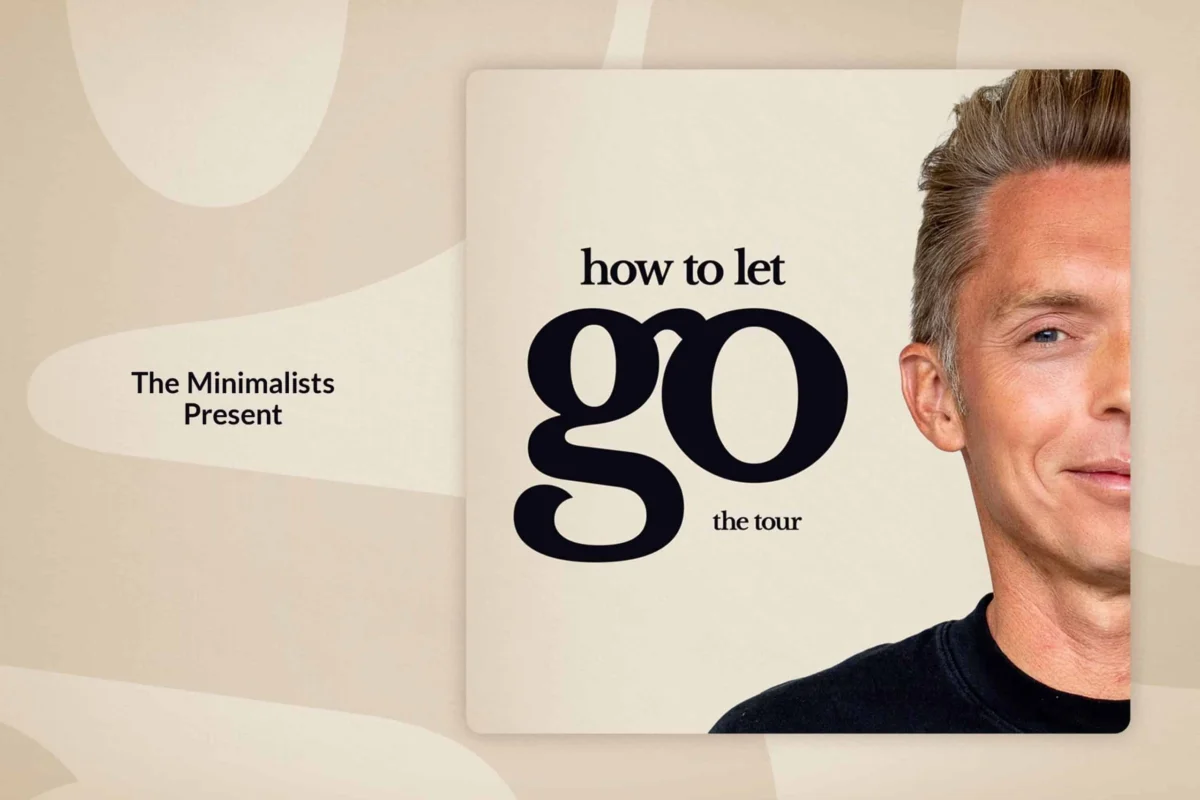
In an era defined by digital saturation and the relentless pursuit of "more," the philosophy of minimalism has undergone a profound transformation. What began as a niche lifestyle movement centered on decluttering physical spaces has evolved into a comprehensive framework for mental and emotional clarity. At the forefront of this movement is Joshua Fields Millburn, one half of the influential duo known as The Minimalists. Recently, Millburn announced a significant strategic and creative pivot: the abandonment of his upcoming book, How to Let Go, in favor of a solo live tour of the same name.
This decision marks a pivotal moment in Millburn’s career and signals a broader shift in how modern thought leaders engage with their audiences. By transitioning from the solitary medium of the printed word to the interactive, visceral environment of the live stage, Millburn aims to bridge the gap between theoretical minimalism and the lived experience of emotional release.
Main Facts: A New Chapter for The Minimalists
The announcement, shared via Millburn’s official channels, details the genesis of his new solo venture. For over a year, Millburn had been deeply immersed in the manuscript for How to Let Go, a book intended to serve as a guide for navigating the complexities of attachment. However, during the creative process, he identified a disconnect between the static nature of the written page and the dynamic resonance of the subject matter.
Millburn observed that while his ideas were logically sound on screen, they lacked the "breath" and "vitality" that only a live audience could provide. The nuances of human emotion—laughter, silence, shared grief, and spontaneous interaction—became the missing ingredients in his work. Consequently, Millburn made the bold decision to "close the book" and reformat the project as a solo live show.
Initial Tour Dates and Early Success
The announcement included the first leg of the "How to Let Go" tour, which has already demonstrated significant market demand:
- Seattle, WA (Sept 11): SOLD OUT
- Vancouver, BC (Sept 12): SOLD OUT
- New York City, NY (Oct 18): Tickets currently available at City Winery.
- Los Angeles, CA (Dec 11): Tickets currently available via Eventbrite.
The rapid sell-out of the Pacific Northwest dates suggests a high level of "minimalist fatigue" among urban populations—a paradox where the very people living in high-density, high-consumption areas are the most desperate for a roadmap toward simplicity.
Chronology: From Corporate Burnout to Cultural Catalyst
To understand the weight of Millburn’s new tour, one must look at the trajectory of The Minimalists over the last decade and a half.
2010–2012: The Genesis
In 2010, Joshua Fields Millburn and his childhood friend Ryan Nicodemus were successful corporate executives in Ohio, earning six-figure salaries but struggling with debt, stress, and a sense of existential emptiness. Following the death of his mother and the end of his marriage in the same month, Millburn discovered minimalism. After "packing all his belongings in boxes" to see what he actually used, he and Nicodemus launched TheMinimalists.com.
2013–2016: Mainstream Breakthrough
The movement gained massive traction with the release of their first book, Minimalism: Live a Meaningful Life, and their first documentary, Minimalism: A Documentary About the Important Things. This era focused heavily on the "30-Day Minimalism Game" and the physical reduction of possessions.
2017–2023: Deepening the Narrative
As the movement matured, Millburn and Nicodemus shifted their focus toward "Essentialism" and the psychological roots of consumption. Their second Netflix documentary, Less Is Now, and their popular podcast expanded the conversation to include digital clutter, toxic relationships, and financial freedom.
2024: The Creative Pivot
The decision to halt a book project in favor of a live show represents the latest stage in this evolution. It suggests that for Millburn, the "how-to" aspect of minimalism is no longer a set of rules to be read, but a performance of vulnerability to be shared.
Supporting Data: The Psychological Weight of Clutter
Millburn’s tour focuses on "heavy burdens," which he categorizes into five main areas: physical clutter, expectations, anxiety, resentment, and "everything else that weighs us down." This focus is supported by a growing body of psychological and sociological data.
The Cortisol Connection
Research from UCLA’s Center on Everyday Lives of Families (CELF) has demonstrated a direct link between the density of household objects and stress levels. In their study of dual-income families, researchers found that mothers’ cortisol levels (the "stress hormone") spiked when they were dealing with their belongings. Millburn’s show aims to address this biological response by providing practical "letting go" strategies.

The Sunk Cost Fallacy and Resentment
Millburn’s inclusion of "resentment" and "expectations" as forms of clutter aligns with behavioral economics. The Sunk Cost Fallacy—the tendency to continue an endeavor once an investment in money, effort, or time has been made—often keeps individuals tethered to bad jobs, toxic relationships, and unfulfilling lifestyles. By treating these emotional states as "mental clutter," Millburn applies minimalist principles to cognitive behavioral therapy concepts.
The Rise of the Experience Economy
The shift from a book to a live show also mirrors the broader economic trend known as the "Experience Economy." According to data from Harris Group, 72% of millennials prefer to spend money on experiences rather than material things. By offering a live show, Millburn is providing a service that aligns with the very values he preaches: an ephemeral, meaningful interaction that leaves no physical footprint.
Official Responses and Audience Engagement
The response to Millburn’s announcement has been overwhelmingly positive, particularly on social media platforms like Instagram and Facebook. The "Minimalists" community, which boasts millions of followers, has transitioned from passive readers to active participants in the tour’s expansion.
Social Media Feedback
Millburn has utilized a crowdsourced approach to tour planning. By asking, "Where should I go next?", he has turned his audience into a de facto booking agency. Comments on his announcement posts show high demand for shows in London, Austin, Chicago, and Melbourne. This level of engagement indicates that the brand of The Minimalists remains resilient despite the saturation of the "lifestyle" influencer market.
The "Rulebook" Incentive
To coincide with the tour announcement, Millburn’s team has also highlighted the "Minimalist Rulebook," a free ebook containing 16 rules for living with less. This serves as a gateway for new followers who may not be ready for the emotional depth of the live show but are looking for the tactical entry points that first made The Minimalists famous.
Implications: The Future of the Minimalism Movement
Millburn’s solo tour has several implications for the future of the self-help and lifestyle industry.
1. The Humanization of the Influencer
By admitting that a book "wasn’t working," Millburn demonstrates a level of creative honesty that is rare in the high-polish world of personal development. This vulnerability is likely to strengthen his bond with his audience, as it mirrors the "letting go" process he is teaching.
2. Minimalism as Performance Art
The transition to a stage show suggests that minimalism is moving away from being a "self-help" category and toward a form of storytelling or performance art. Millburn’s use of "funny personal stories" and "serious practical ideas" indicates a blend of stand-up comedy and keynote speaking, a format that is becoming increasingly popular for modern intellectuals (similar to the live tours of figures like Brené Brown or Malcolm Gladwell).
3. Addressing the "Mental Health" Crisis
By explicitly listing anxiety and resentment as burdens to be explored, Millburn is positioning minimalism as a mental health tool. In a post-pandemic world where rates of anxiety and depression have surged, the message of "letting go" is no longer about having a clean kitchen counter; it is about survival in an overwhelming world.
4. Strategic Scalability
While a book is a one-time purchase, a live tour creates a recurring ecosystem of engagement. It allows for local community building, VIP interactions, and a more robust revenue model that isn’t dependent on the volatile publishing industry.
Conclusion: What Becomes Possible?
The central question of Millburn’s tour—"What becomes possible when we stop clinging?"—is a challenge to the status quo of modern life. By moving his message to the stage, Joshua Fields Millburn is practicing what he preaches: he is letting go of the traditional "author" identity to embrace something more immediate and impactful.
As the tour moves from the sold-out theaters of the West Coast to the iconic stages of New York and Los Angeles, the success of "How to Let Go" will likely be measured not just in ticket sales, but in the collective exhale of audiences who find themselves, for perhaps the first time, ready to lighten their load. For Millburn, the page was a start, but the stage is where the transformation truly happens.


 Nana Wu

 Asro






