


 Jia Lissa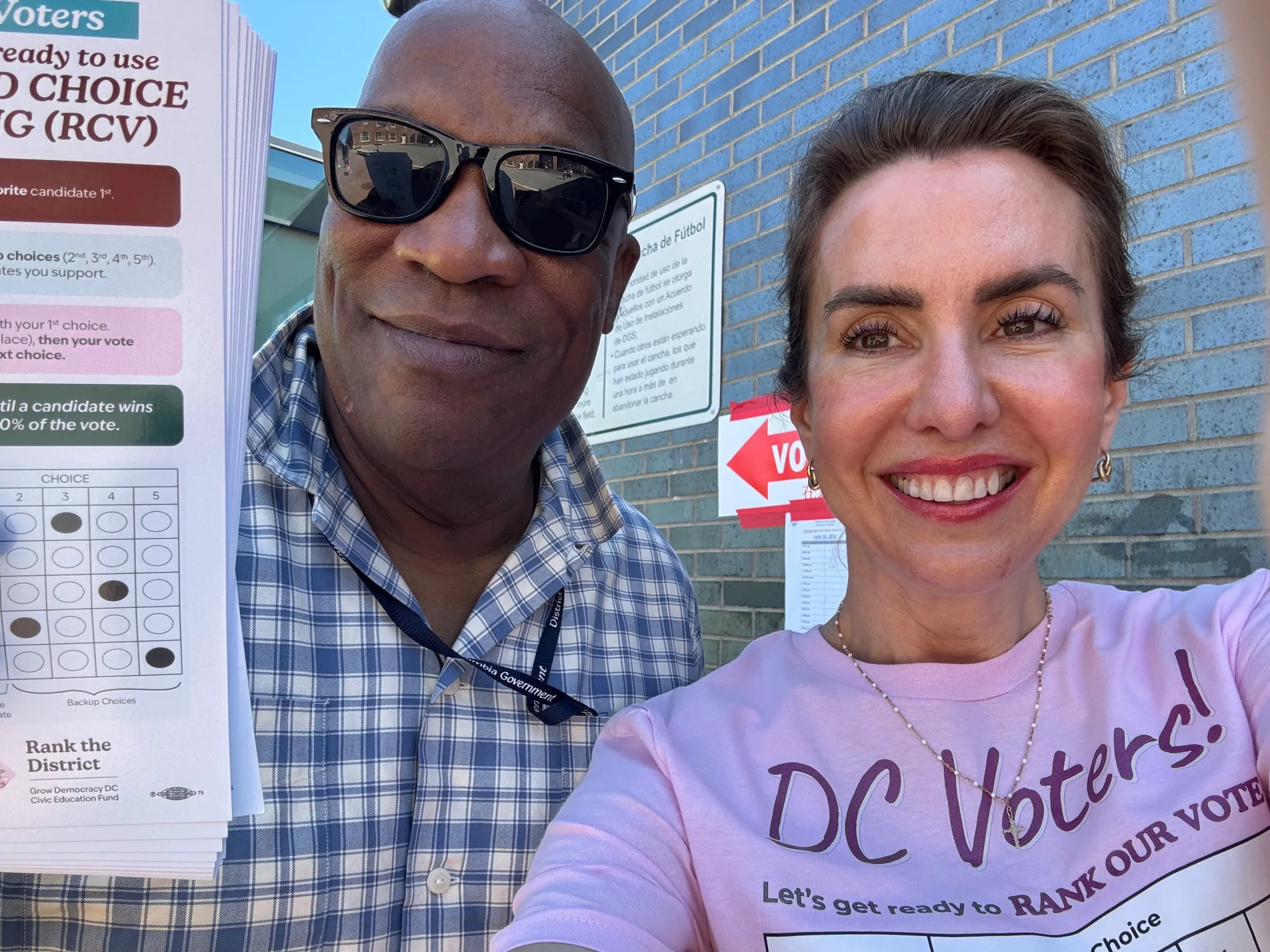
Updated June 18, 2026
In a milestone event for American municipal democracy, Washington, D.C. voters participated in their first-ever primary election utilizing ranked choice voting (RCV) on June 16, 2026. The shift represents a fundamental transformation in how the nation’s capital selects its leadership, moving away from "first-past-the-post" systems that have historically allowed candidates to secure office with only a small fraction of the popular vote.
This transition was fueled by an overwhelming mandate from the electorate; in the November 2024 general election, 73% of D.C. voters supported the ballot measure to implement RCV—a rare instance of supermajority support across all eight of the District’s diverse wards. As of mid-June 2026, the D.C. Board of Elections continues to process late-arriving mail-in ballots, with final RCV tallies expected by Sunday, June 21.
The Mechanics of the New Ballot
Under the RCV system, voters were presented with the option to rank up to five candidates in order of preference rather than selecting a single name. The primary objective is to ensure that winners command majority support. In a traditional plurality system, a crowded field can result in a victor who is opposed by a significant majority of the electorate. By allowing voters to express their second, third, and fourth choices, RCV ensures that the final winner reflects the broadest possible consensus among the voting public.
Chronology of the Historic Primary
The lead-up to the June 16 primary was characterized by months of intensive voter education and logistical preparation.
- Pre-Election Phase: Throughout the spring of 2026, the D.C. Board of Elections, in partnership with advocacy groups like "Rank The District," conducted hundreds of workshops and public demonstrations across all eight wards. These sessions were designed to demystify the new ballot design.
- Election Day (June 16): Polling stations opened across the District. While the process was largely smooth, election officials noted isolated technical issues, such as printer malfunctions, and a surge of late-day voters that kept some locations open past the 8:00 p.m. closing time.
- The Tabulation Process: Following the close of polls, the D.C. Board of Elections began the staggered release of first-choice preferences. Because no candidate in several key races secured an immediate majority, these contests are slated to move into the iterative RCV count, where lower-performing candidates are eliminated and their votes are redistributed based on voter rankings.
- The Path Ahead: As of June 18, the Associated Press estimates that 64% of ballots have been processed. The final, definitive results are expected by June 21, once all mail-in and provisional ballots are accounted for.
Voter Sentiment: A Positive Reception
Despite fears that the new system might cause confusion, the general consensus among D.C. voters has been remarkably positive. Reporters from local outlets, including WTOP, ABC 7, and NBC Washington, captured a sense of empowerment among those leaving the polls.
Mayor Muriel Bowser, who had previously expressed opposition to the implementation of RCV, noted upon exiting her polling place that the process was "fairly straightforward." This sentiment was echoed by a broad cross-section of the electorate. Harrison Kreisberg, a D.C. voter interviewed by WTOP, described the change as "great for democracy," while Michael Rawlings noted the utility of being able to prioritize his preferences in races with multiple appealing candidates.
The ability to support multiple candidates was a recurring theme in exit interviews. Caroline Nodus, speaking to ABC 7, emphasized that the ballot was "super easy to read," adding, "I like having a first choice, of course, but there are other people whose proposals I like, so it’s nice to be able to put my support behind them as well."
Addressing Concerns and Implementation Challenges
While the debut was generally successful, no major electoral reform is without its growing pains. Some voters reported uncertainty regarding whether they were required to rank all five candidates or if they could opt to rank only one or two. Furthermore, in highly competitive, crowded fields, some residents expressed a desire for more comprehensive information about lower-tier candidates to make more informed secondary rankings.

Lisa D. T. Rice, CEO of Grow Democracy DC and the primary proponent of Initiative 83, praised the diligence of election workers. "Thanks to our dedicated election workers, our voting centers largely ran smoothly," Rice noted. She acknowledged that the most common query at the polls was the optional nature of the rankings, suggesting that future education efforts should focus on the flexibility of the ballot.
Preliminary Results and Data Analysis
As of June 17, the landscape of the 2026 primary is coming into focus.
- Mayoral Race: Councilmember Janeese Lewis George has emerged as the frontrunner, securing 52.8% of first-choice votes. Former Councilmember Kenyan McDuffie, who trailed at 36.6%, formally conceded the race on the morning of June 18.
- Congressional Delegate: Councilmember Robert White achieved a decisive victory, capturing 63.2% of first-choice votes, effectively winning the nomination without the need for a secondary RCV tabulation.
- At-Large Council (Democratic Primary): This race remains the most critical test for RCV. With nine candidates in the running, no one surpassed the 50% threshold. Oye Owolewa leads with 33.8%, followed by Lisa Raymond (15.2%) and Kevin Chavous (13.8%). Because no majority exists, the race will be decided by the iterative elimination process, a significant departure from the 2022 cycle where winners often took the seat with as little as 36% of the vote.
Strategic Implications: The Rise of Cross-Endorsements
A fascinating development in this cycle has been the emergence of "cross-endorsements." In the at-large Council and Ward 1 races, several candidates formed coalitions, explicitly asking their supporters to rank their partners as second or third choices.
Political analysts are closely watching these partnerships to see if they hold up during the redistribution of votes. In the past, such strategic alliances were rare; however, under RCV, candidates have a mathematical incentive to reach out to the supporters of their opponents. If successful, this could signal a shift toward more collaborative, coalition-based campaigning in D.C. politics.
The Broader Impact: Ending the Plurality Problem
The historical context of D.C. elections provides the strongest argument for the implementation of RCV. Since 2012, the District has seen a trend where primary winners were effectively "minority candidates," winning their seats with significantly less than half of the total vote. In some cases, such as the 2020 Democratic primaries in Ward 2 and Ward 7, candidates won with less than 30% support.
By mandating that a winner must achieve majority support, D.C. is attempting to bridge the "bitter divide" cited by voters like Stephen Wallant, who noted that first-past-the-post systems are often responsible for political polarization.
Conclusion
The June 16 primary will be remembered as a pivotal moment for Washington, D.C. Whether through the successful adoption of new ballot technology or the emergence of cross-endorsement strategies, the District has signaled a clear desire for a more inclusive and representative democratic process.
As election officials move toward the final tally, the eyes of the nation remain on the District. If this implementation continues to run smoothly, it may serve as a blueprint for other major American cities grappling with the limitations of traditional, winner-take-all elections. For now, the takeaway is clear: the era of the plurality winner is fading, and the era of the majority-mandate has arrived.
For more information on the final results and ongoing analysis of the RCV implementation, residents are encouraged to visit the official DC Board of Elections website or Grow Democracy DC.

 Asro
Asro
 Asep Darmawan