
 Nila Kartika Wati
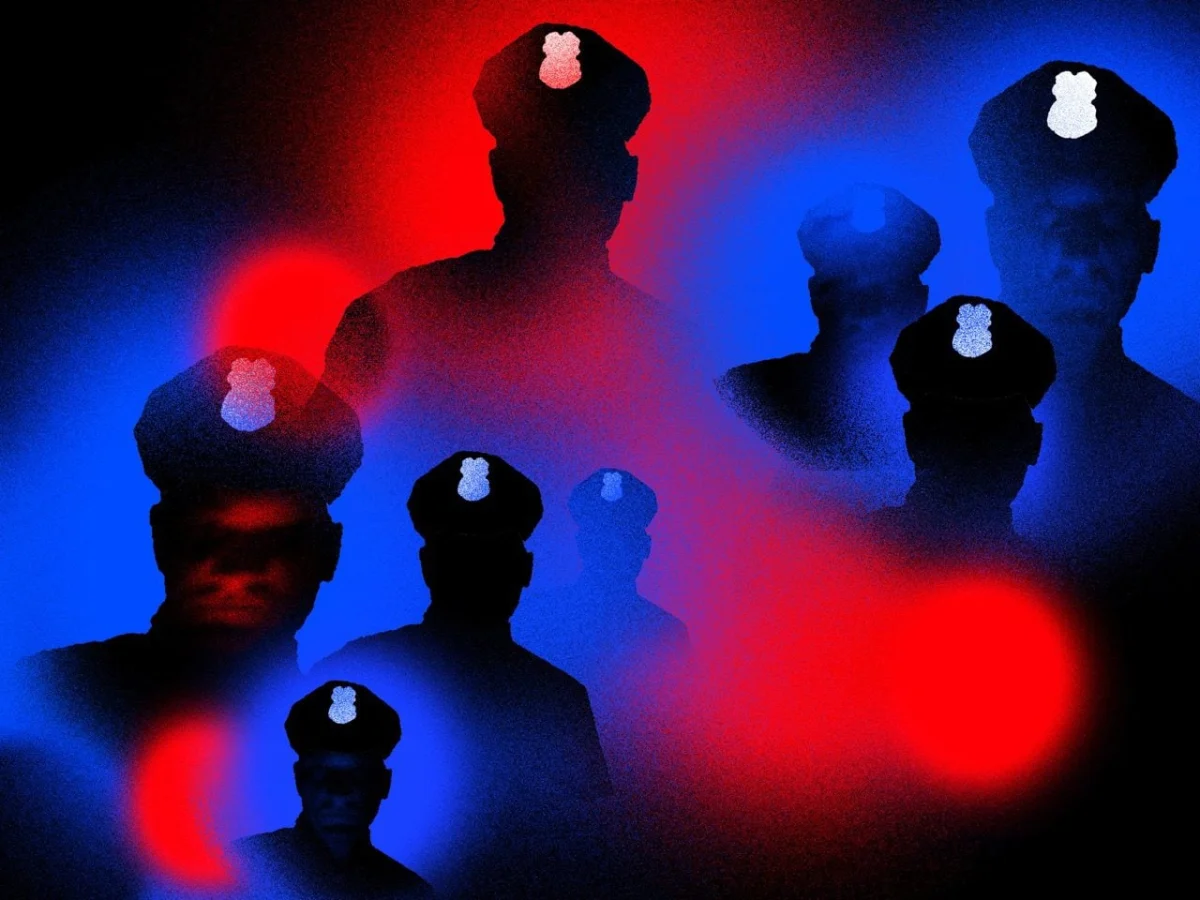
In the wake of the March 2024 death of 26-year-old Dexter Reed—killed by plainclothes officers following a traffic stop for an alleged seat belt violation—the Chicago Police Department (CPD) found itself at a reckoning. The incident, which spiraled from a routine stop into a fatal exchange of gunfire, amplified long-standing community outcries regarding the department’s reliance on aggressive, pretextual traffic stops. These encounters have disproportionately defined the lived experience of residents in Chicago’s Black and Latino neighborhoods for years, fueling a cycle of racial profiling, documented abuse, and persistent distrust.
In response to the tragedy, police leadership pledged to dismantle the culture of "dragnet" enforcement. Yet, a new investigative analysis by Bolts and Injustice Watch reveals a troubling reality: while the total volume of documented traffic stops has plummeted by tens of thousands, the department has simultaneously presided over a massive, persistent, and largely unchecked volume of "off-the-books" police encounters. Despite promises of transparency, the proportion of unreported stops has surged, leaving the city’s oversight mechanisms effectively blind.
The Discrepancy: A Failure of Transparency
The fundamental issue lies in the disparity between the stops officers report to the state—via the mandatory "blue card" documentation system—and the activity logs recorded by the Office of Emergency Management and Communications (OEMC). Every time an officer radios in a stop, it is logged by dispatchers. However, comparing these dispatch logs with state-mandated reporting reveals that more than half of all traffic stops conducted by CPD are never officially documented.
This represents a significant deterioration in transparency. An investigation published in the summer of 2024 indicated that roughly one-third of stops were going unreported. In the year since that report, despite acknowledgment of the problem and promises of a "fix" from department officials, the situation has worsened. Today, more than 50% of traffic encounters remain hidden from public and regulatory oversight.
"It is really hard for the public to hold our authorities accountable when we are operating with flawed data," says W. Robert Schultz III, an organizer for the Active Transportation Alliance. "These practices undergird a culture in law enforcement that sees the world outside their cruiser to be the enemy. It really produces harm. It destroys trust."
Chronology of a Failed Reform Effort
The arc of recent Chicago policing reform has been marked by high-profile pledges and stalled execution.

- March 2024: The killing of Dexter Reed serves as the catalyst for public outrage, prompting leadership to acknowledge the toxicity of pretextual stops.
- Summer 2024: Initial reports from Bolts and Injustice Watch expose that over 200,000 stops from the previous year were never reported.
- June 2025: Facing intense pressure at a city council hearing, CPD Deputy Director Noe Flores publicly promises a "fix" to the department’s electronic record-keeping system.
- February 2026: CPD debuts a new electronic reporting system intended to replace the archaic paper blue cards. Despite the technological upgrade, data shows no sustained reduction in undocumented stops.
- July 2026: Superintendent Larry Snelling, who oversaw the department during this tumultuous period, steps down. His tenure, while characterized by a reduction in total stop volume, leaves behind a legacy of "shadow" policing that remains largely unaccounted for.
Supporting Data: Policing Without Accountability
The data gap is not merely a bureaucratic oversight; it is a profound barrier to constitutional policing. When stops go undocumented, the Civilian Office of Police Accountability (COPA) and other watchdog groups are stripped of their ability to analyze patterns of bias.
Internal weekly activity reports—obtained via public records requests—confirm that department commanders are fully aware of these numbers. They utilize the dispatch logs to monitor officer activity, yet this data is rarely reconciled with the official reports filed with state regulators. The result is a dual-track system: one that provides the public with a sanitized, incomplete version of events, and another that keeps the true scope of police contact buried in internal archives.
Statistical analysis of the documented stops that do exist reveals that less than two percent are for safety-related issues like speeding. Instead, the vast majority are for minor equipment or registration violations—the classic "pretext" used to search for contraband. Data consistently shows that Black and Latino drivers are stopped at significantly higher rates, often in neighborhoods where such enforcement yields little to no impact on actual crime reduction.
"There are hit-and-runs and 911 calls that don’t get a quick response or go unsolved," notes Schultz. "It just seems like we’re spending a lot of law enforcement time on stuff that brings very little return."
The "Consent Decree" Standoff
A major point of contention has been whether to fold traffic stop reform into the existing federal consent decree. Since 2019, CPD has been subject to a federal reform process overseen by a judge and an independent monitoring team. While Superintendent Snelling initially suggested that bringing traffic stops under this federal umbrella would ensure accountability, the process has stalled for over two years.
Critics, including the Free2Move Coalition, argue that federal oversight may actually hinder local progress. Under the current structure, if a policy is negotiated via the consent decree, the city’s Community Commission for Public Safety and Accountability (CCPSA) loses its independent authority to dictate terms. If the commission and the police department reach an impasse, the final decision-making power rests with a federal judge rather than the elected or appointed community representatives meant to provide local oversight.

"We don’t know whether the next superintendent is going to have the same position and understand that these kinds of traffic stops not only are ineffective but also are harmful to communities of color," says Amy Thompson, an attorney for Impact for Equity. "It’s up to the whim of whatever the superintendent would like to do, because all of these decreases have happened on an informal basis."
Implications for Future Governance
The departure of Larry Snelling has created a leadership vacuum that threatens to derail even the modest progress made toward reducing total stop volume. Without a codified, enforceable policy on traffic stops, the current "informal" decline in stops is fragile.
Aaron Gottlieb, a University of Chicago professor and former member of the CCPSA, argues that the focus should not be on the volume of stops, but on the logic behind them. "It’s an ethical question about whether you believe that this is how people should be treated when there’s no evidence of any benefit," he asserts.
The successful implementation of reform in cities like Los Angeles and Minneapolis—where pretextual stops have been restricted—suggests that Chicago could achieve a "win-win" scenario. By limiting stops for minor equipment violations, police departments in those jurisdictions have reported a decline in officer-involved violence and a reduction in misconduct complaints.
However, for such a shift to occur in Chicago, the department must first move beyond the "shadows." The persistent failure to document over half of its traffic encounters suggests that the department is not merely suffering from a technical glitch, but is maintaining a systemic culture of secrecy. As the city moves to appoint a new superintendent, the unanswered question remains: can a department that refuses to account for its past be trusted to reform its future?
Until the CPD reconciles its dispatch logs with its public reports and subjects its stop-and-search policies to rigorous, transparent oversight, the "murky view" of how the city’s streets are policed will continue to erode the very foundation of public trust. The tragedy of Dexter Reed was intended to be a turning point; instead, it has become a marker of how far the city still has to travel to achieve true accountability.

 Siti Muinah
 Reynand Wu