


 Ammar Sabilarrohman
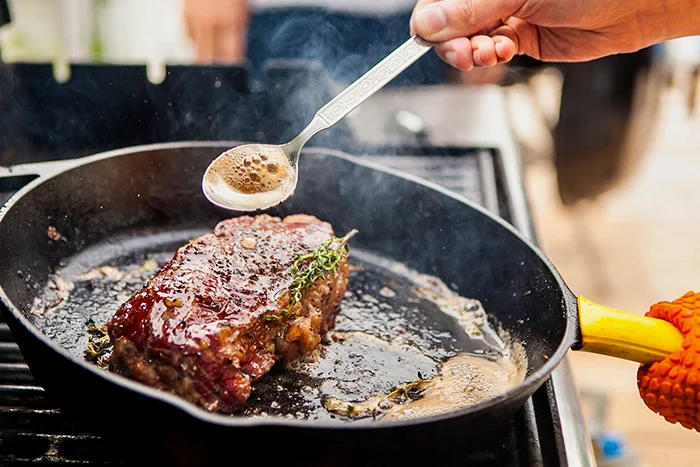
As Los Angeles continues its aggressive transition toward cleaner-burning engines and a robust fleet of electric vehicles (EVs), air quality regulators have long anticipated a steady decline in the city’s notorious smog. However, a groundbreaking study from the National Oceanic and Atmospheric Administration (NOAA) has uncovered a paradoxical hurdle in the quest for cleaner air: the very act of preparing meals is now a major, and previously underestimated, driver of ozone pollution.
In a comprehensive analysis published in the journal Atmospheric Chemistry & Physics, researchers revealed that volatile organic compounds (VOCs) released during commercial and residential cooking now account for more than 25% of human-generated VOC-driven ozone production in the LA basin. This figure effectively places the kitchen on par with the entire on-road and off-road transportation sector, complicating the narrative that shifting away from fossil fuels will automatically solve the region’s air quality woes.
Main Facts: The Chemistry of the Kitchen
To understand why a sizzling steak or a stir-fry could impact the atmosphere, one must look at the chemistry of "smog soup." Ozone is not emitted directly from tailpipes or chimneys; rather, it is formed in the atmosphere when nitrogen oxides (NOx) react with volatile organic compounds (VOCs) in the presence of sunlight.
For decades, the primary culprits of this process were assumed to be the combustion of gasoline and diesel. As California’s stringent environmental regulations successfully curbed vehicular emissions, the "ozone budget"—the balance of chemical precursors in the air—shifted. The NOAA study utilizes advanced chemical modeling to demonstrate that while vehicle-derived VOCs have plummeted, the VOCs associated with heating animal fats, vegetable oils, and other food components have remained a constant, potent contributor.
The specific compounds released—ranging from complex alcohols to aldehydes and acids—are highly reactive. When these compounds drift into the LA basin’s unique atmospheric trap, they catalyze the formation of ground-level ozone, a respiratory irritant that exacerbates asthma, reduces lung function, and can cause permanent lung tissue damage.
Chronology: A Shift in Air Quality Science
The realization that cooking is a significant polluter did not happen overnight. The scientific journey to this conclusion unfolded over several years:
- Pre-2015: Air quality models largely ignored "cooking" as a distinct category, grouping its emissions into broad, generic categories like "solvent use" or "miscellaneous area sources."
- 2018–2020: During intensive field campaigns in urban centers, researchers began noticing high concentrations of specific organic molecules that did not match the chemical signature of petroleum products.
- 2021–2023: NOAA scientists performed a deep-dive analysis of Los Angeles’ air composition, using high-resolution mass spectrometry to isolate compounds linked specifically to cooking oils and fats.
- March 2025: The findings were finalized and published in Atmospheric Chemistry & Physics, confirming that cooking emissions are a primary rival to transportation emissions in the regional ozone equation.
Supporting Data: By the Numbers
The NOAA study provides a startling breakdown of the urban air chemistry. By creating a refined chemical model that specifically incorporates cooking-related VOCs, researchers observed a significant "model gap" closure.
- 25% Contribution: Cooking-related VOCs now account for one-quarter of the total ozone production attributable to human activity.
- The Transportation Parity: The total volume of ozone-forming potential from cooking is now statistically indistinguishable from the combined impact of all on-road and off-road vehicles in the LA basin.
- Reactive Potential: Unlike some industrial VOCs, which break down relatively quickly, the specific organic compounds emitted by high-heat cooking (such as grilling and deep frying) exhibit high "ozone formation potential," meaning they are exceptionally efficient at accelerating the chemical reactions that lead to smog.
- The Urban Factor: Los Angeles presents a "worst-case scenario" for this phenomenon due to its high population density, thousands of commercial restaurants, and a topography that traps emissions against the mountains, allowing ozone to "cook" in the heat for extended periods.
Official Responses and Scientific Perspective
The scientific community has reacted to the findings with a mixture of surprise and professional validation. Dr. Matthew Coggon, a lead researcher on the study, noted that the results highlight the success of current environmental policy while simultaneously illustrating the "moving goalposts" of atmospheric science.
"We have been so focused on the tailpipe that we missed the stove," said one atmospheric chemist familiar with the study. "It’s a success story for clean energy, but it proves that as we solve the biggest, most obvious problems, the smaller—or previously ignored—sources start to dominate the remaining pollution profile."

Regulatory bodies, including the California Air Resources Board (CARB), are now tasked with the difficult job of interpreting this data. While there is no immediate push to "regulate the kitchen" in the way that car manufacturers are regulated, the data suggests that future air quality management plans for the South Coast Air Basin will need to account for cooking emissions. This could eventually include requirements for advanced filtration systems in commercial kitchens or incentives for cleaner cooking technologies.
Implications: A New Era for Environmental Policy
The implications of this research are far-reaching, extending well beyond the borders of Los Angeles. As cities worldwide implement electric vehicle mandates and tighten industrial standards, the relative influence of "small" sources—such as household products, paints, and now, cooking—will inevitably rise.
The Challenge of Mitigation
Mitigating cooking emissions presents a unique sociological and economic challenge. Unlike a power plant, which can be fitted with scrubbers, millions of individual households and thousands of small businesses contribute to this pollution. Implementing high-efficiency particulate air (HEPA) or activated carbon filtration on every stove is currently not feasible from a cost or energy-efficiency standpoint.
Rethinking Urban Planning
The findings may force urban planners to rethink how restaurant districts are clustered. If a high concentration of commercial kitchens in a specific area is found to be a "hot spot" for ozone, zoning regulations might eventually shift to mandate enhanced ventilation and emission-control technology for new developments.
Public Health and Awareness
For the average resident, the implications are less about individual guilt and more about public health awareness. While individuals cannot stop cooking, the study underscores the importance of ventilation. Using range hoods—and ensuring they vent to the outside rather than recirculating air—is a vital, yet underutilized, tool for both indoor air quality and the reduction of the outdoor smog burden.
Conclusion: The Next Frontier in Air Quality
The NOAA study is a testament to the sophistication of modern atmospheric monitoring. It serves as a stark reminder that the environment is a complex, dynamic system where solutions to one problem can uncover the next.
As Los Angeles moves closer to its goal of zero-emission transportation, the "cooking ozone" phenomenon serves as a vital case study for the rest of the world. It proves that air quality improvement is a perpetual, iterative process. By identifying cooking as a primary pollutant, scientists have provided the foundation for the next generation of environmental policy—one that will likely look inside the home and the commercial kitchen with the same level of scrutiny once reserved for the highway.
The road to a smog-free Los Angeles is no longer just about the car; it is about the entire urban ecosystem. As we continue to refine our understanding of the atmosphere, we must remain agile enough to address the "hidden" pollutants that have been hiding in plain sight—or, in this case, on the stovetop.


 Nila Kartika Wati

 Dwi Wanna




