




 Ammar Sabilarrohman
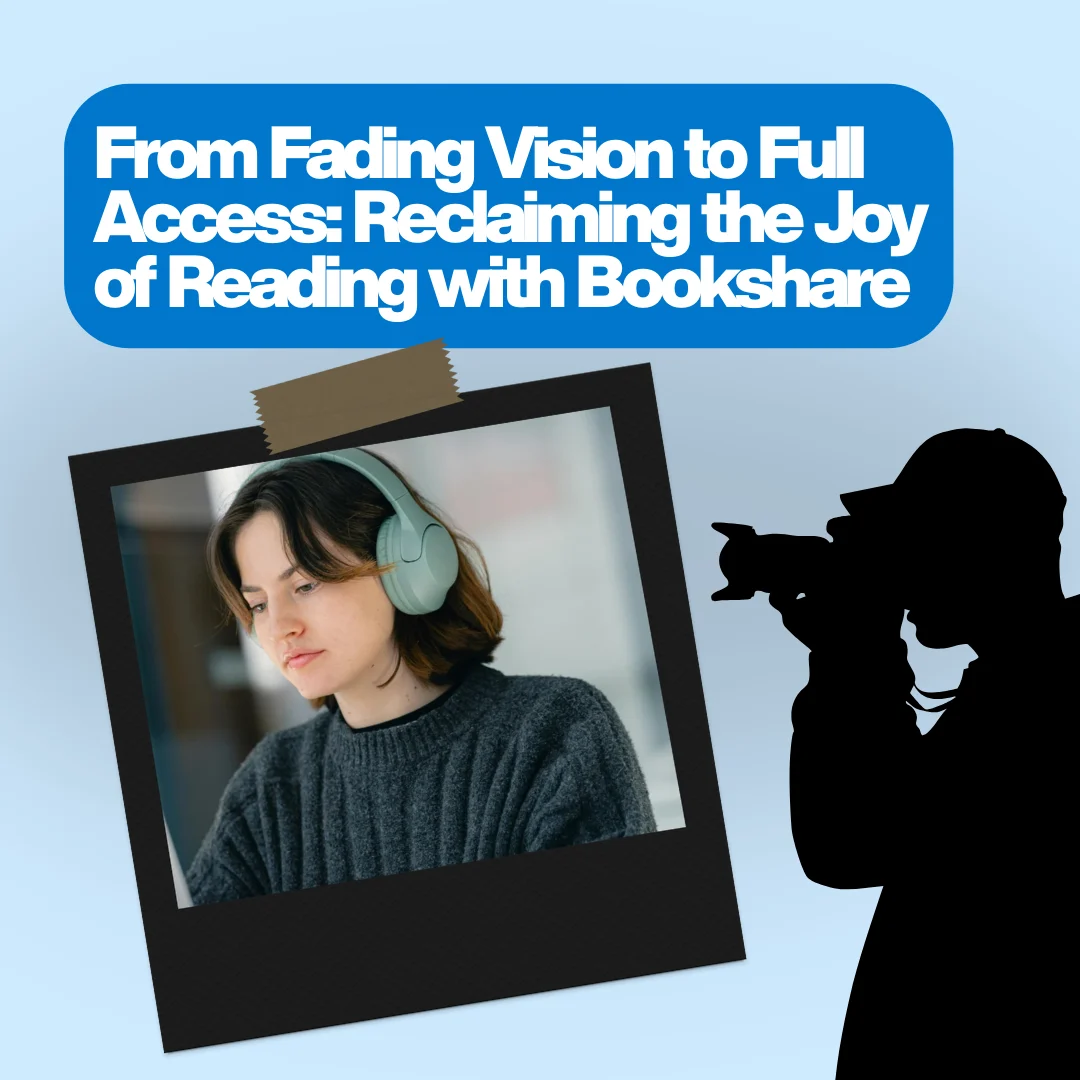
For most students, the transition to university is defined by the weight of heavy textbooks, the stress of late-night research, and the pursuit of academic identity. For Angela, a student navigating life with progressive vision loss, this transition was fraught with a much more fundamental challenge: the fear of losing her ability to engage with the written word. Having grown up with peripheral vision loss, she had long adapted to a world that required unconventional navigation, but when her central vision began to fade during her freshman year, her greatest refuge—reading—seemed to be slipping away.
This is not merely a story of one student’s academic success; it is a lens into the "information desert" faced by millions of individuals with print disabilities. It is a narrative about the power of inclusive technology to dismantle barriers, foster confidence, and empower a generation of learners to move from simply surviving the classroom to actively shaping their futures.
The Turning Point: A Crisis of Accessibility
The crisis Angela faced is one shared by countless students who struggle with dyslexia, blindness, or visual impairments. The sudden loss of central vision during her freshman year turned a once-joyful pastime into an exhausting ordeal. "Am I ever going to read a book again?" she recalls asking herself, a question that carries the weight of an existential threat to an academic career.
For many, the standard print format is the only gatekeeper to higher education. Without digital accessibility, that gate is locked. The frustration of squinting at blurry lines, the onset of persistent headaches, and the mental tax of trying to decipher text that refuses to resolve into meaning can cause even the most dedicated students to lose their footing.
Chronology of a Breakthrough: From Isolation to Integration
The trajectory of Angela’s academic journey shifted the moment she engaged with her university’s disability services office. It was there that a counselor introduced her to Bookshare, an initiative that would serve as a catalyst for her future.
The Initial Encounter:
Within minutes of logging into the platform, the barriers began to dissolve. By utilizing a refreshable Braille display paired with high-quality audio narration, Angela transformed her study process. She no longer had to rely on visual strain; instead, she could follow along with the tactile feedback of Braille while the text flowed audibly.
The Academic Pivot:
This newfound accessibility did more than just improve her grades—it redefined her career path. Witnessing the transformative power of assistive technology, Angela redirected her academic focus toward special education. Her goal shifted from merely navigating the system to building a better one for those who would follow in her footsteps.
The Professional Expansion:
Today, Angela’s relationship with reading has evolved from a struggle to a position of abundance. She often jokes that she has access to more books than the average person, a testament to how digital repositories can outpace traditional libraries in terms of inclusivity and breadth of content.
Supporting Data: The Reality of the "Information Desert"
To understand the magnitude of the challenge, one must look at the data surrounding print disabilities. A "print disability" is not merely a visual impairment; it is any condition—including learning disabilities like dyslexia—that prevents an individual from reading standard print.
According to various accessibility advocates, only a small fraction of published works are ever produced in accessible formats. This creates an "information desert" where students with print disabilities are effectively cut off from:
- Essential Textbooks: Without accessible digital versions, students cannot keep pace with class lectures.
- Research Materials: The inability to search, skim, or synthesize academic journals limits the scope of a student’s research.
- Daily Information: Simple texts, including lab instructions, campus updates, and even daily tasks like reading a recipe, become significant obstacles.
Bookshare, which hosts hundreds of thousands of titles, functions as a digital lifeline. By providing these resources in formats like ePub, DAISY, and audio, platforms like this allow students to bypass the physical constraints of traditional print, ensuring that the quality of their academic output is not limited by the medium through which they access information.
The Psychological Burden: Dropping the "Exhausting Performance"
Perhaps the most profound takeaway from Angela’s experience is not the technical solution, but the emotional relief of transparency. For years, she engaged in what she calls an "exhausting performance"—the act of pretending to see what she could not. She would nod in agreement when classmates pointed to diagrams she couldn’t perceive, or mimic the movements of those reading a shared document.
This "masking" is a common, often invisible, strain on students with disabilities. It consumes mental energy that should be reserved for critical thinking and creative inquiry. By utilizing assistive tools, Angela was able to drop the facade. The technology provided the autonomy she needed to stop "performing" sight and start truly engaging with content on her own terms.
Official Perspectives: The Role of Inclusive Infrastructure
Educational institutions are increasingly recognizing that accessibility is not a "special service" but a fundamental right. Experts in the field of inclusive education argue that universal design—the practice of making learning environments accessible to all from the start—is the only way to close the equity gap.
When schools partner with organizations like Bookshare, they are making a statement: that a student’s potential is not defined by their ability to decode ink on paper.
"As a student, Bookshare gave me the tools to keep up with my classes and the confidence to aim higher," Angela notes. Her testimony highlights that when the barrier of accessibility is removed, the focus returns to the student’s intellect, curiosity, and drive. It is an investment in human capital that pays dividends far beyond the university gates.
Implications: The Broader Impact on Society
The implications of providing accessible tools extend deep into the fabric of society. When students are empowered to thrive rather than just survive, they carry that momentum into their professional lives.
- Workforce Inclusion: By mastering assistive technologies during their formative years, students with print disabilities enter the workforce with a competitive edge, already equipped with the skills to navigate digital environments.
- Community Contribution: When individuals with diverse perspectives are given the tools to contribute to research, literature, and discourse, the entire community benefits from a wider range of ideas.
- Redefining "Learning": The traditional model of learning—one that centers on a specific type of visual interaction—is being challenged. In its place, we are seeing a move toward multimodal learning, where audio, tactile, and digital formats are treated with equal validity.
Conclusion: Opening the Doors
Angela’s story is a powerful reminder that barriers are often structural, not personal. When we provide students with the right tools, we don’t just help them pass a class; we ignite a lifelong passion for discovery.
The success of students like Angela is proof that the "information desert" can be irrigated. By supporting organizations that prioritize accessibility and by advocating for inclusive digital policies, we can ensure that every student, regardless of their visual capability, has the opportunity to explore the worlds found within books.
As we look toward the future of education, the goal must be clear: to ensure that the joy of learning remains a universal experience, unhindered by the limitations of print. For those interested in learning more about how these barriers are being dismantled or to support initiatives that provide accessible materials to students in need, more information can be found at www.bookshare.org.
In the end, it is not about the technology itself, but about the liberation it provides. It is about the freedom to read, to learn, and to grow—without performance, without exhaustion, and without limits.

 Iffa Jayyana
 Suro Senen






