



 Neng Nana
This coverage is made possible through a partnership between Grist and Interlochen Public Radio in northern Michigan.
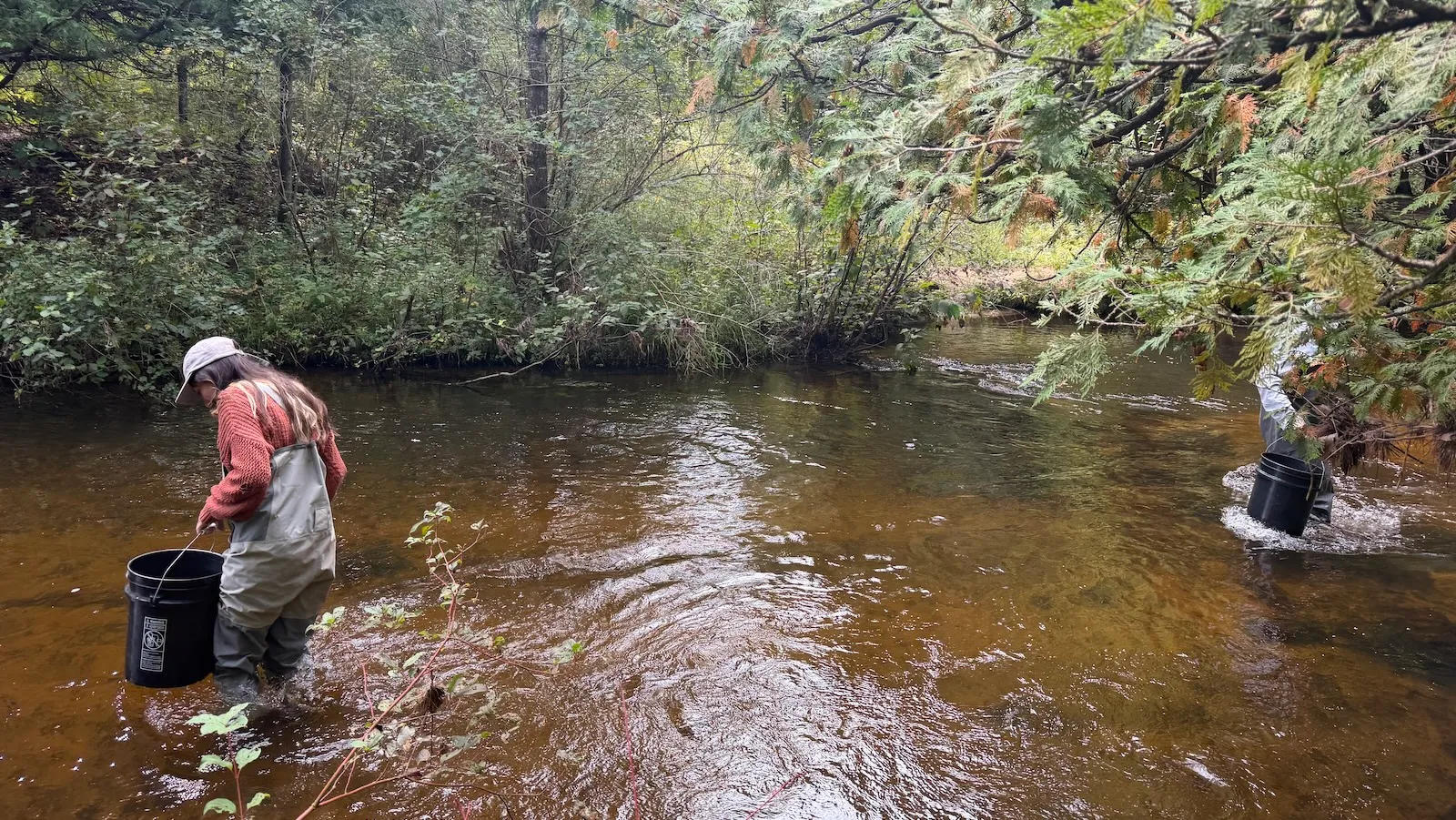
On a crisp, biting morning in September, the rhythmic sound of water rushing over stones in the Boardman-Ottaway River was punctuated by the quiet, focused activity of a restoration team. Sean Leask, a fish and wildlife biologist with the Grand Traverse Band of Ottawa and Chippewa Indians, stood waist-deep in the cold current, carefully counting and measuring a batch of young Arctic grayling.
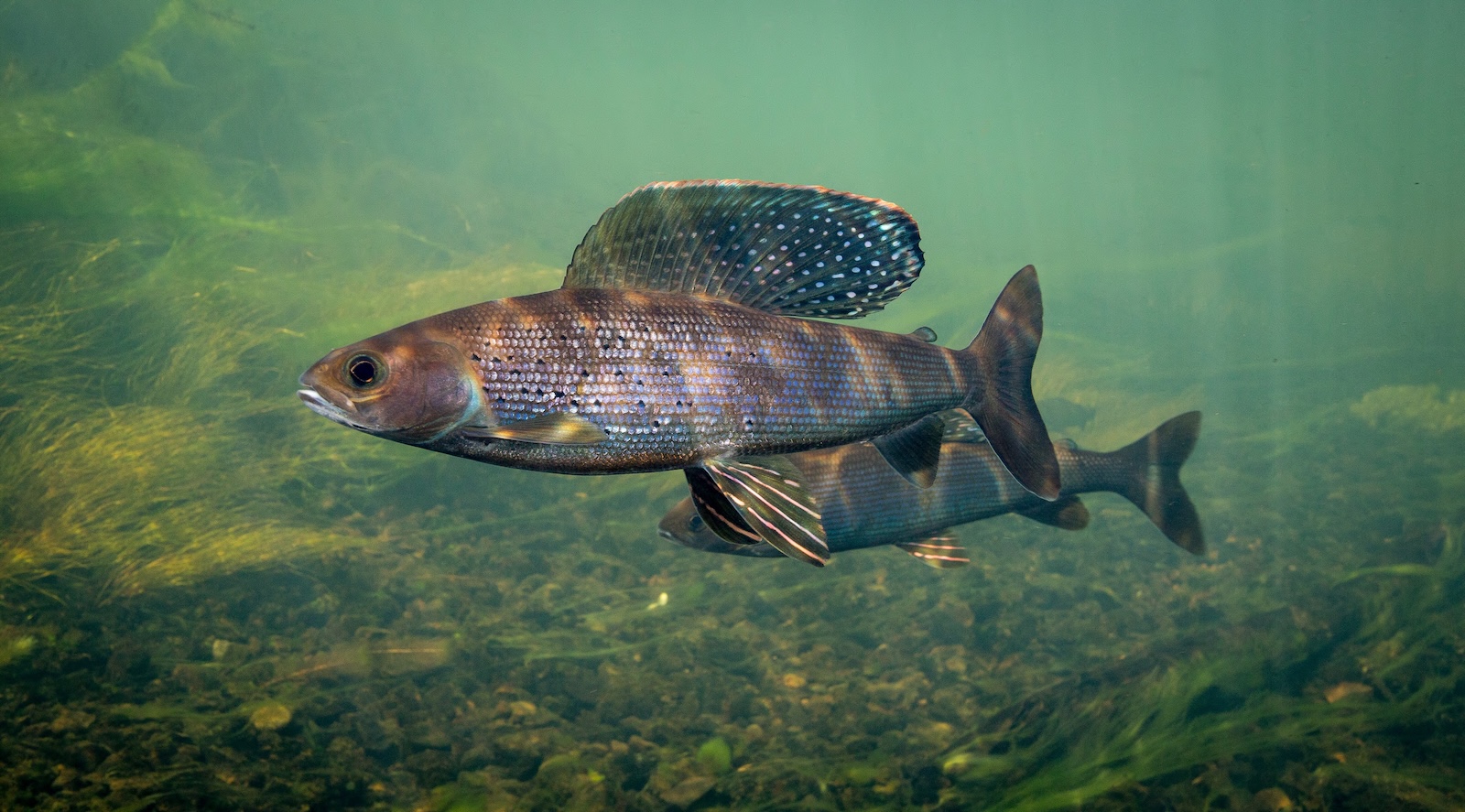
Even at this juvenile stage, the fish possess a distinct, iridescent shimmer that catches the light at precise angles—a hallmark of a species that once defined the waterways of northern Michigan. But the sight of these fish is something of a biological miracle: the Arctic grayling has been functionally extinct in Michigan waters for nearly a century. Today, three northern Michigan tribes are engaged in an ambitious, multi-million-dollar experiment to reintroduce the species, hoping to restore not just a fish, but a foundational piece of their cultural and ecological heritage.
The Vanishing of an Icon: A Historical Overview
To understand the weight of this effort, one must look back at the ecological collapse of the early 20th century. By the 1930s, the Arctic grayling had been effectively wiped out in the Great Lakes region. The primary drivers were a trifecta of human-induced pressures: the massive environmental degradation caused by industrial logging, which clogged rivers with silt and debris; aggressive overfishing during the state’s developmental boom; and the introduction of non-native trout species that outcompeted the grayling for habitat and food.
For decades, the rivers of northern Michigan ran clear of these "sail-finned" trout relatives. The loss was profound, particularly for the Anishinaabe people, for whom the grayling was more than just a biological entity—it was an ancestral companion.
"Our taking care of them and helping them to reestablish their population helps us to reestablish ourselves, our culture, and our traditions," says Tina Frankenberger, the tribal environmental resiliency lead for the Grand Traverse Band. The current reintroduction project represents a reclamation of space and history, joining a growing movement of tribal-led restoration efforts across North America, from salmon in the Pacific Northwest to condors in California.
The Chronology of the Return
The current restoration project is the culmination of years of federal, state, and private financial investment, paired with extensive scientific planning. The timeline of their return began in earnest in 2025, when three tribes—the Grand Traverse Band of Ottawa and Chippewa Indians, the Little River Band of Ottawa Indians, and the Little Traverse Bay Bands of Odawa Indians—received a shipment of eggs sourced from the Chena River in Alaska.
The choice of Alaskan stock was strategic. Unlike the remaining population in Montana’s Big Hole River, which suffers from limited genetic diversity, the Alaskan grayling are robust and genetically varied, providing a stronger foundation for a self-sustaining population in the Great Lakes watershed.
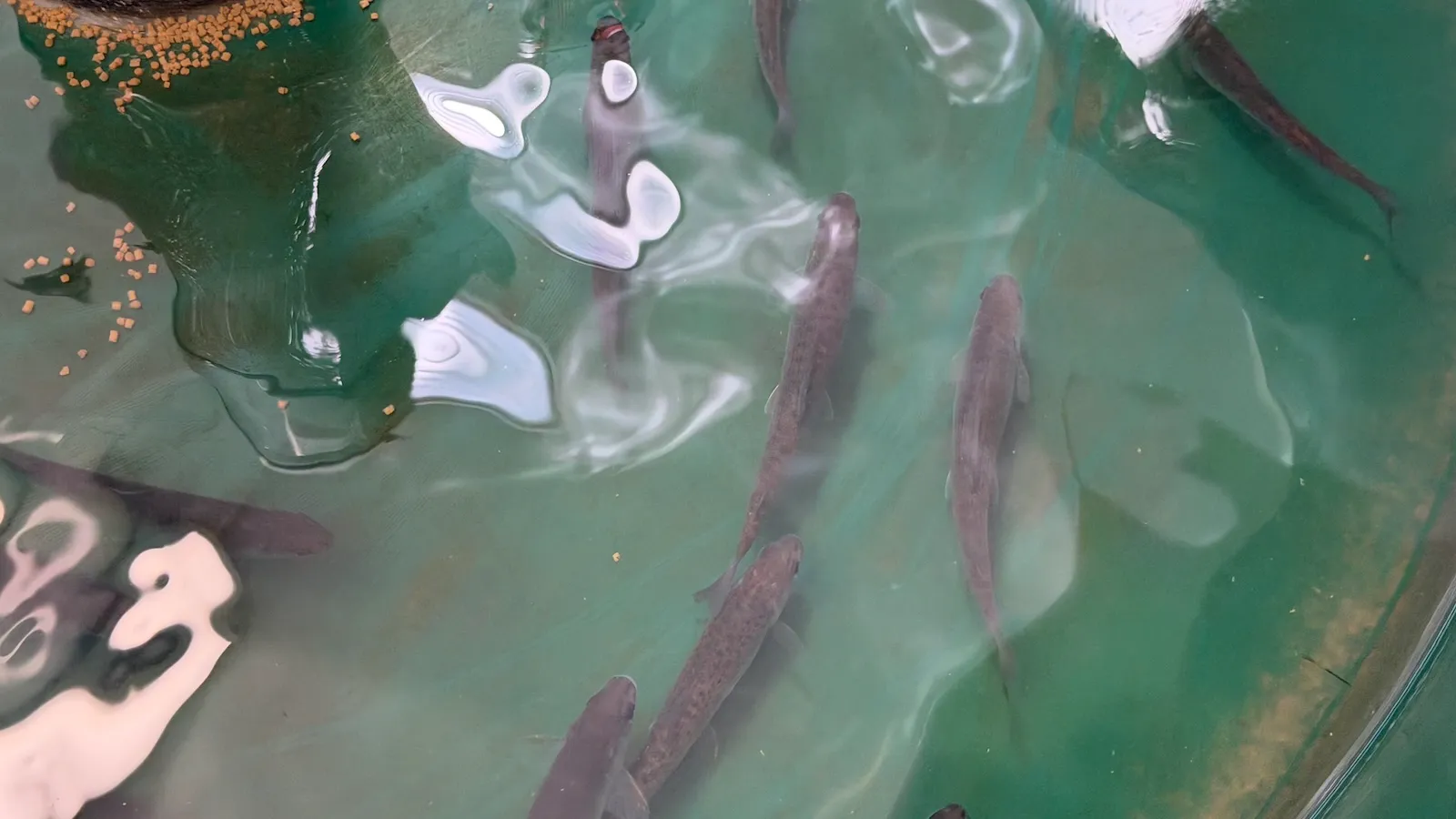
- 2025: The three tribes receive their first shipment of eggs. The Grand Traverse Band begins operating its streamside rearing facility, while the Little River Band utilizes in-stream incubators.
- 2026: A year of "close calls" and adaptation. A power outage at the Grand Traverse facility leads to a significant loss of fish, yet the tribe manages to rebound, producing four times as many fish the following season.
- Late 2026: The first rounds of juvenile grayling are released into the Boardman-Ottaway and Manistee river systems.
- 2027 and Beyond: The ongoing phase. Biologists are now shifting toward intensive monitoring, predation studies, and adapting rearing techniques to handle the volatility of climate-driven weather events.
Data, Survival, and the "Needle in a Haystack"
Translating theoretical restoration into physical success has proven to be the project’s most daunting hurdle. Tracking the movement and survival of the released fry is a logistical nightmare.
"It’s like looking for a needle in a haystack, and the haystack is the size of a river," says Alex Ontkos, an inland fisheries biologist with the Little River Band of Ottawa Indians. Earlier this year, his team stocked roughly 391,000 eggs into in-stream incubators on the Manistee River. While they observed tens of thousands of fry successfully hatch and emerge into the wild, subsequent surveys have yet to produce a confirmed sighting of an adult grayling.
The survival rate remains a subject of intense scrutiny. The Grand Traverse Band reported a 50 to 60 percent viability rate in their initial batches. However, the absence of physical recaptures is not necessarily an indication of failure, according to the biologists. In large, complex river systems, fish mortality is high, and the dispersal of young fry makes them incredibly difficult to locate.
There are, however, glimmers of hope. Monitoring stations along the Boardman-Ottaway have periodically registered signals from tagged fish. While Leask acknowledges that these pings could represent "ghost" signals—perhaps a tagged fish that has been consumed by a predator—he remains cautiously optimistic. The team is now planning comprehensive predation studies for the coming year to determine which species are consuming the grayling, which will allow them to refine their stocking methods.
Official Responses and Adaptive Management
The challenges facing the tribes are not merely biological; they are climatic. Kris Dey, the hatchery manager for the Little Traverse Bay Bands of Odawa Indians, points to the compounding effects of recent extreme weather as a major obstacle.
"All the places that we scouted for years and prepped and prepared, we have not had a great time getting out into the river and evaluating where they’re at and how they’re doing," Dey explains. Recent years have seen unprecedented ice storms and severe flooding, which have physically altered the riverbeds and blocked access to critical survey sites.
Moreover, the long-term outlook for the grayling is tied to the warming of Michigan’s waterways. As an Arctic species, the grayling prefers cold, oxygen-rich environments. As climate change shifts regional temperatures upward, biologists are forced to reconsider their strategies.
"Climate change and the dramatic weather that we’re having may make us do things in a different way," says Dey. He is currently exploring upgrades to the incubation systems that would allow the grayling to reach a larger size before being released, theoretically improving their chances of surviving the initial transition to the wild.
Broader Implications for Ecological Resilience
The restoration of the Arctic grayling serves as a microcosm for the larger challenge of climate-resilient conservation. It is an acknowledgment that we cannot simply "restore" nature to a static version of the past; we must instead engineer ecosystems that can evolve alongside a changing climate.
The tribes are not working in isolation. Their efforts are supported by millions of dollars in federal and private funding aimed at increasing fish passage and removing barriers to migration. However, the scientific community remains cautious. Even when a species is successfully re-established, the question of long-term stability remains. As seen in the case of the lake sturgeon in Wisconsin—another success story led by tribal nations—the ability of these fish to adapt to warming winters remains an open, and urgent, question.
For the Grand Traverse Band, the act of releasing the grayling is a sacred duty. Before releasing the fish into the Boardman-Ottaway, Tina Frankenberger performed a traditional Anishinaabe offering, sprinkling tobacco on the water to ensure the ancestors would hear their prayers. It was a poignant reminder that for the tribes, this is not merely an experiment in population biology; it is an act of cultural continuity.
"I think about them reestablishing their connection to this river," Frankenberger said, watching the fish disappear into the current. "I like to think it’ll help rebuild those connections for our people."
As the project moves into its next phase, the biologists involved are tempering their expectations with the reality of the scientific method. They know that a definitive answer regarding the success of the reintroduction will likely take another six to eight years of data collection. Until then, they continue to count, measure, and release, operating under the humble philosophy shared by Dan Mays, the inland policy biologist for the Grand Traverse Band: "This is an experiment. We’re trying our best."
In the face of climate uncertainty and historical ecological loss, that "best" represents the most comprehensive, collaborative effort ever undertaken to bring a lost species back to the Great Lakes. The grayling are, for now, a hidden presence in the water—a silent, iridescent hope for the rivers of northern Michigan.


 Siti Muinah

 Nila Kartika Wati





