


 Nila Kartika Wati
Main Facts: A New Approach to Ingested Pollutants
In an era where microplastics have been detected in the most remote corners of the Earth—from the depths of the Mariana Trench to the heights of Mount Everest—scientific attention is increasingly shifting toward the human interior. Recent studies have confirmed the presence of these microscopic polymer fragments in human blood, lung tissue, and even the placentas of newborn babies. As the global plastic crisis escalates, a new category of biotechnological intervention is emerging: microplastic-binding probiotics.
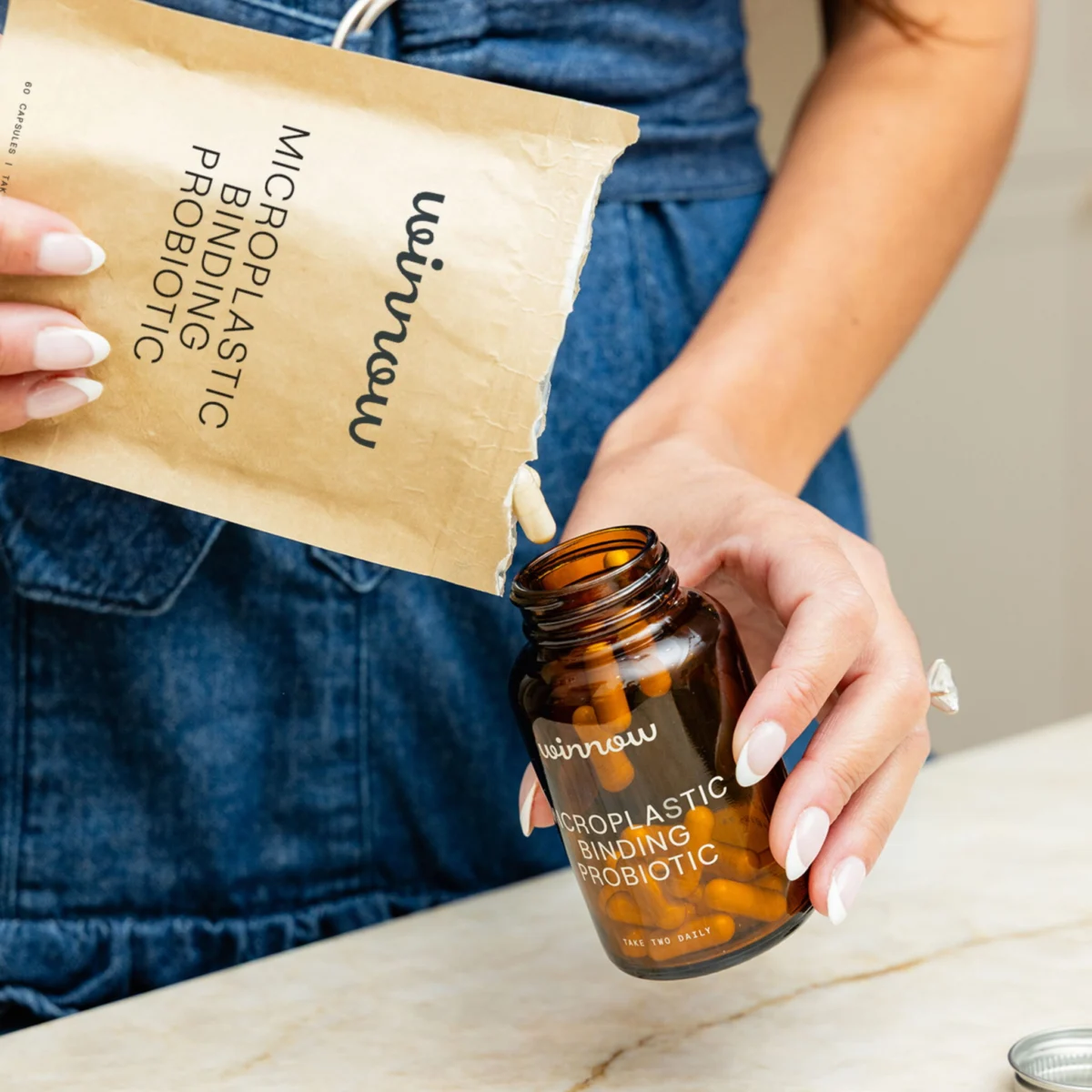
At the forefront of this niche is Winnow, a health-technology firm that has developed a daily probiotic specifically engineered for a dual purpose. While traditional probiotics focus exclusively on digestive regularity and microbiome diversity, Winnow’s formula utilizes specific bacterial strains selected for their "surface adsorption" capabilities—the ability to physically bind to microplastic particles within the gastrointestinal tract and facilitate their excretion.
The product represents a pivot in environmental health strategies. Rather than focusing solely on external filtration or lifestyle changes, this approach seeks to utilize the human microbiome as a defensive barrier against the unavoidable ingestion of polymers like Polyethylene (PE), Polypropylene (PP), and Polyethylene Terephthalate (PET). However, while the gut-health benefits of the selected strains are backed by human clinical trials, the microplastic-binding aspect remains in the preclinical phase, highlighting both the potential and the experimental nature of this "internal bio-remediation."
Chronology: From Marine Pollution to Human Bioaccumulation
The trajectory of microplastic research has moved with alarming speed over the last two decades, leading directly to the development of products like Winnow.
2004–2014: The Era of Marine Awareness
During this decade, the term "microplastics" (defined as plastic particles smaller than 5mm) entered the scientific lexicon. Research primarily focused on "The Great Pacific Garbage Patch" and the impact of plastics on marine life. The primary concern was the mechanical ingestion of plastic by sea turtles and birds.
2015–2020: The Food Chain Discovery
Studies began to show that microplastics were not merely floating in the ocean; they were being consumed by zooplankton and small fish, moving up the food chain. By 2018, the first pilot study detected microplastics in human stool samples across eight different countries, proving that humans were actively ingesting these materials through seafood, salt, and bottled water.
2021–2024: The Systemic Breakthrough
The scientific community was jolted by findings that microplastics were moving beyond the digestive tract. Research published in Environment International and other journals identified microplastics in human blood and deep lung tissue. This shifted the conversation from "ingestion" to "bioaccumulation," raising urgent questions about inflammation and endocrine disruption.
2025: The Rise of Biological Mitigation
In early 2025, peer-reviewed research began exploring the use of "probiotic bioremediation." A landmark study screened nearly 800 bacterial strains to identify those with high adsorption potential. This scientific momentum provided the foundation for Winnow to commercialize a multi-strain formula designed to intercept plastics before they can cross the gut barrier.
Supporting Data: The Science of Surface Adsorption
The efficacy of Winnow and similar probiotic interventions rests on the concept of surface adsorption. This is not a chemical reaction but a physical one, where plastic particles adhere to the exterior of a bacterium.
The Mechanism: EPS and S-Layer Proteins
Winnow’s research points to specific bacterial structures that act as "biological magnets." These include:
- Exopolysaccharides (EPS): Sugar-based polymers secreted by bacteria that create a sticky biofilm, capable of trapping micro-sized particles.
- S-layer Proteins: A rigid, patterned outer layer of the cell envelope that provides a high surface area for particle attachment.
Performance Metrics
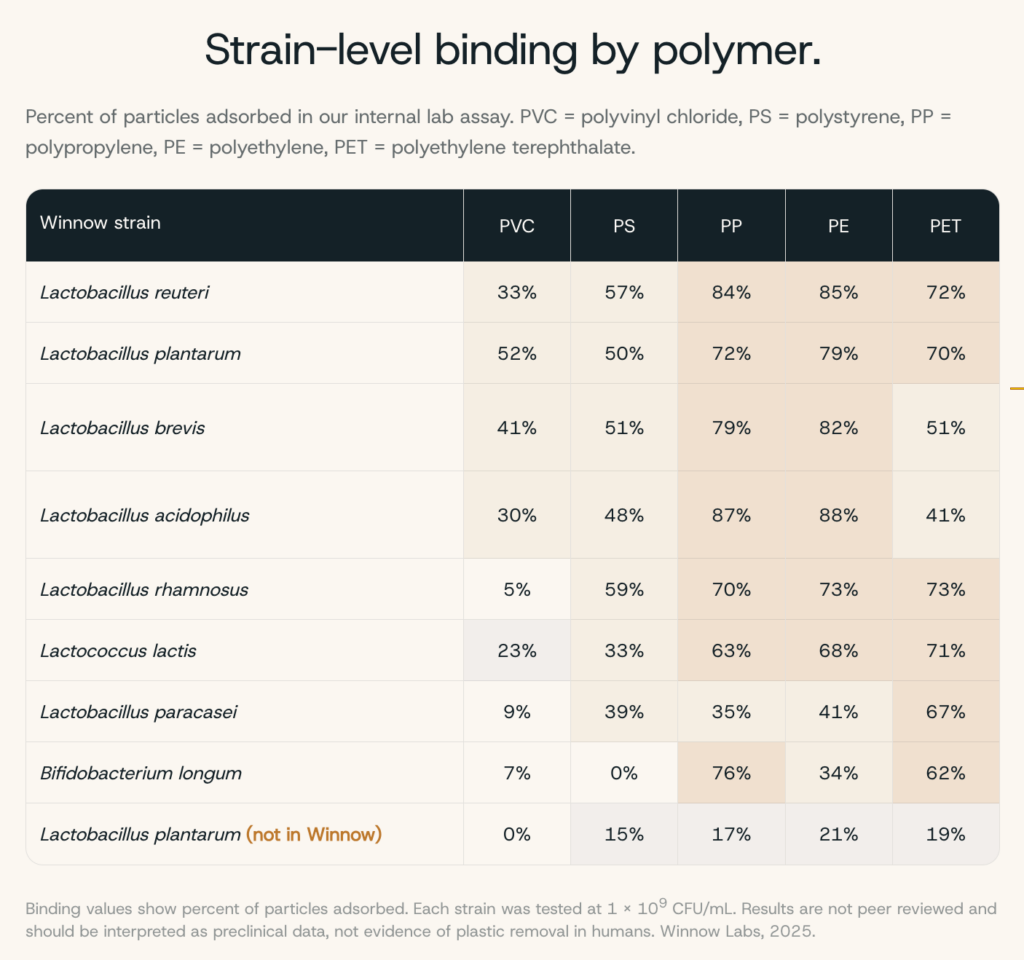
In internal laboratory testing, Winnow’s multi-strain formula demonstrated a synergistic effect. While individual probiotic strains showed some affinity for plastic, the full formula bound 1.8 times more of a blended plastic mix than any single strain alone. This is critical because human exposure is rarely limited to one type of plastic.
The formula’s binding capabilities were tested across the "big five" of consumer plastics:
- PE (Polyethylene): Found in plastic bags and films.
- PP (Polypropylene): Used in takeout containers and bottle caps.
- PS (Polystyrene): Common in foam packaging and cutlery.
- PET (Polyethylene Terephthalate): The primary material for beverage bottles.
- PVC (Polyvinyl Chloride): Used in plumbing and some food packaging.
According to Winnow’s published science data, their formula outperformed average single strains in every polymer category, suggesting that a diverse "consortium" of bacteria is more effective at managing the varied shapes and charges of microplastic fragments.
Clinical vs. Preclinical Evidence
It is essential to distinguish between the two pillars of Winnow’s scientific claims:
- Gut Health (Clinical): The formula includes L. rhamnosus ATCC 53103, L. reuteri DSM 17938, and L. acidophilus ATCC SD5212. These strains have been the subject of extensive human research regarding intestinal barrier support, immune response, and digestive regularity.
- Microplastic Binding (Preclinical): The data regarding the removal of plastics is currently based on in vitro (lab) and in vivo (animal) models. While a 2025 study showed that specific strains increased plastic excretion and reduced tissue accumulation in animal subjects, human clinical trials for plastic removal are still on the horizon.
Official Responses and Industry Context
The emergence of microplastic-binding supplements has prompted a range of responses from the wellness industry and environmental advocates.
The Company Position
Winnow has maintained a transparent, if cautious, stance regarding the limitations of their product. "I want to be very clear," stated a spokesperson for the brand. "I do not think any supplement is a magic solution to plastic pollution. A capsule does not replace the need for reducing plastic exposure, better regulation, or holding corporations accountable for plastic production."
The company positions the product as a "tool for the world we actually live in," acknowledging that even the most dedicated "zero-waste" individuals cannot entirely avoid microplastics in the air and municipal water supplies.
Regulatory Landscape
Currently, the FDA does not approve dietary supplements for the treatment or prevention of environmental toxicity. Consequently, products like Winnow are marketed under the "Structure/Function" claim framework. This means they are designed to support the body’s natural processes (such as digestion and excretion) rather than claiming to "cure" plastic toxicity.
Comparison to Industry Standards
Winnow is often compared to other premium probiotic brands, such as Seed. However, Winnow distinguishes itself through its specific focus on environmental pollutants and its commitment to plastic-free packaging—a move that aligns the product’s delivery system with its health mission.
Implications: The Future of Functional Probiotics
The introduction of microplastic-binding probiotics marks a significant shift in how we perceive "functional medicine." It suggests a future where the human microbiome is managed not just for internal health, but as a filter for an increasingly "synthetic" environment.
Public Health Implications
If preclinical results translate to humans, the implications for public health are profound. Microplastics are known to carry "hitchhiker" chemicals, such as Bisphenol A (BPA) and phthalates, which are linked to hormonal imbalances. By accelerating the excretion of these particles, probiotics could potentially reduce the "residence time" of these toxins in the body, thereby lowering the risk of chronic inflammation.
The Lifestyle Shift
For the "Zero Waste" community, Winnow represents a secondary line of defense. Experts suggest that while a probiotic may help, it should be the final step in a hierarchy of exposure reduction:
- Elimination: Avoiding bottled water and plastic-wrapped produce.
- Mitigation: Replacing scratched plastic cutting boards and avoiding heating food in plastic containers.
- Filtration: Using high-quality HEPA filters and water filtration systems to capture particles before they are inhaled or ingested.
- Biological Support: Using probiotics like Winnow to manage the "unavoidable" fraction of exposure.
Scientific Frontiers
The next step for this technology will be human longitudinal studies. Researchers are looking to determine if long-term probiotic use can lower the detectable levels of microplastics in human blood and urine. Furthermore, there is interest in whether these bacteria can be engineered to not just bind plastic, but eventually break it down into harmless byproducts—a process known as microbial degradation.
As we move deeper into the "Plasticene" epoch, the boundary between environmental health and personal wellness continues to blur. The development of Winnow suggests that the solution to our plastic problem may not only lie in cleaning up our oceans but in fortifying our internal ecosystems against the pollutants we have already set in motion.

 Nana
 Ammar Sabilarrohman






