

 Iffa Jayyana
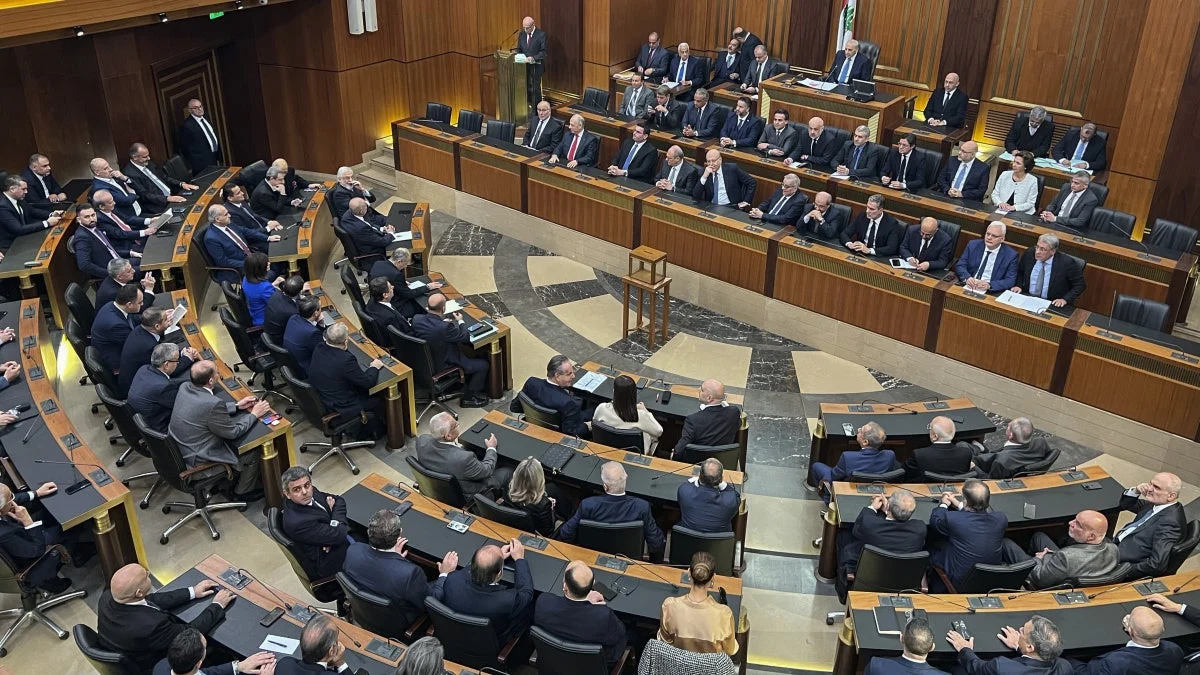
BEIRUT – After sixteen years of arduous legislative deliberation, Lebanon’s media landscape sits at a precarious crossroads. While the passage of a new media law on August 11, 2026, was initially hailed as a milestone for press freedom, civil society advocates and international human rights organizations are now pushing for an urgent legislative corrective. A new draft law, introduced by a coalition of ten members of parliament on October 5, seeks to bridge the gaps left by the original legislation, aiming to dismantle the state’s long-standing arsenal of tools used to silence dissent.
The State of Play: A Legislative Paradox
The media law adopted in August was designed to modernize a regulatory framework that had grown dangerously obsolete. For decades, Lebanese journalists, activists, and artists have operated under a "sword of Damocles," facing frequent summonses and criminal lawsuits based on archaic penal codes.
The new law introduces several undeniably positive developments. It effectively ends pretrial detention for expression-related offenses committed online or through media channels—a practice previously used to intimidate critics. Furthermore, it empowers citizens to establish online media platforms without the restrictive "prior authorization" previously required by the state. Crucially, the law limits the jurisdiction of military courts over speech-related crimes, a long-standing demand of legal experts who argue that civilians should never be tried in military tribunals for expressing their opinions.
However, the law contains a "poison pill" in Article 104(b). This provision criminalizes the "intentional fabrication of falsehoods and dissemination of false and harmful news," punishable by up to three years in prison. By failing to define "harmful news," the law leaves the door wide open for state actors to weaponize the statute against anyone whose reporting or commentary proves inconvenient to the political establishment.
A Chronology of Suppression and Reform
The fight for a modern media law in Lebanon has been a marathon of frustration.
- 2010–2025: The legislative process languished for over a decade and a half. During this period, Lebanon saw a sharp uptick in the use of criminal defamation laws. Human Rights Watch (HRW) and other watchdogs documented a consistent pattern: journalists were summoned by security services—often the General Security or the Cybercrime Bureau—and subjected to aggressive interrogations that often involved psychological intimidation.
- April 2025: A notable wave of summonses against prominent journalists and activists underscored the weaponization of the Penal Code. These events solidified the consensus that legislative reform was not merely an aesthetic choice, but a necessity for the survival of the independent press.
- August 11, 2026: Parliament passed the new media law. While it contained groundbreaking protections for media independence, including the right to unionize and the protection of source anonymity, its failure to repeal overlapping criminal statutes sparked immediate backlash.
- October 5, 2026: Ten members of parliament introduced a critical amendment package. This move represents a rare instance of legislative self-correction, directly targeting the loopholes that allow the Penal Code and Military Justice Code to override the new protections.
The Conflict of Codes: Why the Penal Code Matters
The primary critique leveled by Human Rights Watch is that the new media law exists in a vacuum. It does not explicitly supersede the Lebanese Penal Code or the Military Justice Code. Consequently, while the media law might decriminalize certain acts of defamation, the older, more draconian codes remain fully enforceable.
Under the current status quo, provisions within the Penal Code continue to criminalize libel, slander, and insults directed at foreign states, the Lebanese president, state institutions, and the military. These offenses carry prison sentences of up to two years. More alarmingly, the Military Justice Code continues to prohibit "publicly disparaging the flag or the army," a charge frequently used to stifle legitimate criticism of government institutions.
The October 5 draft law seeks to harmonize these codes by making them inapplicable to cases of media-related or online expression. This would prevent the state from "forum shopping"—the practice of choosing a court or a specific law that maximizes the chances of a conviction against a journalist.
The Role of Security Services
One of the most persistent issues in Lebanon is the role of security agencies in policing speech. HRW research has consistently highlighted the bias of these agencies, noting that interrogation tactics often border on the abusive. Security services have frequently used their investigative powers to pressure journalists into revealing sources or to sign "pledges" to cease their reporting.
The proposed amendments would fundamentally shift this power dynamic. By limiting the authority to investigate expression-related crimes solely to the public prosecution—and removing it from the purview of security agencies—the amendment would provide a buffer between journalists and the security apparatus. This change is intended to end the "chilling effect" that arises when a journalist knows they could be called in for a "friendly chat" by intelligence services at any hour.
Implications for Civil Society and Democracy
The implications of these legislative battles extend far beyond the newsroom. In a country struggling with economic collapse and political volatility, a free press acts as the only effective mechanism for accountability.
"Given the history of public officials and powerful individuals abusing Lebanon’s laws to clamp down on journalists, activists, and artists, parliament should act to prevent further abuse," said Ramzi Kaiss, Lebanon researcher at Human Rights Watch. "No one should face abusive retaliation for peacefully expressing their views, and parliament has a chance to end these abuses right here and now."
The international community, including various UN rapporteurs, has long pressured Lebanon to align its laws with the International Covenant on Civil and Political Rights (ICCPR), to which Lebanon is a signatory. Article 19 of the ICCPR mandates that restrictions on freedom of expression must be necessary and proportionate. The current vague language regarding "harmful news" fails these tests entirely.
The Path Forward: A Call for Total Repeal
Human Rights Watch and local advocates argue that the October 5 amendments, while a massive step in the right direction, are only part of the solution. They advocate for a total repeal of criminal defamation and insult provisions in all Lebanese codes, regardless of the medium.
If Lebanon is to truly transition toward a transparent, democratic society, it must move such disputes into the civil court system. In a civil court, the burden of proof is different, and the goal is to provide remedy for reputational damage rather than to punish the individual through incarceration.
As the Lebanese parliament reviews the October 5 proposals, the eyes of the international community are fixed on the legislature. For years, the Lebanese people have demanded a state that protects their rights rather than one that polices their thoughts. The passage of these amendments would not only be a victory for the media; it would serve as a declaration that in the new Lebanon, the truth is no longer a crime.
"For years, Lebanese civil society has fought for increased protections to the right to freedom of expression and the press," Kaiss noted. "Passing the proposed amendments to the media law would be a breakthrough."
Whether the parliament has the political will to strip itself of the power to silence its critics remains the defining question of this legislative session. The draft law is not just a collection of technical corrections; it is a test of whether the state is willing to trust its own citizens with the fundamental right to speak freely.


 Rifan Muazin

 Layla Zulfa




